Watch the guide video
Quick answer
For most budget-conscious UK buyers, the best turntable under £200 is usually a simple, well-made deck with a decent cartridge, stable speed, a built-in phono stage if you need one, and connections that suit your speakers or amplifier.
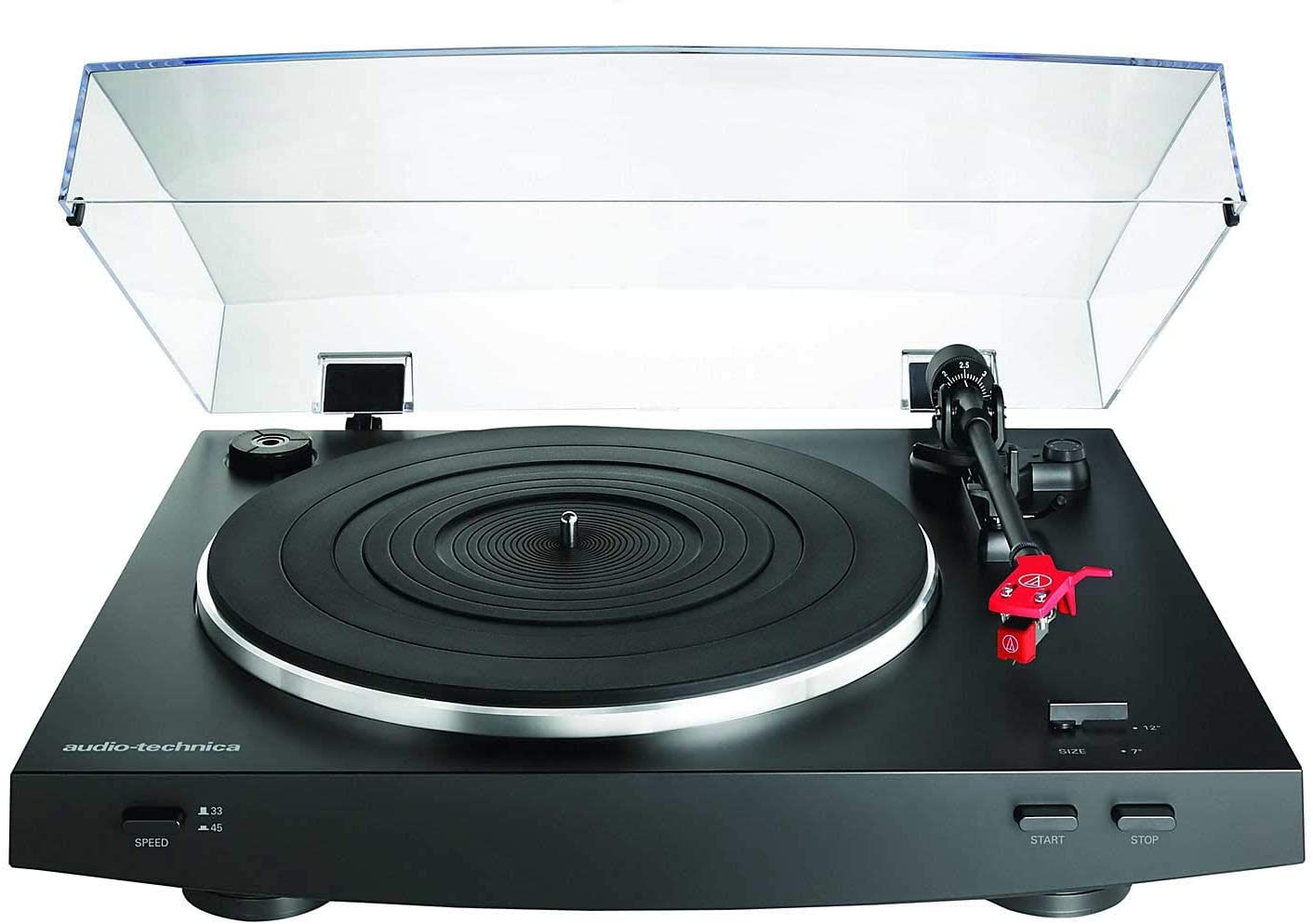
If you want the easiest start, look for an automatic or semi-automatic turntable with a built-in phono preamp. If you care more about sound and future upgrades, prioritise adjustable tracking force, a replaceable cartridge and a more solid plinth over Bluetooth, lights or retro styling.
Key Takeaways
Under £200, you should focus on the basics before extras. A turntable that spins at the right speed, tracks records safely and connects cleanly to your system is more useful than one with a long list of novelty features.
The most important buying checks are:
- Does it have a proper, replaceable stylus?
- Can it connect to your speakers or amplifier without extra boxes?
- Is the tonearm suitable for regular record use?
- Does it play at the speeds you need, usually 33⅓ and 45 rpm?
- Is it built well enough to sit level and resist vibration?
Built-in speakers are convenient, but they are usually the biggest compromise. If your budget allows, a separate turntable and powered speakers will normally give you a more flexible and enjoyable system.
Bluetooth is useful for convenience, but it is not essential for vinyl. It converts the signal into a wireless digital stream, so choose it for practicality rather than for the purest analogue route.
Who This Guide Is For
This guide is for UK buyers who want to enjoy records without spending hi-fi money. It is especially useful if you are buying a first turntable, replacing a suitcase player, or choosing a gift for someone starting a record collection.
It is also for listeners who have limited space and want to know whether an all-in-one record player is good enough. The answer depends on expectations: it can be fine for casual listening, but it is rarely the best long-term choice.
This guide is not aimed at DJs, collectors with expensive pressings, or buyers building a serious hi-fi system from scratch. Those buyers should usually look beyond this budget or consider carefully chosen used equipment.
What to Consider Before Buying
Start with your complete system, not just the turntable. A record player needs somewhere to send sound, and different products handle that in different ways.
Before choosing a model, answer these questions:
- Do you already own speakers?
- Are those speakers powered, meaning they plug into the mains and have their own amplifier?
- Do you own a hi-fi amplifier, AV receiver or soundbar?
- Does your amplifier have a phono input?
- Do you want wired sound, Bluetooth sound or both?
A phono input is not the same as a normal aux input. Vinyl cartridges produce a very small signal that needs extra amplification and equalisation before it sounds correct.
If your turntable has a built-in phono stage, it can plug into many powered speakers, amplifiers or line inputs. If it does not, you need either an amplifier with a phono input or a separate phono preamp.
Set Your Budget and Expectations
The phrase “under £200” can mean different things depending on what is included. A turntable alone under £200 is a different purchase from a full record player system with speakers, Bluetooth and a retro cabinet.
If you already own suitable speakers or an amplifier, put most of the budget into the turntable. If you own nothing, decide whether you want a starter all-in-one unit now or a better separate system built in stages.
At this level, you should expect some trade-offs:
- More convenience can mean less upgrade flexibility.
- Built-in speakers save space but limit sound quality.
- Automatic operation is easy, but may reduce adjustment options.
- A better tonearm and cartridge may mean fewer wireless features.
Do not judge by weight, wood-effect finish or the number of functions alone. A simple deck that does the fundamentals well can be a better buy than a feature-heavy music centre.
System Compatibility in Plain English
A turntable system has three main jobs: read the groove, amplify the tiny signal, and play it through speakers. Problems happen when one of those stages is missing.
The simplest routes are:
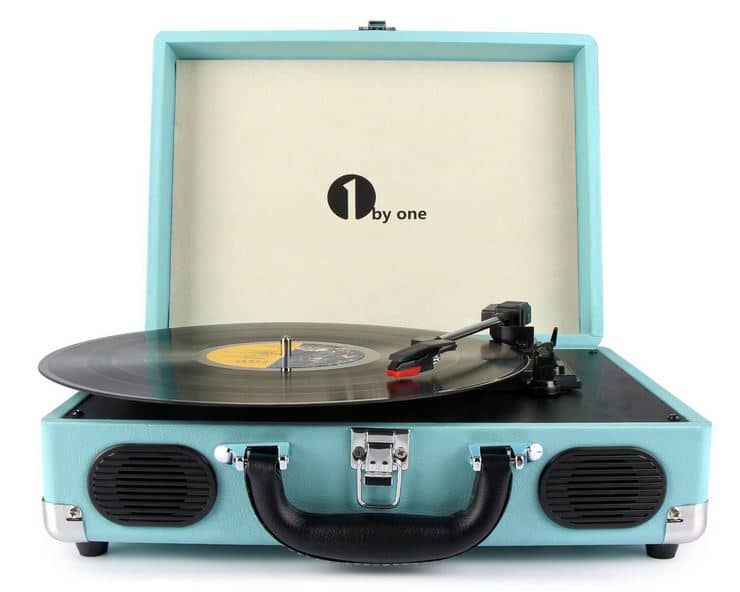
- Turntable with built-in speakers: everything is in one box.
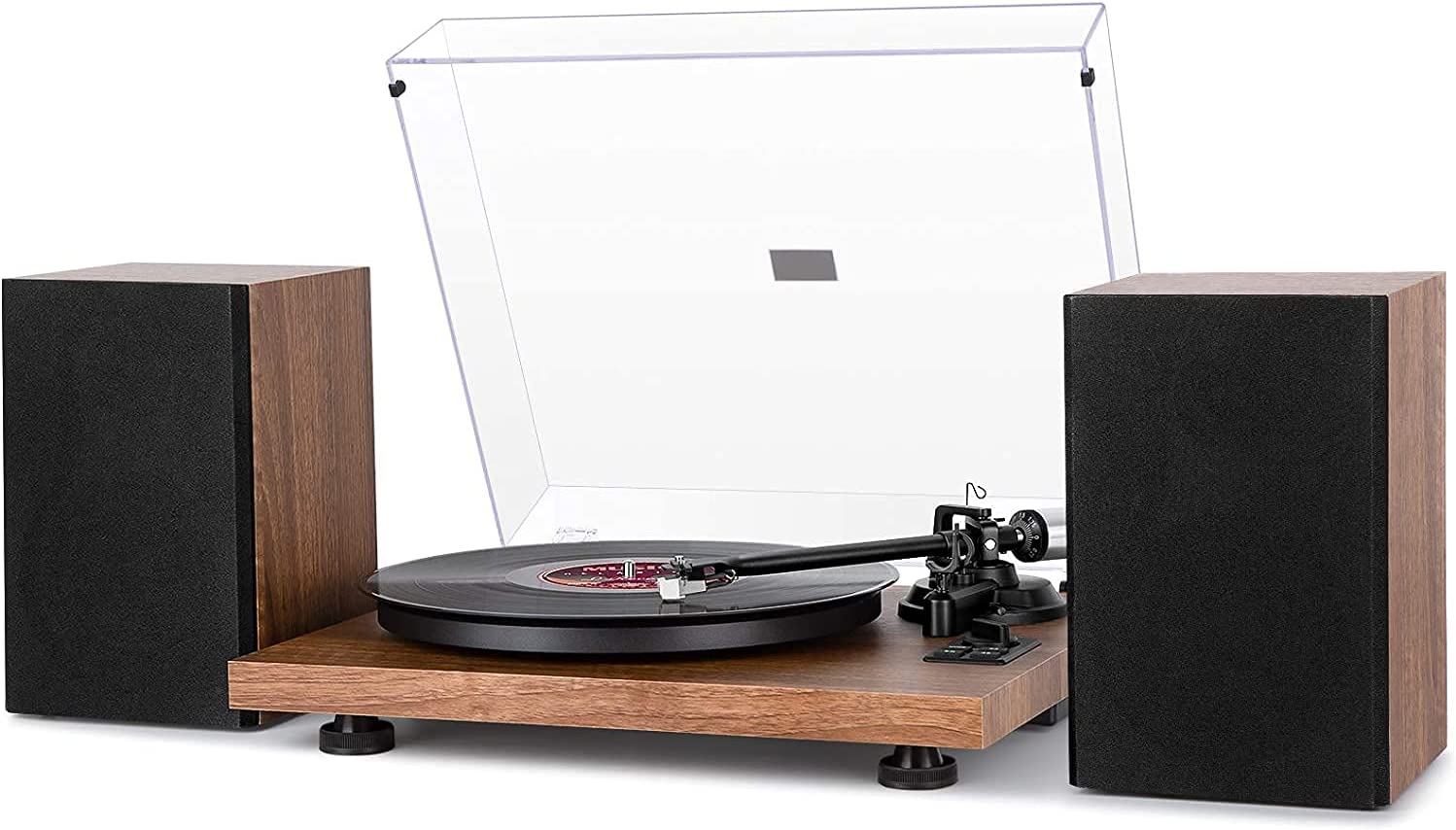
- Turntable with built-in phono stage plus powered speakers: fewer boxes, better flexibility.
- Turntable into an amplifier with phono input plus passive speakers: more traditional hi-fi setup.
- Turntable with Bluetooth output into Bluetooth speakers or headphones: convenient, but wireless.
Powered speakers are often the easiest upgrade from an all-in-one player. Catalogue examples include products such as Edifier R1280DB powered speakers, House of Marley Get Together Duo speakers, Sanyun SW206 speakers and Wharfedale Diamond 9.1 speakers, but always check whether the speakers are powered or passive before buying.
Passive speakers need a separate amplifier. If you plug a turntable directly into passive speakers, you will not get usable sound.
Soundbars can be awkward. Some have analogue inputs, some only use HDMI or optical, and Bluetooth may introduce delay or connection limitations.
Features That Matter Most
The cartridge and stylus are crucial because they physically read the record groove. A replaceable stylus is important, because styli wear out and should not be treated as permanent parts.
Tracking force is the downward pressure the stylus applies to the record. If it is too light, the stylus can skip; if it is too heavy, it can cause unnecessary wear.
An adjustable counterweight is useful because it lets you set tracking force properly. Some very simple players use fixed tonearms, which are easier but less flexible.
Speed stability matters because unstable speed causes pitch wobble. Listen for sustained piano notes, vocals or guitar chords sounding uneven if you are assessing a deck in person.
A built-in phono stage is very practical in this price range. It lets the turntable connect to line-level inputs on powered speakers or an amplifier, provided the product has the right output setting.
Anti-skate helps the stylus sit evenly in the groove. It is not always adjustable on budget decks, but some form of sensible tonearm design is preferable to a crude arm with no meaningful setup.
The platter is the rotating platform under the record. A better platter and mat can help with speed consistency and vibration control, though they are only one part of the overall design.
Dust cover quality matters more than many buyers expect. Records attract dust easily, and keeping the deck covered when not in use reduces cleaning and playback noise.
Essential vs Optional Conveniences
Some features are genuinely useful; others are nice but should not decide the purchase on their own. Under £200, this distinction is important because every extra feature uses part of the budget.
Essential features for most buyers are:
- Replaceable stylus.
- Reliable 33⅓ and 45 rpm playback.
- Suitable output for your speakers or amplifier.
- Stable, level feet or a plinth that does not feel flimsy.
- Clear setup instructions.
Useful but not essential features include:
- Built-in phono stage.
- Automatic start and stop.
- Bluetooth output.
- USB output for recording records to a computer.
- Hinged dust cover.
Purely optional features include:
- Retro cabinet styling.
- Built-in radio, CD, cassette or MP3 functions.
- Decorative lighting.
- Portable suitcase format.
- Multiple finishes or fabric covers.
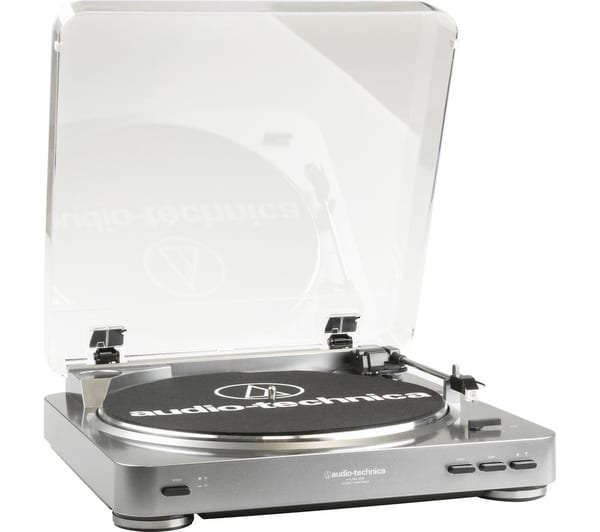
Automatic turntables are good for beginners because they place and lift the arm for you. Manual turntables can offer more control, but you must cue the tonearm carefully and lift it at the end unless there is auto-stop.
USB is useful if you want to digitise records. It should not be a priority if you only plan to listen at home.
Choosing for Different Buyers
For a first-time listener, ease of setup matters. Look for a turntable with a built-in phono stage, simple speed selection, a replaceable stylus and clear instructions.
For someone buying a gift, avoid overcomplicated models unless the recipient is already interested in hi-fi setup. An automatic model or a turntable with powered speakers can reduce frustration.
For a small bedroom, flat or student room, compactness and vibration control matter. Avoid placing the deck on the same lightweight surface as loud speakers, because bass vibration can travel back into the stylus.
For a buyer who already owns powered speakers, check the inputs first. If the speakers have RCA or 3.5 mm line input, a turntable with a built-in phono stage may be the simplest match.
For a buyer with an older amplifier, check whether it has a phono input. If it does, you may not need a built-in phono stage, although having one can still be convenient.
For casual family listening, an all-in-one record player may be acceptable if expectations are modest. Still, choose one with a replaceable stylus and avoid using precious or rare records on a player with a crude tonearm.
For someone who wants to upgrade later, prioritise a proper cartridge mount, adjustable tracking force and standard outputs. These features make it easier to improve the cartridge, speakers or phono stage later.
Bluetooth, USB and Built-In Speakers
Bluetooth turntables are popular because they reduce cable clutter. Models in this broad category include products such as the Sony PS-LX310BT, Audio-Technica AT-LP60XBT and several 1byone, Victrola, Lenco and ION Bluetooth decks, though pricing and features vary.
Bluetooth is best viewed as a convenience feature. It can be very useful with wireless speakers or headphones, but it is not the cleanest route if you are trying to get the most from a record.
USB turntables let you connect to a computer and record vinyl into audio files. This is handy for archiving, but software, recording levels and record condition all affect the result.
Built-in speakers make a record player self-contained. The downside is that small speakers in the same cabinet as the turntable can restrict bass, stereo separation and vibration control.
If you want better sound without making the system complicated, consider a turntable plus powered speakers. This is often a sensible middle ground between a suitcase player and a full hi-fi separates system.
Common Mistakes
Final Checklist
Use this checklist before you buy. It is designed to catch the practical issues that cause the most disappointment.
- Decide whether you need a turntable only or a complete listening system.
- Check what speakers or amplifier you already own.
- Confirm whether you need a built-in phono stage.
- Make sure the stylus is replaceable.
- Check that the turntable plays the record speeds you need.
- Look for adjustable tracking force if you want safer setup and future flexibility.
- Decide whether Bluetooth or USB is genuinely useful to you.
- Avoid paying extra for radio, cassette or decorative features unless you will use them.
- Check the deck will fit on a stable, level surface away from speaker vibration.
- Leave room in the budget for a record brush, stylus brush and any required cables.
Frequently asked questions
Can a turntable under £200 damage records?
A budget turntable is not automatically unsafe, but poor tonearm design, excessive tracking force or a worn stylus can increase record wear.
Choose a model with a replaceable stylus and sensible tracking setup. Avoid playing valuable records on very crude players with no adjustment and unknown stylus quality.
Do I need to buy speakers separately?
Only if the turntable does not have built-in speakers or if you want better sound than most all-in-one units can provide.
Powered speakers are the simplest separate option because they include their own amplifier. Passive speakers need an amplifier between the turntable and the speakers.
Is a suitcase record player a bad idea?
A suitcase player can be fine for occasional, casual listening, especially where portability and low cost matter most.
The trade-off is usually sound quality, upgrade potential and sometimes tonearm refinement. If you are building a record collection, a separate turntable and speakers is normally the more sensible long-term route.
Should I choose belt drive or direct drive under £200?
For normal home listening, either can work well if the design is competent. Belt drive uses a rubber belt between the motor and platter, while direct drive has the motor driving the platter more directly.
At this price, the overall execution matters more than the drive type alone. Check speed stability, build quality and setup features before focusing on the label.
Is it worth buying a used turntable instead?
Used turntables can offer good value, but they carry more risk if you cannot inspect them properly. Belts, styli, cartridges, hinges and tonearm bearings may need attention.
If buying used, budget for at least a replacement stylus unless you know its history. Avoid any unit with electrical faults, damaged tonearm wiring or signs of unsafe mains work.
Can I connect a budget turntable to Bluetooth headphones?
Only if the turntable has Bluetooth output, not just Bluetooth input. Some record players receive Bluetooth from a phone but do not transmit vinyl sound to headphones.
Check the wording carefully. Look for terms such as Bluetooth transmitter or Bluetooth output if wireless headphones are your plan.
What should I upgrade first after buying a budget turntable?
If the turntable is fundamentally decent, speakers often make the biggest audible difference. A clean stylus and properly set tracking force should come before spending on upgrades.
After that, consider a better cartridge or external phono stage only if the turntable supports those changes. Do not overspend upgrading a deck with limited adjustment or fixed parts.
Why does my new record player sound quiet or thin?
The most common cause is a missing phono stage. A turntable plugged into a normal aux input without phono amplification will often sound weak, quiet and lacking bass.
Check whether your turntable has a phono or line switch. If it does not have a built-in phono stage, use an amplifier with a phono input or a separate phono preamp.
Final recommendation
The best next step is to decide what role the turntable must play in your room. If you already have speakers or an amplifier, spend the budget on the best deck and connection match you can find.
If you need everything from scratch, be honest about whether convenience or sound quality matters more. An all-in-one player is easy, but a modest turntable with powered speakers is usually the stronger foundation.
Before ordering, run through the checklist and confirm the phono stage, speaker connection, stylus replacement and setup requirements. A careful match will do more for your enjoyment than chasing the flashiest feature list under £200.