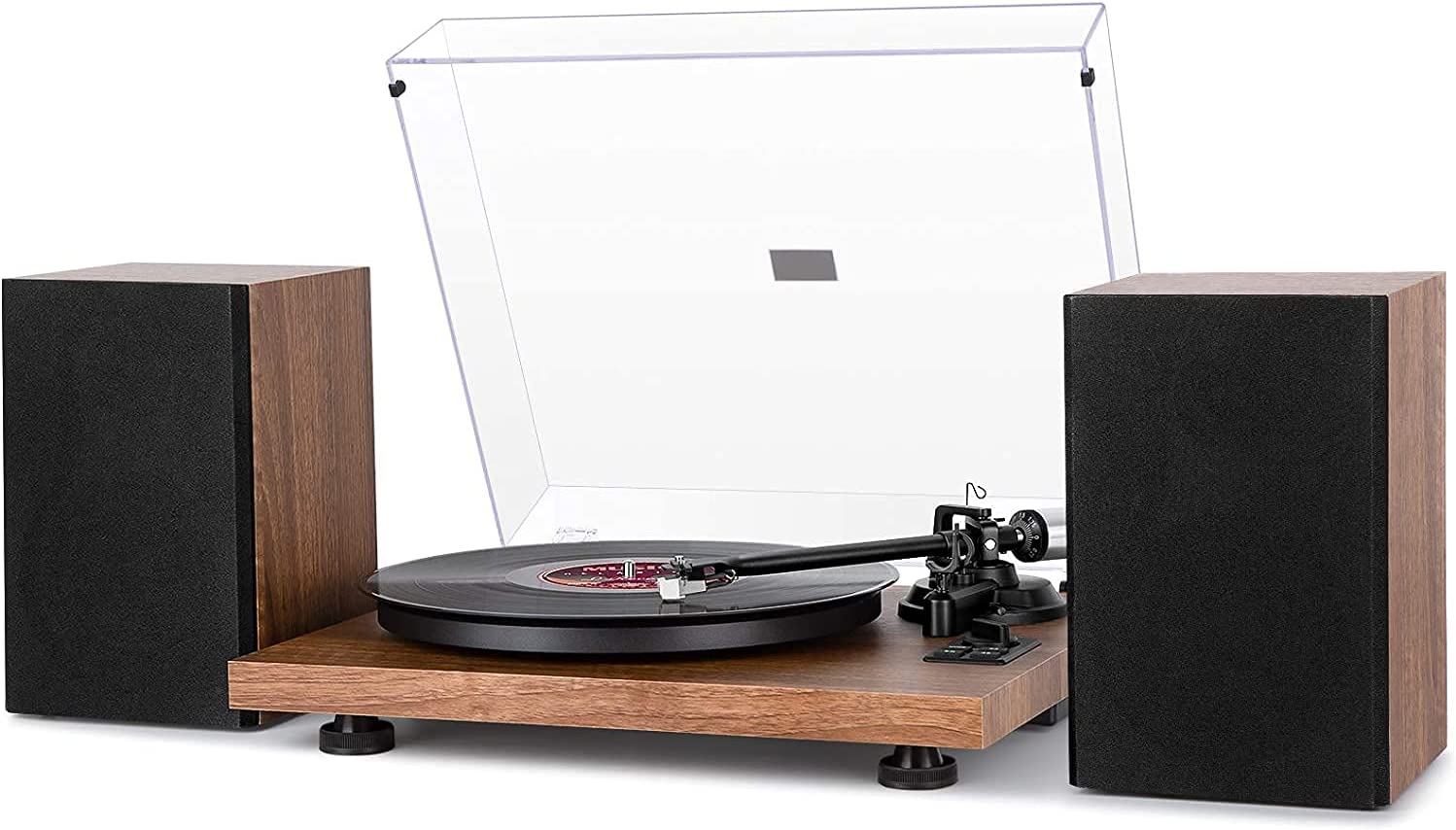
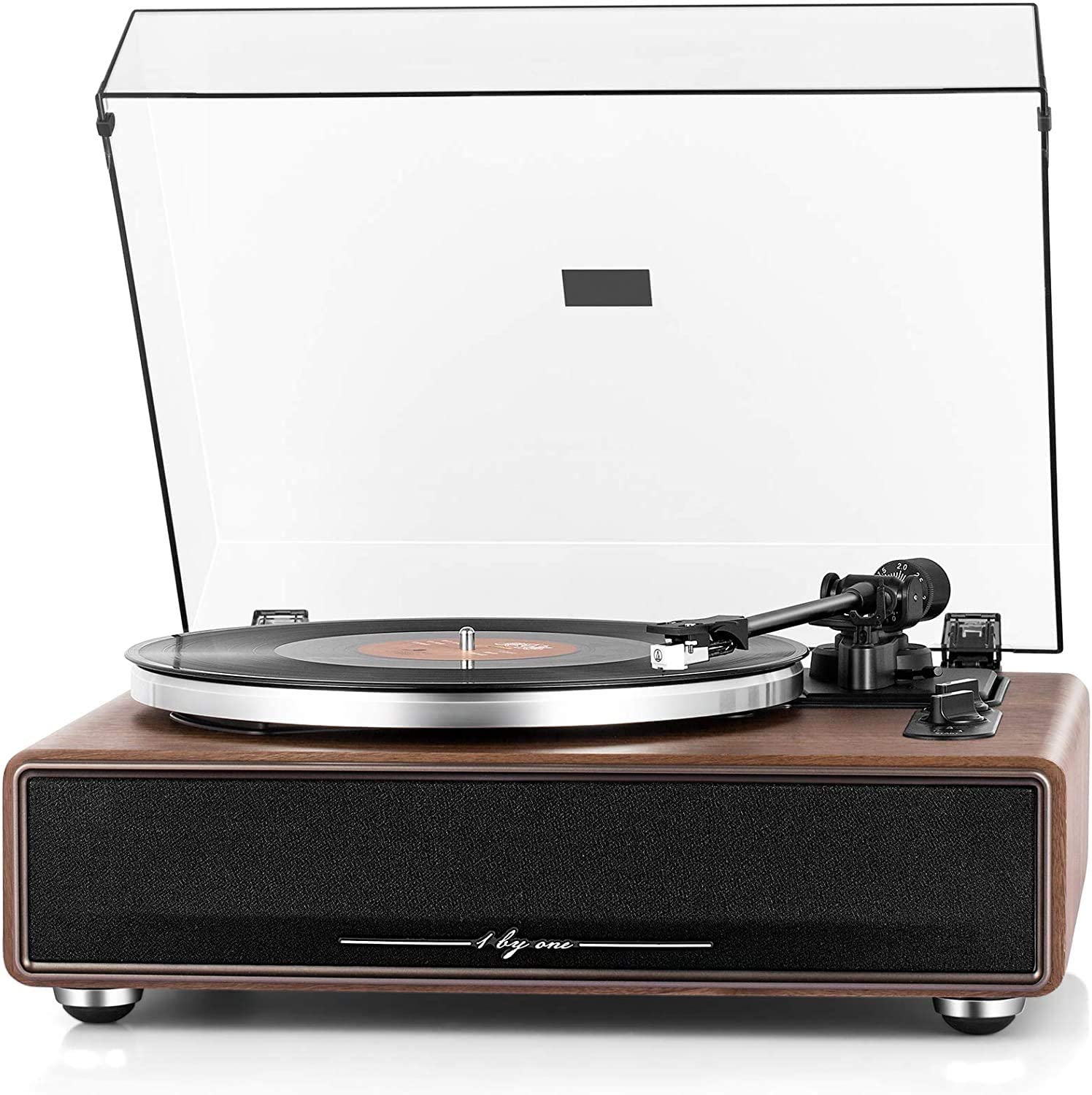
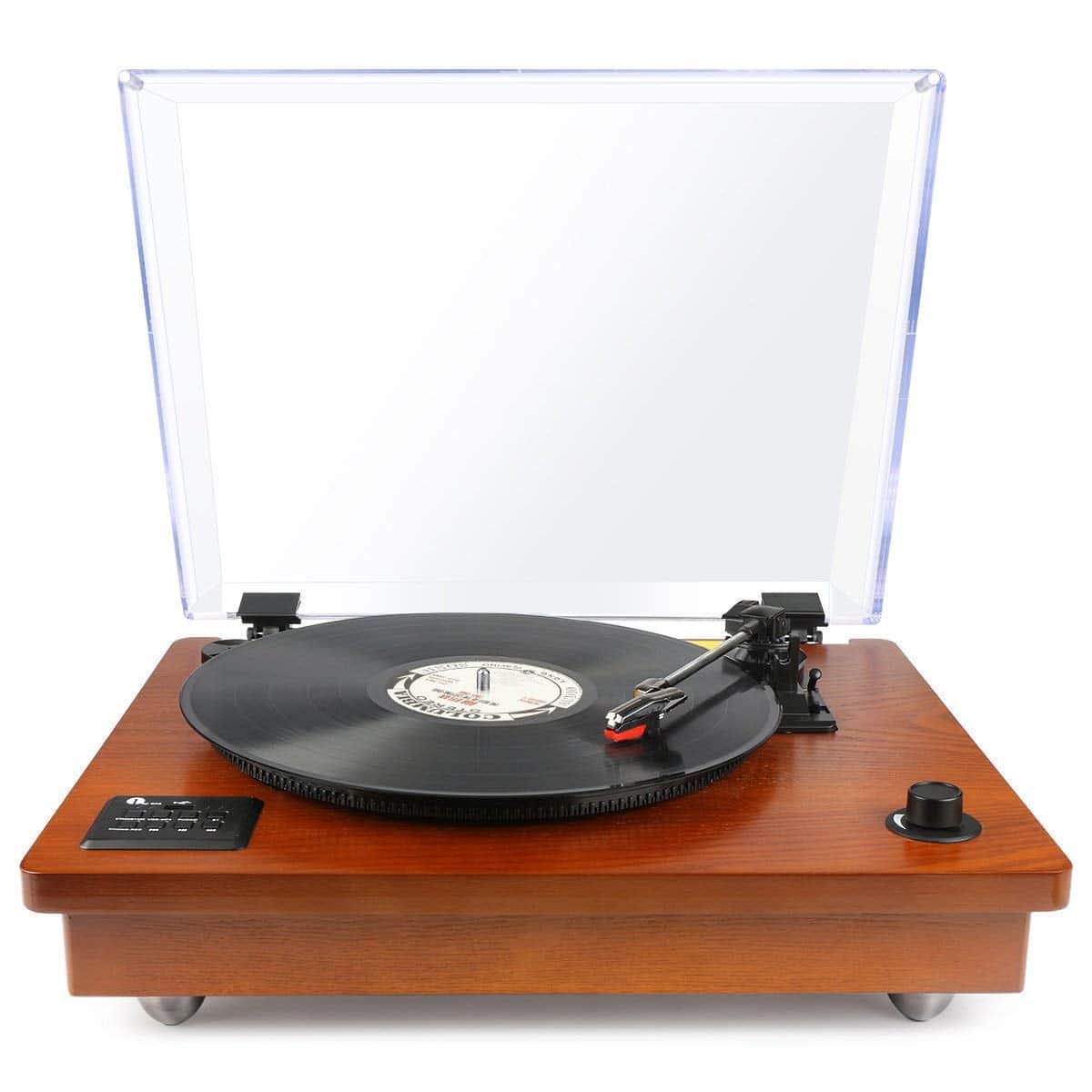
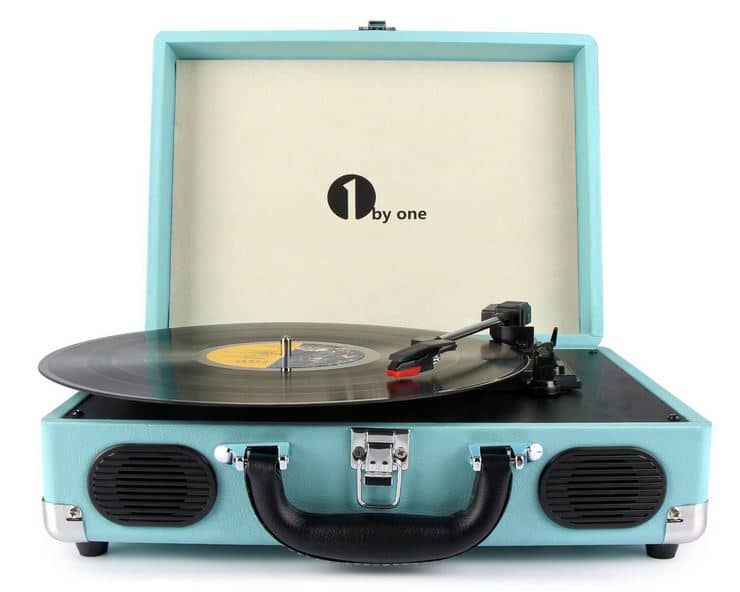
Watch the guide video
Quick answer
The best Bluetooth turntable for most buyers is one that gets the record-playing basics right first, then adds reliable wireless output. Look for a decent tonearm, replaceable stylus, stable platter speed, built-in phono stage if you need it, and Bluetooth transmission to your speaker or headphones.
If you mainly want convenience, an automatic Bluetooth model can make sense. If sound quality matters more, consider a stronger conventional turntable with a separate Bluetooth transmitter or powered speakers with the right inputs.
Key Takeaways
Bluetooth is useful, but it should not be the only reason to buy a turntable. A poor record player with Bluetooth is still a poor record player.
For most wireless vinyl systems, you need Bluetooth output from the turntable to a speaker, soundbar or headphones. Some record players only have Bluetooth input, which lets you stream music from your phone into the player’s built-in speaker, but does not send vinyl wirelessly.
Prioritise these essentials:
- Bluetooth output if you want wireless playback from records
- A replaceable stylus, so you are not stuck when the needle wears out
- A tonearm that tracks records properly and does not apply excessive force
- A built-in phono preamp if your speaker or amplifier has no phono input
- RCA outputs, so the turntable can still be used in a wired system later
Useful extras include automatic start and stop, USB recording, built-in speakers, app features and portable designs. Treat these as conveniences, not substitutes for good playback basics.
Who This Guide Is For
This guide is for listeners who want to play records through Bluetooth speakers, wireless headphones or compact powered speakers. It is especially relevant if you do not want a traditional hi-fi amplifier and passive speaker setup.
It will also help if you are buying a first turntable for a bedroom, living room, student room or small flat. In those situations, fewer boxes and fewer cables can be a real advantage.
You may also find it useful if you already own a Bluetooth speaker and want to know whether it will work with vinyl. The answer depends on whether the turntable can transmit Bluetooth audio and whether your speaker accepts it reliably.
This is not a guide for specialist DJ use, studio archiving or high-end analogue systems. Bluetooth can sound enjoyable, but it is not the purest way to hear what a good record and cartridge can do.
What to Consider Before Buying
Start with the system you already have. The right Bluetooth turntable depends on whether you are using wireless headphones, a Bluetooth speaker, powered speakers, a soundbar, or a separate amplifier.
Check the direction of Bluetooth. Bluetooth output sends the sound of the record to another device, while Bluetooth input lets the turntable act like a speaker for your phone.
Think about where the turntable will sit. It should be on a level, stable surface away from speaker vibration, doors, wobbly furniture and heavy footfall.
Budget for the whole system, not just the deck. You may need speakers, a stylus replacement later, a record brush, inner sleeves, or a phono preamp if the turntable does not include one.
If you already own a good wired hi-fi, Bluetooth may be less important than cartridge quality, tonearm adjustment and isolation. In that case, a traditional deck with a separate wireless add-on may give you more flexibility.
Features That Matter Most
Bluetooth output is the headline feature. It allows the turntable to send audio wirelessly to compatible speakers or headphones, usually after the signal has passed through a built-in phono stage.
A built-in phono preamp is very useful for simple systems. Records produce a very small signal, and a phono preamp boosts and equalises it so speakers or amplifiers with standard line inputs can handle it.
A replaceable stylus matters for both sound and record care. The stylus is the tiny tip that sits in the groove, and it wears with use.
A proper tonearm matters because it controls how the stylus sits in the groove. Better designs usually track more securely and are less likely to mistrack during louder or more complex passages.
Speed stability affects pitch. If the platter does not rotate consistently at 33⅓ or 45 rpm, sustained notes can sound unsteady or slightly warped.
RCA outputs are important even if you plan to use Bluetooth at first. They let you connect the deck to powered speakers, an amplifier or a separate phono stage if you later decide to improve the system.
Essential Features Versus Optional Conveniences
Essential features are the ones that affect whether the turntable will work properly and treat your records reasonably well. Optional conveniences make ownership easier, but they should not outweigh the fundamentals.
Essential for most buyers:
- Bluetooth output for wireless playback from records
- Wired audio outputs for future flexibility
- Replaceable stylus from a known cartridge or stylus family
- Stable 33⅓ and 45 rpm playback
- A dust cover or practical way to protect the platter and tonearm
- Clear setup instructions for tracking force, belt fitting or pairing
Optional conveniences:
- Fully automatic operation, where the arm starts and returns by itself
- Built-in speakers for casual listening in one box
- USB output for recording vinyl to a computer
- Rechargeable battery for portable use
- 78 rpm playback for shellac records, only if you also have the correct stylus
- Remote control, radio, CD, cassette or all-in-one music centre features
Sound Quality and Bluetooth Trade-Offs
Bluetooth adds convenience, but it also changes the signal path. The analogue sound from the record is converted to digital, compressed for wireless transmission, then converted back by the receiving device.
For relaxed listening, many people find this perfectly acceptable. For critical listening, a wired connection into good powered speakers or an amplifier usually gives the record more room to breathe.
Latency is another trade-off. Bluetooth can introduce a small delay, which is not usually a problem for music, but can be annoying if you are trying to watch a record-spinning video in sync with the sound.
Bluetooth range is affected by walls, furniture, Wi-Fi congestion and the quality of both devices. If your speaker cuts out across the room, the turntable may not be faulty; the wireless environment may simply be poor.
Codec support can matter, but do not over-focus on it. Terms such as SBC, AAC, aptX or LDAC describe different ways of sending Bluetooth audio, but both the turntable and receiving device must support the same codec to benefit.
Budget and Value Considerations
At the lowest budgets, many Bluetooth record players focus on looks, portability and all-in-one convenience. They can be enjoyable for casual use, but check carefully for a replaceable stylus, sensible tracking and proper audio outputs.
In the mid-range, you are more likely to find better tonearms, separate speakers, sturdier plinths and automatic Bluetooth models from established hi-fi brands. Examples in the catalogue include models such as the Sony PS-LX310BT, Audio-Technica AT-LP60XBT and Audio-Technica AT-LP3XBT, though you should still compare features carefully.
Higher budgets do not always mean built-in Bluetooth. Many stronger hi-fi turntables are designed for wired systems, so wireless playback may require a separate phono stage, transmitter or powered speaker solution.
Do not forget running costs. Styli need replacing, records need cleaning, and very cheap accessories can make the system frustrating to use.
System Compatibility
A Bluetooth turntable needs a receiving device, such as a Bluetooth speaker, Bluetooth headphones, a soundbar or Bluetooth-enabled powered speakers. Pairing is usually simple, but not every combination is equally reliable.
If you use powered bookshelf speakers, check whether you really need Bluetooth at all. Many powered speakers have RCA or line inputs, which can sound better and avoid pairing issues.
Catalogue speaker examples such as Edifier R1280DB, House of Marley Get Together Duo, Sanyun SW206 and Wharfedale Diamond 9.1 sit in different system categories. Some are powered and some may require amplification, so always check the exact input and power requirements before buying.
If your amplifier has a phono input, you may not need the turntable’s built-in phono preamp. If your amplifier only has AUX, line, CD or tape inputs, you need either a built-in phono stage or an external one.
For headphones, make sure the turntable can pair directly with them. Some Bluetooth headphones are awkward to pair without a screen, so check the pairing method and whether the turntable has a clear pairing button or indicator.
Choosing for Different Buyers
For a first-time listener, simplicity matters. A fully automatic or semi-automatic Bluetooth turntable reduces handling mistakes and makes it easier to enjoy records without learning every setup detail on day one.
For a small flat, look for a compact deck with Bluetooth output and a stable surface to place it on. Avoid putting the turntable on the same flimsy unit as a bass-heavy speaker, as vibration can cause skipping or feedback.
For headphone listeners, Bluetooth output is the key feature. Also consider whether the turntable has a wired headphone option through a speaker, amplifier or separate headphone amp, because Bluetooth pairing can sometimes be less convenient than expected.
For gift buyers, choose clarity over novelty. A deck with a replaceable stylus, simple controls and clear manufacturer support is usually safer than a highly decorative player with vague specifications.
For casual kitchen or bedroom listening, an all-in-one Bluetooth record player can be acceptable if expectations are realistic. Built-in speakers are handy, but they will not match a proper pair of external speakers.
For sound-quality-focused buyers, consider whether Bluetooth belongs in the turntable at all. A turntable such as a conventional belt-drive or direct-drive model connected to good powered speakers may be the better long-term route, even if it uses a separate wireless solution when needed.
For portable listening, models such as compact or suitcase-style Bluetooth players may be tempting. Check battery life claims, stylus replacement, platter support and whether the design holds records flat enough during playback.
Setup and Everyday Use
Bluetooth turntables are often sold as easy to use, but setup still matters. A few careful checks can prevent skipping, distortion and avoidable record wear.
Use this basic setup order:
- Place the turntable on a level, stable surface.
- Fit the belt, platter and mat if the model requires assembly.
- Remove any transport clips or tonearm locks only when instructed.
- Set tracking force and anti-skate if the turntable provides these adjustments.
- Connect power and select phono or line output as required.
- Pair the turntable with your Bluetooth speaker or headphones.
- Test with a clean, non-valuable record before playing your best copy.
Keep the lid down only if the manufacturer’s design allows it without resonance or contact. Some lids can pick up vibration, so experiment if you hear booming or feedback.
Clean records and the stylus regularly. A carbon fibre record brush before each side and a gentle stylus brush used in the correct direction can reduce noise and wear.
If Bluetooth pairing fails, turn off nearby devices that may be grabbing the connection. Then reset pairing on both the turntable and speaker, and keep them close together during the first connection.
Common Mistakes
The biggest mistake is assuming every Bluetooth record player sends vinyl to wireless speakers. Some only receive Bluetooth from a phone, which is a completely different feature.
Another common mistake is buying for appearance alone. Retro cabinets, suitcase cases and music-centre designs can look appealing, but the stylus, tonearm and speaker arrangement still matter.
Do not ignore the cartridge and stylus. If replacements are hard to identify, the player may become inconvenient or uneconomical to maintain.
Avoid placing the turntable directly beside or on top of a speaker. Bass vibration can travel back into the stylus and cause rumble, distortion or skipping.
Do not expect Bluetooth to fix weak built-in speakers. Wireless transmission affects how the sound is sent, not how well the source deck reads the record.
Do not open the turntable or attempt electrical repairs if there is a power fault, burning smell, liquid damage or exposed wiring. Unplug it and contact the retailer, manufacturer or a qualified repairer.
Final Checklist
Before you buy, run through this checklist. It will catch most compatibility and value problems before they become returns.
- Does the turntable have Bluetooth output, not just Bluetooth input?
- Will it pair with your intended speaker, headphones or soundbar?
- Does it also have RCA outputs for wired use?
- Is there a built-in phono preamp if your system needs one?
- Is the stylus replaceable, and can you identify the replacement part?
- Does it play the record speeds you actually own, usually 33⅓ and 45 rpm?
- Is the tonearm manual, automatic or semi-automatic, and are you comfortable with that?
- Do you have a stable surface away from speaker vibration?
- Have you allowed budget for speakers, cleaning tools and future stylus replacement?
- Are the extra features genuinely useful, or are they distracting from the basics?
If two models look similar, choose the one with clearer specifications, better system flexibility and easier maintenance. Those qualities tend to matter more over time than a long list of novelty features.
Frequently asked questions
Can I use any Bluetooth speaker with a Bluetooth turntable?
Usually, yes, if the turntable has Bluetooth output and the speaker accepts standard Bluetooth audio. Pairing can still vary by device, especially if the speaker is designed mainly for phones.
For best reliability, keep the speaker close during pairing and check whether either device automatically connects to something else first.
Will a Bluetooth turntable sound as good as a wired one?
Not usually in a strict hi-fi sense. Bluetooth compresses and converts the signal, while a wired connection keeps the path simpler.
That does not mean Bluetooth sounds bad. For casual listening through a good wireless speaker, it can be enjoyable and much more convenient.
Do I need a separate amplifier with a Bluetooth turntable?
Not if you are sending audio to a Bluetooth speaker or powered Bluetooth speakers. Those devices have their own amplification built in.
You may need an amplifier if you want to use passive speakers. Passive speakers cannot be driven directly from a normal turntable output.
What is the difference between a Bluetooth record player and a Bluetooth turntable?
The terms are often used loosely. A “record player” may mean an all-in-one unit with speakers, while a “turntable” often means a separate deck that needs speakers or an amplifier.
Always check the actual features rather than relying on the wording. The important details are Bluetooth direction, outputs, cartridge type and whether speakers are included.
Can I connect a Bluetooth turntable to a soundbar?
You can if the soundbar supports Bluetooth audio input and pairing works without needing a screen-based app that blocks other sources. Some soundbars are easier than others.
If the soundbar has analogue or optical inputs, a wired route may be more stable. You may need a phono preamp or analogue-to-digital converter depending on the soundbar’s inputs.
Are suitcase Bluetooth record players bad for records?
Not all are the same, but very cheap suitcase players can involve compromises in tonearm design, speaker placement and platter support. These factors may affect tracking and record wear.
If you choose one, look for a replaceable stylus, sensible tracking, stable playback and the option to use external speakers. Avoid using worn or damaged styli on records you care about.
Do Bluetooth turntables work with AirPods or other true wireless earbuds?
Some can, but pairing can be awkward because earbuds often expect a phone or app to manage the connection. You also cannot always adjust volume easily from the turntable.
Check the turntable’s pairing instructions and whether your earbuds can enter a standard Bluetooth pairing mode. If headphone listening is your main use, confirm this before buying.
Is USB useful on a Bluetooth turntable?
USB is useful if you want to record vinyl to a computer. It is not needed for normal wireless playback.
If digitising records matters, also consider the recording software, file quality and how much time you want to spend splitting tracks and cleaning up noise.
Final recommendation
Choose a Bluetooth turntable by working backwards from how you will actually listen. If you want records through wireless speakers or headphones, confirm Bluetooth output first, then check the turntable fundamentals.
For most buyers, the safest route is a deck with Bluetooth output, wired RCA outputs, a built-in phono stage, a replaceable stylus and clear setup instructions. That combination keeps the system simple now and leaves room to improve later.
If sound quality is your priority, do not be afraid to choose a better wired turntable and add wireless playback elsewhere in the system. If convenience is the priority, accept the trade-offs and focus on a model that is easy to maintain, stable in use and compatible with your existing speaker setup.