Watch the guide video
Quick answer
The best mid-range turntable for most listeners is a well-built deck with stable speed, a properly adjustable tonearm, a decent cartridge, and good isolation from vibration. It should suit your amplifier, speakers and room rather than simply having the longest feature list.
If you want the simplest route, choose a turntable with a built-in phono stage only if your amplifier or powered speakers do not already have one. If you want the strongest upgrade path, prioritise the tonearm, platter, motor design and cartridge compatibility over Bluetooth, USB and automatic features.
Key Takeaways
A mid-range turntable should give you a clear step up in consistency, tracking and upgrade potential compared with a basic starter deck.
The main things to assess are:
- Speed stability, so records do not sound wavering or unstable
- Tonearm adjustment, so the cartridge can track correctly
- Cartridge quality and upgrade options
- Isolation from vibration, footfall and speaker feedback
- Compatibility with your amplifier, phono stage or powered speakers
Convenience features are useful, but they are not always the best route to better sound.
Features such as Bluetooth, USB recording, automatic operation and built-in speakers can be handy. They should not come at the expense of the turntable’s core mechanical design.
A better turntable will only show its value if the cartridge, phono stage, amplifier, speakers and setup are up to the job.
Who This Guide Is For
This guide is for listeners who already enjoy records and want something more capable than a basic plug-and-play player.
You might be moving on from a suitcase-style player, an all-in-one music centre, a budget Bluetooth deck, or an older inherited turntable that is becoming unreliable.
It is also for buyers who are building a more serious first hi-fi system.
You do not need to be an audiophile, but you should be willing to set up the deck carefully and think about matching it with the rest of your equipment.
This guide is not mainly for DJs, collectors of vintage restoration projects, or buyers who simply want a decorative retro player for occasional background use.
Those needs can be valid, but they involve different priorities.
What Mid-Range Really Means
Mid-range does not have one fixed price point. It usually means a turntable that moves beyond the cheapest mechanisms and gives you better parts, better adjustment and a clearer upgrade path.
At this level, you should expect more attention to the basics.
That means a more stable platter, a better tonearm, a replaceable cartridge, lower unwanted noise, and a chassis that is less easily disturbed by vibration.
Some models keep things deliberately simple. Examples in the wider market include manual belt-drive decks such as the Rega Planar 1, Rega Planar 2, Pro-Ject Debut Carbon EVO and Pro-Ject Debut PRO, where the design focus is on the mechanical side of playback.
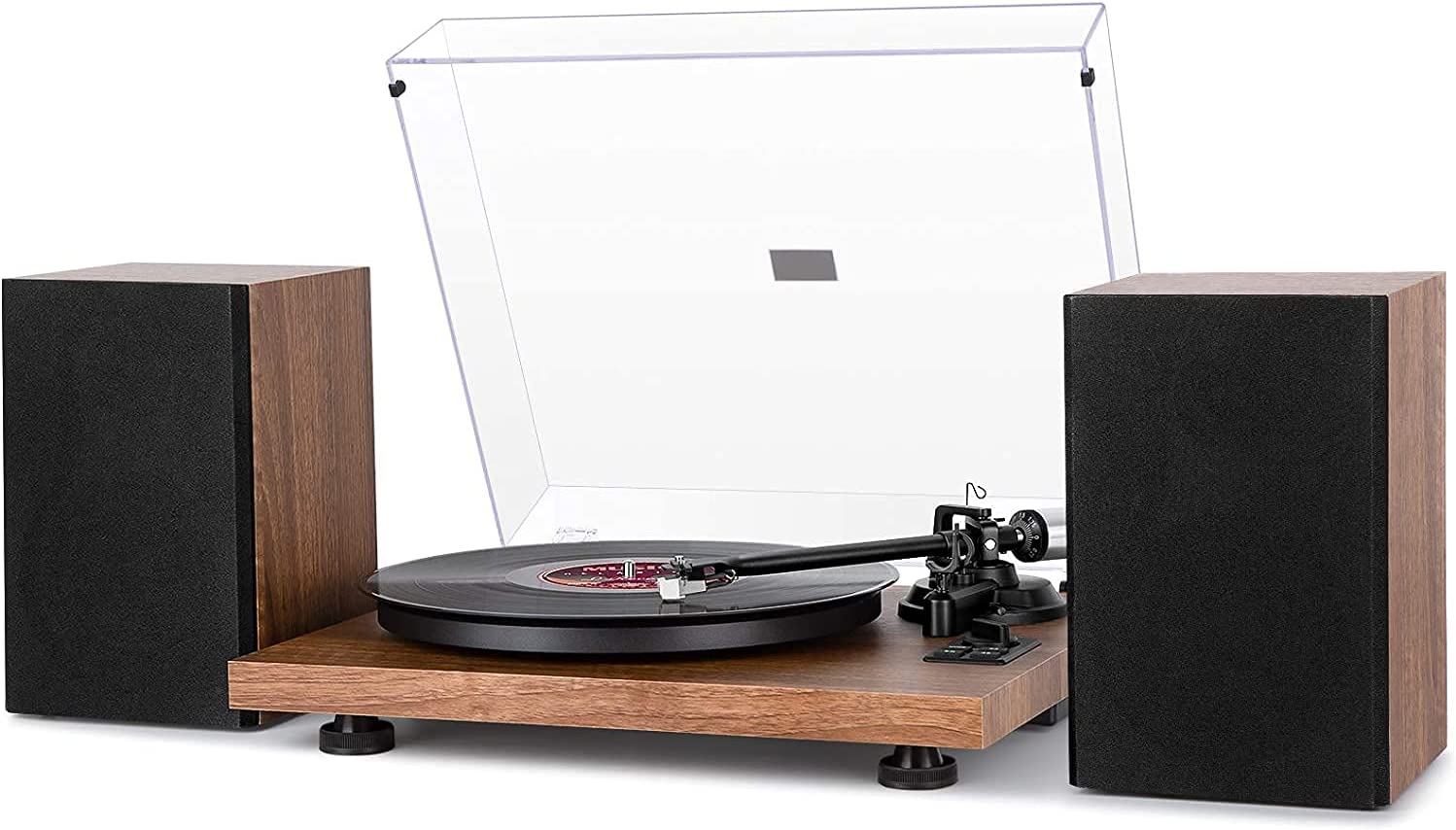
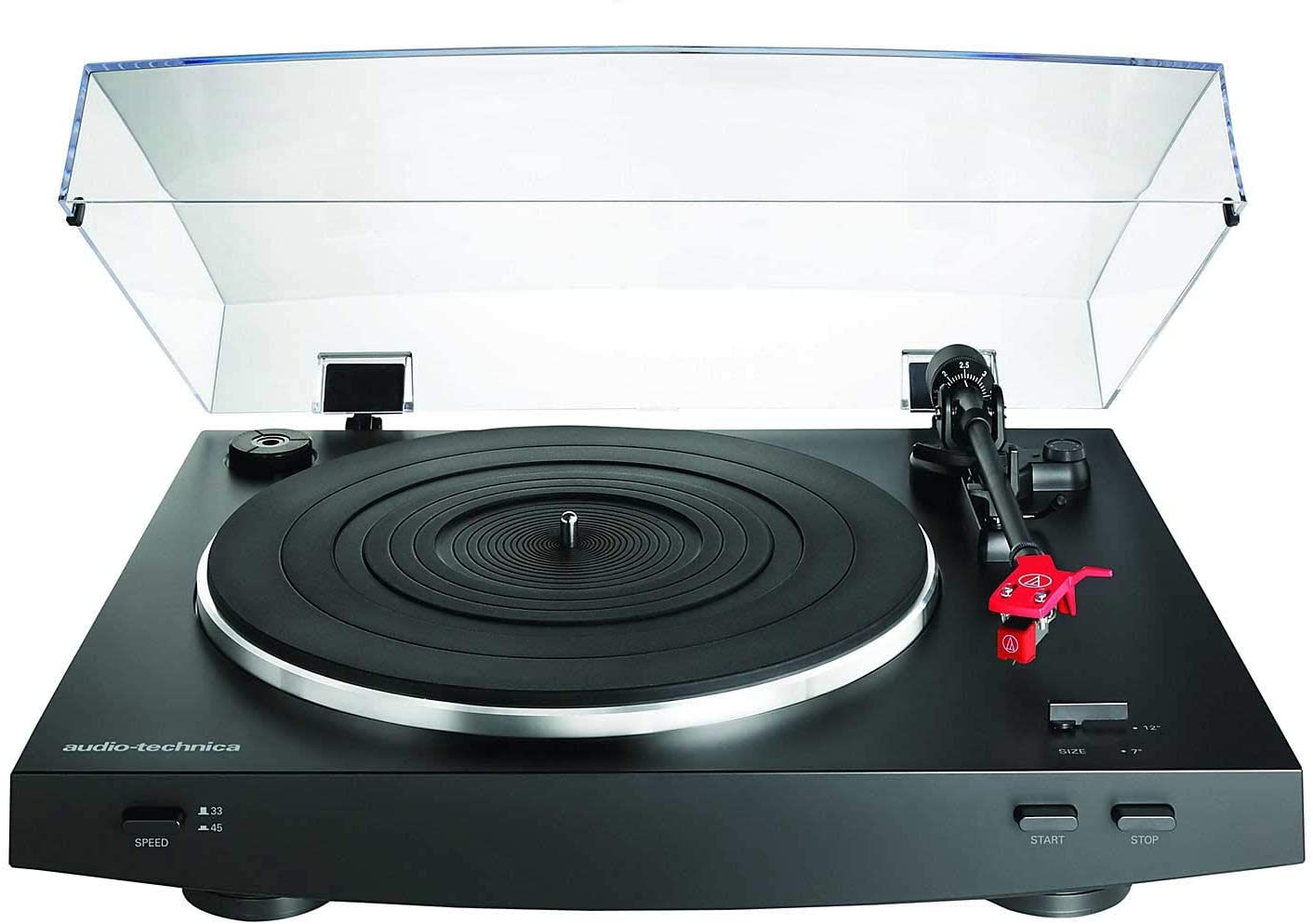
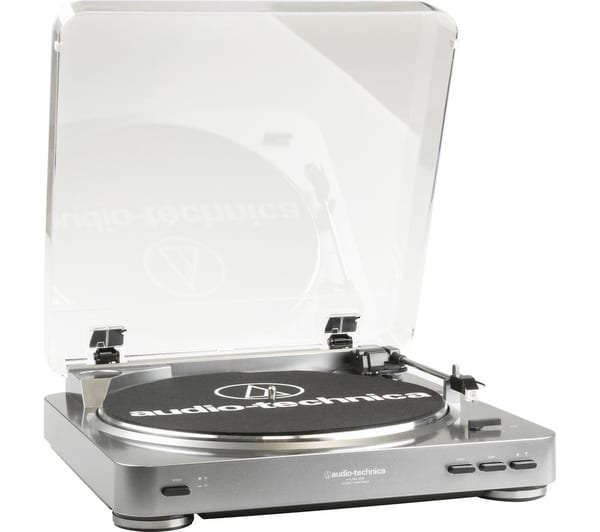
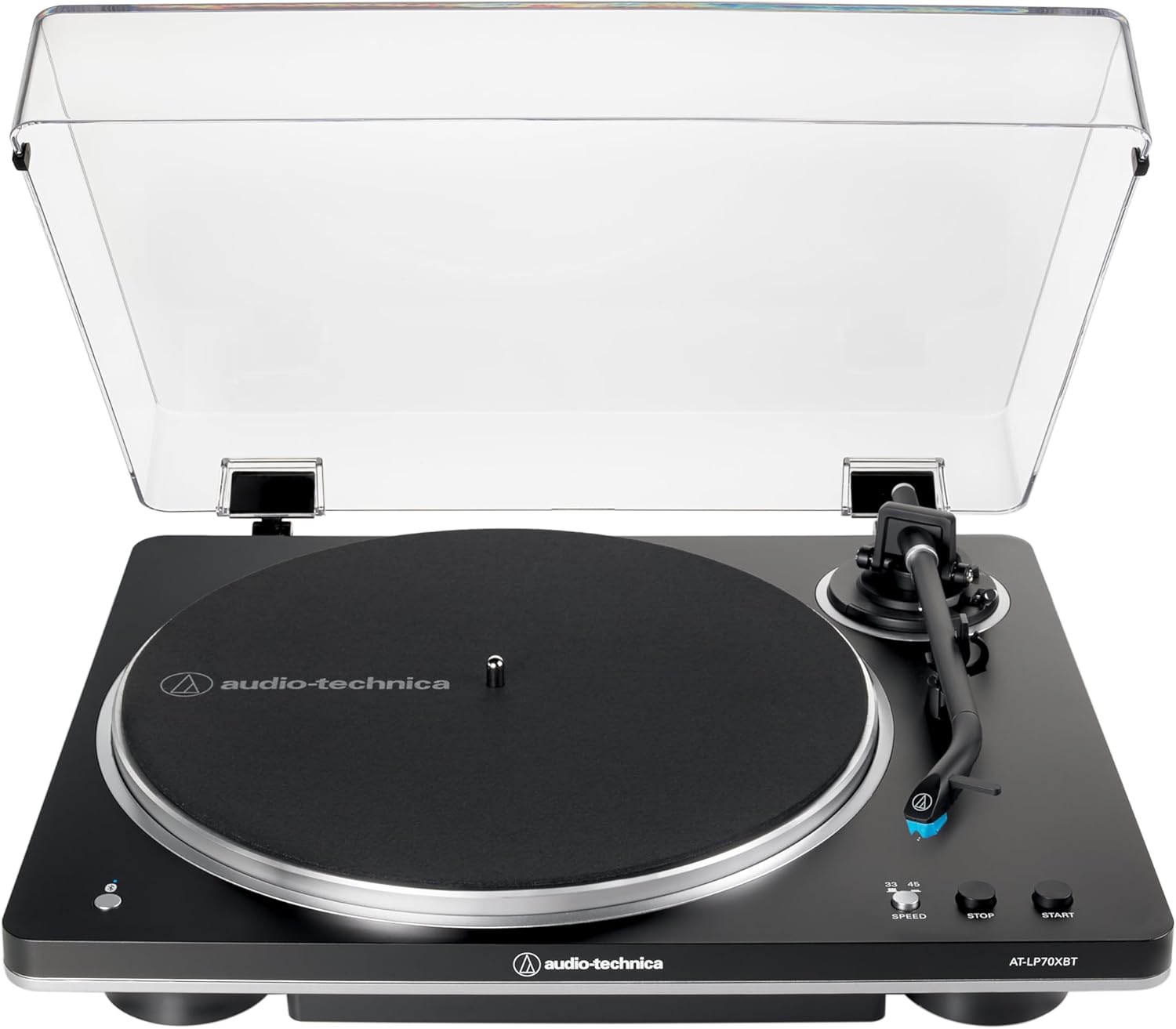
Other models add features such as USB, Bluetooth, automatic operation or a built-in phono stage. Examples from the catalogue include decks such as the Audio-Technica AT-LP120USBHCBK, Audio-Technica AT-LP5x, Denon DP-450USB, Sony PS-HX500, Pro-Ject Automat A1 and Technics SL-1500C.
The right choice depends on whether you value simplicity, flexibility, convenience or upgrade potential most.
What to Consider Before Buying
Start with your existing system, not the turntable. A turntable has to work electrically and physically with the equipment you already own.
Check these points before comparing models:
- Do you have an amplifier, receiver or powered speakers?
- Does that equipment have a phono input?
- Do you need a built-in phono stage in the turntable?
- Do you want wired listening, Bluetooth output, USB recording, or all three?
- Where will the turntable sit, and is the surface stable?
A phono stage is the small amplifier circuit that boosts the tiny signal from a cartridge to a usable level. Some turntables have one built in, some amplifiers have one built in, and some systems need a separate external phono preamp.
If you connect a turntable without a phono stage into a normal line input, it will sound very quiet and thin. If you connect a turntable with its phono stage switched on into another phono input, it can sound distorted or overloaded.
Also think about how hands-on you want to be.
Manual turntables usually offer better value in the parts that affect playback, but you need to cue the arm yourself and lift it at the end. Automatic turntables are easier to live with, especially if you are nervous about handling records or often listen while doing other things.
Budget and Where the Money Should Go
With mid-range turntables, the sensible question is not simply how much the deck costs. It is how the whole playback chain is balanced.
A very capable turntable feeding weak speakers may not sound much better than a modest deck feeding good speakers. Likewise, an excellent cartridge can be wasted if the tonearm is not suitable or the phono stage is noisy.
A practical system budget should include:
- The turntable itself
- Cartridge or stylus replacement costs
- A phono stage if needed
- A stable support or isolation platform if your furniture is lively
- Record cleaning supplies
- Speaker or amplifier upgrades if the rest of the system is clearly holding things back
Do not spend the full budget on the deck if it leaves you unable to replace a worn stylus. A damaged or badly worn stylus can harm records, so running costs matter.
If your speakers are very basic, split the budget more evenly. Speakers and room placement often make a larger audible difference than buyers expect.
System Compatibility
Compatibility is one of the most common areas where mid-range buyers get caught out. A turntable is not like a CD player that simply plugs into any line input and works at full level.
First, check whether the turntable has a built-in phono stage. Then check whether your amplifier or powered speakers have a phono input or only line-level inputs such as AUX, CD or RCA.
Use this simple matching guide:
- Turntable with built-in phono stage into powered speakers: use line output if available
- Turntable without built-in phono stage into powered speakers: add an external phono stage
- Turntable into amplifier with phono input: use the turntable’s phono output if it has a switchable stage
- Turntable into amplifier without phono input: use a built-in or external phono stage
Bluetooth is convenient but it changes the purpose of the turntable. It sends the signal wirelessly to speakers or headphones, which can be useful in flats, shared rooms or simple systems.
However, Bluetooth adds digital conversion and may introduce delay or compression depending on the system. If sound quality is the main reason for upgrading, a wired connection is usually the safer choice.
USB is useful if you want to digitise records. It is not essential for normal listening, and it should not be prioritised over the tonearm, cartridge and platter if you rarely plan to record vinyl to a computer.
Features That Matter Most
The most important mid-range turntable features are mechanical, not flashy. Vinyl playback depends on the record rotating smoothly while the stylus tracks the groove accurately.
Essential features to look for:
- Stable speed at 33⅓ and 45 rpm
- A tonearm with correct tracking force adjustment
- Anti-skate adjustment or a well-designed equivalent
- A replaceable cartridge or at least an easily replaceable stylus
- A rigid, low-resonance plinth and platter
- Proper feet or isolation to reduce vibration
Tracking force is the downward pressure of the stylus on the record. Too little can cause mistracking and distortion, while too much can increase wear.
Anti-skate applies a small outward force to balance the inward pull on the tonearm as the record spins. Correct anti-skate helps both channels track more evenly.
A good cartridge is important, but do not look at the cartridge in isolation. A better cartridge only works properly if the tonearm can support and align it correctly.
If you expect to upgrade cartridges later, check that the arm allows suitable adjustment and uses a common cartridge fitting.
Drive Type, Tonearm and Cartridge Choices
Most mid-range turntables use either belt drive or direct drive. Belt drive uses a rubber belt between the motor and platter, while direct drive places the motor system directly under the platter.
Belt-drive designs are often chosen for home hi-fi because they can help isolate motor vibration from the platter. Manual belt-drive examples in this broad category include models such as the Pro-Ject Debut range, Rega Planar models and some Fluance and Teac decks.
Direct drive can offer strong speed control and quick start-up. It is common in DJ-style decks and some home hi-fi models, including designs such as the Audio-Technica AT-LP120USBHCBK, Audio-Technica AT-LP5x and Technics SL-100C.
Neither drive type is automatically better. Implementation matters more than the label.
Tonearm quality is often the dividing line between an entry-level and a serious mid-range deck. A better arm should move freely, hold its settings and allow the cartridge to track securely.
Cartridge choice affects tonal balance, detail and tracking ability. Moving magnet cartridges are the usual practical choice at this level because replacement styli are widely available and phono stage matching is simpler.
It must suit the tonearm, your phono stage and your ability to set it up accurately.
Convenience Features: Useful, But Not Always Essential
Mid-range turntables often split into two camps. Some focus on pure playback with minimal features, while others add convenience for modern homes.
Convenience features can be useful if they solve a real problem:
- Built-in phono stage for simpler connection to powered speakers or line inputs
- Bluetooth for wireless listening where cables are awkward
- USB for recording vinyl to a computer
- Automatic start and stop for easier everyday use
- Speed-change switch for moving between LPs and singles without handling the belt
Automatic operation is worth considering if you often fall asleep while listening or worry about leaving the stylus in the run-out groove. Models such as the Denon DP-300F, Pro-Ject Automat A1 and Audio-Technica AT-LP3XBT represent the kind of deck buyers may compare when ease of use is important.
Built-in phono stages are convenient, but an external phono stage can be upgraded later. If you enjoy system building, a deck without too many built-in extras may offer more flexibility.
Bluetooth turntables can be excellent for convenience, but they are not always the most logical upgrade from entry level. If your aim is better sound from records, prioritise a stable wired system first.
Once tracking force and anti-skate are set, daily use is mainly placing the record, cueing the arm and lifting it at the end.
Choosing for Different Buyers
Different listeners should prioritise different things. The best mid-range choice for a careful hi-fi upgrader may not be the best choice for someone who wants simple family use in a living room.
For the sound-first listener:
- Prioritise tonearm quality, cartridge compatibility and isolation
- Consider a simple manual deck with fewer built-in features
- Use a good wired connection and a suitable phono stage
For the convenience-first listener:
- Look for automatic operation or auto-stop
- Consider a built-in phono stage if your system is simple
- Bluetooth may be useful, but check whether you still have wired output for future upgrades
For the upgrader with an existing amplifier and speakers:
- Check whether your amplifier’s phono input is good enough
- Choose a deck with a cartridge you can replace or improve later
- Avoid paying extra for features you will not use
For the small-room or flat listener:
- Pay attention to isolation from footfall and speaker vibration
- Consider where cables will run before choosing Bluetooth or wired
- Use compact powered speakers only if they have the right inputs or you can add a phono stage
For the digitising buyer:
- Choose USB only if you genuinely plan to record records to a computer
- Check that the deck still has strong analogue playback basics
- Budget time for cleaning records before recording them
For the style-conscious buyer:
- It is fine to care about finish and appearance
- Do not let looks override cartridge quality, setup options and serviceability
- Be cautious with all-in-one retro systems if sound quality is the main goal
Common Mistakes
The biggest mistake is treating features as proof of quality. A deck with Bluetooth, USB, built-in speakers and multiple modes is not automatically better than a simpler turntable with a better arm and platter.
Another mistake is ignoring setup. Even a capable turntable can sound poor if the tracking force is wrong, the cartridge is misaligned, or the deck is not level.
Avoid these common buying errors:
- Buying a turntable before checking phono stage compatibility
- Placing the deck on the same surface as large speakers
- Assuming a heavier-looking deck is always better
- Choosing a cartridge upgrade without checking tonearm compatibility
- Forgetting the cost of stylus replacement
- Using old, dirty or damaged records to judge a new setup
They can be convenient for casual listening, but separate speakers usually give more placement flexibility and a more convincing stereo image.
Do not attempt internal electrical repairs if a turntable hums, loses power or behaves unpredictably. Check cables, grounding and setup first, then use the retailer, manufacturer support or a qualified technician if the fault remains.
Final Checklist
Use this checklist before you buy. It is designed to catch the practical issues that cause most disappointment after delivery.
- Confirm your amplifier, receiver or powered speakers have the right input.
- Check whether you need a built-in phono stage, an external phono stage, or neither.
- Decide whether sound quality, convenience or digitising records is your main priority.
- Check that the cartridge or stylus is replaceable and that replacements are easy to source.
- Make sure the tonearm offers the adjustment you need for correct setup.
- Check that the turntable will fit on a level, stable surface away from speaker vibration.
- Decide whether manual, semi-automatic or automatic operation suits your listening habits.
- Confirm you can play both LPs and singles in the way you prefer, including speed change.
- Set aside money for record cleaning, a stylus brush and possible setup accessories.
- Read the return policy and warranty terms before buying, especially for more complex automatic or wireless models.
If a deck passes these checks and suits your system, it is far more likely to be a confident purchase than one chosen only from a feature list.
Frequently asked questions
Is a mid-range turntable worth it if I only have a small record collection?
Yes, if the records you own matter to you and you listen regularly. A better turntable can reduce mistracking, improve speed stability and make your records more enjoyable to play.
If you only play vinyl occasionally in the background, a simpler model may be enough. Put money into speakers or headphones first if those are the weakest part of your system.
Should I choose belt drive or direct drive for home listening?
Both can work well for home listening. Belt drive is common in traditional hi-fi decks, while direct drive can offer strong speed control and convenient start-up.
Do not choose by drive type alone. Look at the whole design, including the arm, platter, cartridge and isolation.
Do I need a separate phono preamp?
You need a phono preamp somewhere in the system. It may be built into the turntable, built into your amplifier, or supplied as a separate box.
If your amplifier has a phono input, you may not need anything else. If it only has line inputs, you need a turntable with a built-in phono stage or an external phono preamp.
Are Bluetooth turntables good enough for serious listening?
Bluetooth is useful, but it is mainly a convenience feature. It can make sense where cables are awkward or where you use wireless speakers and headphones.
For the best sound from a mid-range turntable, a wired connection is usually preferable. Many buyers choose a Bluetooth-capable deck only if it also gives them a proper wired upgrade path.
How important is the cartridge on a mid-range turntable?
The cartridge is very important because it reads the groove and strongly affects the sound. Tracking ability, tonal balance and detail all depend partly on the cartridge.
However, the cartridge is not the whole story. A good cartridge needs a suitable tonearm, correct setup and a clean record to perform properly.
Is automatic operation worse than manual operation?
Not necessarily. Automatic operation can be very useful and may protect the stylus from being left running at the end of a side.
The trade-off is that automatic mechanisms add complexity. If sound quality for the money is your main aim, a simpler manual deck may put more of the budget into the playback parts.
Can I use powered speakers with a mid-range turntable?
Yes, powered speakers can work well if the signal is matched correctly. You need either a turntable with a built-in phono stage or a separate phono preamp between the turntable and speakers.
Speakers such as powered bookshelf designs are often used in compact vinyl systems. Just make sure the inputs match and that the turntable is not placed on the same vibrating surface as the speakers.
What should I upgrade first: turntable, cartridge or speakers?
Upgrade the weakest link first. If your turntable is basic but your speakers are capable, a better deck or cartridge may be the right move.
If your speakers are small, poor quality or badly placed, they may limit everything upstream. In that case, speaker placement or a speaker upgrade may bring a bigger improvement.
Final recommendation
The best next step is to define your system, not to chase the most impressive specification list. Decide how you will connect the turntable, where it will sit, and whether your priority is sound quality, convenience, recording to USB, or long-term upgrading.
For most listeners moving beyond entry level, the safest choice is a well-made deck with stable speed, a properly adjustable tonearm, a replaceable cartridge and sensible compatibility with the rest of the system. Add Bluetooth, USB or automatic operation only when those features match how you genuinely listen.
Before buying, shortlist a few models that meet the final checklist rather than focusing on one brand or one headline feature. That approach gives you a better chance of ending up with a turntable you will enjoy using for years, without overspending on things you do not need.