Watch the guide video
Quick answer
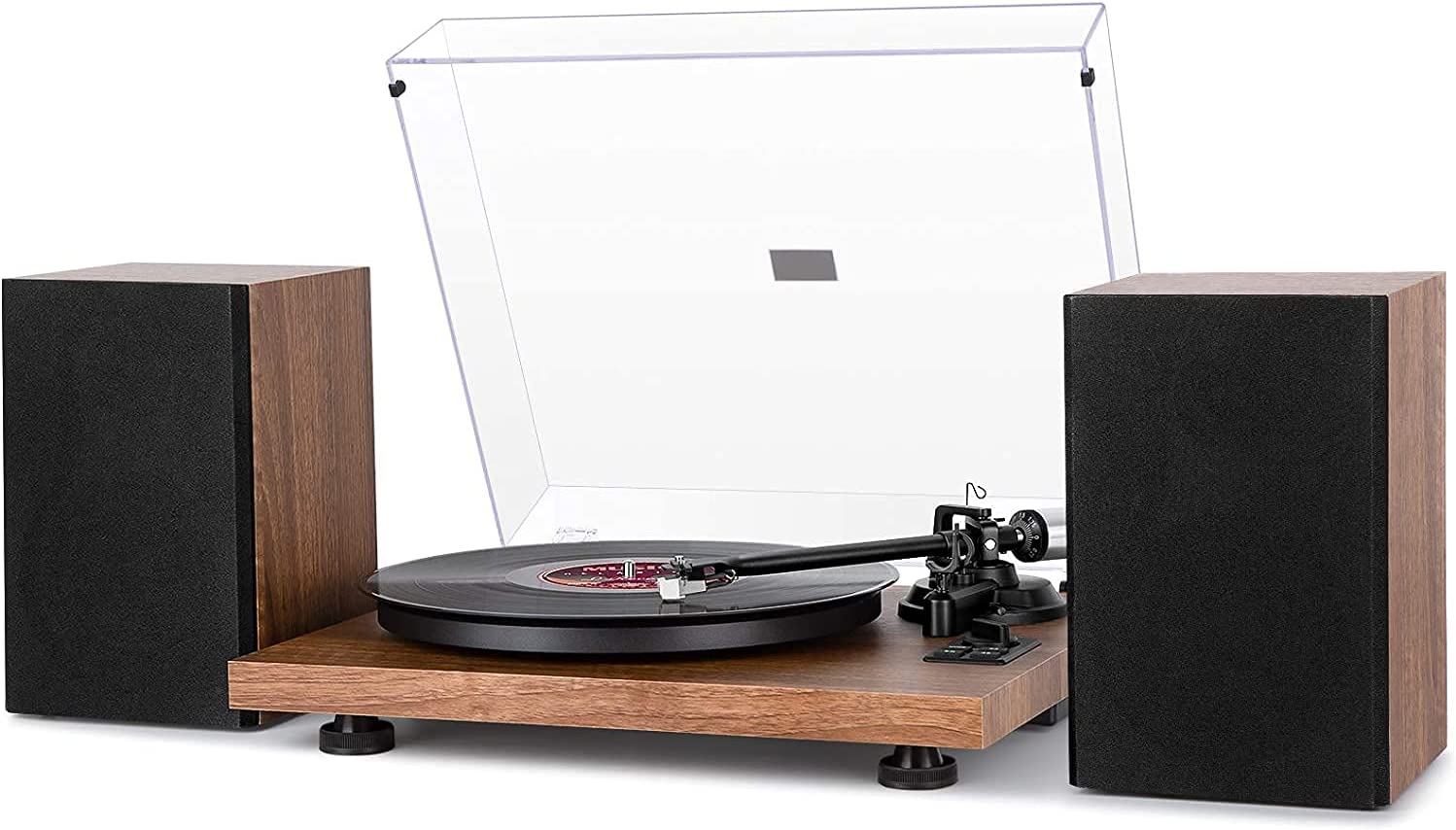
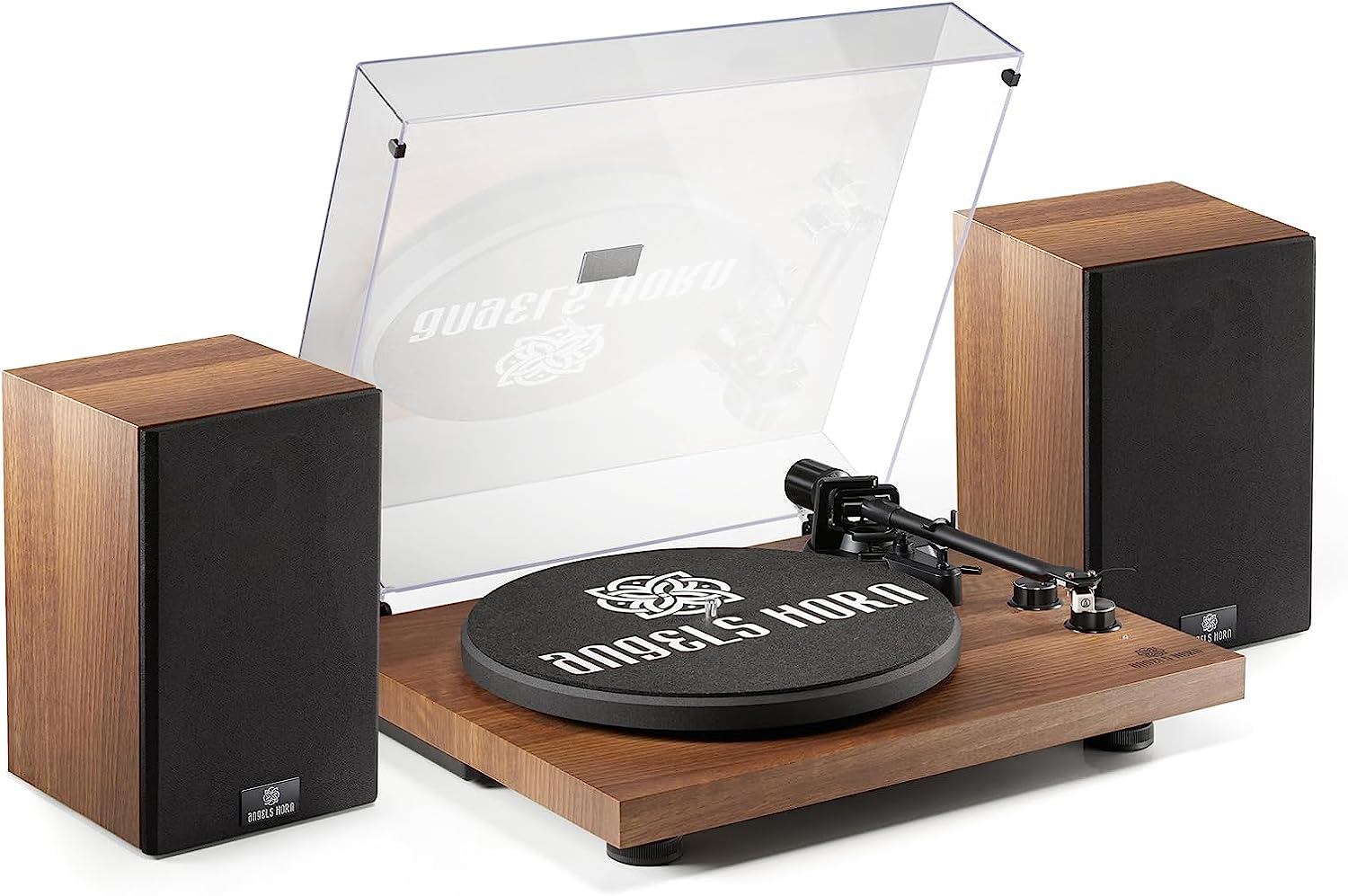
For most beginners, the best turntable is a well-made deck with a proper tonearm, a replaceable stylus, stable speed control, and simple compatibility with the speakers or amplifier you already own.
If you want the easiest start, look for an automatic or semi-automatic model with a built-in phono stage. If you care more about long-term sound quality and upgrading, choose a manual turntable from a reputable hi-fi brand and budget for suitable speakers, cables and basic record care.
Key Takeaways
The right beginner turntable is the one that fits your whole system, not just your shelf. A good deck connected badly will be more frustrating than a simpler model that matches your speakers properly.
- Prioritise a proper tonearm, replaceable stylus and stable platter over retro styling.
- Check whether you need a built-in phono stage before you buy.
- Avoid treating Bluetooth, USB and built-in speakers as essential unless you genuinely need them.
- Leave budget for speakers, record cleaning and a safe place to put the turntable.
- Choose automatic operation if convenience matters more than hands-on setup.
- Choose manual operation if you want a more traditional hi-fi route and easier future upgrades.
Who This Guide Is For
This guide is for first-time vinyl buyers who want to play records at home without making an expensive mistake. You may be buying your first deck, replacing a suitcase-style player, or building a small hi-fi system from scratch.
It is also useful if you have inherited records and want a sensible way to enjoy them. Older records can sound wonderful, but they deserve a turntable that tracks correctly and does not put unnecessary wear on the groove.
This is not a guide for DJs, collectors chasing specialist vintage decks, or advanced users building high-end analogue systems. Some models from brands such as Technics, Rega, Pro-Ject, Audio-Technica, Denon and Fluance can suit more serious systems, but the buying principles are the same: match the deck to your needs and equipment.
What to Consider Before Buying
Start with how you want to listen. A turntable cannot usually drive normal passive speakers on its own, so you need to know what is already in your room and what you still need to buy.
The most important compatibility question is whether your system has a phono input. A phono signal is much quieter than a normal line-level signal, so it needs boosting and equalisation before it reaches an amplifier or powered speaker.
You have three common setup routes:
- Turntable with built-in phono stage into powered speakers.
- Turntable into an amplifier with a phono input, then passive speakers.
- Turntable into a separate phono preamp, then amplifier or powered speakers.
If you already own powered speakers such as Edifier R1280DB, House of Marley Get Together Duo, Sanyun SW206 or similar, check whether they have a suitable line input. If your turntable lacks a built-in phono stage, you will need a separate phono preamp between them.
Also think about space and placement. Turntables dislike vibration, so a wobbly sideboard, shared desk or speaker cabinet can cause skipping, feedback or muddy bass.
Before choosing a model, answer these questions:
- Do you already own speakers or an amplifier?
- Do you want wired sound, Bluetooth convenience, or both?
- Will you play records often, or only occasionally?
- Are you comfortable cueing the tonearm by hand?
- Do you plan to upgrade later?
- Is the turntable going in a stable, level position away from speaker vibration?
Features That Matter Most
A proper tonearm matters because it holds the cartridge at the correct angle and pressure as the record spins. Poor tracking can make records sound harsh and may increase wear over time.
A replaceable stylus is essential. The stylus is the tiny tip that sits in the groove, and it wears out with use, so you should be able to replace it without replacing the whole turntable.
Look for adjustable or well-set tracking force. Tracking force is the downward pressure of the stylus on the record; too light can cause mistracking, while too heavy can increase wear.
Speed stability is another core feature. If the platter does not rotate consistently, sustained notes can wobble or sound slightly off-pitch.
The platter and plinth also matter, but not in a mystical way. A heavier, better-damped design can help reduce unwanted vibration, while a flimsy build may make the deck more sensitive to knocks and resonance.
Essential features for most beginners are:
- 33⅓ and 45 rpm playback.
- A replaceable stylus.
- A tonearm that tracks reliably.
- Stable speed control.
- A dust cover or practical way to keep dust off the record surface.
- Clear connection options for your speakers or amplifier.
Optional conveniences include:
- Bluetooth output for wireless speakers or headphones.
- USB output for digitising records.
- Automatic start and stop.
- Built-in speakers.
- Pitch control.
- App-based or digital extras.
Manual, Automatic and Semi-Automatic Turntables
Manual turntables require you to lift the tonearm, place the stylus on the record, and return it at the end. This is the classic hi-fi approach and often gives you a wider choice of models.
Automatic turntables handle the start and return of the tonearm for you. They are appealing if you are nervous about lowering the stylus, have limited dexterity, or simply want a less fussy experience.
Semi-automatic models usually require you to start playback manually but lift or return the arm at the end. This can be a good compromise if you worry about the stylus sitting in the run-out groove after a side finishes.
Examples in the beginner-friendly automatic area include models such as the Denon DP-300F, Pro-Ject Automat A1 and Audio-Technica AT-LP3XBT. The right choice still depends on your system, not just the operating style.
Choose manual if:
- You want a traditional hi-fi feel.
- You are happy to learn basic setup.
- You may upgrade the cartridge or system later.
Choose automatic if:
- You want the easiest daily use.
- Other family members will use the turntable.
- You are worried about cueing records by hand.
Choose semi-automatic if:
- You want some convenience without giving up the manual feel.
- You often forget to lift the arm at the end of a side.
- You want a practical middle ground.
Built-In Phono Stage, Bluetooth and USB Explained
A built-in phono stage lets the turntable connect to ordinary line inputs on powered speakers, amplifiers or soundbars with suitable analogue inputs. For beginners, this can remove one box from the setup and reduce confusion.
Some turntables let you switch the phono stage on or off. That is useful because you can start simply, then use a separate phono preamp later if you upgrade your system.
Bluetooth can be convenient, especially in rented homes or rooms where cables are awkward. However, Bluetooth converts the signal to digital and compresses or processes it depending on the system, so it is not the purest route if sound quality is your main priority.
USB is useful if you want to record your vinyl to a computer. It is not essential for normal listening, and many buyers never use it after the first few experiments.
Examples from the catalogue that illustrate these categories include the Sony PS-LX310BT and Audio-Technica AT-LP60XBT for Bluetooth convenience, and models such as the Audio-Technica AT-LP120USBHCBK, Lenco L-400 or Sony PS-HX500 where USB is part of the appeal. Treat these as feature examples, not automatic recommendations for every buyer.
Drive Type: Belt Drive or Direct Drive
Belt drive means the motor turns the platter using a rubber belt. It is common in home hi-fi because the belt can help isolate motor vibration from the platter.
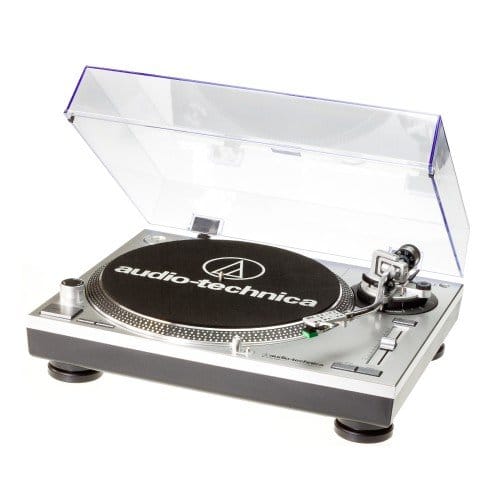
Direct drive means the platter is driven directly by the motor. It is often associated with DJ decks and models where quick start-up, strong torque and speed control are priorities.
For a first home turntable, either type can work well. The quality of the whole design matters more than the label on the drive system.
Belt drive may suit you if:
- You are mainly listening at home.
- You prefer a simple hi-fi deck.
- You do not need DJ-style features.
Direct drive may suit you if:
- You want faster start-up and stronger platter control.
- You are interested in DJ-style operation.
- You like models such as the Audio-Technica AT-LP5X, Pioneer PLX-500-K or Technics SL-100C for their direct-drive approach.
Do not buy a direct-drive deck just because it sounds more advanced. Likewise, do not dismiss belt drive as basic; many respected hi-fi turntables use it very successfully.
Speakers, Amplifiers and System Matching
A turntable is only one part of the chain. If your speakers are poor, badly placed or incompatible, even a good deck will not show what it can do.
Powered speakers have amplification built in, so they can be a neat beginner solution. They still need the correct input signal, which means either a turntable with a built-in phono stage or an external phono preamp.
Passive speakers need a separate amplifier. That amplifier must either have a phono input or be used with a separate phono stage.
If you have a soundbar, check carefully before buying. Many soundbars have limited analogue inputs, and Bluetooth-only connection may introduce delay or reduce sound quality.
A simple beginner system might look like this:
- Turntable with built-in phono stage.
- RCA cable from turntable to powered speakers.
- Speakers placed on stands or a stable surface away from the turntable.
- Turntable set level, with tracking force checked if adjustable.
A more upgradeable system might look like this:
- Manual turntable without relying on built-in extras.
- Separate phono preamp or amplifier with phono input.
- Passive speakers on stands.
- Upgrade path through cartridge, phono stage or speakers later.
Choosing for Different Buyers
Different beginners need different turntables. The best choice for a student bedroom is not necessarily the best choice for someone building a long-term lounge system.
If you want maximum simplicity, consider an automatic deck with Bluetooth or a built-in phono stage. Models in this broad area include the Sony PS-LX310BT, Audio-Technica AT-LP3XBT and Denon DP-300F, though you should still check connections and cartridge details before buying.
If you want a proper hi-fi starting point, look at straightforward manual decks from established turntable brands. Examples that often appear in this type of shortlist include the Rega Planar 1, Pro-Ject Primary E, Pro-Ject T1 Phono SB and Audio-Technica LPW-series models.
If you already own powered speakers, prioritise easy connection. A turntable with a switchable built-in phono stage may be more practical than a purist model that requires another box immediately.
If you want to digitise records, USB matters. Look at USB-focused models such as the Audio-Technica AT-LP120USBHCBK, Denon DP-200 USB, Lenco L3808 or Sony PS-HX500, but buy them for real recording needs rather than as a vague future option.
If you mainly want a decorative retro player, be honest about the trade-off. Many retro and all-in-one units are convenient and charming, but they may not match the tracking, speaker separation or upgradeability of a separate turntable and speaker system.
If you are buying for a teenager or as a gift, ease of use and safe handling are important. Automatic operation, a cueing lever, clear controls and a replaceable stylus are more useful than a long list of novelty features.
Budget and Upgrade Priorities
Your budget should cover the whole listening setup, not just the turntable. It is common for beginners to spend everything on the deck and then realise they still need speakers, stands, a phono preamp or cleaning supplies.
A sensible first system balances the turntable and speakers. Overspending on one while neglecting the other usually gives poorer results than buying evenly matched components.
Do not forget the small essentials:
- Carbon fibre record brush.
- Stylus cleaning brush or suitable stylus cleaner.
- Inner sleeves for records that arrive in rough paper sleeves.
- Stable furniture or a wall shelf if the floor is springy.
- Spare stylus information for your cartridge.
Upgrade in the right order. Speakers and placement often make a bigger difference than changing cables or chasing small accessories.
A good upgrade path is:
- Improve placement and isolation.
- Upgrade speakers or speaker stands.
- Try a better phono stage if your system justifies it.
- Replace or upgrade the cartridge when the stylus is due.
- Consider a higher-grade turntable only when the rest of the system is ready.
Common Mistakes
The most common beginner mistake is buying a record player with built-in speakers and expecting full hi-fi sound. Built-in speakers can be handy for casual use, but their size and position limit stereo separation, bass and overall clarity.
Another mistake is ignoring the phono stage. If you plug a turntable without a phono stage into a normal line input, the sound will usually be very quiet and thin.
Many new buyers also place the turntable too close to the speakers. Bass vibration can travel through furniture, causing feedback, skipping or a thick, uncontrolled sound.
Avoid these common errors:
- Buying on looks alone.
- Assuming Bluetooth is always better because it is newer.
- Forgetting that records need cleaning.
- Playing damaged or dirty records with a worn stylus.
- Ignoring whether the stylus is replaceable.
- Choosing a complex manual deck if you know you want effortless operation.
- Choosing an all-in-one unit if you already know you want to upgrade.
Final Checklist
Use this checklist before you press buy. It should catch most compatibility and usability problems before the box arrives.
- I know whether my speakers are powered or passive.
- I know whether my amplifier or speakers have the right input.
- I know whether I need a built-in or separate phono stage.
- The stylus is replaceable.
- The turntable plays the record speeds I need.
- The tonearm has a cueing lever or automatic function if I want easier handling.
- I have somewhere level, stable and vibration-free to place it.
- I have allowed for basic cleaning tools.
- I understand whether Bluetooth or USB is essential, optional or unnecessary for me.
- I have checked the return policy and warranty terms with the retailer.
When the turntable arrives, set it up slowly:
- Place it on a stable, level surface.
- Fit the belt, platter, mat and counterweight only as instructed by the manufacturer.
- Set tracking force and anti-skate if the model requires it.
- Connect to the correct phono or line input.
- Keep speakers off the same surface if possible.
- Clean the record and stylus before serious listening.
- Start with a record you know is in good condition.
If anything sounds wrong, stop and check the setup before playing more records. Most early problems come from connection settings, tracking force, speaker placement or a dirty stylus.
Frequently asked questions
Is a suitcase record player good enough for a beginner?
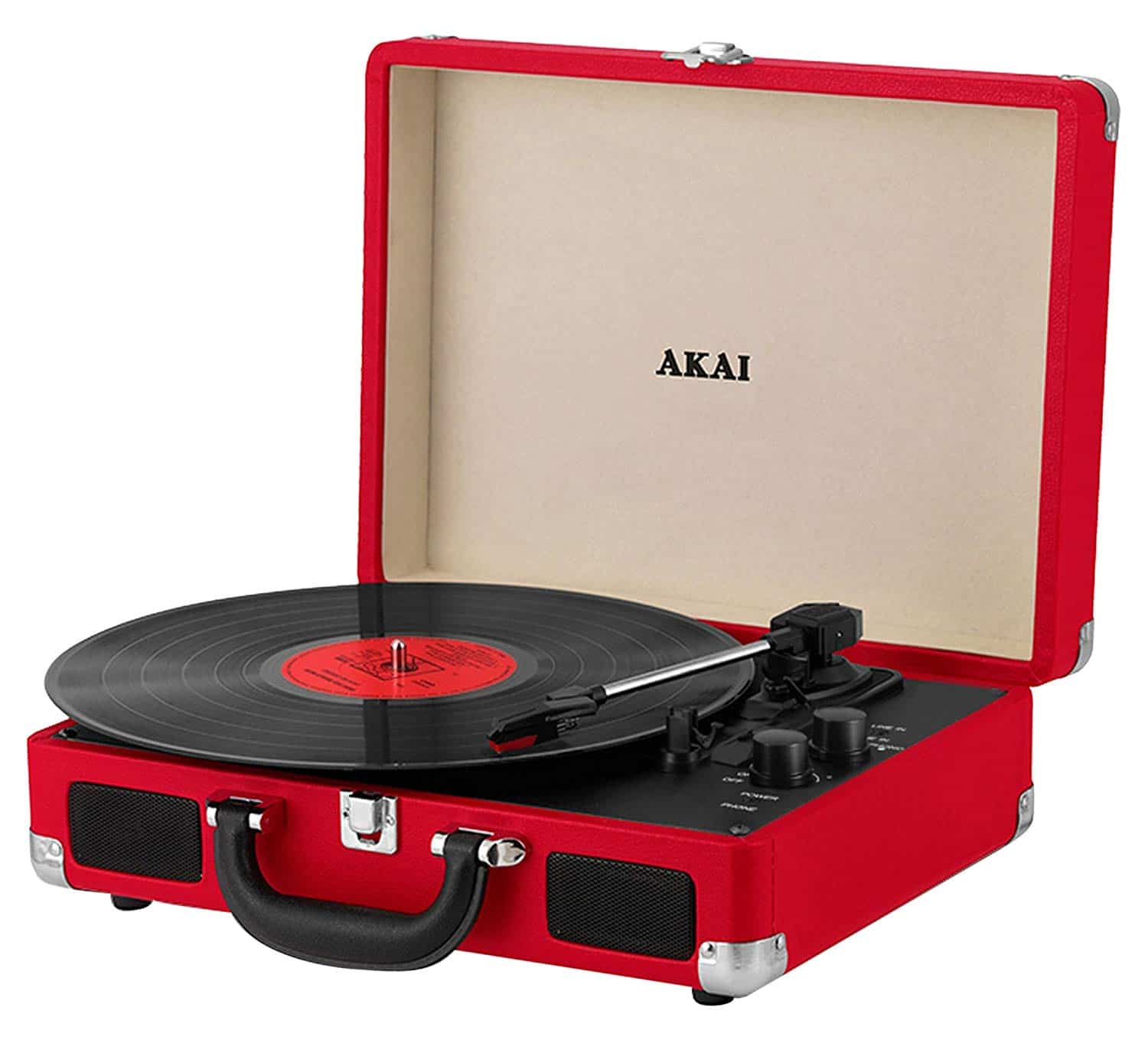
It can be acceptable for very casual listening, especially if portability and low commitment matter most. However, built-in speakers, basic tonearms and limited upgrade options mean it is not the best route if you plan to build a record collection.
If you already own valuable or sentimental records, choose a turntable with a proper tonearm and replaceable stylus instead.
Do I need separate speakers for a turntable?
Not always, but separate speakers usually give better sound than built-in speakers. You can use powered speakers for a simple setup, or passive speakers with an amplifier.
Check whether your turntable output is phono or line level. That single detail determines whether you need a phono preamp.
Will Bluetooth ruin the point of listening to vinyl?
Bluetooth does not ruin vinyl, but it changes the signal path. The analogue sound is converted for wireless transmission, so it is less purist than a wired connection.
For convenience, Bluetooth can be perfectly reasonable. For the best sound from a modest system, a wired connection is usually the safer choice.
How often should I replace the stylus?
Stylus life depends on the stylus type, setup, record condition and how often you play records. Follow the cartridge maker’s guidance and listen for signs such as distortion, harshness or increased sibilance.
Do not wait until records sound badly damaged. A worn stylus can affect playback and may increase record wear.
Should I buy vintage or new for my first turntable?
Vintage turntables can be excellent, but they are not always beginner-friendly. They may need a new belt, cartridge, service work or electrical attention.
If you buy vintage, use a trusted seller who can confirm the deck is working safely and correctly. Do not attempt unsafe electrical repairs yourself.
What records can a beginner turntable play?
Most beginner turntables play 33⅓ rpm LPs and 45 rpm singles. Some also play 78 rpm records, but that usually requires a different stylus suitable for 78s.
Do not play old shellac 78s with a normal LP stylus. It will not track correctly and can damage the record or stylus.
Is an expensive cartridge worth it on a beginner deck?
Usually not straight away. A better cartridge only helps if the tonearm, setup, phono stage and speakers are good enough to show the difference.
For a first system, focus on correct setup, clean records and decent speakers before spending heavily on cartridge upgrades.
Why does my new turntable sound quiet or thin?
The most likely cause is a phono stage mismatch. If the turntable is set to phono and plugged into a normal line input, the sound will be very quiet and lacking bass.
Check whether the turntable has a phono/line switch. Use line for ordinary aux inputs, and phono only with a proper phono input or phono preamp.
Final recommendation
The best beginner turntable is not the one with the longest feature list. It is the one that matches your speakers, feels comfortable to use, protects your records, and leaves you room to enjoy the hobby without constant troubleshooting.
If you want the simplest start, choose an automatic or easy-use model with a built-in phono stage and pair it with suitable powered speakers. If you want a stronger long-term hi-fi route, choose a solid manual deck, budget properly for speakers and setup, and keep optional extras secondary.
Before buying, confirm the connection path from stylus to speakers. Once that is clear, your choice becomes much easier and you can focus on the records you actually want to play.