Quick answer
Buy vintage if you enjoy the idea of a well-made older deck, are willing to check condition carefully, and have access to servicing or parts. A good vintage turntable can be rewarding, but the final cost is not just the asking price.
Buy new if you want a simpler route, warranty support, modern features such as Bluetooth or USB, or less risk as a first-time buyer. A new turntable is not automatically better, but it is usually easier to choose, return, set up and maintain.
In this guide
- How vintage and new turntables differ in build, features and ownership risk
- Why condition matters more than age when buying second-hand
- Which modern conveniences you may gain or lose, including Bluetooth, USB and automatic operation
- What hidden costs to allow for, such as stylus replacement, belt replacement and servicing
- How to judge whether a vintage deck is a bargain or a project
- When a new turntable is the safer choice for beginners
- What to check before buying either option
Watch the article video
1. Start with what you want from vinyl
Before comparing vintage and new turntables, decide what role vinyl will play in your home. A buyer who wants relaxed weekend listening has different needs from someone building a long-term hi-fi system or digitising records.
Ask yourself a few practical questions:
- Do you want a simple plug-and-play system?
- Are you happy adjusting tracking force and cartridge alignment?
- Do you need Bluetooth, USB recording or built-in speakers?
- Will the turntable connect to an existing amplifier or powered speakers?
- Are you comfortable buying used equipment with no warranty?
There is no single correct answer. The best choice is the one that suits your patience, budget, room and expectations.
It also helps to separate “vintage-looking” from genuinely vintage. A retro-style all-in-one player may look old, but it is a modern product. A true vintage turntable is an older deck, usually bought second-hand, often from a private seller, dealer or auction site.
2. What buying vintage really means
A vintage turntable is usually a deck made decades ago and sold used today. Some were mass-market models, while others were serious hi-fi products. Age alone does not prove quality.
The main attraction is that many older decks were built when vinyl was the dominant music format. Some have heavy platters, solid tonearms and simple mechanical layouts that can still perform well when maintained properly.
The drawback is uncertainty. A vintage deck may have worn bearings, a tired motor, a stretched belt, oxidised switches, damaged cables or a cartridge that needs replacing. These problems are not always obvious from photographs.
Condition is more important than reputation. A modest model that has been serviced and set up correctly is usually a better buy than a famous model with faults, missing parts or signs of careless storage.
You should also consider whether parts are available. Belts, styli and cartridges are often easy to replace, but lids, hinges, tonearm parts, idler wheels and proprietary power supplies can be harder to source.
3. What buying new really means
A new turntable gives you a clearer buying process. You know the model, condition, accessories and return route before purchase. You may also get a warranty, which matters if you are not confident diagnosing mechanical or electrical faults.
Modern turntables vary widely. Some are proper hi-fi decks designed for use with separate speakers and an amplifier or phono stage. Others are convenient record players with built-in speakers, Bluetooth, USB or automatic operation.
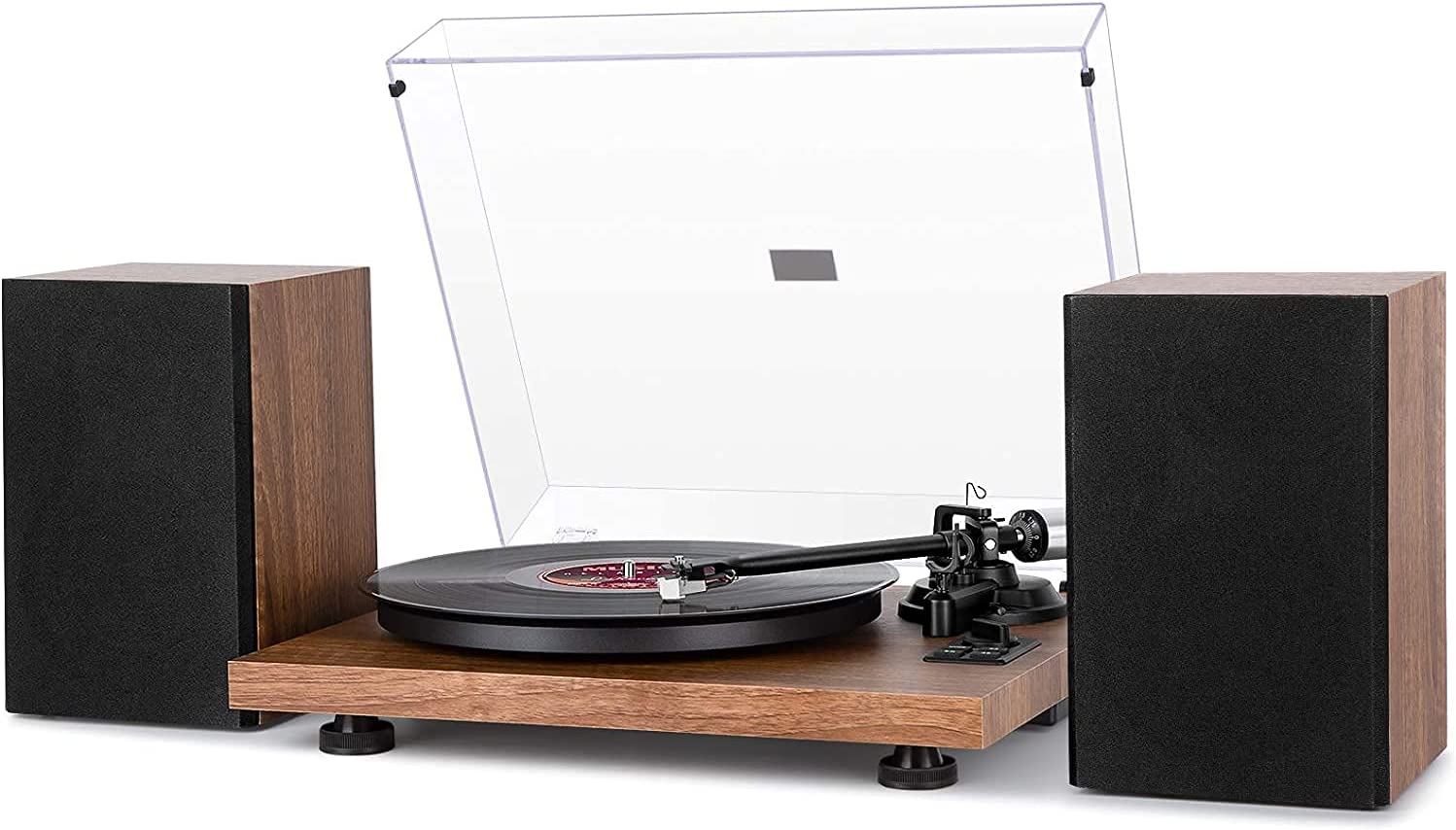
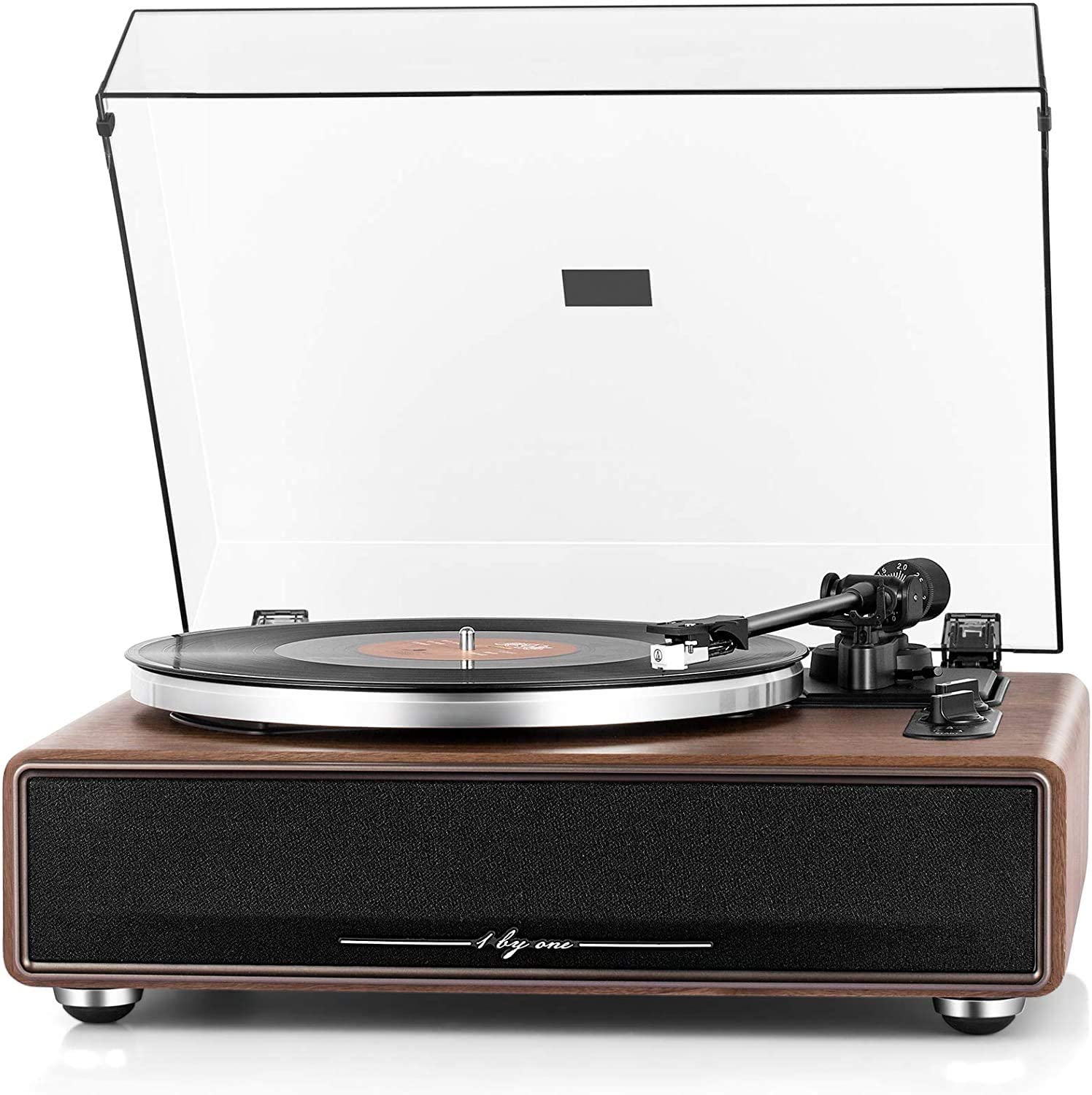
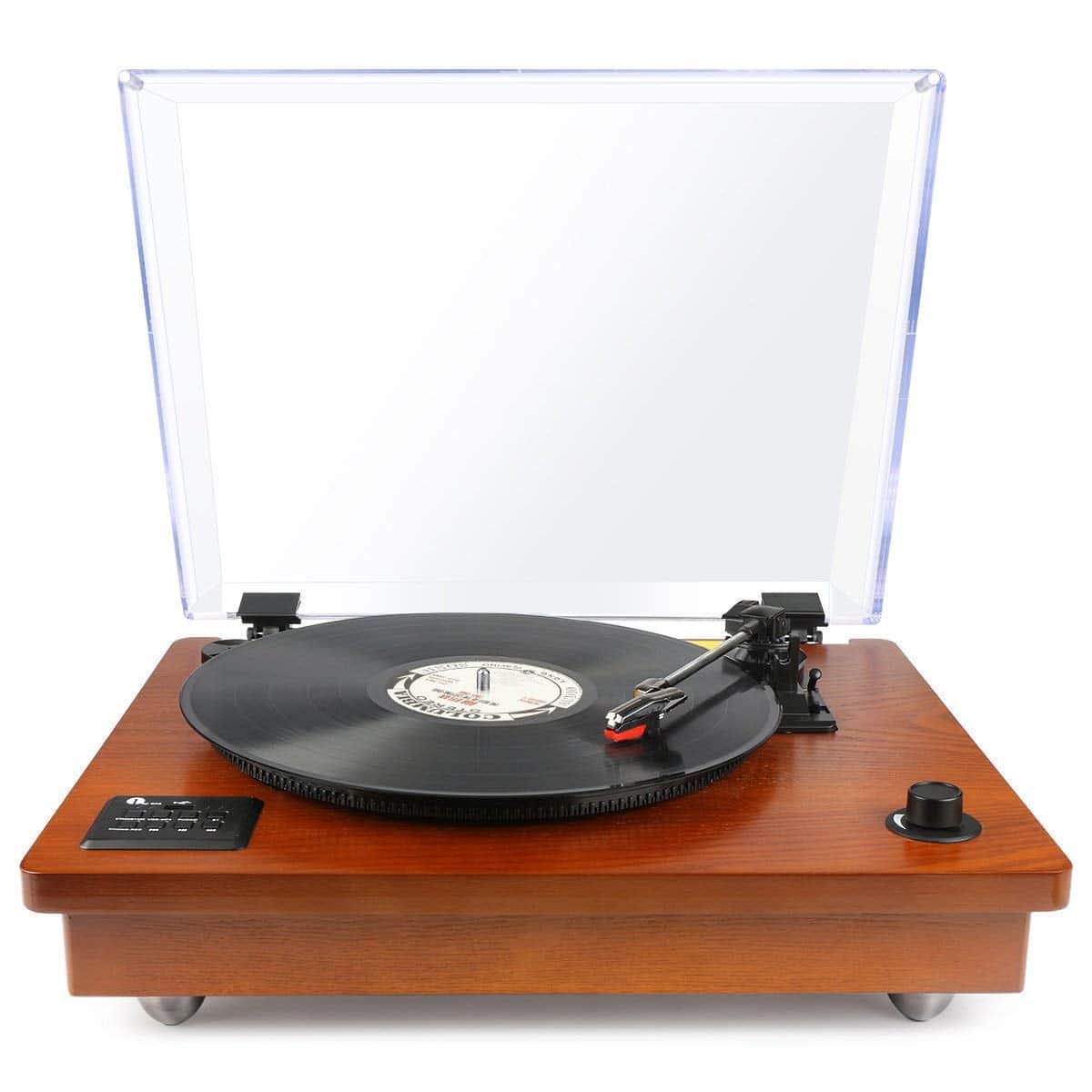
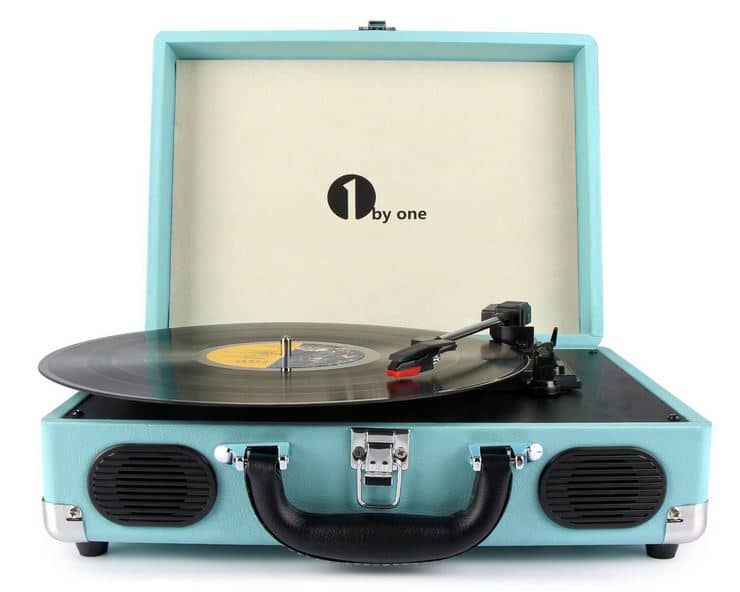
Catalogue examples of modern categories include the Audio-Technica AT-LP3XBT Automatic Wireless Turntable, Denon DP-300F Automatic Vinyl Turntable, Lenco L3808 Record Player in the USB turntable category, and Bluetooth record players from brands such as 1byone, House of Marley and Auna. These examples show the range of modern options, not a ranking or recommendation.
The biggest advantage of new equipment is predictability. You can usually find a manual, replacement stylus information and setup instructions. If something arrives damaged or faulty, the route to a remedy is normally clearer than with a private vintage sale.
The main caution is that new does not always mean good for your records. Very cheap all-in-one players can have limited adjustment and basic tonearms. If you plan to play valued records often, look for a model with a replaceable stylus, adjustable tracking force where possible, and a stable platter.
4. Sound quality: old engineering versus modern consistency
Sound quality depends on more than whether a turntable is vintage or new. The cartridge, stylus condition, tonearm setup, platter speed stability, isolation and phono stage all affect what you hear.
A well-serviced vintage hi-fi deck can sound excellent. Many were made with solid materials and simple, durable engineering. If the motor is quiet, the platter runs at the correct speed and the tonearm bearings are healthy, an older deck can compete strongly.
A neglected vintage deck can sound poor. Speed drift, rumble, worn styli and poor alignment may cause dull sound, distortion or pitch instability. These are not “warm vintage character”; they are faults.
A new turntable is more likely to give consistent results straight away, especially if bought from a reputable retailer. However, entry-level modern models may use lighter construction or simplified adjustment. That can limit performance and upgrade flexibility.
The cartridge is often the easiest sound upgrade on either type. The cartridge is the small body at the end of the tonearm that holds the stylus. The stylus is the tiny tip that sits in the record groove.
If the stylus is worn, dirty or unknown, replace it before serious listening. Playing records with a damaged stylus can permanently mark the grooves.
5. Reliability, servicing and hidden costs
The purchase price is only part of the real cost. Vintage turntables often need attention before they are at their best. New turntables can also need accessories, especially if your amplifier or speakers do not have the right inputs.
For vintage, allow for possible costs such as:
- Replacement stylus or cartridge
- New belt, if it is a belt-drive model
- Cleaning and lubrication by someone competent
- Phono cable or plug repair
- Dust cover hinges or lid replacement, if appearance matters
- Professional service if speed, hum or tonearm faults appear
For new, allow for possible costs such as:
- Phono preamp, if not built in and not present in your amplifier
- Better speakers, if buying a deck rather than an all-in-one player
- Stylus replacement after normal wear
- Isolation support if the deck is near speakers or a springy floor
- Record cleaning brush and basic care items
A phono preamp, also called a phono stage, boosts the very quiet signal from a turntable and applies the correct equalisation. Some turntables have one built in. Some amplifiers have a “phono” input.
If neither does, you need an external unit.
With vintage decks, servicing can turn an uncertain purchase into a reliable one. But it can also make a cheap deck less cheap. If you are buying on a tight budget, do not spend everything on the deck itself.
6. Features and convenience
New turntables usually win on convenience. If you want Bluetooth, USB recording, automatic start and stop, or a built-in phono stage, you will find plenty of modern options.
Bluetooth lets a turntable send sound wirelessly to compatible speakers or headphones. It is convenient, but it normally adds digital processing and compression. For the most direct analogue hi-fi path, a wired connection is still the usual choice.
USB turntables let you connect to a computer to record vinyl digitally. This is useful if you want archive copies or portable files. It is less important if you only plan to listen through speakers.
Automatic turntables can move the tonearm for you, or at least return it at the end depending on design. This can be reassuring for beginners and useful if you often forget to lift the arm. Manual turntables require you to cue the record yourself.
Vintage decks may offer some automatic functions, but their mechanisms can be complex. A faulty automatic mechanism can be difficult to diagnose and may need specialist attention. Simple manual vintage decks can be easier to maintain.
If you value convenience above tweaking, a modern automatic or Bluetooth model may make more sense. If you value mechanical simplicity and are happy with manual operation, vintage remains attractive.
7. Records safety and setup basics
A turntable should play records without unnecessary wear. This depends on the stylus, tracking force, tonearm movement and setup.
Tracking force is the downward pressure of the stylus on the record. Too little can cause mistracking, where the stylus fails to follow the groove properly. Too much can increase wear if it exceeds the cartridge maker’s guidance.
Anti-skate is a setting that helps balance the sideways pull on the tonearm as the record spins. Not every entry-level deck provides it, but where it exists it should be set appropriately. Poor anti-skate can affect tracking and channel balance.
On a vintage deck, check that the tonearm moves freely and drops gently with the cueing lever. It should not stick, swing wildly or scrape across the record. The platter should spin smoothly without obvious wobble.
On a new deck, do not assume it is fully set up in the box unless the instructions say so. Some decks require you to fit the belt, balance the tonearm and set the tracking force. Rushing this stage is a common cause of disappointing sound.
A safe basic setup follows this order:
- Place the turntable on a level, stable surface.
- Fit the belt or platter parts as instructed.
- Install or check the cartridge and stylus.
- Balance the tonearm if the model requires it.
- Set tracking force and anti-skate according to the cartridge guidance.
- Connect to the correct phono or line input.
- Test with a clean, replaceable record before using valuable pressings.
8. How to inspect a vintage turntable before buying
If buying vintage, inspection is essential. Photographs can hide faults, and a seller’s phrase such as “powers on” does not mean “works properly”.
If possible, see and hear the turntable working. Take a record you know, but avoid using a valuable one for an unknown stylus. Listen for steady pitch, equal sound from both channels and no loud hum.
Check the main parts carefully:
- Platter: should rotate evenly without scraping or obvious wobble.
- Tonearm: should move smoothly and have no loose bearings.
- Cueing: should lower the stylus slowly, not drop it.
- Speed: should be stable at 33 and 45 rpm if both are offered.
- Cartridge: should be securely fitted, with no bent cantilever.
- Cables: should not crackle when gently moved.
- Lid and hinges: should be intact if you care about appearance.
Ask direct questions before travelling or paying. Has it been serviced? When was the stylus last replaced?
Are all parts original or known replacements? Is there any hum, speed issue or automatic fault?
Be cautious with decks stored in lofts, garages or sheds. Damp, heat and dust can damage mechanical parts, rubber belts and electrical contacts.
If the seller cannot demonstrate the deck, treat it as a project unless priced accordingly. A non-tested vintage turntable may still be worth buying for an experienced hobbyist, but it is rarely ideal for a beginner.
9. When a new turntable is the better choice
A new turntable is often the better choice if this is your first serious record player. It reduces the number of unknowns and gives you more support if something goes wrong.
Choose new if:
- You want warranty and easier returns.
- You do not know how to assess tonearm bearings, speed stability or cartridge wear.
- You need Bluetooth, USB or automatic operation.
- You want a clear manual and predictable replacement stylus options.
- You are buying as a gift and need it to work straight away.
New also makes sense if your space is limited. Many modern systems are designed to pair with powered speakers, which include their own amplifier. This can reduce the number of boxes in the room.
However, avoid choosing solely by appearance. Retro cabinets, suitcase designs and built-in speakers may suit casual use, but they are not automatically the best route for regular vinyl listening. Look at the tonearm, cartridge, stylus replacement options and connection flexibility.
10. When vintage is worth considering
Vintage is worth considering if you enjoy older engineering and are willing to buy carefully. It can also suit listeners who want a better-quality deck than a similar budget might buy new, provided servicing costs do not erase the advantage.
Choose vintage if:
- You can inspect or hear the deck before buying.
- You have access to a trusted technician or are comfortable with basic maintenance.
- The model uses obtainable belts, styli or cartridges.
- The seller can explain its condition clearly.
- You prefer a repairable mechanical product over modern convenience features.
A serviced vintage deck from a knowledgeable seller is usually less risky than a bargain from an unclear listing. The asking price may be higher, but uncertainty is lower.
Vintage is less suitable if you need Bluetooth, USB or a compact all-in-one solution. You can add external devices in many cases, but that adds cost and complexity. If simplicity is the priority, modern equipment is usually easier.
11. A practical decision checklist
If you are undecided, compare the two routes using your actual situation rather than general opinion. The right answer changes depending on your patience, knowledge and system.
Use this checklist:
- Set a total budget, including cartridge, stylus, speakers, phono stage and possible service.
- Decide whether you want manual, automatic, Bluetooth or USB features.
- Check what equipment you already own, especially speakers and amplifier inputs.
- If considering vintage, find out whether parts and local servicing are realistic.
- If considering new, check whether the stylus is replaceable and whether setup is adjustable.
- Avoid buying any deck that cannot play at stable speed or has a damaged stylus.
- Leave enough budget for record care, because dirty records can make good equipment sound poor.
If two options cost similar money, choose the one with the lower risk unless you actively enjoy restoration. Vinyl is more enjoyable when the system works reliably and does not make you anxious about damaging records.
The simplest rule is this: buy vintage for character, repairability and potential value; buy new for convenience, support and predictable ownership.
At a glance comparison
| Best reason to buy vintage | Potentially strong build quality, classic design and repairable engineering if the deck is in good condition. |
|---|---|
| Main vintage risk | Unknown wear, missing parts, speed faults, cartridge issues and possible servicing costs. |
| Best reason to buy new | Clear condition, warranty support, manuals, modern features and easier returns. |
| Main new-turntable risk | Some entry-level models prioritise convenience or styling over adjustment, upgradeability and record care. |
| Best for beginners | Usually new, unless the vintage deck is serviced, demonstrated and bought from a knowledgeable seller. |
| Best for hobbyists | Often vintage, especially for buyers who enjoy maintenance, setup and careful component matching. |
| Feature advantage | New turntables are more likely to offer Bluetooth, USB, built-in phono stages and automatic operation. |
| Long-term ownership | Either can work well, but vintage depends heavily on parts availability and new depends on build quality and support. |
Frequently asked questions
Is a vintage turntable more likely to damage records?
Not simply because it is vintage. Records are at risk when the stylus is worn, tracking force is wrong, the tonearm is faulty or the deck is poorly set up.
A well-serviced vintage turntable with a good stylus can be safe for records. An unsuitable or badly adjusted new player can be a problem too.
Should I replace the cartridge on a used turntable straight away?
You do not always need to replace the whole cartridge, but you should be cautious about the stylus. If its age and condition are unknown, replacing the stylus is sensible before regular use.
Replace the cartridge if it is damaged, incompatible, poorly mounted or if replacement styli are no longer available.
Can I add Bluetooth to a vintage turntable?
Yes, but not directly in most cases. You normally need a phono preamp if your system lacks one, then a Bluetooth transmitter connected after the signal has been amplified to line level.
This can work, but it adds boxes, cables and possible troubleshooting. If Bluetooth is central to how you listen, a modern Bluetooth turntable may be simpler.
Are direct-drive turntables better than belt-drive turntables?
Neither is automatically better. A direct-drive turntable has the motor connected directly to the platter system, while a belt-drive turntable uses a rubber belt between motor and platter.
Direct drive can offer strong speed control, while belt drive can help isolate motor vibration when designed well. Condition and design matter more than the drive type alone.
Is an automatic turntable a good idea?
Automatic operation can be very useful, especially for beginners or anyone who wants the arm to lift or return without fuss. It can reduce handling mistakes.
The trade-off is mechanical complexity. On vintage decks, automatic mechanisms may need service. On new decks, check exactly what “automatic” means, because functions vary.
What should I avoid in a first turntable?
Avoid any turntable with a damaged or non-replaceable stylus, unstable speed, excessive hum or a tonearm that cannot move freely. Also avoid spending the whole budget before allowing for speakers, a phono stage or basic record care.
If buying vintage, avoid listings that cannot confirm operation unless you are deliberately buying a repair project.
Do I need separate speakers with a new turntable?
Many turntables require separate speakers, and many need an amplifier or powered speakers. Powered speakers have amplification built in, so they can be a compact option if the turntable provides the right output.
All-in-one record players include speakers, but they are usually bought for convenience rather than system flexibility. Check the connections before buying.
Is it worth buying a vintage deck online without seeing it?
It can be, but the risk is higher. Turntables are delicate, and poor packing can damage the tonearm, lid, platter or bearings during delivery.
If buying online, ask for detailed photographs, confirmation of working speed and sound, and clear packing arrangements. If the seller cannot answer basic questions, assume extra risk.
Final thoughts
The vintage-versus-new decision is not about old being better or modern being safer in every case. It is about matching the turntable to your confidence, system and appetite for risk.
Choose vintage if you can verify condition, allow for servicing and enjoy the character of older equipment. Choose new if you want warranty support, modern features and a more predictable first step into vinyl.
Your next step is to map out the whole system, not just the deck. Check whether you need a phono stage, powered speakers, Bluetooth, USB or automatic operation, then compare models within that framework. For further reading, move on to guides about turntable setup, cartridge and stylus basics, and choosing speakers for a record player.