Quick answer
For most budget-conscious UK buyers, the best turntable under £200 is usually a simple deck from a recognised audio brand with a built-in phono stage, a replaceable stylus and a clear upgrade path. If you already own powered speakers or a hi-fi amplifier, prioritise the turntable mechanism over extra features.
If you want the lowest-cost, easiest setup, an all-in-one record player can be convenient, but it is normally a compromise. It may be fine for casual listening, but it is less suitable if you are building a record collection you want to keep in good condition and enjoy for years.
In this guide
- Why “under £200” often means choosing between convenience and sound quality
- How to compare all-in-one record players, Bluetooth turntables and separate hi-fi decks
- Which features matter most: cartridge, stylus, phono stage, speed control and tonearm
- Why built-in speakers are convenient but rarely the best route for vinyl sound
- How to avoid hidden costs such as speakers, cables and replacement styli
- What to check before buying used or discounted turntables in the UK
- How to recognise when spending a little more may be better value
Watch the article video
What “best under £200” really means
There is no single best turntable under £200 for every buyer. A student in a small bedroom, a parent buying a first record player as a gift, and a listener building a budget hi-fi system all need different things.
At this price, the best choice is the one with the fewest bad compromises for your situation. You are usually balancing sound quality, ease of use, build quality, features and future upgrade options.
It helps to separate turntables into three broad groups:
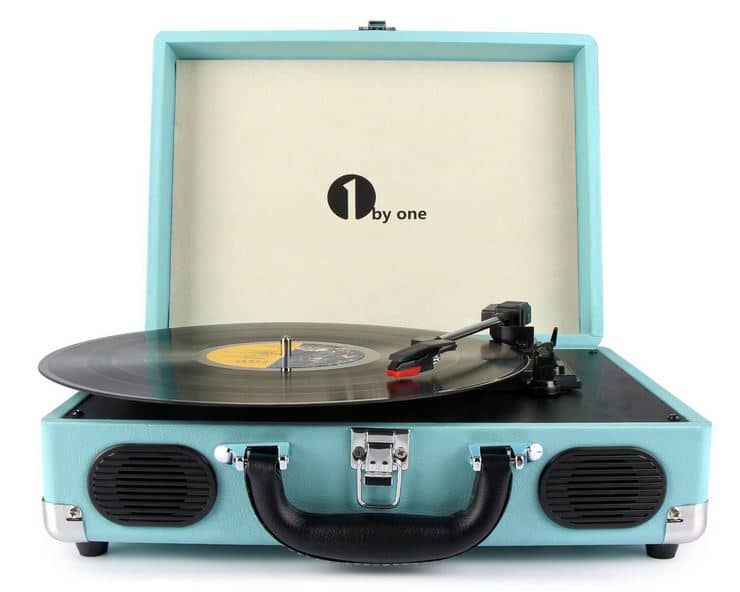
- All-in-one record players with built-in speakers
- Bluetooth or USB turntables designed for convenience
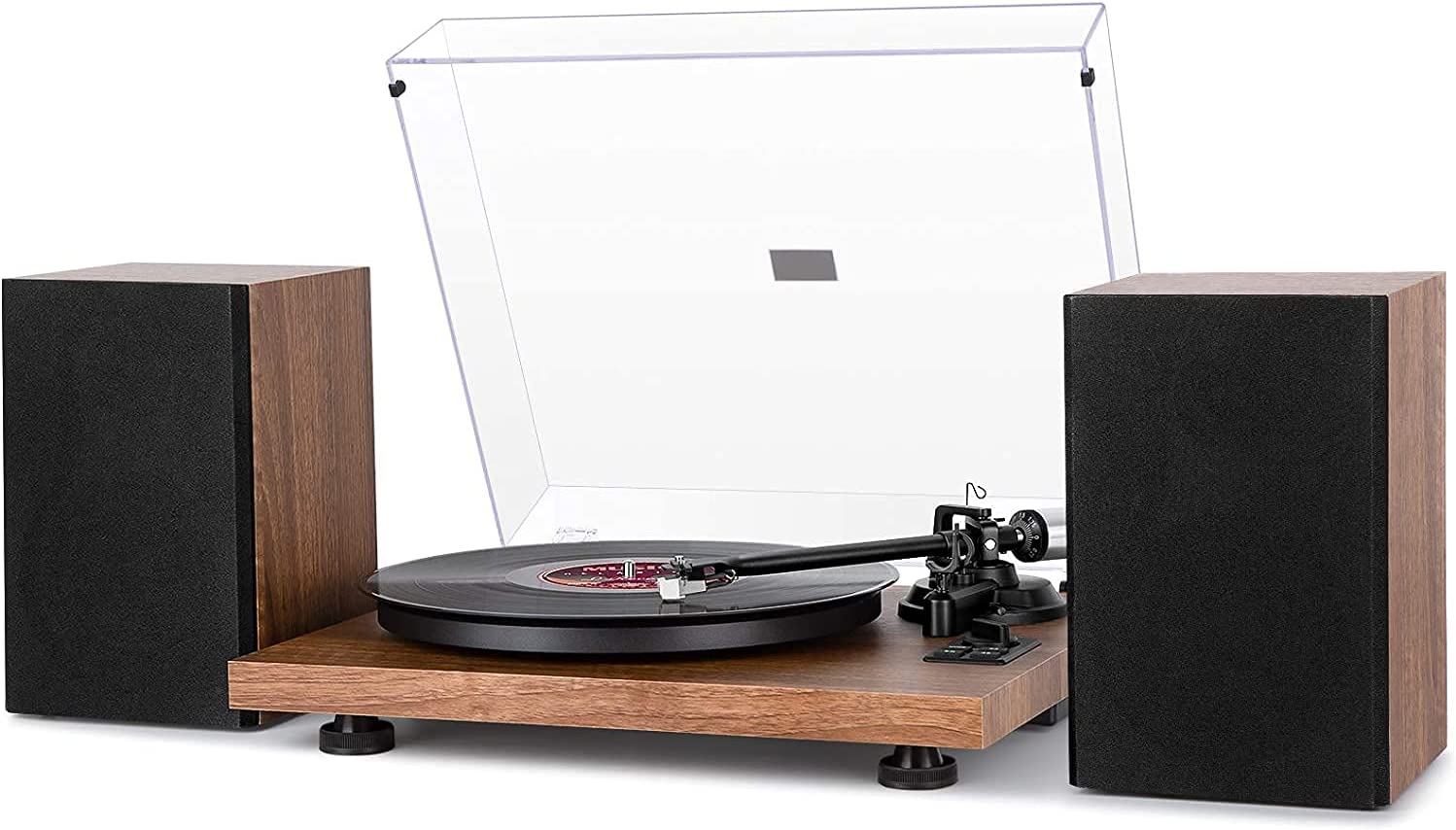
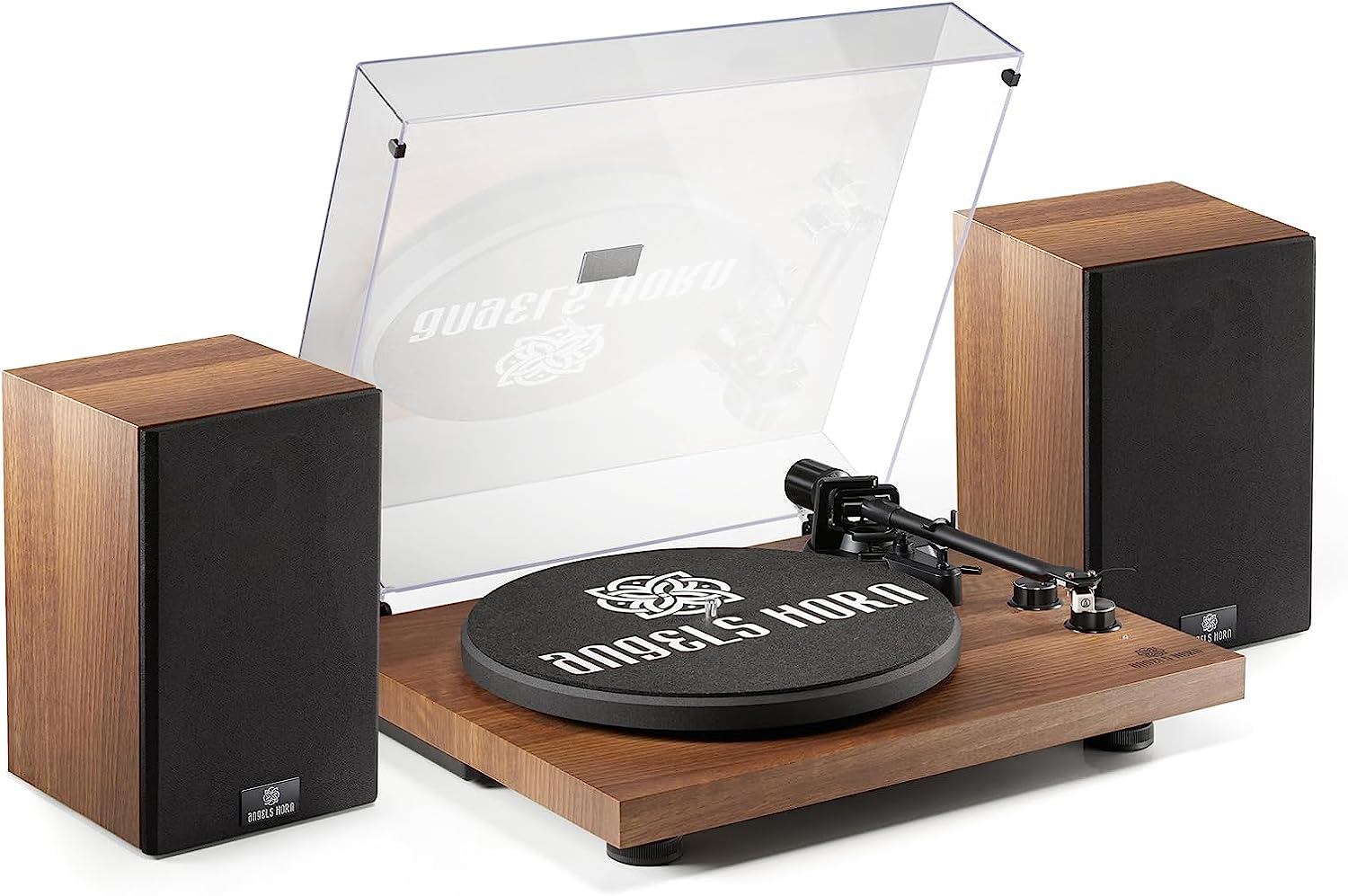
- Separate hi-fi style turntables that need external speakers or an amplifier
All-in-one units are the easiest to use because the speakers are inside the cabinet. The downside is that small built-in speakers and lightweight construction often limit bass, stereo separation and detail.
Bluetooth and USB models are useful if you want wireless playback or digital recording. However, those features do not automatically mean better sound, and they should not distract you from the basics of the tonearm, stylus and platter.
A separate hi-fi turntable usually gives the best long-term route, but it may not be complete on its own. You may need powered speakers, an amplifier, or a phono preamp, depending on the model.
Start with your complete system, not just the deck
A common budget mistake is spending the full £200 on the turntable and forgetting the rest of the system. A turntable does not make much sound by itself; it needs amplification and speakers.
Some turntables have a built-in phono stage. This small circuit boosts the very quiet signal from the cartridge to a level that normal amplifiers or powered speakers can use. If a deck has a built-in phono stage, it can usually connect to an AUX, line or RCA input.
If the turntable does not have a built-in phono stage, you need either an amplifier with a phono input or a separate phono preamp. This matters because it can add cost and complexity.
Before buying, answer these questions:
- Do you already own powered speakers or a hi-fi amplifier?
- Does your amplifier have a phono input?
- Do you want to listen through Bluetooth speakers, wired speakers or headphones?
- Do you have enough space for separate speakers?
- Are you buying for casual use or long-term listening?
If you have no speakers at all, a turntable and powered speaker bundle may make more sense than a bare deck. Catalogue examples of speaker-related products include Edifier R1280DB powered Bluetooth bookshelf speakers and House of Marley Get Together Duo bookshelf speakers, but you should still check compatibility and current pricing.
If you already have a decent amp or powered speakers, avoid paying for built-in speakers you do not need. Put the budget towards the deck, cartridge and setup quality instead.
The main types of turntable under £200
Under £200, the product type tells you a lot about likely strengths and weaknesses. It is more useful than looking only at brand names or features.
All-in-one record players are compact and simple. Catalogue examples in this broad area include models such as the GPO Attache Portable Vinyl Turntable, Crosley Executive Briefcase Style Vinyl Turntable, Fenton RP118B Briefcase Record Player and various retro-style systems from Auna, Denver and GPO.
These can suit occasional listening, decorative use, small spaces or gifts where convenience is more important than performance. The usual trade-offs are smaller speakers, more resonance from the cabinet and fewer upgrade options.
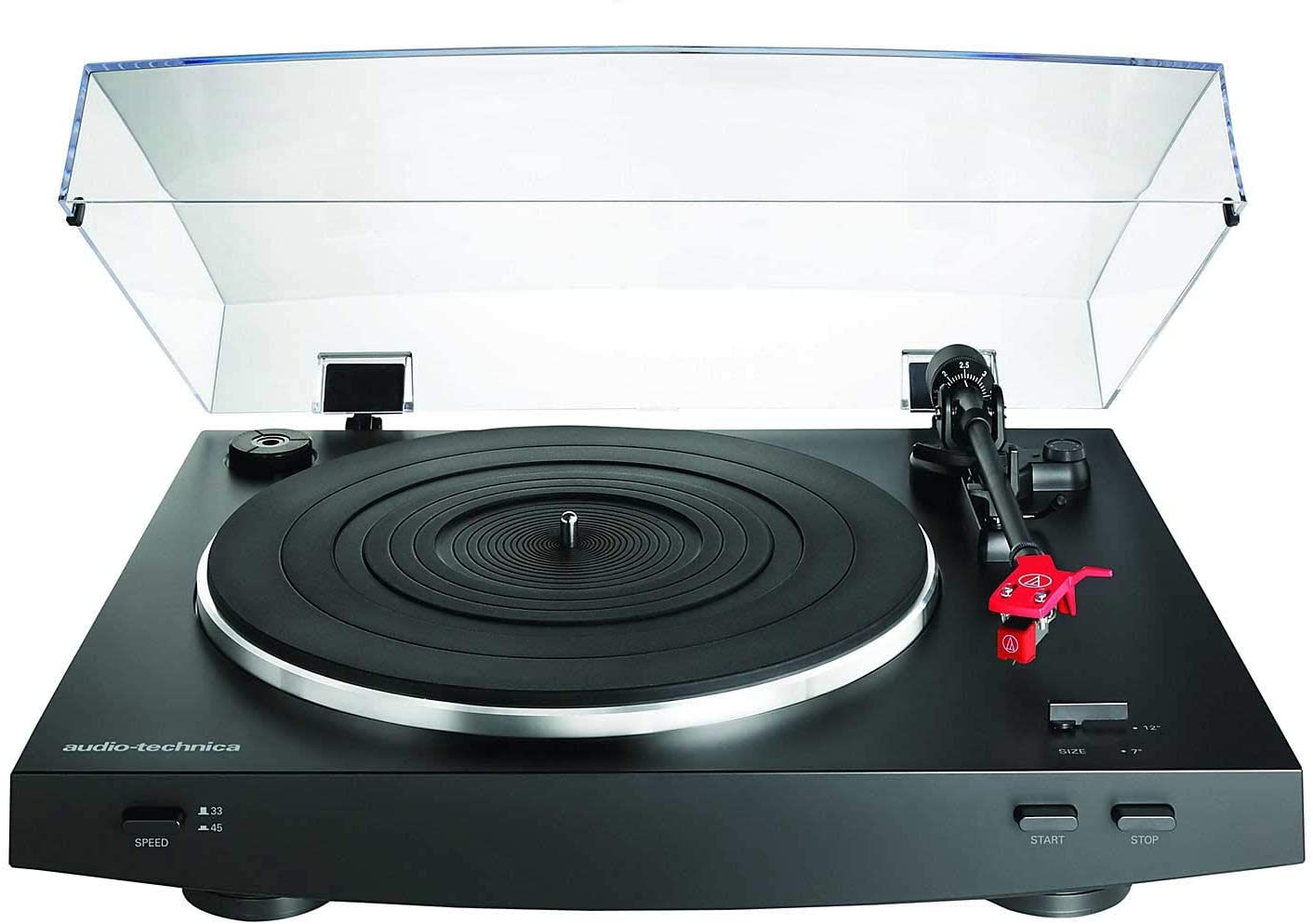
Budget hi-fi style turntables are designed more like a traditional separate component. Catalogue examples that often appear in entry-level discussions include the Audio-Technica AT-LP60 USB Vinyl Turntable, Audio-Technica AT-LP60XBT Turntable, Denon DP29FE2 Record Player, 1byone High Fidelity Belt Drive Record Player and House of Marley Stir It Up Vinyl Turntable.
These vary in features and current selling price, so do not assume every example will be under £200 at the time you shop. The point is to compare the design approach: separate platter, separate speakers, replaceable stylus and better system flexibility.
Bluetooth record players add wireless convenience. Examples in the catalogue include the Audio-Technica AT-LP60XBT Turntable, Lenco LS-300 Bluetooth Record Player, ION Audio Premier LP Vinyl Turntable and several 1byone Bluetooth models.
USB turntables are useful if you want to record vinyl to a computer. Catalogue examples include Audio-Technica AT-LP60 USB Vinyl Turntable, Denon DP-200 USB Vinyl Turntable, ION Audio Air LP Wood Vinyl Turntable and Lenco L-400 Black USB Vinyl Turntable.
The safest approach is to choose the type first, then compare individual models within that type. This prevents you paying for a feature you will rarely use.
Features that matter most at this budget
At under £200, the basics matter more than flashy extras. A turntable with a stable speed, decent cartridge and sensible tonearm is usually a better buy than one with many features but weak fundamentals.
The cartridge is the small part at the end of the tonearm that holds the stylus, often called the needle. The stylus sits in the record groove and turns the movement into an electrical signal.
A replaceable stylus is important because styli wear out. If you cannot easily replace it, the whole player becomes less practical over time.
Look for these features where possible:
- A replaceable stylus with replacements available in the UK
- A tonearm that tracks the record properly without excessive weight
- A built-in phono stage if you want simple connection to powered speakers
- 33 and 45 rpm speed support for LPs and singles
- Clear instructions for setup and cartridge care
- A dust cover or practical way to protect the deck
An adjustable counterweight is useful because it lets you set the tracking force, which is the downward pressure of the stylus on the record. Too little force can cause skipping; too much can increase record and stylus wear.
However, not every beginner deck has full adjustment. If the tonearm is factory-set, check that the stylus is replaceable and that the manufacturer gives clear maintenance information.
Bluetooth, USB, built-in speakers, radio and cassette features may be useful, but they should come after the record-playing essentials. More functions in a very low-cost product can mean less budget spent on the turntable mechanism itself.
Built-in speakers: convenient, but understand the limits
Built-in speakers are tempting because they make the purchase feel complete. You can take the unit out of the box, plug it in, and play records without separate equipment.
The drawback is that vinyl playback is sensitive to vibration. When speakers are built into the same box as the platter and tonearm, sound from the speakers can feed vibration back into the stylus.
Small built-in speakers also struggle to produce deep bass or a wide stereo image. This does not mean every all-in-one player is unusable, but it does mean expectations should be realistic.
Choose built-in speakers if:
- You mainly want simple background listening
- Space is very limited
- The player is for occasional use or a first taste of vinyl
- You accept that sound quality and upgrade options are limited
Avoid built-in speakers if:
- You are buying new records regularly
- You care about detail, bass and stereo separation
- You want a system you can improve over time
- You already own speakers or an amplifier
A useful compromise is a record player that has built-in speakers but also offers line output for external speakers. That gives you a way to improve the sound later, though the turntable mechanism itself may still be basic.
If your budget allows, separate speakers placed away from the turntable are usually better. Even affordable powered bookshelf speakers can provide a clearer, fuller sound than most built-in units.
Bluetooth: helpful, but not always in the way buyers expect
Bluetooth can mean two different things on record players. Some turntables transmit sound to Bluetooth speakers or headphones, while others receive sound from a phone and play it through built-in speakers.
For vinyl listening, Bluetooth transmission is the more relevant feature. It lets you send the turntable’s audio to wireless speakers, a soundbar or Bluetooth headphones.
The trade-off is that Bluetooth compresses the audio signal. This may be acceptable for convenience, but it is not the purest route if your aim is maximum vinyl sound quality.
Bluetooth can also introduce delay. That does not usually matter for music listening, but it can feel odd if you hear the record acoustically from the stylus and through a speaker at slightly different times in the same room.
If you already own good Bluetooth speakers, a Bluetooth turntable may be practical. Catalogue examples in this broad category include the Audio-Technica AT-LP60XBT Turntable, Audio-Technica AT-LP70XBT Record Player, 1byone Bluetooth models, Lenco LS-300 Bluetooth Record Player and House of Marley Revolution Wireless Turntable.
Do not choose Bluetooth purely because it sounds modern. A wired connection to powered speakers is often simpler, more reliable and better sounding for the money.
If the model description says only “Bluetooth record player”, read carefully. It may mean Bluetooth input rather than Bluetooth output.
Manual, automatic and semi-automatic operation
Operation style affects daily use more than many buyers expect. A manual turntable requires you to lift the arm, place the stylus on the record, and return the arm at the end.
An automatic turntable can move the arm for you, usually at the start and end of a side. This is useful for beginners, shared households and anyone worried about dropping the stylus.
Semi-automatic designs normally require manual cueing at the start but lift or return the arm at the end. This can reduce stylus wear if you forget the record is playing.
Fully automatic systems are convenient, but they add mechanical parts. At very low budgets, that means the money has to be shared between automation and core playback quality.
Manual decks are not difficult once you learn the cueing lever. The cueing lever lowers the stylus slowly onto the record, reducing the risk of a clumsy hand movement.
For a first turntable, automatic operation is worth considering if ease of use matters more than upgrade potential. Catalogue examples in automatic categories include Audio-Technica AT-LP3XBT Automatic Wireless Turntable and Denon DP-300F Automatic Vinyl Turntable, though you must check current pricing if shopping below £200.
New, used or discounted: where the risks are
A new sub-£200 turntable gives you a warranty, predictable condition and fewer surprises. That is reassuring for first-time buyers.
Used turntables can offer better build quality for the same money, but only if the condition is genuinely good. A bargain can become expensive if it needs a stylus, belt, cartridge, lid, hinges or servicing.
When buying used, check these points before handing over money:
- Ask whether the stylus has been replaced recently.
- Check that the platter spins smoothly at both 33 and 45 rpm.
- Listen for obvious speed wavering, humming or one channel cutting out.
- Confirm that the tonearm moves freely and lowers gently.
- Inspect the cartridge, cables, lid and hinges.
- Make sure replacement belts and styli are available.
Do not rely on “it powers on” as proof that a used turntable works properly. A turntable can power on and still have speed, tracking or channel problems.
Discounted new models can be good value, especially when a retailer clears older stock. The caution is to check what is included, because missing power supplies, adapters or cartridges can remove the saving.
For gifts or beginners, new is often less stressful. For confident buyers who can inspect and test, used can stretch the budget further.
How to compare specific models without turning it into a sales race
When comparing products under £200, avoid starting with star ratings or promotional claims. Build a shortlist based on your use case, then check the essentials.
Use this simple comparison method:
- Decide whether you want all-in-one convenience or a separate system.
- Check whether you already have suitable speakers or an amplifier.
- Confirm whether the turntable has a built-in phono stage.
- Check that the stylus is replaceable and easy to buy.
- Decide whether Bluetooth or USB is genuinely needed.
- Read the setup requirements before buying.
- Leave money for accessories such as a record brush or replacement stylus.
If you are looking at catalogue examples such as the Audio-Technica AT-LP60 USB, Denon DP29FE2, ION Audio Max LP, 1byone Vinyl Turntable, Lenco LS-300 or Crosley C62, compare them by system type and features rather than assuming one is universally best.
For instance, one buyer may value automatic operation and simple setup. Another may prefer a manual belt-drive design that fits better into a separate hi-fi system.
Also check the size of the plinth, which is the main body of the turntable. Some compact players look convenient but may not fully support a 12-inch LP, leaving the record edge exposed.
Finally, check return policies. Budget turntables can vary in setup tolerance, and it is sensible to buy from a retailer that gives you a clear route if the unit arrives faulty or unsuitable.
When to spend less, and when to stretch the budget
Spending less can make sense if you are unsure whether vinyl will become a regular hobby. A basic player can help you learn how records work without committing to a full system.
It also makes sense if the turntable is mainly for decorative or occasional use. In that case, convenience may matter more than fidelity.
Stretching the budget is sensible if you already own many records or plan to buy new albums regularly. New vinyl is not cheap, so protecting the records and enjoying them properly becomes more important.
A slightly better deck, cartridge or speaker setup can give more lasting value than adding features such as radio, cassette, lights or novelty styling. The more serious your listening plans, the more you should prioritise the turntable basics.
If you are close to the £200 ceiling, consider whether waiting and saving a little more would avoid a false economy. The cheapest option is not always the cheapest long term if you replace it within months.
A practical budget split for a first separate system is to think in terms of the whole setup, not a fixed turntable-only number. If you need speakers too, a balanced turntable and speaker pairing is often better than a more expensive deck feeding weak speakers.
At a glance comparison
| All-in-one record player | Best for simple, low-space listening. Usually includes speakers, but sound quality and upgrade options are limited. |
|---|---|
| Bluetooth turntable | Best for wireless convenience. Check whether Bluetooth is output, input, or both, and remember that wireless audio is usually compressed. |
| USB turntable | Best for recording vinyl to a computer. Useful for archiving, but not essential for normal listening. |
| Separate hi-fi style turntable | Best for long-term sound quality and system building. May need powered speakers, an amplifier or a phono preamp. |
| Used turntable | Can offer stronger build for the money, but condition, stylus wear and servicing costs must be checked carefully. |
Frequently asked questions
Can a turntable under £200 sound good?
Yes, it can sound enjoyable, especially if it is connected to decent external speakers and set up properly. The limits are usually in refinement, build quality, cartridge quality and upgrade potential.
Do not expect the same performance as a more expensive hi-fi deck, but do expect clean, stable playback from a well-chosen budget model.
Are suitcase record players bad for records?
Not automatically, but many very cheap suitcase-style players use lightweight construction and basic tonearms. If the tracking force is too high or the stylus is worn, record wear can increase.
If you choose one, use a clean stylus, replace it when needed and avoid playing valuable records on equipment you do not trust.
Do I need speakers with a turntable under £200?
You need speakers unless the record player has built-in speakers. A separate turntable will normally need powered speakers, an amplifier with passive speakers, or another suitable audio system.
Check whether the turntable has a built-in phono stage before connecting it to powered speakers or a standard line input.
Is belt drive or direct drive better at this price?
For normal home listening under £200, belt drive is common and perfectly suitable when well implemented. Direct drive is often associated with DJ-style decks and fast start-up, but it is not automatically better.
Focus on speed stability, condition, cartridge support and overall design rather than choosing by drive type alone.
Should I buy a USB turntable to digitise records?
Buy USB only if you genuinely plan to record vinyl to a computer. It can be useful for rare records, mixtapes or portable listening copies, but the recording process takes time and needs basic software skills.
If you only want to listen at home, USB should not be a priority over playback quality.
How often should I replace the stylus on a budget turntable?
There is no single answer because stylus life depends on the stylus type, tracking force, record cleanliness and hours of use. Follow the manufacturer’s guidance and replace it sooner if you hear distortion, mistracking or obvious wear.
Never assume an unknown used stylus is safe. Replacing it is often the first sensible step with a second-hand turntable.
Is automatic operation worth having for beginners?
Automatic operation can be very helpful if you are nervous about placing the stylus on the record. It can also prevent the stylus sitting in the run-out groove for too long if you forget to lift the arm.
The trade-off is added mechanism, so compare the whole turntable rather than buying automatic operation on its own.
What accessories should I budget for first?
Start with a carbon fibre record brush, a stylus cleaning brush and inner sleeves if your records need them. These are not glamorous accessories, but they help reduce dust, noise and unnecessary wear.
A replacement stylus should also be part of your long-term budget, especially if the turntable will be used frequently.
Final thoughts
The best turntable under £200 is not simply the one with the longest feature list. It is the one that fits your existing equipment, treats records sensibly, and leaves you with a system you will actually enjoy using.
If you want maximum simplicity, an all-in-one player may be enough, provided you accept its limits. If you care more about sound and long-term value, look for a separate turntable with a replaceable stylus, a suitable phono stage and proper speakers.
Your next step is to write down what you already own, especially speakers and amplification, then shortlist by system type. After that, compare cartridge support, connection options and setup requirements before looking at styling or extras.
For further reading, move on to a beginner guide to phono preamps or a guide to powered speakers for turntables. Those topics will help you avoid the most common compatibility mistakes when building a budget vinyl system.