Quick answer
A cheap record player can be worth buying if your expectations are modest, your records are inexpensive or second-hand, and the player has the basic features needed to play records safely. Look for a replaceable stylus, a tonearm that tracks properly, stable speed, and a way to connect to better speakers later.
The cheapest all-in-one and suitcase-style players are usually best treated as casual machines, not long-term record-care equipment. If you plan to buy new albums, keep records for years, or listen often, it is usually wiser to choose a basic proper turntable and budget for speakers, or to buy carefully used equipment.
In this guide
- Why the lowest-cost record players often sound thin or unstable
- Which features matter most for record care, not just convenience
- How built-in speakers, Bluetooth and USB recording change the trade-offs
- What to check before buying a cheap new or used turntable
- When an all-in-one player is acceptable and when it is a false economy
- How to plan a budget system you can improve over time
Watch the article video
What Does “Cheap” Really Mean in Record Players?
Cheap can mean several different things. It may mean a very low-cost all-in-one player with built-in speakers, a portable suitcase unit, a budget turntable from a hi-fi brand, or a used deck bought privately.
Those options are not equal. A simple turntable with no speakers can cost more to set up because it needs powered speakers, an amplifier, or a phono stage. But it may treat records better and give you a clearer upgrade path.
Many buyers compare only the price on the box. That can be misleading because an all-in-one machine appears complete, while a turntable-only model may need extra equipment before it makes sound.
A fair comparison should include:
- The record player or turntable itself
- Speakers or headphones if needed
- A phono preamp if the turntable does not have one built in
- Replacement stylus availability
- Basic record cleaning supplies
- Any cables or stands you need
A cheap record player is not automatically bad. The question is whether the savings have come from harmless simplification or from parts that directly affect sound and record wear.
The Main Trade-Off: Convenience Versus Record Care
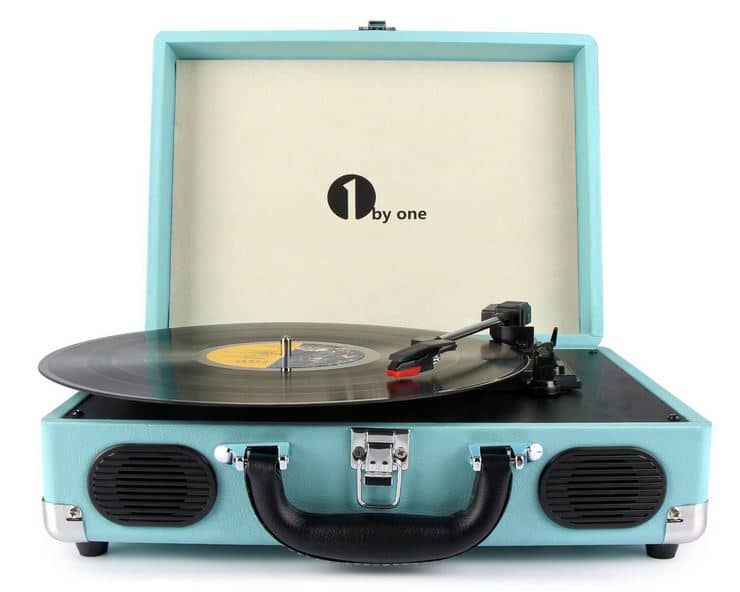
The cheapest record players usually prioritise convenience. They may include a lid, speakers, Bluetooth reception, radio, USB recording, or a retro cabinet in one compact unit.
Convenience is useful, especially for a bedroom, student room or occasional listening space. But vinyl playback depends on small mechanical parts working accurately, and these parts are where the budget matters most.
The stylus is the tiny tip that sits in the groove. The tonearm is the arm that holds it. Tracking force is the downward pressure that keeps the stylus in contact with the record.
If tracking force is too light, the stylus can mistrack, jump or rattle in the groove. If it is too heavy, it can increase wear. If the stylus is poor quality or cannot be replaced easily, the player becomes risky once the tip wears.
Record care is not about being precious. It is about avoiding preventable damage. A record that is played with a worn stylus or unstable arm can develop distortion, noise or groove wear that cleaning will not fix.
For occasional play of charity shop records, a basic all-in-one may be acceptable. For new pressings, treasured albums or frequent listening, the record-care argument becomes much stronger.
Features That Matter More Than Extras
A budget buyer should focus first on the parts that touch and control the record. Extra features are only useful after the basics are sound.
The most important features are:
- A replaceable stylus from a recognisable type or brand
- A tonearm that moves smoothly across the record
- Suitable tracking force, ideally adjustable or clearly specified by the manufacturer
- Stable 33⅓ and 45 rpm playback speeds
- A platter that supports the record reasonably well
- A cartridge that is replaceable or at least uses a proper replacement stylus
- A line output or phono output for external speakers or an amplifier
The cartridge is the small body at the end of the tonearm. It holds the stylus and turns groove movement into an electrical signal. On very cheap players, the cartridge may be a simple fixed type with limited upgrade options.
A full-size platter is not essential for every listener, but it helps support the record more evenly. Very small platters leave much of the disc unsupported, which can be an issue with warped or slightly uneven records.
Speed stability is also important. If the motor or belt cannot hold a steady speed, piano notes, sustained vocals and guitar chords can waver. This is often described as wow and flutter: slow and fast speed variation that makes music sound seasick or shaky.
If a product description talks mainly about colour, lights, cabinet style or Bluetooth, read more carefully. Those things may be fine, but they do not tell you much about how well it handles a record.
Built-In Speakers: Useful, But Usually Limited
Built-in speakers are one of the main reasons people buy cheap record players. They remove the need for separate speakers, and they make the system feel simple.
The compromise is size. Small speakers in a light cabinet cannot move much air, so bass is usually limited and the sound may be thin, boxy or harsh at higher volume. This is a physical limitation, not just a matter of brand.
There is also a mechanical concern. Speakers create vibration, and a turntable is designed to read tiny vibrations from a groove. When speakers share the same lightweight case as the record mechanism, vibration can feed back into playback, especially if the volume is high.
For casual background listening this may not matter. For careful listening it can become annoying, and it can make the stylus less stable in the groove.
If you choose an all-in-one model, look for an output that lets you connect external speakers later. This might be a line output, RCA sockets, a headphone output, or Bluetooth transmission, though a wired line output is usually more predictable for sound quality.
Products in the local catalogue include many Bluetooth record players and retro record players, such as briefcase-style, cabinet-style and multi-function units. These categories can be convenient, but convenience should not be confused with the best record-care choice.
Bluetooth, USB and Other Extras: Helpful or Distraction?
Bluetooth can be useful, but it is important to understand what it does. Some record players receive Bluetooth from a phone, which means they act like a speaker system. Others transmit Bluetooth to wireless speakers or headphones.
Bluetooth adds convenience, but it does not improve vinyl quality. The signal is digitally compressed, and there may be a slight delay. For casual listening it can be fine, but it is not the reason to buy a turntable if record playback quality is your main concern.
USB is different. A USB turntable can connect to a computer so you can make digital copies of records. This can be useful for archiving rare records or listening on a phone, but it takes time to do properly.
A USB feature does not automatically mean the turntable is good. The mechanical parts still matter. A poor stylus, unstable speed or noisy motor will be captured in the recording.
Retro designs can also be appealing. Some combine vinyl playback with radio, CD, cassette, Bluetooth or decorative cabinet styling. These are often lifestyle products rather than record-care-first turntables.
There is nothing wrong with choosing a feature-rich player if that is what you need. The mistake is paying for many extras while ignoring the tonearm, stylus and output options.
When a Cheap All-In-One Player Makes Sense
A cheap all-in-one player can be a reasonable choice in specific situations. It is not automatically a bad purchase if it matches the job.
It may make sense if:
- You only play records occasionally
- Most of your records are inexpensive or already worn
- You want a simple gift for a beginner
- You have very limited space
- You are not ready to build a hi-fi system
- You value portability more than sound quality
For example, a portable or retro-style player can be useful for discovering whether you enjoy the ritual of vinyl. It lets you handle records, learn about sides and speeds, and understand whether you will listen often enough to justify a better setup.
The key is to be honest about its role. Treat it as an entry point or casual player, not as the final word in vinyl replay.
If you go this route, avoid playing valuable records repeatedly on a machine with an unknown or worn stylus. Replace the stylus as recommended by the manufacturer, keep records clean, and do not force the tonearm if it skips.
Skipping is not always caused by a bad record. It can also be caused by poor tracking, vibration, an uneven surface, or a worn stylus.
When Spending a Bit More Is the Better Budget Choice
If you plan to buy new records regularly, spending a bit more at the start can save frustration. New vinyl is not cheap, and it makes little sense to protect the player budget while risking the records.
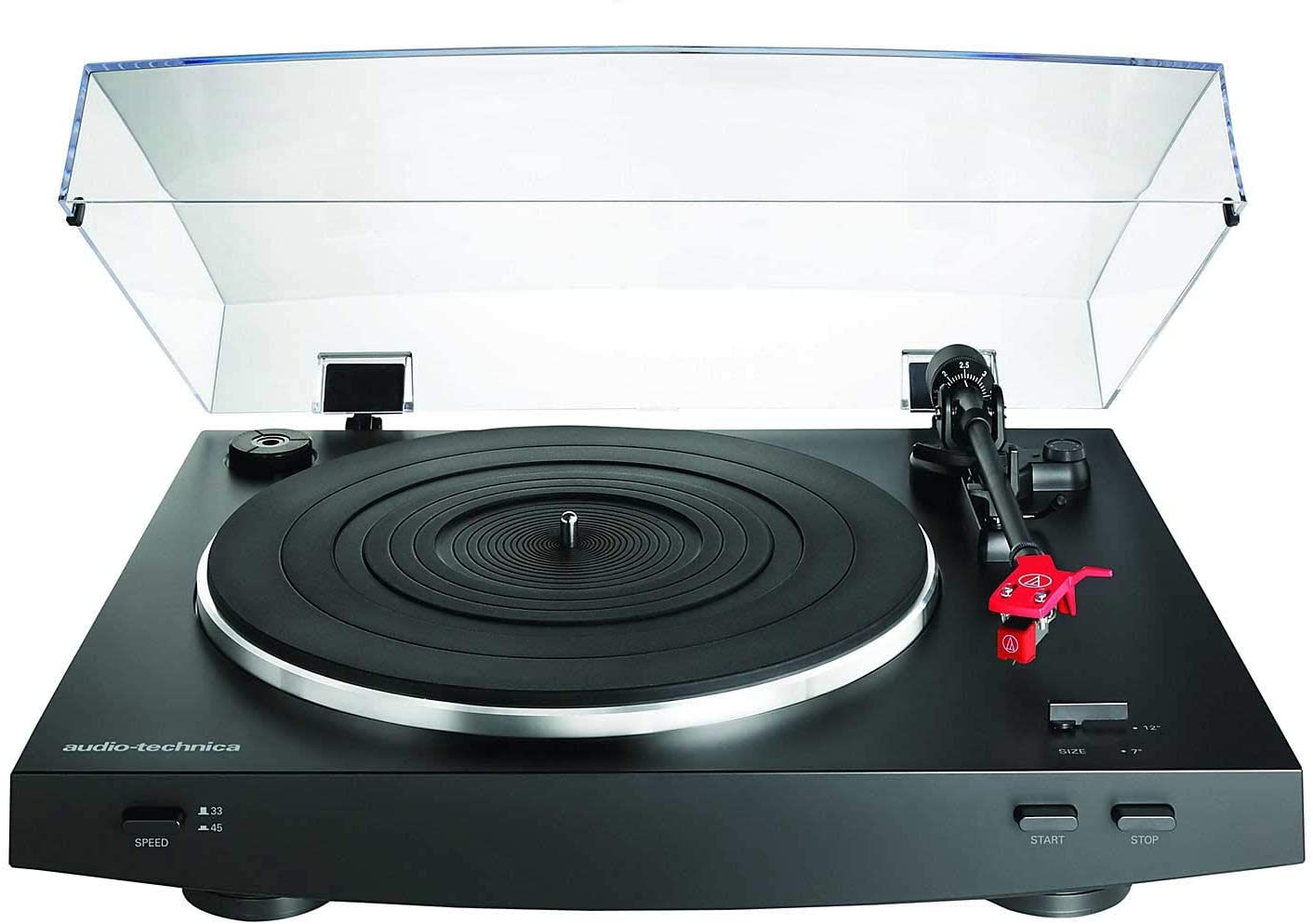
A better budget turntable may not include speakers, lights or a retro cabinet. Instead, it may put more of the cost into the motor, tonearm, cartridge and platter.
Look for a turntable that offers:
- A proper cartridge and stylus system
- Adjustable tracking force, or a well-designed preset arm from a reputable turntable maker
- An anti-skate setting, where appropriate, to help the arm pull evenly across the record
- A dust cover
- Clear replacement stylus information
- A built-in phono preamp if you need easy connection to powered speakers
Anti-skate is a small sideways force that helps balance the inward pull on the tonearm as the record spins. It is not always adjustable on entry-level automatic models, but on manual turntables it is a useful feature to have.
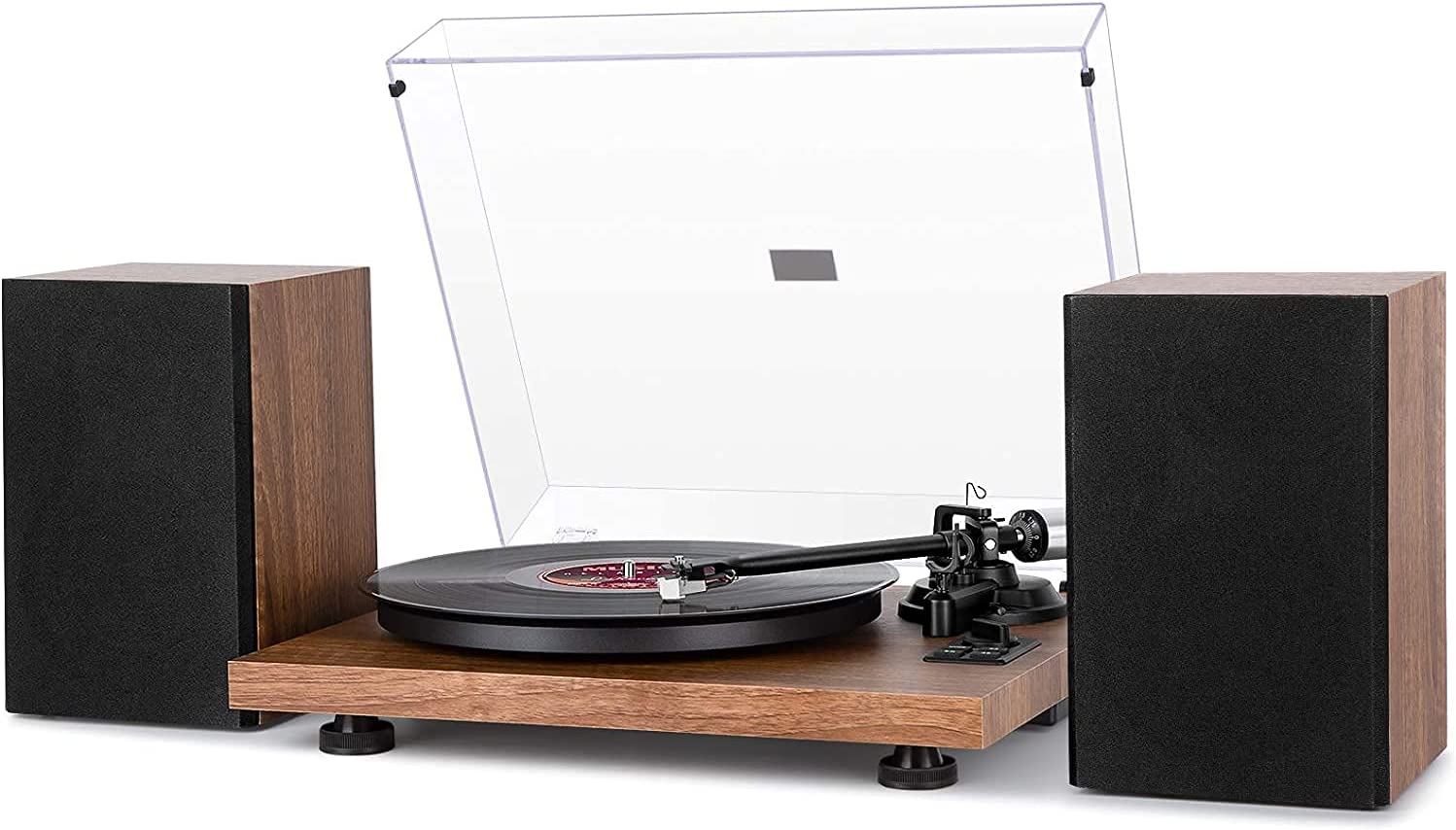
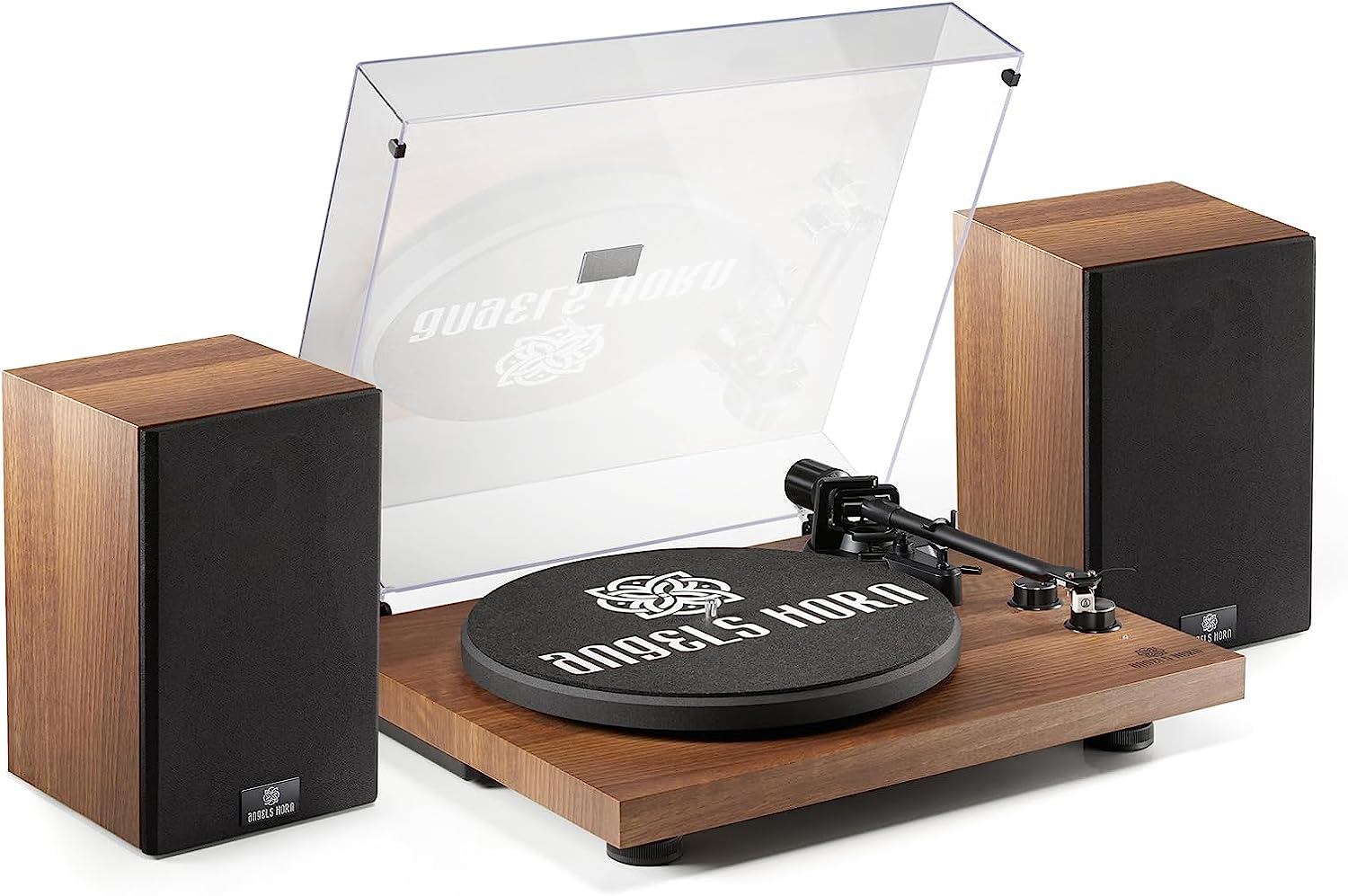
Catalogue examples in broader budget and mid-budget categories include models from Audio-Technica, Denon, Fluance, Lenco, House of Marley and others. The point is not that any single product is automatically the answer, but that turntable-only designs often put more attention on the playback mechanism than ultra-cheap all-in-one units.
If your budget is tight, consider buying the turntable first and using modest powered speakers. Powered speakers contain their own amplifier, so they can simplify a small system. Models such as the Edifier R1280DB and House of Marley Get Together Duo appear in the local speaker category, but you should still check connection compatibility before buying.
Buying Used: Bargain or Trap?
Used turntables can offer better engineering for the money, but they need more care. A neglected used deck can cost more than expected once you add a belt, stylus, cartridge, mat, cables or repair work.
Before buying used, ask for a demonstration if possible. Listen for steady speed, hum, crackling channels, skipping and mechanical noises.
Use this checklist:
- Check that the platter starts smoothly and reaches speed.
- Confirm that both left and right channels work.
- Inspect the stylus, but assume it may need replacing unless its history is clear.
- Check that the tonearm moves freely and lowers gently.
- Look for missing counterweights, headshells, hinges or power supplies.
- Ask whether the belt has been replaced on a belt-drive model.
- Make sure the dust cover and plinth are not badly cracked.
A belt-drive turntable uses a rubber belt between the motor and platter. Belts wear and stretch, but they are often replaceable. A direct-drive turntable connects the motor more directly to the platter and may need different checks, especially for speed control.
Used automatic turntables can be convenient, but their internal mechanisms can become stiff with age. If the arm does not return correctly or the controls jam, repairs may not be simple.
Used buying is best for someone willing to inspect, research and possibly replace parts. If you want a simple first purchase with a warranty, a modest new turntable may be less stressful.
How to Judge a Cheap Record Player Before Buying
Product pages can be vague, so it helps to read them with a clear set of questions. Do not be distracted by the number of functions if the basic playback details are missing.
Ask these questions:
- Can the stylus be replaced easily?
- Is the replacement stylus named or clearly available?
- Does the tonearm have adjustable tracking force, or is the tracking system clearly explained?
- Does it have outputs for external speakers or an amplifier?
- Does it support the records you own, such as 33⅓ and 45 rpm?
- Is the platter large enough to support records reasonably well?
- Are the built-in speakers the only listening option?
- Is there a proper returns policy if speed, hum or skipping problems appear?
If you cannot find replacement styli, be cautious. A stylus is a wear item, not a lifetime part. Continuing to use a worn stylus is one of the easiest ways to damage records.
Also check what “Bluetooth record player” means. It may mean you can stream from your phone into the player, not necessarily send vinyl wirelessly to speakers.
If a player looks stylish but gives almost no detail about the cartridge, stylus or outputs, that is a warning sign. It does not mean it will fail, but it means you cannot judge the most important parts properly.
A Practical Budget Path for New Vinyl Listeners
If you are starting from nothing, the safest approach is to plan the system in stages. This avoids overspending on features you may not use and reduces the chance of buying twice.
A sensible path is:
- Decide how often you will listen. Occasional novelty use and weekly album listening justify different equipment.
- Decide which records you will play. Valuable, new or sentimental records deserve a more careful setup.
- Choose between all-in-one convenience and separate-system flexibility.
- Make sure the stylus is replaceable and available.
- Budget for cleaning. A carbon fibre brush and inner sleeves can do more for enjoyment than another decorative feature.
- Place the player on a stable, level surface away from speaker vibration.
- Replace the stylus when needed rather than waiting for obvious distortion.
For the lowest-risk budget system, a basic turntable with a built-in phono preamp and a pair of powered speakers is often a strong starting point. It keeps the setup simple while allowing each part to be improved later.
For the lowest-effort system, an all-in-one player wins. Just understand that you are accepting limits in sound, volume, upgrade potential and possibly record care.
There is no single correct answer. The right choice depends on whether your priority is trying vinyl cheaply, protecting a collection, saving space, or building towards better sound.
At a glance comparison
| Lowest-cost all-in-one player | Most convenient and often includes speakers, but usually limited sound, limited upgrades and more record-care concerns. |
|---|---|
| Budget turntable plus powered speakers | Costs more to set up, but usually gives better sound, better separation from speaker vibration and a clearer upgrade path. |
| Used turntable system | Can be excellent value if checked carefully, but may need a new stylus, belt, cartridge or servicing. |
| Saving for a better starter setup | Slower route, but sensible if you will buy new records regularly or want equipment you can keep longer. |
Frequently asked questions
Will a cheap record player definitely damage my records?
Not definitely. Damage risk depends on the stylus condition, tracking force, tonearm behaviour and how often you play the records.
A cheap player used occasionally with a good stylus on inexpensive records may be acceptable. A poorly tracking player used repeatedly on valuable records is a much bigger concern.
How do I know when the stylus needs replacing?
Replace it according to the manufacturer’s guidance if available. If you do not know the history of a used stylus, replace it before regular listening.
Warning signs include increased distortion, harsh sibilance on vocals, dull sound, visible damage, or skipping that was not present before. Do not wait until the stylus looks obviously worn, because the tip is very small.
Is Bluetooth bad for vinyl?
Bluetooth is not bad for the record itself. It affects how the sound is transmitted after the turntable has played the groove.
It can be convenient for wireless speakers or headphones, but it does not fix mechanical weaknesses in the turntable. If the player has poor speed stability or a worn stylus, Bluetooth will simply pass on those problems.
Are suitcase record players always a bad idea?
They are not always a bad idea, but they are usually a compromise. Their strengths are portability, low setup effort and compact design.
Their weaknesses are often small speakers, lightweight construction, limited upgrade options and greater sensitivity to vibration. They are best for casual use rather than serious long-term record collecting.
Should I buy records first or the player first?
If you are new to vinyl, buy a few inexpensive records before building a collection. This lets you learn handling, cleaning and storage without risking treasured albums.
If you already own valuable records, choose the player more carefully before playing them. The playback equipment matters more when the records are difficult or costly to replace.
Do I need an amplifier with a cheap turntable?
It depends on the design. An all-in-one record player has amplification and speakers built in, so it can make sound by itself.
A turntable-only model needs either powered speakers, an amplifier with a phono input, or a separate phono preamp plus amplifier. Check whether the turntable has a built-in phono preamp before buying speakers.
Is a heavier turntable always better?
Not always, but very light players can be more vulnerable to vibration, unstable placement and low-quality parts. Weight can help, but design matters too.
A well-designed entry-level turntable can outperform a heavier decorative unit. Look at the tonearm, stylus, speed stability and outputs rather than judging by weight alone.
What is the safest cheap upgrade after buying a basic player?
A fresh correct stylus is usually the safest first step if the player supports replacement. Clean records also make a large difference, because dirt increases noise and can build up on the stylus.
After that, external speakers can improve sound more than many people expect, provided the record player has a suitable output.
Final thoughts
Cheap record players can be worth buying, but only when you understand what you are giving up. They are best for casual listening, small spaces, gifts and trying vinyl without committing to a full system.
If you care about record condition, listen often, or plan to buy new albums, the better budget move is usually a proper entry-level turntable with replaceable parts and external speakers. It may feel less convenient at first, but it gives your records a safer and more satisfying long-term home.
Before buying, check the stylus, tonearm, speed options, outputs and upgrade path. If those details are missing or unclear, pause rather than being led by styling or extra features.
Your next reading step should be a beginner’s guide to choosing a first turntable, especially one that explains phono preamps, powered speakers and cartridge basics. That will help you decide whether an all-in-one player, a Bluetooth turntable or a simple separate system fits your budget best.