Quick answer
For most first-time vinyl buyers, the best turntable under £300 is usually a separate deck with a proper tonearm, replaceable stylus, stable platter, and either a built-in phono preamp or a clear route into an amplifier or powered speakers. If you want the easiest setup, an automatic or Bluetooth model can make sense, but check what you give up in adjustment and upgrade options.
Avoid choosing purely by retro styling, built-in speakers, or a long list of functions. A simpler turntable with better mechanical basics is often the safer long-term buy, especially if you plan to keep collecting records.
In this guide
- How to judge turntables under £300 without relying on hype or feature lists
- The main differences between manual, automatic, Bluetooth, USB and all-in-one record players
- Which specifications and design features are worth checking before you buy
- Why cartridge, stylus, tonearm and phono preamp choices affect everyday listening
- How to plan a complete system, including speakers, without overspending
- Common mistakes that can damage records or limit future upgrades
Watch the article video
What “best under £300” really means
Under £300, “best” depends on your system, your room and how involved you want to be. A buyer who wants one-button operation has different needs from someone building a hi-fi system piece by piece.
The important point is to avoid judging a turntable as if it were a normal digital gadget. Vinyl playback is mechanical. The deck has to spin at the right speed, isolate vibration, hold the cartridge correctly and let the stylus follow the groove without excessive force.
A strong sub-£300 choice usually gets the basics right before adding extras. Look for:
- A tonearm that tracks records safely and consistently
- A replaceable stylus, ideally with a cartridge that can be changed later
- A stable platter and plinth that do not feel flimsy
- Clear output options for your amplifier, powered speakers or headphones system
- Sensible setup instructions and parts that are easy to replace
A model with Bluetooth, USB recording, radio, CD, cassette and built-in speakers may be convenient, but those extras do not automatically make it a better record player. The more jobs one product tries to do at a low price, the more carefully you should check the record-playing parts.
The main types you will see in this price range
Most turntables under £300 fall into a few broad categories. Understanding these categories is more useful than memorising model names because it shows where the compromises usually sit.
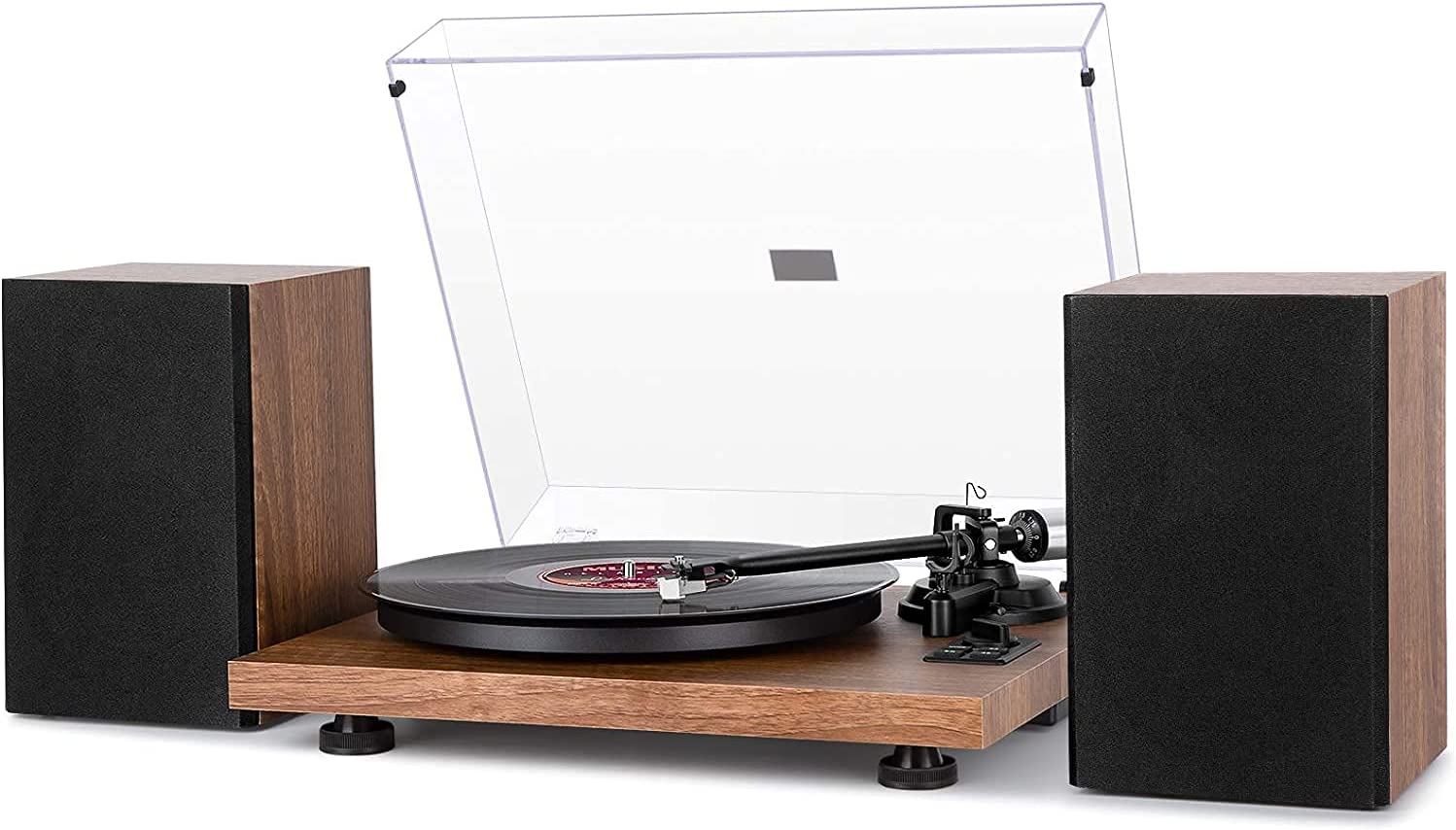
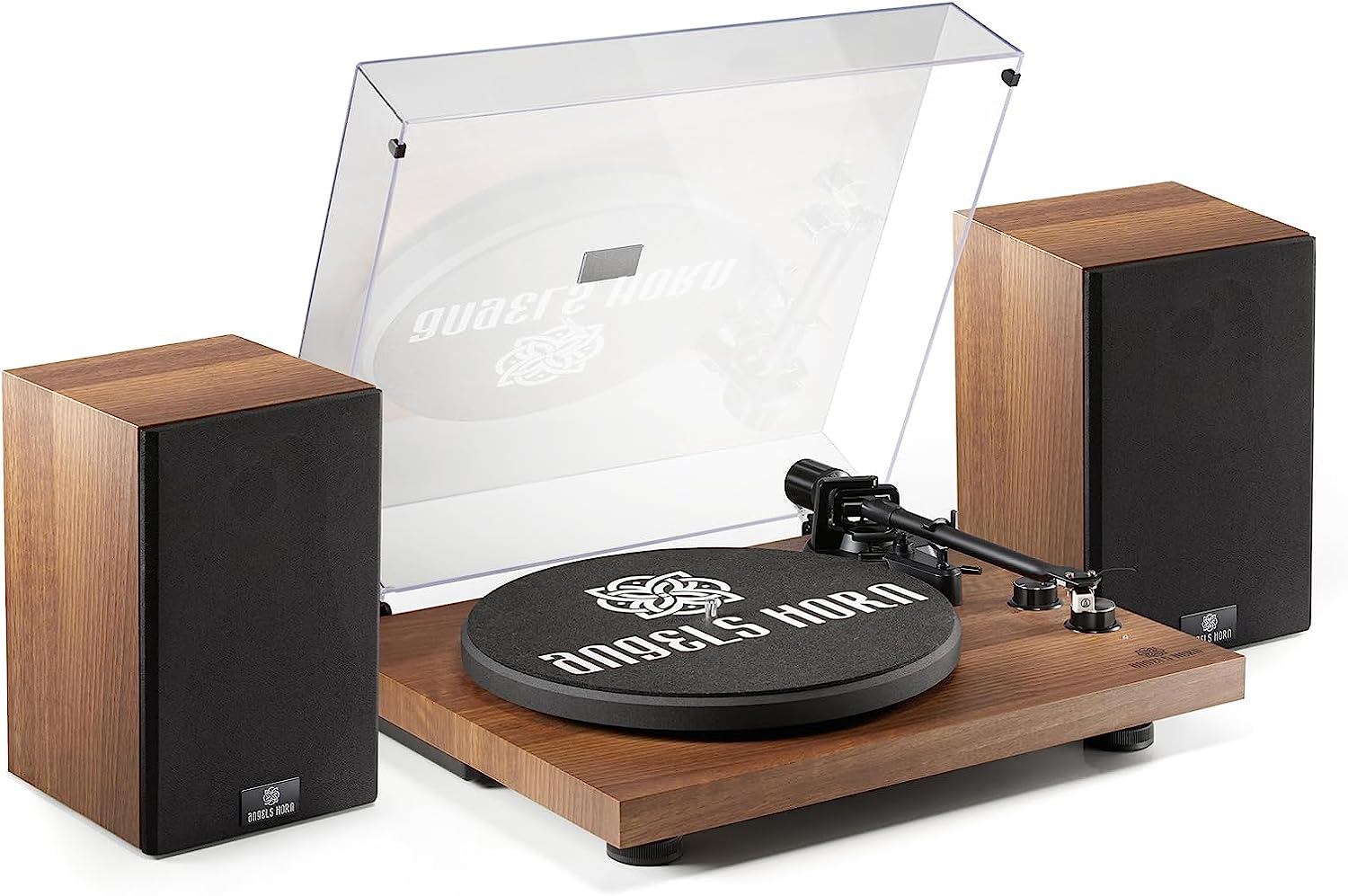
A manual hi-fi turntable requires you to move the tonearm onto the record and lift it at the end. Manual designs can be simple and robust, but they ask more from the user. Examples in the local catalogue that represent this general type include products such as the Audio-Technica LPW40WN, Audio-Technica LPW50PB, Fluance RT80, Fluance RT81 and House of Marley Stir It Up Vinyl Turntable, though current UK pricing and specification should always be checked before comparison.
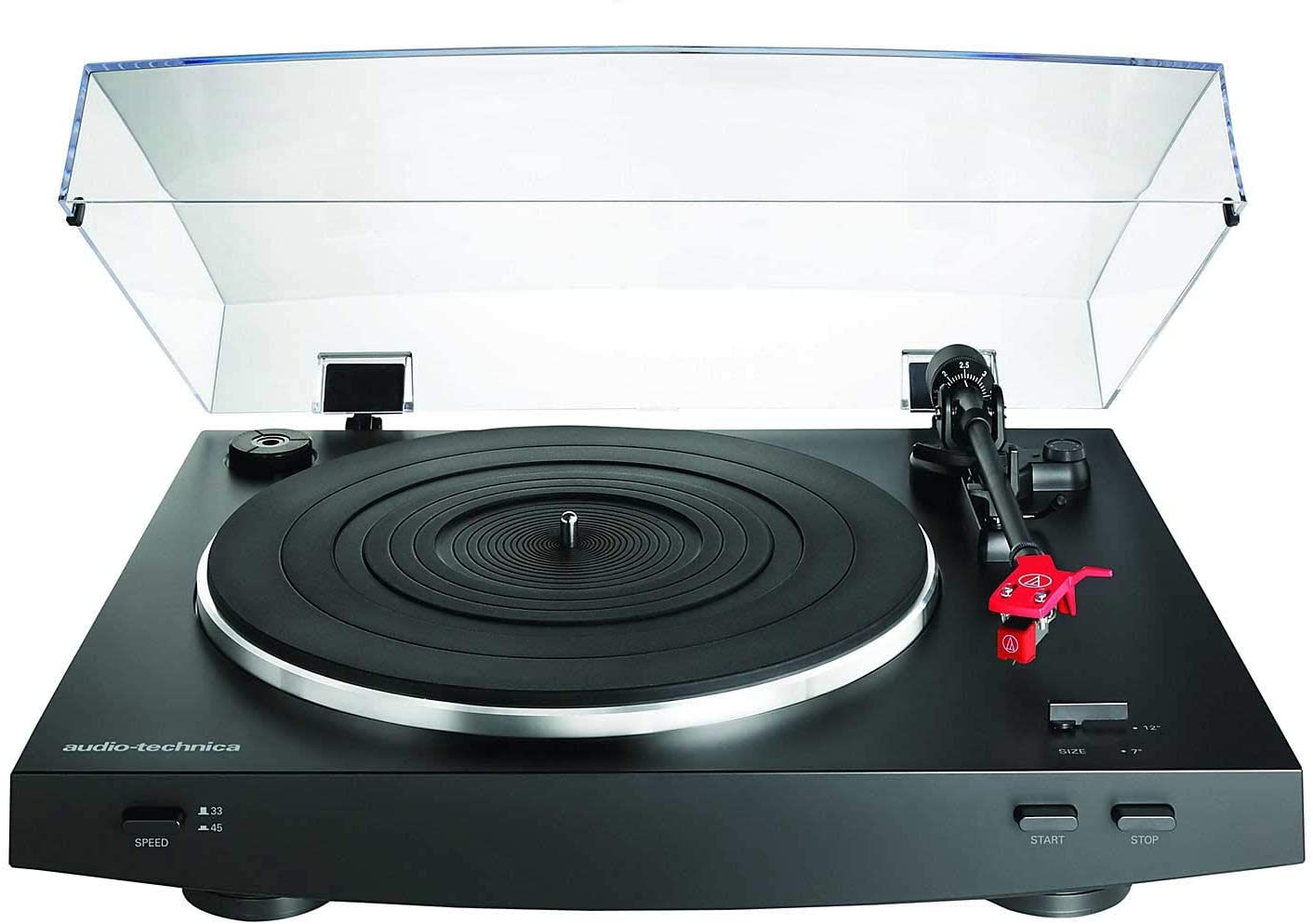
An automatic turntable can start and stop playback for you. This is useful if you are nervous about cueing records or often forget to lift the arm. Catalogue examples of the automatic category include the Audio-Technica AT-LP3XBT Automatic Wireless Turntable and Denon DP-300F Automatic Vinyl Turntable.
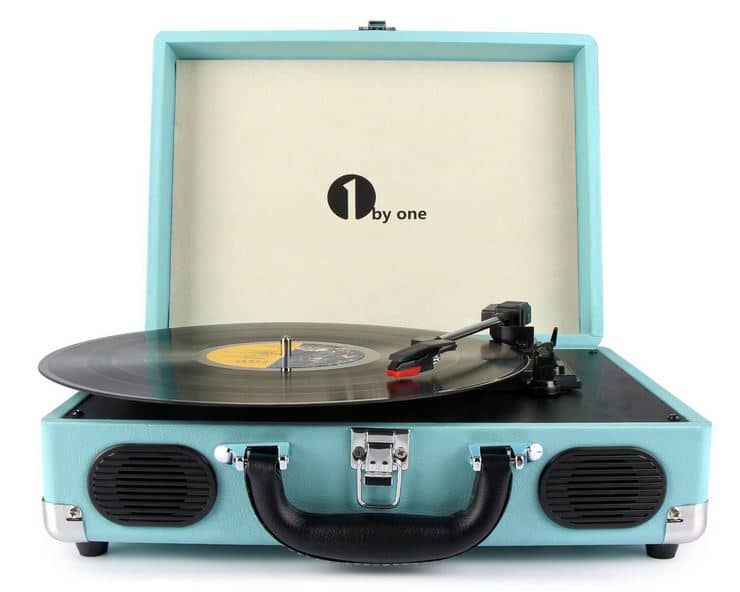
A Bluetooth turntable sends audio wirelessly to compatible speakers or headphones. This can reduce cable clutter, but Bluetooth compresses the signal and may introduce delay. Catalogue examples in Bluetooth-related categories include the Audio-Technica AT-LP60XBT, Audio-Technica AT-LP70XBT, Lenco LS-300, House of Marley Revolution Wireless Turntable and several 1byone Bluetooth models.
A USB turntable connects to a computer so you can digitise records. This is useful for archiving rare singles or family records, but it should not be the main reason to buy unless you genuinely plan to record your vinyl. Catalogue examples include the Audio-Technica AT-LP120USBHCBK, Denon DP-200 USB, Lenco L3808 and ION Audio Air LP.
All-in-one and retro systems put the turntable, speakers and extra functions in one cabinet. They are convenient and decorative, but sound quality and record care vary widely. Catalogue examples of retro or all-in-one styles include the Auna Belle Epoque 1910 Retro Stereo, Denver MCR-50 8-in-1 Retro Record Player, GPO Chesterton Record Player and LoopTone Vintage 10 in 1 Bluetooth Record Player.
Where the money should go first
In a sub-£300 budget, the most important spending should go towards the parts that touch or control the record. That means the stylus, cartridge, tonearm, platter and motor system.
The stylus is the tiny tip that sits in the groove. A worn, damaged or poor-quality stylus can make records sound harsh and may increase wear. Check that replacement styli are easy to find in the UK before buying.
The cartridge is the small body at the end of the tonearm that turns groove movement into an electrical signal. Some budget decks use a fixed cartridge; others allow cartridge upgrades. If you think you may improve the system later, a standard removable cartridge mount is worth considering.
The tonearm holds the cartridge at the correct angle and pressure. Better arms allow tracking force adjustment, and some include anti-skate, which helps counter the arm’s natural pull towards the centre of the record. These adjustments are not just audiophile fuss; they help the stylus sit correctly in the groove.
The motor and platter control speed stability. If the speed wavers, sustained piano notes and vocals can sound unsteady. A heavier or better-damped platter is not automatically perfect, but a very light, rattly platter is rarely a good sign.
Manual, automatic or semi-automatic operation
Manual turntables are the simplest in operation and often appeal to buyers who want fewer mechanisms inside the deck. You lower the arm at the start and lift it at the end. This is not difficult, especially if the turntable has a cueing lever that lowers the stylus gently.
Automatic turntables handle more of the process. Press a button and the arm moves to the record, lowers itself, then returns at the end. This is helpful for shared family use, for beginners, or for anyone who may leave a record spinning after the side finishes.
Semi-automatic designs usually require you to start playback manually but lift or return the arm at the end. They can offer a useful compromise, though the exact behaviour varies by model.
The trade-off is that automatic mechanisms add complexity. At lower prices, it is worth checking owner instructions, warranty support and whether the arm still allows proper tracking force adjustment. Convenience is valuable, but it should not come at the expense of safe tracking.
Built-in phono preamp, amplifier and speaker choices
A turntable produces a very small signal that needs special equalisation before it can be played through normal audio inputs. A phono preamp, also called a phono stage, performs this job. Without one, the sound will be extremely quiet and thin unless your amplifier has a dedicated phono input.
Many entry-level and mid-range turntables include a built-in phono preamp. This is useful because you can connect directly to powered speakers, an amplifier line input, or some wireless speaker systems with an analogue input. Look for a switch marked “phono/line” or similar, but always check the manual for the specific model.
If you already own an amplifier with a phono input, you may prefer to use that instead. In that case, a switchable built-in preamp gives flexibility. If the built-in preamp cannot be bypassed, future upgrades may be more limited.
Do not forget the speakers. A £300 turntable played through weak speakers will not reveal much of its potential. If your total budget is £300, it may be wiser to spend less on the deck and leave enough for decent powered bookshelf speakers, such as the general type represented in the catalogue by Edifier R1280DB or House of Marley Get Together Duo, rather than putting the whole budget into the turntable alone.
Bluetooth and wireless playback: useful, but not magic
Bluetooth can be genuinely convenient. It lets you place the turntable away from the speakers, use wireless headphones, or connect to an existing Bluetooth speaker without buying an amplifier immediately.
The limitation is that Bluetooth is not the same as a direct wired signal. It usually compresses the audio, and the final sound depends heavily on the Bluetooth speaker or headphones. If the speaker is small, the system may sound small no matter how good the turntable is.
Bluetooth also changes the user experience. Pairing can occasionally be fiddly, volume control may sit in more than one place, and some systems introduce delay. Delay is not normally a problem for listening, but it can be distracting if you hear the record acoustically from the stylus and the delayed speaker sound at the same time.
If you want Bluetooth, treat it as a convenience feature, not proof of quality. A good comparison is to ask: would this still be a sensible turntable if I used cables instead? If the answer is no, the wireless feature may be carrying too much of the appeal.
USB recording and digitising vinyl
USB turntables are aimed at buyers who want to record vinyl to a computer. This can be worthwhile for rare records, out-of-print music, spoken-word discs, interviews or family recordings. For everyday albums available on streaming services, it may be less useful than it first appears.
Digitising vinyl takes time. You normally record in real time, split tracks manually or with software assistance, name files, and clean up clicks if needed. If you are not prepared for that process, USB may become an unused feature.
Sound quality when recording depends on the cartridge, record condition, analogue-to-digital conversion and software settings. A USB socket alone does not guarantee good transfers. It simply provides a route into a computer.
If USB matters to you, check whether the turntable can also be used as a normal hi-fi source. You do not want a deck that is convenient for one archiving project but awkward for daily listening.
All-in-one, suitcase and retro record players
All-in-one record players are popular because they look friendly and need very little setup. Some include speakers, radio, Bluetooth, CD, cassette or USB recording. For occasional background listening, that convenience may be enough.
The caution is that many compact all-in-one designs have physical limits. Small built-in speakers cannot create the stereo spread, bass depth or clarity of separate speakers. The turntable mechanism may also offer fewer adjustments than a separate deck.
Suitcase-style players are especially tempting for gifts and small rooms. Before buying one, check whether the platter supports the whole record, whether the arm has a replaceable stylus, and whether tracking force is specified or adjustable. Records are more durable than some people think, but poor tracking is still a risk over repeated plays.
Retro styling is a matter of taste, not performance. A wooden cabinet, brass-coloured controls or vintage radio dial can be attractive, but the record is still relying on the tonearm, stylus and motor. Judge those parts first.
How to compare models in a shop or online
When comparing turntables online, product pages can be uneven. Some highlight lifestyle features while hiding important mechanical details. Use a consistent checklist so you are not distracted by photographs or badges.
Start with the basics:
- Does it play 33⅓ and 45 rpm records? If you own 78s, does it support 78 rpm and the correct stylus?
- Is the stylus replaceable, and are replacements easy to buy?
- Can the cartridge be changed, or is it fixed?
- Is tracking force adjustable?
- Is there anti-skate adjustment or an automatic anti-skate system?
- Does it include a built-in phono preamp, and can it be switched off?
- What outputs are provided: RCA, USB, Bluetooth, headphone or speaker terminals?
- Are dust cover, mat, belt, counterweight and adapter included where needed?
If you can inspect the turntable in person, look for wobble, loose controls and an arm that feels excessively flimsy. Do not judge only by weight, but a deck that flexes easily or has a loose platter deserves caution.
For online buying, read the setup requirements before purchase. Some turntables are almost plug-and-play, while others require belt fitting, counterweight balancing and tracking force setup. Neither approach is wrong, but surprises lead to frustration.
Setting up a sub-£300 turntable safely
Even a good budget turntable can perform badly if it is placed and set up poorly. Vinyl playback is sensitive to vibration, level surfaces and correct tracking.
Use this basic setup process:
- Place the turntable on a firm, level surface away from the speakers if possible.
- Fit the belt, platter and mat exactly as the instructions show.
- Install or check the cartridge and stylus guard before handling the tonearm.
- Balance the tonearm and set tracking force if the model allows it.
- Set anti-skate according to the instructions, usually close to the tracking force value.
- Connect to the correct input: phono output to phono input, or line output to line input.
- Play a clean, familiar record at moderate volume and listen for mistracking, hum or speed problems.
Keep the deck level. If the turntable leans, the tonearm may pull incorrectly across the record. A small spirit level can help, but do not overcomplicate the process.
Keep speakers off the same lightweight surface if you can. Bass vibration can travel back into the stylus and cause muddiness, feedback or skipping. A sturdy shelf, wall shelf or separate speaker stands can make a bigger difference than many small accessory upgrades.
Used and refurbished options under £300
The used market can offer strong value, but it also adds risk. A second-hand turntable may need a new stylus, belt, cartridge alignment, lid hinges or servicing. Those costs can quickly reduce the saving.
If buying used, ask direct questions. Does it keep speed accurately? Is the stylus new, used or unknown?
Are both channels working? Does the automatic mechanism work fully if fitted? Is the dust cover cracked, and are original parts included?
Collecting in person is often safer than delivery because turntables are delicate. If posting is unavoidable, the platter, counterweight and dust cover should be secured or removed according to the manufacturer’s packing guidance. A loose platter can damage the deck in transit.
Refurbished items from a reputable seller can be a sensible middle ground, especially if they include a warranty. Still, confirm exactly what has been replaced or checked. “Tested” can mean anything from a brief power-on to a proper playback inspection.
How to choose based on your listening priorities
If you want the simplest route into vinyl, choose a turntable with a built-in phono preamp and straightforward setup. Automatic operation can be worth it if confidence and convenience matter more than future tweaking.
If sound quality is your priority, focus on the mechanical basics and use wired connections. Look for a decent cartridge route, adjustable tracking force, stable speed and the ability to pair the deck with proper speakers.
If you live in a small flat, Bluetooth and compact powered speakers may be practical. Just remember that wireless convenience will not fix poor speaker placement or a flimsy surface.
If you are buying for a teenager or as a gift, avoid assuming that the most colourful or retro-looking option is the safest. A simple deck with replaceable stylus, cueing lever and clear instructions is usually a better gift than a novelty player with limited parts support.
If you want to digitise records, choose USB only after checking that you are happy with the recording process. For many listeners, it is better to buy a normal turntable first and treat digitising as a secondary feature.
At a glance comparison
| Manual hi-fi turntable | Best for buyers who want better upgrade potential and do not mind cueing records by hand. Check tracking force, cartridge options and whether a phono preamp is included. |
|---|---|
| Automatic turntable | Best for convenience, shared use and nervous beginners. Check that the mechanism is reliable and that the arm still tracks records safely. |
| Bluetooth turntable | Best for simple wireless connection to speakers or headphones. Treat it as convenient rather than inherently better sounding. |
| USB turntable | Best for digitising records to a computer. Only worth prioritising if you will actually record, edit and store the files. |
| All-in-one or retro system | Best for casual use where looks and simplicity matter most. Check stylus replacement, record support and whether the speakers meet your expectations. |
| Used or refurbished deck | Best for confident buyers willing to inspect condition. Budget for a new stylus, belt or service before assuming it is a bargain. |
Frequently asked questions
Is £300 enough for a good turntable?
Yes, £300 can be enough for a capable entry-level or lower mid-range turntable, especially if you already have speakers or an amplifier. The key is to avoid paying for unnecessary extras and to focus on safe tracking, stable speed and sensible connectivity.
If £300 must cover the entire system, including speakers, you will need to divide the budget carefully. A balanced system usually sounds better than an expensive deck connected to poor speakers.
Should I choose belt drive or direct drive under £300?
Belt drive uses an elastic belt between the motor and platter, which can help reduce motor vibration reaching the record. Direct drive places the motor directly under the platter and is often associated with quick start-up and DJ-style use.
Neither is automatically better at this price. Judge the individual design, speed stability, build quality and intended use. For normal home listening, a well-made belt drive or direct drive can both work well.
Will a cheap turntable damage my records?
A cheap turntable is not automatically dangerous, but poor tracking, a worn stylus or excessive tracking force can increase record wear. The risk is higher when the stylus cannot be replaced easily or the tonearm offers little control.
To reduce risk, keep the stylus clean, replace it when needed, use the correct tracking force where adjustable, and avoid playing dirty or badly warped records repeatedly.
Do I need Bluetooth if I already have powered speakers?
Not necessarily. If your powered speakers have an analogue input, a wired connection from a turntable with a built-in phono preamp is usually simpler and may give better sound.
Bluetooth is most useful when cables are impractical or when you already rely on wireless speakers or headphones. It is a convenience feature, not a requirement for good vinyl playback.
What is the difference between a record player and a turntable?
People often use the words interchangeably, but there is a useful distinction. A turntable is usually the deck itself and needs an amplifier, phono preamp or powered speakers. A record player often means a more complete unit, sometimes with built-in speakers.
When shopping, do not rely on the wording alone. Check exactly what is included and what else you need to hear music.
Is an automatic turntable worse than a manual one?
Not automatically. Automatic turntables can be very practical and reduce handling mistakes, especially for beginners. The concern is that the extra mechanism can add complexity and may reduce adjustability on some budget models.
If you value convenience, automatic operation is a reasonable choice. Just check the tonearm, stylus replacement and setup options rather than assuming the start button tells the whole story.
Can I use a turntable with a soundbar?
Sometimes, but it depends on the soundbar inputs. You normally need a turntable with a built-in phono preamp set to line output, then a compatible analogue input on the soundbar. Many modern soundbars have limited physical inputs.
Bluetooth may work if both devices pair correctly, but results vary. A pair of powered bookshelf speakers is often more straightforward for vinyl.
What should I upgrade first after buying a budget turntable?
If the turntable is fundamentally sound, speakers usually make the biggest audible difference. After that, consider a better stylus or cartridge only if your tonearm supports it and the rest of the system is good enough to show the improvement.
Do not rush into accessories. Correct setup, clean records and good speaker placement often bring more benefit than small add-ons.
Final thoughts
The best turntable under £300 is the one that fits your system and protects your records while leaving room for sensible growth. For most UK buyers, that means prioritising a proper tonearm, replaceable stylus, stable speed and the right output options over decorative styling or a long feature list.
Before buying, decide whether convenience, sound quality, wireless playback or digitising matters most. Then compare only the models that serve that purpose and check the practical details: stylus availability, phono preamp options, speaker needs and setup requirements.
A good next step is to read a guide to turntable setup or phono preamps, because many problems blamed on budget decks are actually caused by incorrect connection, poor placement or wrong tracking force.