Watch the guide video
Quick answer
Choose a manual turntable if you like being hands-on, want a simpler mechanism, and are happy to lift and lower the tonearm yourself. Many enthusiast turntables are manual because it keeps the design mechanically straightforward.
Choose an automatic turntable if convenience matters, if several people will use the player, or if you often forget to lift the arm at the end of a side. The best choice is the one that fits how you will actually listen, not the one that sounds most serious on paper.
Key Takeaways
- Manual turntables need you to place the tonearm on the record and lift it off at the end.
- Automatic turntables can start playback, lower the arm and often return it when the side finishes.
- Semi-automatic turntables usually require manual start but lift or return the arm at the end.
- Manual designs are often simpler, but not automatically better sounding.
- Automatic designs are more convenient, but the mechanism should be well made and correctly adjusted.
- The right choice depends on your listening habits, confidence and household use.
The Main Difference
A manual turntable leaves the start and end of playback to you. You switch the motor on, move the tonearm over the lead-in groove, lower the stylus and lift it again when the record side ends.
An automatic turntable adds a mechanism that handles at least some of that process. On a fully automatic model, pressing a button can start the platter, move the arm, lower the stylus and return the arm after playback.
A semi-automatic turntable sits between the two. You normally start the record yourself, but the deck lifts or returns the arm at the end, which protects the stylus from sitting in the run-out groove for ages.
The difference is not just a feature tick-box. It changes how relaxed, careful and involved you need to be every time you play a record.
How Playback Feels Day to Day
With a manual turntable, playing a record feels more deliberate. You take the record from its sleeve, place it on the platter, clean it if needed, cue the arm and listen through the side.
That ritual is part of the appeal for many vinyl listeners. It encourages you to pay attention to the record rather than treating it like background streaming.
The downside is that you cannot be completely absent-minded. If you fall asleep or leave the room, the stylus may continue sitting in the run-out groove until you return.
With an automatic turntable, the experience is more forgiving. You can press a button and let the deck handle the most delicate part of lowering the stylus.
This is useful for shared households, nervous beginners and anyone with less steady hands. It also makes vinyl easier to enjoy while cooking, working or relaxing away from the system.
Side-by-Side Comparison
- Operation: Manual turntables need you to cue and return the arm. Automatic turntables automate some or all of that movement.
- Convenience: Manual decks ask for more attention. Automatic decks are easier for casual listening and shared use.
- Mechanical simplicity: Manual designs usually have fewer moving parts. Automatic models add linkages, gears, sensors or control systems depending on the design.
- Learning curve: Manual turntables teach careful handling quickly. Automatic turntables reduce the chance of dropping the stylus badly while you learn.
- End-of-side safety: Manual decks rely on you noticing when the side has finished. Automatic or semi-automatic decks can lift or return the arm.
- Upgrade culture: Many traditional hi-fi decks are manual. Automatic options exist, but the choice can be narrower at enthusiast level.
- Suitability for children or guests: Automatic operation is generally less intimidating. Manual operation needs a little instruction and care.
This comparison only holds when the turntables are otherwise of similar quality. A well-made automatic turntable is preferable to a poorly made manual one, and the reverse is also true.
Sound Quality and Mechanical Trade-offs
A common claim is that manual turntables sound better because they have fewer mechanisms attached to the tonearm. There is some logic behind this, because extra parts can add complexity and may need careful design to avoid unwanted friction or vibration.
However, sound quality does not come from manual operation alone. A turntable’s performance also depends on speed stability, tonearm quality, cartridge alignment, isolation from vibration and correct tracking force.
A good manual deck can sound excellent because the design is focused on the basics. Examples in the broader market include many simple belt-drive hi-fi turntables from brands such as Rega, Pro-Ject, Fluance and Audio-Technica.
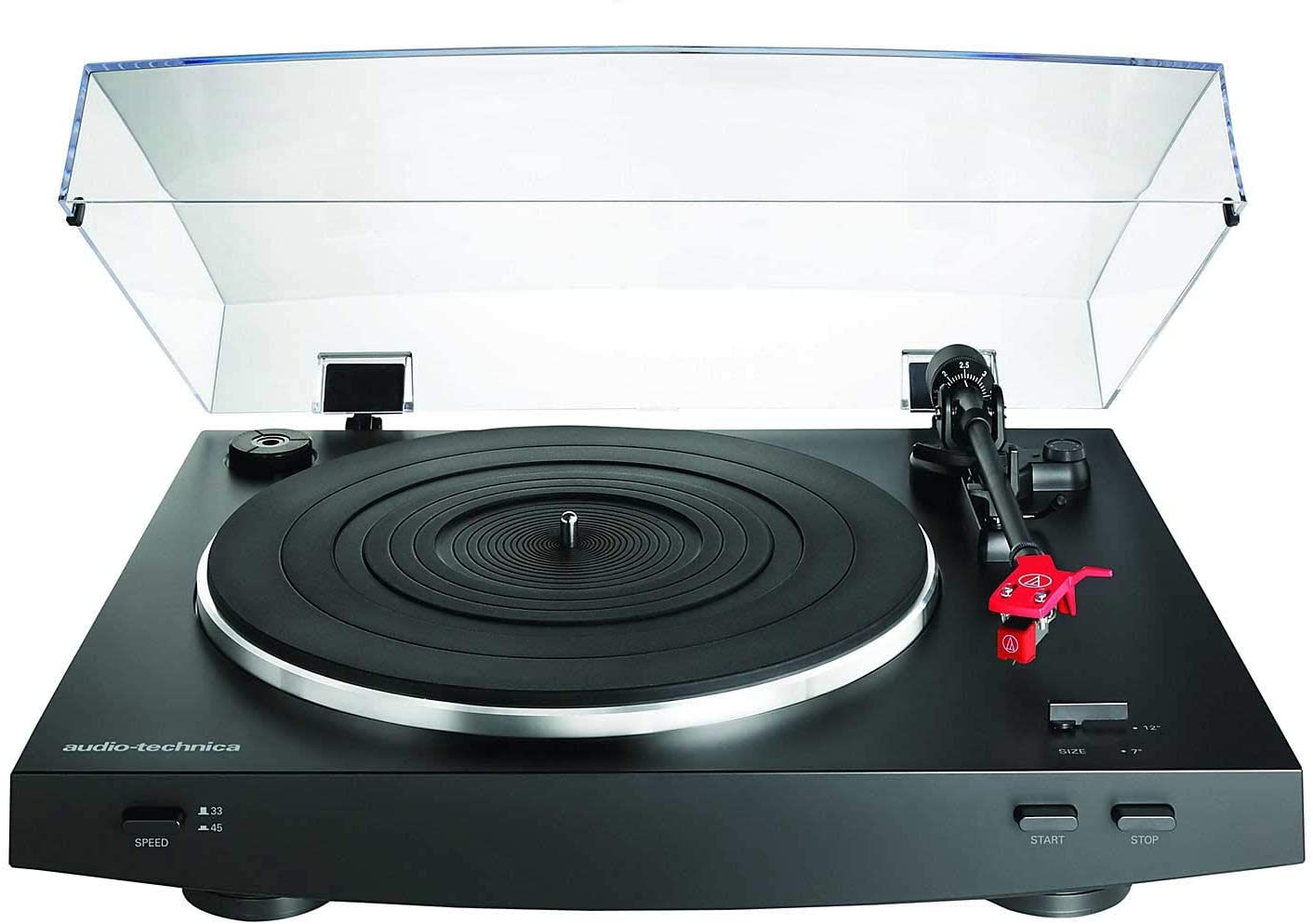
A good automatic deck can also be perfectly satisfying for everyday listening. Models such as the Audio-Technica AT-LP3XBT, Denon DP-300F and Pro-Ject Automat A1 show that automatic operation can be aimed at listeners who still care about proper vinyl playback.
The meaningful trade-off is not “sound versus convenience”. It is whether you prefer a simpler mechanical path, or whether you value the protection and ease of automation enough to accept the added mechanism.
Setup, Maintenance and Reliability
Manual turntables are often simpler to set up once you understand the basics. You may need to fit the belt, balance the tonearm, set tracking force and adjust anti-skate if the model provides it.
Tracking force is the downward pressure of the stylus on the record. Too little can cause skipping and groove damage; too much can wear records and stylus faster than necessary.
Automatic turntables may arrive more pre-set, but the automation still needs to behave correctly. The arm should lower gently, land in the correct place and return without scraping across the record.
Basic checks after unpacking any turntable are sensible:
- Place the turntable on a level, stable surface.
- Fit the platter, belt and mat as instructed by the manufacturer.
- Confirm the cartridge or stylus guard is removed before playing.
- Set tracking force and anti-skate if the model requires manual adjustment.
- Test the cueing lever or automatic start with a less valuable record first.
- Listen for obvious speed problems, rubbing noises or mistracking.
With maintenance, manual models have fewer automatic parts to go out of adjustment. Automatic models may need more care if the mechanism becomes sluggish, especially on older second-hand decks.
Do not attempt unsafe electrical repairs inside a turntable. If the motor, power supply or internal wiring appears faulty, use a qualified repairer or return the unit under the seller’s process.
Advantages and Disadvantages
Manual turntables offer several practical advantages:
- Fewer automation parts, which can make the design mechanically simpler.
- More direct control over cueing and replaying specific tracks.
- Often wider choice among traditional hi-fi models.
- A more involving listening ritual for those who enjoy handling records.
Their disadvantages are just as real:
- You must lift the arm at the end of each side.
- Beginners may feel nervous lowering the stylus by hand.
- A missed end-of-side can leave the stylus running in the inner groove.
- Guests or family members may need guidance before using it.
Automatic turntables have different strengths:
- Easier operation for new or occasional users.
- Less risk of clumsy cueing if the mechanism works well.
- End-of-side lift or return can reduce unnecessary stylus wear.
- Better suited to background listening and shared systems.
Their disadvantages are mainly about complexity:
- More moving parts can mean more to adjust or repair over time.
- Some automatic mechanisms feel less refined than others.
- Choice can be narrower if you want a very particular cartridge or tonearm setup.
- Poorly designed automation can be annoying if it lands inaccurately or operates roughly.
The fair comparison is between good examples of each type. A cheap, badly aligned manual deck will not outperform a competent automatic deck simply because it is manual.
Which Is Better for Different Buyers
Choose a manual turntable if you want the most hands-on vinyl experience. It suits listeners who enjoy the process, are willing to learn basic setup, and do not mind being present at the end of a side.
Manual also makes sense if you plan to upgrade cartridges, experiment with setup or build a more traditional hi-fi system over time. Many popular enthusiast decks, including models in ranges such as Rega Planar and Pro-Ject Debut, follow this approach.
Choose an automatic turntable if you want vinyl to be easy and approachable. It suits first-time buyers, shared living rooms, family use and anyone who worries about dropping the needle.
Automatic return is especially useful if you listen while doing other things. It is also sensible for late-night listening, where falling asleep during a record is a real possibility.
A semi-automatic turntable can be the ideal compromise. You still cue the record yourself, but the deck protects the stylus at the end of the side.
For buyers using Bluetooth speakers or compact powered speakers, convenience may matter more than fine adjustment. In that case, an automatic Bluetooth model can be a practical choice, provided it still uses a proper stylus and tracks records safely.
For buyers building a separates hi-fi system with an amplifier and passive speakers, manual turntables often give broader choice. That does not mean you must buy manual, but it does mean the market may offer more options.
Common Mistakes
The first mistake is buying for an imagined version of yourself. If you like the idea of a serious manual deck but actually listen while multitasking, you may find it irritating in daily use.
The second mistake is assuming automation protects records on its own. A turntable still needs the correct stylus, suitable tracking force and a clean record surface.
The third mistake is ignoring the cueing mechanism. Whether manual or automatic, the arm should lower smoothly rather than dropping quickly onto the record.
The fourth mistake is overlooking speaker and amplifier needs. Some turntables have a built-in phono stage, while others need a separate phono input or external phono preamp.
A phono stage boosts the very small signal from the cartridge to a level your amplifier or powered speakers can use. If you connect a turntable without one to the wrong input, the sound may be extremely quiet and thin.
Before buying, check these points:
- Does the turntable include a built-in phono stage, or do you need one separately?
- Does it have Bluetooth, USB or analogue outputs, if those matter to your setup?
- Can tracking force be adjusted, or is everything fixed?
- Is the cartridge replaceable, and can you buy replacement styli easily?
- Does the automatic function include start, stop, return, or only end-of-side lift?
The Verdict
There is no universal winner between manual and automatic turntables. The better choice is the one that matches how careful, attentive and involved you want playback to be.
Manual turntables are best for buyers who enjoy the ritual and want a simpler, more traditional design. They reward careful handling and suit listeners who see record playing as an active part of the experience.
Automatic turntables are best for buyers who want vinyl without as much fuss. They make sense when convenience, shared use and end-of-side protection are more important than maximum mechanical simplicity.
If you are unsure, look closely at your normal listening habits. If you sit down and play albums properly, manual is easy to live with; if you wander off, automatic return is worth serious consideration.
Frequently asked questions
Is a fully automatic turntable the same as a semi-automatic one?
No. A fully automatic turntable can usually start playback and return the arm for you.
A semi-automatic model normally requires you to start the record manually, but it lifts or returns the arm at the end. For many buyers, that end-of-side function is the most useful part.
Will an automatic turntable damage my records?
A properly working automatic turntable should not damage records simply because it is automatic. The important points are gentle arm movement, correct tracking force and a stylus in good condition.
If the arm drops suddenly, lands in the wrong place or drags sideways, stop using it and seek adjustment or support. Do not keep testing it on valuable records.
Are manual turntables harder for beginners?
They require a little more care, but they are not difficult once you learn the routine. The cueing lever lowers the arm slowly, so you do not usually have to place the stylus by hand.
The main habit to build is lifting the arm at the end of each side. After a few records, most people find the process straightforward.
Does automatic return wear out over time?
Like any moving mechanism, automatic return can wear, dry out or fall out of adjustment, especially on older used turntables. That does not mean it is unreliable by default.
When buying second-hand, test the full automatic cycle before committing. Make sure the arm starts, lowers, lifts and returns smoothly.
Can I upgrade the cartridge on both types?
Sometimes, but it depends on the turntable. Many manual hi-fi models allow cartridge changes and adjustment, while some more convenience-focused automatic models use more fixed arrangements.
Check whether the headshell, cartridge mount and tracking force are adjustable. If easy upgrades matter to you, confirm this before buying.
Is automatic better for older listeners or people with shaky hands?
Often, yes. Automatic start and cueing can reduce the need for precise hand movement near the record surface.
A turntable with a gentle cueing system, clear controls and automatic return can make vinyl more enjoyable and less stressful. It is still worth checking that the buttons and arm movement feel easy to use.
Should DJs use automatic turntables?
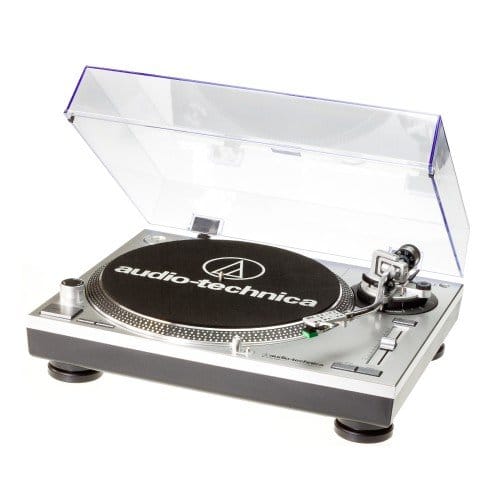
Generally, no. DJ use normally requires direct control of the platter and tonearm, plus quick cueing and back-cueing.
Automatic mechanisms are designed for home listening, not performance handling. A dedicated DJ turntable is the more appropriate route for scratching, mixing or club-style use.
Can I leave a record playing on a manual turntable?
You can leave it briefly, but you should be aware that the stylus will continue sitting in the run-out groove after the side ends. This is not usually an immediate disaster, but it is not a habit to encourage.
If you regularly forget, choose a semi-automatic or automatic deck. It is a simple way to reduce unnecessary stylus wear.
Final recommendation
Start by deciding how you actually listen. If vinyl is a focused, sit-down activity for you, a manual turntable is likely to feel natural and satisfying.
If records will be played by several people, used in the background, or left running while you move around the house, automatic operation is worth paying attention to. End-of-side lift or return is often more useful than buyers expect.
Before choosing a specific model, check the cartridge, stylus availability, phono stage requirements and whether the tonearm can be set up correctly. A convenient turntable still needs to treat records properly, and a manual turntable still needs to fit your real routine.
The sensible next step is to shortlist one or two manual options and one or two automatic options at the same quality level. Compare how each would work in your room, with your speakers, and with the way you are most likely to play records week after week.