Watch the guide video
Quick answer
The most useful turntable accessories for most vinyl listeners are a carbon fibre record brush, a safe stylus cleaner, good inner sleeves, proper record storage and, where needed, a tracking force gauge. These support clean playback, reduce wear and help you look after the records you already own.
After that, consider system-specific upgrades such as an external phono stage, better speakers, isolation support or a record cleaning kit. Buy accessories to solve a real problem rather than to decorate the system.
Key Takeaways
Start with record care before cosmetic upgrades. Clean records and a clean stylus usually make a bigger day-to-day difference than an expensive mat or record weight.
Match accessories to your turntable. A fully automatic Bluetooth model, a manual hi-fi deck and a portable suitcase-style player do not need the same tools.
Prioritise the accessories that reduce avoidable wear:
- A carbon fibre brush for surface dust
- A stylus brush or approved stylus cleaner
- Anti-static inner sleeves
- Stable, upright record storage
- A tracking force gauge if your tonearm allows adjustment
Treat convenience accessories as optional. Bluetooth transmitters, record weights, display stands and premium outer sleeves can be useful, but they should not come before basic cleaning and setup.
Who This Guide Is For
This guide is for vinyl listeners who already own a turntable or are buying one and want to know which accessories are worth adding. It is especially useful if you are building a simple home listening setup rather than a specialist hi-fi system.
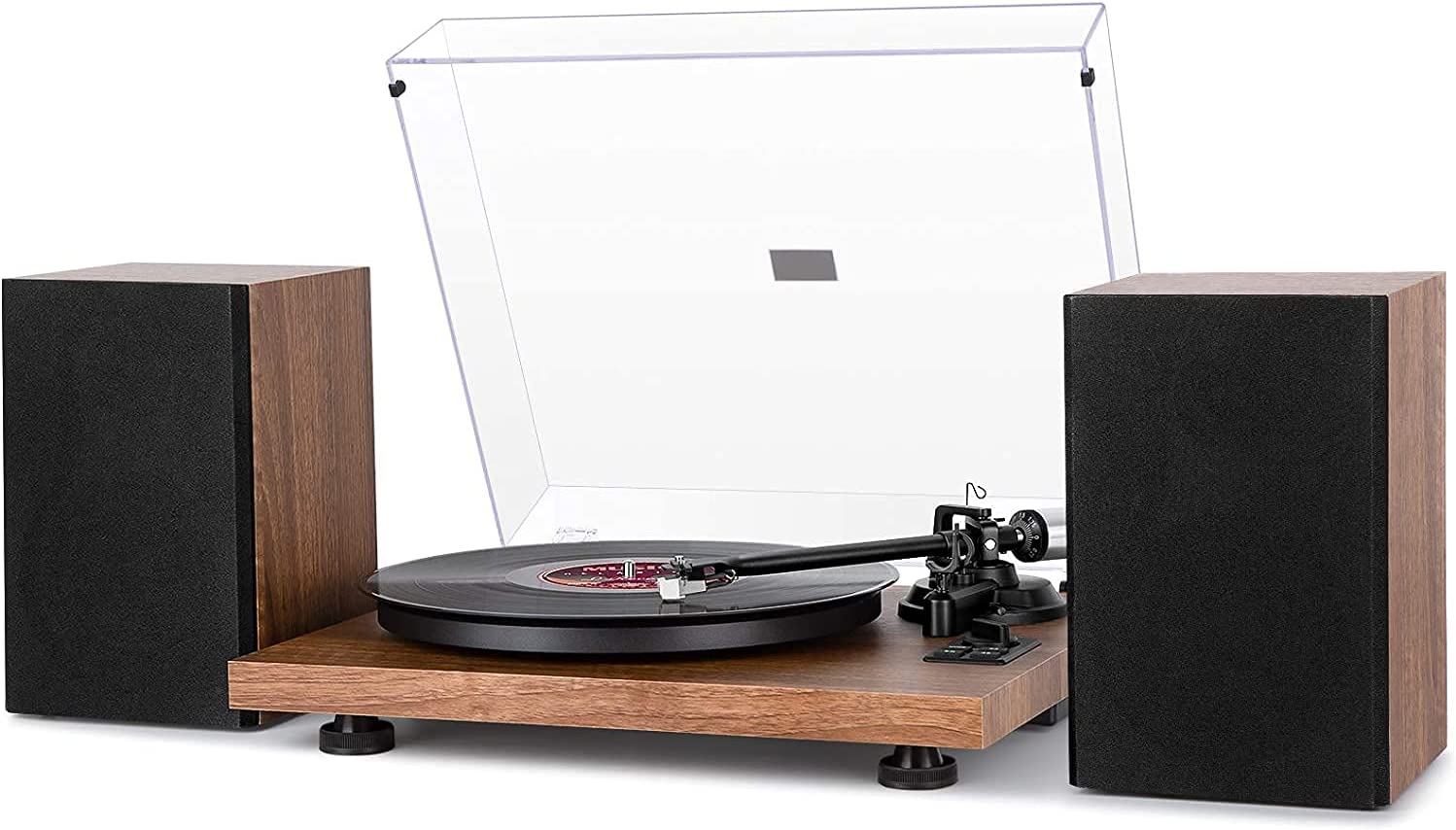
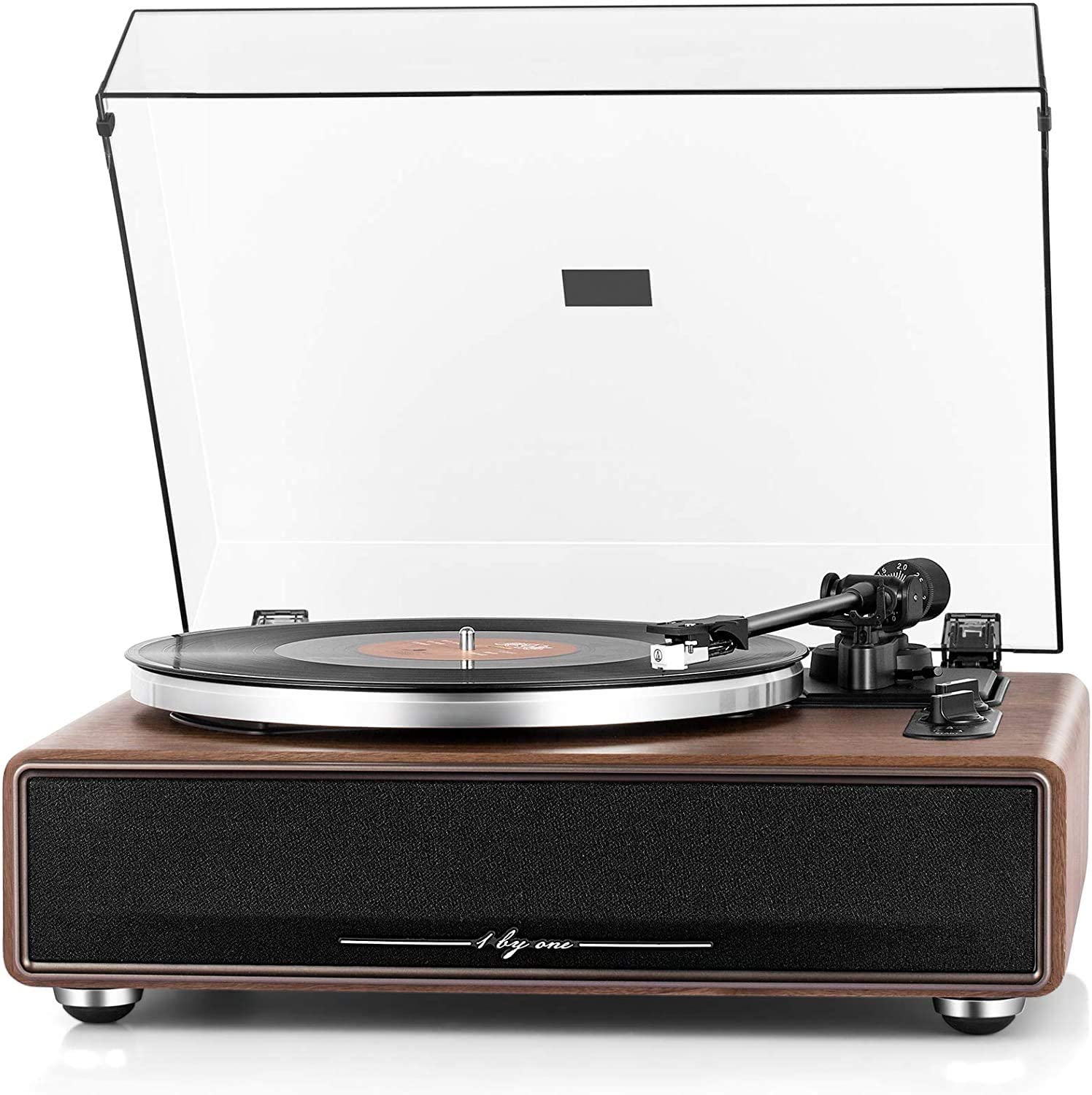
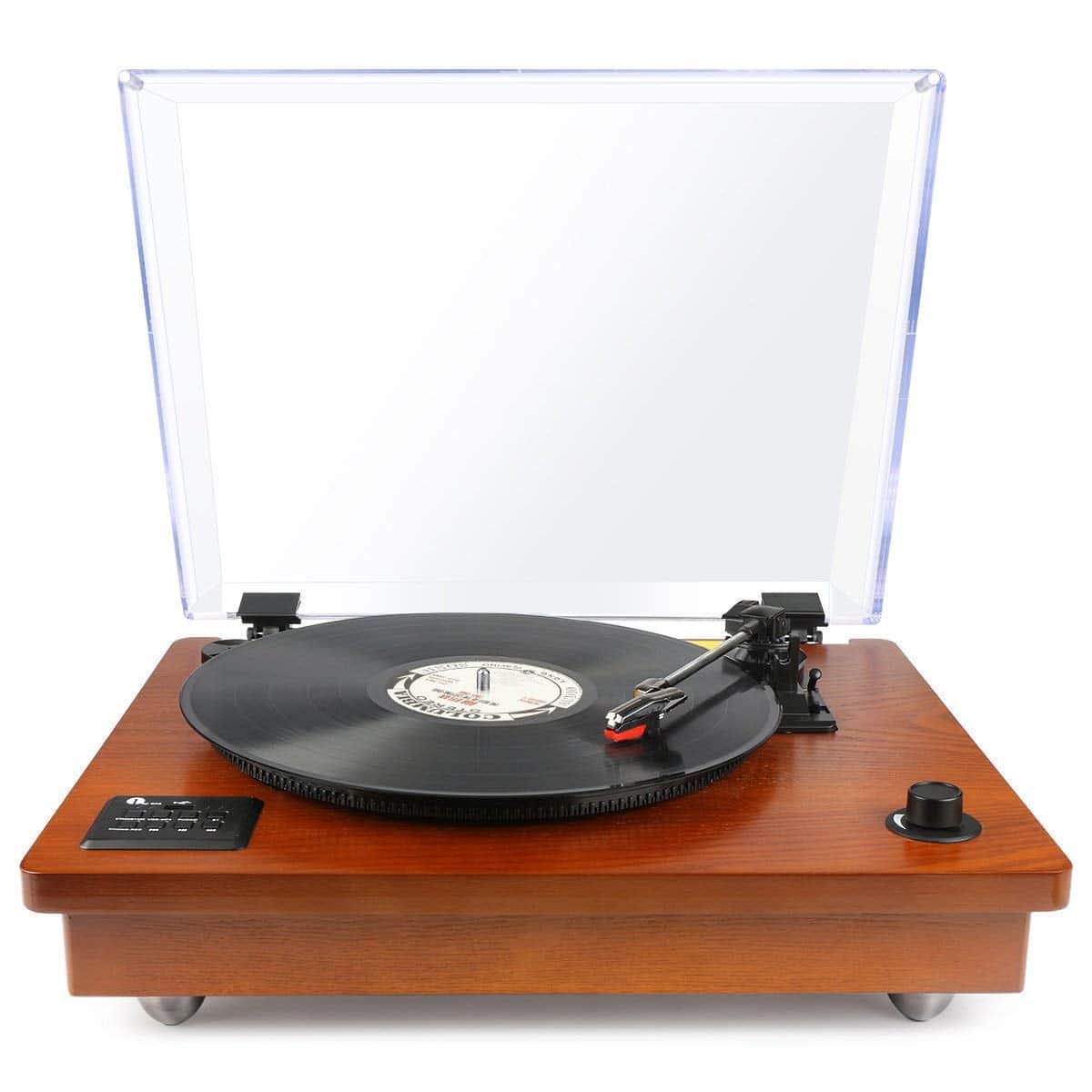
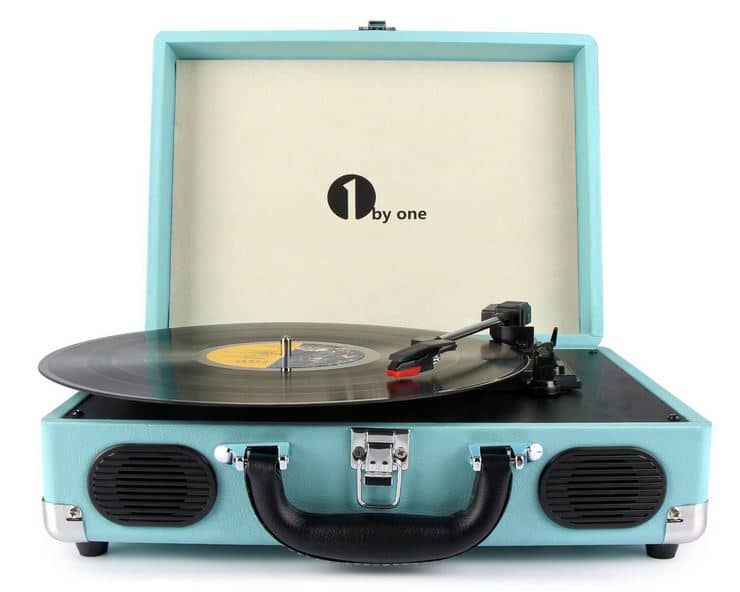
It also suits buyers comparing different types of turntable. For example, someone using a Sony PS-LX310BT Bluetooth Vinyl Turntable may have different needs from someone with a Rega Planar 1 Record Player, Pro-Ject Debut Carbon EVO Turntable or Technics SL-1500C Record Player.
You do not need to buy everything at once. A sensible accessory kit can be built gradually as your record collection and listening habits grow.
Start With the Essentials
The first accessories should protect the stylus and the record groove. Vinyl playback is mechanical: a tiny stylus sits in the groove, so dust, static and poor setup can cause noise and unnecessary wear.
For most listeners, the essential starter kit is:
- Carbon fibre record brush
- Stylus cleaning brush or gel from a reputable brand
- Anti-static inner sleeves
- Outer sleeves if you want to protect artwork
- Stable record storage that keeps LPs upright
If your turntable has an adjustable counterweight, add a tracking force gauge. Tracking force is the downward pressure of the stylus on the record, and setting it correctly helps the stylus stay in the groove without pressing too hard.
If your turntable is fixed and non-adjustable, a tracking gauge may not be useful. In that case, spend the money on cleaning and storage instead.
What to Consider Before Buying
Check what your turntable already includes before buying accessories. Some models come with a dust cover, built-in phono stage, fitted cartridge, USB output, Bluetooth or a supplied mat, while others are more stripped back.
Ask these questions first:
- Does the turntable have an adjustable tonearm?
- Does it have a built-in phono stage?
- Are you using powered speakers, passive speakers or headphones?
- Do you play mostly new records, used records or both?
- Is the turntable on a solid surface away from speaker vibration?
Your answers decide what matters most. A listener buying second-hand records will benefit more from record cleaning, while someone hearing hum or low volume may need to check phono stage and cable compatibility.
Do not assume a more expensive accessory is automatically better. The right basic tool used correctly often beats an advanced accessory bought for the wrong system.
Features That Matter Most
For cleaning accessories, look for safe materials and simple use. A good record brush should lift dust without shedding fibres, and a stylus cleaner should be designed for cartridges rather than general household cleaning.
For sleeves, focus on anti-static protection and easy handling. Paper sleeves can leave fibres behind, while better inner sleeves reduce static and scuffing when records are removed.
For setup tools, accuracy matters more than appearance. A digital tracking force gauge, alignment protractor and small spirit level can help if your turntable allows cartridge and tonearm adjustment.
For isolation accessories, the goal is stability. Isolation pads, a wall shelf or a heavier support can help if footsteps, bass or nearby speakers make the needle skip.
For phono stages, compatibility is key. Most entry-level cartridges are moving magnet, often shortened to MM, while some higher-end cartridges are moving coil, or MC, and need a compatible phono stage.
Cleaning and Record Care Accessories
A carbon fibre brush is the simplest daily cleaning tool. Use it before playback to remove loose dust, but do not expect it to deep-clean fingerprints, mould or ingrained dirt.
A stylus brush is equally important. Always brush from back to front, following the direction the record travels, and never scrub side to side because that can damage the cantilever.
For used records, consider a wet cleaning kit. Fluid and a proper cleaning pad can remove dirt that a dry brush cannot, but the record must be dried properly before it goes back into its sleeve.
A practical cleaning routine is:
- Wash and dry your hands before handling records.
- Hold the record by the edge and labelled centre.
- Use a carbon fibre brush before playing.
- Clean the stylus gently when needed.
- Put the record into a clean inner sleeve after playback.
Wet vacuum and ultrasonic cleaners are optional. They can be useful for large collections or frequent second-hand buying, but they are excessive for someone with a small, mostly new collection.
Setup, Isolation and Measurement Tools
Setup accessories matter most with manual turntables and adjustable tonearms. If your deck lets you set tracking force, anti-skate and cartridge alignment, the right tools help you avoid guesswork.
A digital tracking force gauge is a sensible purchase for adjustable arms. It lets you set the cartridge to the manufacturer’s recommended range rather than relying only on the markings on the counterweight.
A cartridge alignment protractor helps position the cartridge correctly in the headshell. Poor alignment can cause distortion, especially towards the end of a side where the grooves are tighter.
A small spirit level is useful if the turntable sits on furniture that is not perfectly flat. A level deck helps the tonearm behave consistently across the record.
Isolation is worth considering if you hear feedback, bass boom or skipping. Before buying specialist feet, first move the turntable away from speakers and place it on a rigid, stable surface.
System Compatibility: Phono Stages, Speakers and Connections
A phono stage is a small preamp that boosts the very quiet cartridge signal and applies the correct equalisation for vinyl. Without one, a turntable connected to a normal line input will sound extremely quiet and thin.
Some turntables include a built-in phono stage, especially many USB and Bluetooth models. Others need an external phono stage or an amplifier with a dedicated phono input.
Check the signal chain before spending money:
- Turntable with built-in phono stage to powered speakers: usually simple
- Turntable without phono stage to powered speakers: external phono stage needed
- Turntable to hi-fi amplifier with phono input: external phono stage may not be needed
- Turntable to Bluetooth speaker: needs compatible Bluetooth output or a transmitter
Powered speakers can be a tidy option for small rooms. Catalogue examples such as Edifier R1280DB Powered Bluetooth Bookshelf Speakers, House of Marley Get Together Duo Bookshelf Speakers, Sanyun SW206 speakers and Wharfedale Diamond 9.1 Speakers show the broad types buyers often compare, though each needs checking for inputs and whether amplification is built in.
Passive speakers need an amplifier. Powered or active speakers have amplification inside, but still need the right input type and, in many cases, a phono stage before them.
Choosing for Different Buyers
Beginners should keep the accessory list short. Buy a brush, stylus cleaner, sleeves and safe storage before thinking about mats, clamps or cartridge upgrades.
Collectors of used records should prioritise cleaning. A wet cleaning system, spare inner sleeves and outer sleeves will usually be more valuable than decorative accessories.
Listeners with automatic turntables should avoid unnecessary setup tools. If the cartridge and tonearm are factory-set and not intended for adjustment, a protractor and gauge may have limited use.
Manual turntable owners should consider setup tools earlier. Decks such as many Rega, Pro-Ject, Fluance, Teac and Technics models may reward careful setup, depending on the exact model and cartridge arrangement.
Bluetooth and USB users should focus on compatibility and convenience. If you use a Bluetooth or USB turntable, check whether accessories support your actual listening goal, such as digitising records, playing through powered speakers or reducing vibration.
Apartment and small-room listeners should think about isolation and speaker placement. A compact support or isolation pads may help more than a record weight if footfall or bass vibration is the problem.
Budget Priorities and Upgrade Order
Spend in the order that solves the biggest risks first. The first risk is dirty playback; the second is poor setup; the third is system mismatch.
A sensible upgrade order is:
- Cleaning brush and stylus cleaner.
- Anti-static inner sleeves and upright storage.
- Tracking force gauge if the tonearm is adjustable.
- Better support or isolation if skipping or feedback occurs.
- External phono stage if the built-in stage or amplifier input is limiting the system.
- Speaker upgrade if the rest of the system is stable and correctly connected.
Do not spend heavily on accessories if the turntable itself has major limitations. If the tonearm has no proper adjustment, the cartridge cannot be replaced, or the platter is very unstable, saving for a better turntable may be wiser.
Equally, do not underestimate small purchases. Good sleeves, a careful cleaning routine and a stable surface are not glamorous, but they help every listening session.
Common Mistakes
Final Checklist
Use this checklist before you buy any accessory:
- What problem am I trying to solve?
- Does my turntable support this accessory?
- Will it protect records, improve setup or improve compatibility?
- Is there a cheaper practical fix, such as better placement or cleaning?
- Do I know whether my speakers are powered or passive?
- Do I need a phono stage, or do I already have one?
- Will this accessory still be useful if I upgrade the turntable later?
For a first accessory kit, keep it simple:
- Carbon fibre record brush
- Stylus cleaner
- Anti-static inner sleeves
- Stable upright storage
- Tracking force gauge if suitable
For a more developed system, add selectively:
- Wet record cleaning kit
- Cartridge alignment protractor
- Isolation platform or feet
- External phono stage
- Better speakers or amplifier support if the system needs it
If an accessory does not solve a clear problem, wait. Vinyl listening rewards careful setup more than impulse buying.
Frequently asked questions
Do I need a record clamp or record weight?
Not always. A clamp or weight can help some slightly dished records sit flatter, but it depends on the turntable design.
Avoid using heavy weights on decks that are not designed for them. If in doubt, check the turntable manual and prioritise cleaning, setup and isolation first.
Are anti-static sleeves really worth buying?
Yes, they are one of the more sensible low-cost accessories. They reduce static build-up and help prevent paper dust from getting onto the record surface.
They are especially useful after cleaning used records. There is little point deep-cleaning a record and putting it straight back into a dirty old sleeve.
Can I use a normal microfibre cloth to clean records?
A dry household cloth is not ideal for routine record cleaning. It may push dust around, create static or leave fibres in the groove.
Use a carbon fibre brush for light dust and a proper record cleaning system for deeper dirt. Always avoid abrasive cloths and household sprays.
When should I replace my stylus instead of cleaning it?
Clean the stylus first if you hear sudden distortion, fuzzy treble or extra crackle. Dust on the stylus can sound worse than you might expect.
If problems continue, the stylus may be worn or damaged. Check the cartridge maker’s guidance and avoid playing valuable records with a suspect stylus.
Do I need an external phono stage if my turntable has one built in?
Not necessarily. A built-in phono stage is often convenient and may be perfectly suitable for a simple system.
Consider an external phono stage only if your wider system is good enough to show the difference, or if you need cartridge compatibility that the built-in stage does not provide.
What accessories help most with crackle and pops?
Start with cleaning and static control. A carbon fibre brush, anti-static sleeves and a wet cleaning method for dirty records are the most direct tools.
Some crackle is caused by groove wear or pressing faults, which accessories cannot fully fix. Cleaning can reduce noise, but it cannot restore damaged vinyl.
Should I buy better speakers before turntable accessories?
If you have no proper speakers, speakers may be the bigger priority. A good turntable will still sound limited through weak or poorly placed speakers.
If your speakers are already adequate, buy care and setup accessories first. They protect the records and help the turntable perform as intended.
Are USB and Bluetooth accessories useful for vinyl?
They can be useful if they match how you listen. USB is helpful for digitising records, while Bluetooth can make placement and casual listening easier.
Both add convenience rather than pure analogue simplicity. Check whether your turntable already includes these features before buying extra adaptors.
Final recommendation
The best turntable accessories are the ones that solve real problems: dust, static, poor setup, vibration and connection mismatches. Start with cleaning, sleeves and safe storage, then add setup tools if your turntable allows adjustment.
After that, look at your system as a whole. If the speakers, phono stage or placement are holding things back, spend there before buying decorative or highly specialised extras.
A confident purchase is a practical one. Buy fewer accessories, choose them carefully and make sure each one helps you play records cleanly, safely and enjoyably.