Quick answer
A good turntable spins the record at a steady speed, lets the stylus track the groove accurately, keeps unwanted vibration away from the cartridge, and connects properly to the rest of your hi-fi or powered speakers. It does not need to be complicated, but it should be adjustable enough to protect your records and get the best from the cartridge.
For most buyers, the most important things are a competent tonearm, a decent cartridge or upgrade path, stable speed, sensible isolation, and the right output options. Convenience features such as automatic operation, Bluetooth or USB can be useful, but they should not come at the expense of basic mechanical quality.
In this guide
- Why speed stability affects pitch, timing and musical confidence
- How the tonearm, cartridge and stylus work together in the groove
- Why tracking force and anti-skate are more important than many buyers realise
- What belt drive and direct drive mean in normal home listening
- When built-in phono stages, Bluetooth and USB are genuinely useful
- How to spot common compromises in all-in-one and very cheap record players
- A practical checklist for choosing a turntable that suits your system
Watch the article video
Start with the job a turntable has to do
A turntable has one deceptively simple job: rotate a record at the correct speed while a stylus follows the groove. Everything else is there to help that happen with as little unwanted movement, noise and distortion as possible.
Records are physical objects, so small mechanical problems become audible. If the platter wobbles, the motor vibrates, or the tonearm cannot track properly, the sound can become unstable, thin, harsh or distorted.
A good turntable is therefore not just an attractive object. It is a controlled mechanical system made up of a motor, platter, bearing, tonearm, cartridge, stylus, plinth and output electronics.
When comparing models, try to think less in terms of brand prestige and more in terms of control. The better the deck controls speed, vibration and stylus movement, the easier it is for your records to sound clean and convincing.
Speed stability: why steady rotation matters
Records are normally played at 33⅓ or 45 revolutions per minute. If the turntable runs too fast, too slow, or varies as it spins, the pitch and timing of the music will suffer.
The two common terms are wow and flutter. Wow is a slow wavering in pitch, often noticeable on piano notes, sustained vocals or strings. Flutter is a faster variation that can make music feel nervous or blurred.
In normal listening, poor speed stability may not jump out on every track. It often appears as a feeling that the music lacks focus, that held notes do not sit still, or that rhythm feels slightly uneasy.
A good turntable uses a motor, drive system and platter that work together to keep rotation consistent. Some decks also include electronic speed control, which can help keep speed accurate and make switching between 33 and 45 easier.
The platter matters because it supports the record and helps smooth out tiny speed changes. A flat, stable platter is more important than a decorative one, and the record should sit securely without rocking.
Do not judge speed quality only by whether the turntable has a speed switch. Convenience is useful, but the important question is whether the deck can keep the chosen speed steady while the stylus is actually playing a record.
Tonearm quality: the part that guides the stylus
The tonearm holds the cartridge and allows the stylus to follow the spiral groove from the outside of the record to the centre. It needs to move freely in both directions while keeping the cartridge at the correct angle and pressure.
A poor tonearm can cause mistracking, inner-groove distortion and unnecessary record wear. Mistracking means the stylus is not following the groove cleanly, so the sound may become gritty, spitty or compressed, especially on loud passages.
A good tonearm should feel controlled rather than loose or flimsy. It should have low-friction bearings, a secure headshell or cartridge mount, and ideally proper adjustment for tracking force and anti-skate.
Tracking force is the downward pressure of the stylus on the record. Too little force can cause the stylus to bounce or mistrack, which can damage the groove. Too much force can also increase wear and dull the sound.
Anti-skate is a small outward force that helps balance the natural pull of the arm towards the centre of the record. Without suitable anti-skate, one side of the groove can be pressed harder than the other, which may affect distortion and wear.
Some simple turntables have fixed tonearms with no meaningful adjustment. That can be convenient, but it limits your ability to set up the cartridge correctly or upgrade it later. For buyers who care about long-term performance, adjustable tracking force is a major advantage.
Cartridge and stylus: where the sound is actually picked up
The cartridge is the small component at the end of the tonearm. Its stylus, often called the needle, sits in the record groove and turns tiny movements into an electrical signal.
This is one of the most important parts of the whole player. A capable turntable fitted with a poor or worn stylus will not sound its best, and a very basic deck may not allow a better cartridge to perform properly.
Most affordable hi-fi turntables use a moving magnet cartridge. This type is common, practical and usually works with standard phono inputs or built-in phono stages. It also often allows the stylus to be replaced without replacing the whole cartridge.
Stylus shape matters too. A basic conical stylus can be forgiving and inexpensive, while an elliptical stylus can trace the groove more accurately and often gives cleaner detail. More advanced stylus shapes exist, but they also demand careful set-up.
A good turntable should either come with a decent cartridge or make cartridge replacement straightforward. Standard cartridge mounting is useful because it gives you more choice later.
Be cautious with players that use a very basic ceramic cartridge and offer no proper tracking adjustment. These can work for casual use, but they are rarely the best choice if you want good sound quality or long-term record care.
Drive system: belt drive, direct drive and what really matters
The drive system is how the motor turns the platter. The two main types are belt drive and direct drive.
In a belt-drive turntable, the motor turns the platter using a rubber belt. The belt can help isolate motor vibration from the record, and many home hi-fi turntables use this approach.
In a direct-drive turntable, the motor is directly connected to the platter. This can offer strong speed control and quick start-up, which is why direct drive is common in DJ-style decks and some hi-fi models.
Neither system is automatically better in every case. A well-designed belt-drive deck can outperform a poor direct-drive deck, and a well-designed direct-drive deck can be excellent for home listening.
For normal buyers, the question should be: is the drive system quiet, stable and well implemented? You should not choose purely because a listing says belt drive or direct drive.
Belt-drive owners should remember that belts wear over time. If speed becomes inconsistent or the platter struggles to start, a replacement belt may be needed. This is normal maintenance, not necessarily a fault.
Isolation, plinth and build: keeping vibration under control
A record player is sensitive to vibration because the stylus is designed to pick up very small movements. Unfortunately, it cannot always tell the difference between groove information and unwanted vibration from speakers, footsteps, furniture or the motor.
The plinth is the main body of the turntable. A good plinth should support the motor, platter and tonearm rigidly while helping to manage vibration.
Heavier is not always better, but a turntable should feel stable and well assembled. A lightweight, hollow-feeling body can be more prone to feedback and resonance, especially when placed near speakers.
The feet also matter. Decent isolation feet help stop vibration from travelling up from the shelf or table. They are especially useful in rooms with suspended wooden floors, where footsteps can cause skipping.
Placement is part of performance. Even a good turntable can sound poor if it is sitting on the same surface as a bass-heavy speaker or on a wobbly sideboard.
For best results, place the turntable on a level, rigid surface away from direct speaker vibration. If you hear low-frequency rumble, acoustic feedback or skipping when the volume rises, the issue may be isolation rather than the record itself.
Phono stage and connections: making the signal usable
A turntable cartridge produces a very small signal. It also needs special equalisation before it can sound balanced through normal speakers or an amplifier. This job is done by a phono stage, also called a phono preamp.
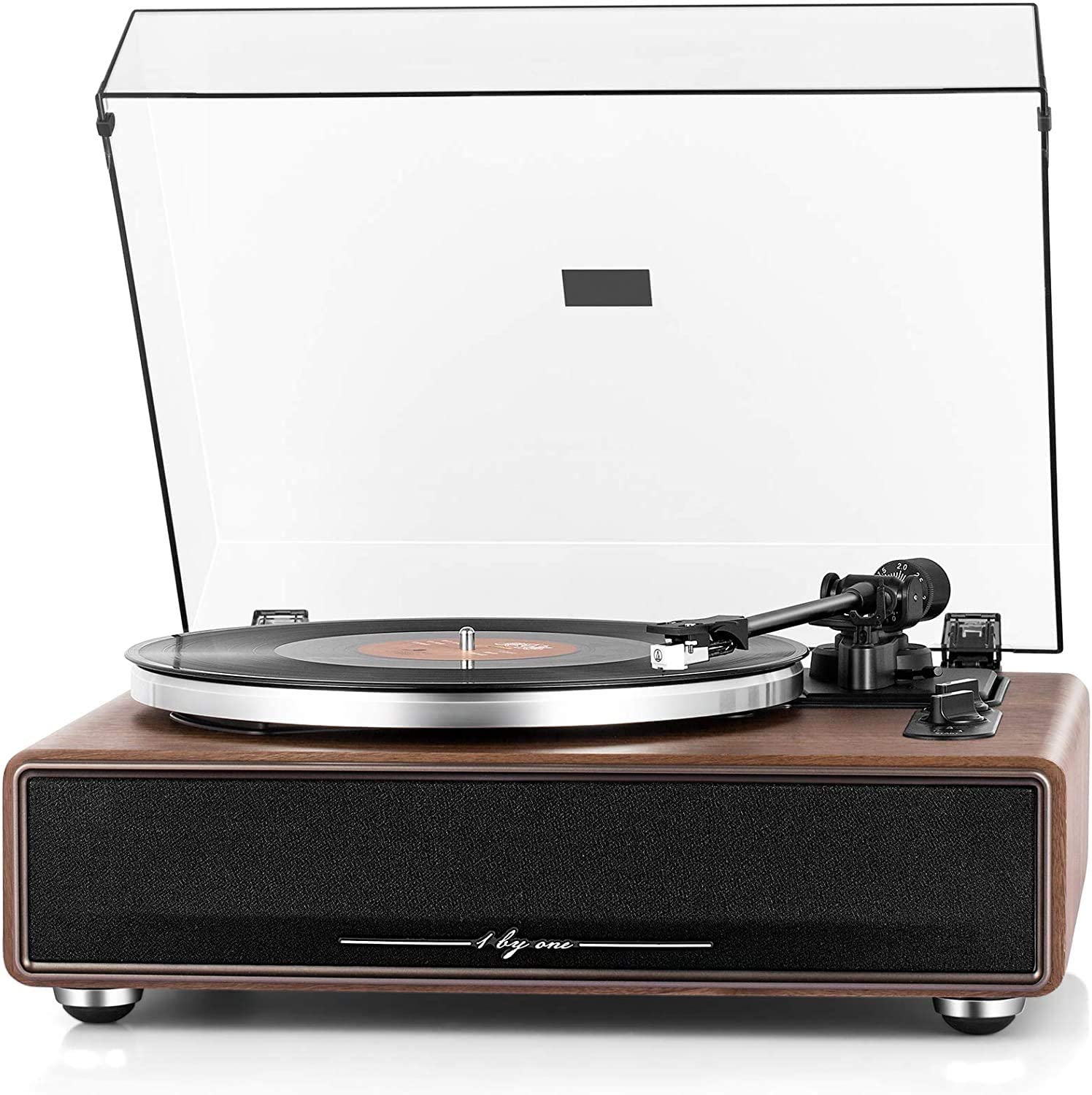
Some turntables include a built-in phono stage. This lets you connect directly to powered speakers, an amplifier line input, or some wireless speaker systems that have an analogue input.
Other turntables output a phono-level signal only. These need an amplifier with a dedicated phono input or a separate phono preamp between the turntable and amplifier.
The important point is matching. If you connect a phono-level turntable into a normal line input without a phono stage, it will sound extremely quiet and thin. If you run a built-in phono output into another phono input, it may sound loud, distorted and boomy.
Look for clear switching between phono and line if a turntable has a built-in preamp. This gives you flexibility if you later upgrade to a better external phono stage or an amplifier with its own phono input.
Connections should suit your system rather than impress on paper. RCA outputs are common for hi-fi use, USB is useful for recording records to a computer, and Bluetooth is convenient where cables are awkward.
Convenience features: useful, but not the whole story
Convenience features can make vinyl easier to live with. They are not bad, but they should be judged by how you will actually listen.
Automatic turntables can start and stop the record for you, and some return the arm at the end of a side. Models listed in the local catalogue such as the Denon DP-300F Automatic Vinyl Turntable and Audio-Technica AT-LP3XBT Automatic Wireless Turntable sit in this type of category, although the exact features should always be checked on the product page.
Manual turntables require you to cue the arm yourself. They can be very simple and satisfying, but they need a steadier hand and more attention at the end of a record.
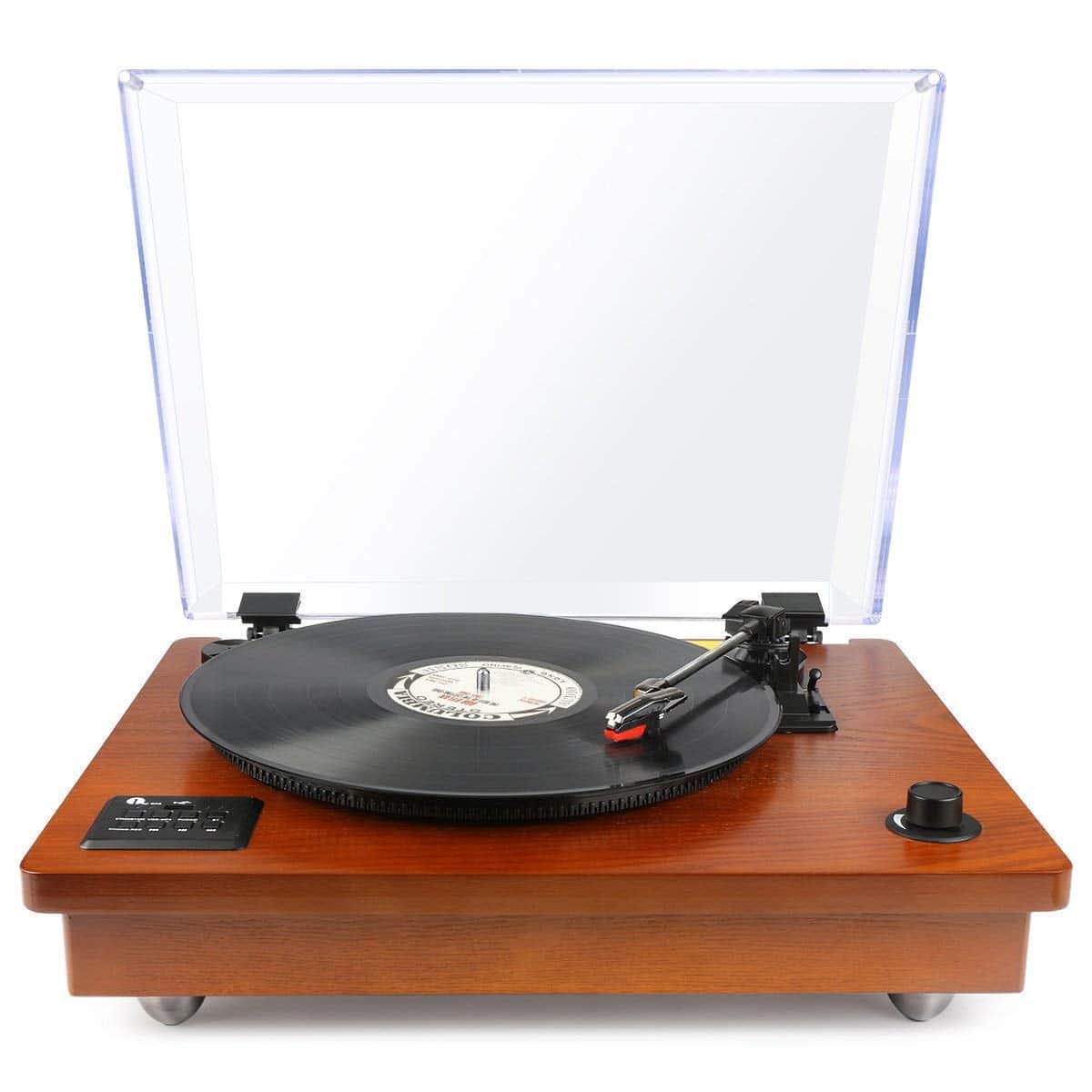
Bluetooth turntables can send audio wirelessly to compatible speakers or headphones. This is convenient, but Bluetooth converts the signal and may introduce compression or delay depending on the equipment used.
USB turntables allow you to make digital recordings of records. Catalogue examples include USB-category models such as the Audio-Technica AT-LP120USBHCBK USB Vinyl Turntable, Denon DP-200 USB Vinyl Turntable and Lenco L-400 Black USB Vinyl Turntable. USB is most valuable if you genuinely plan to archive records or listen on portable devices.
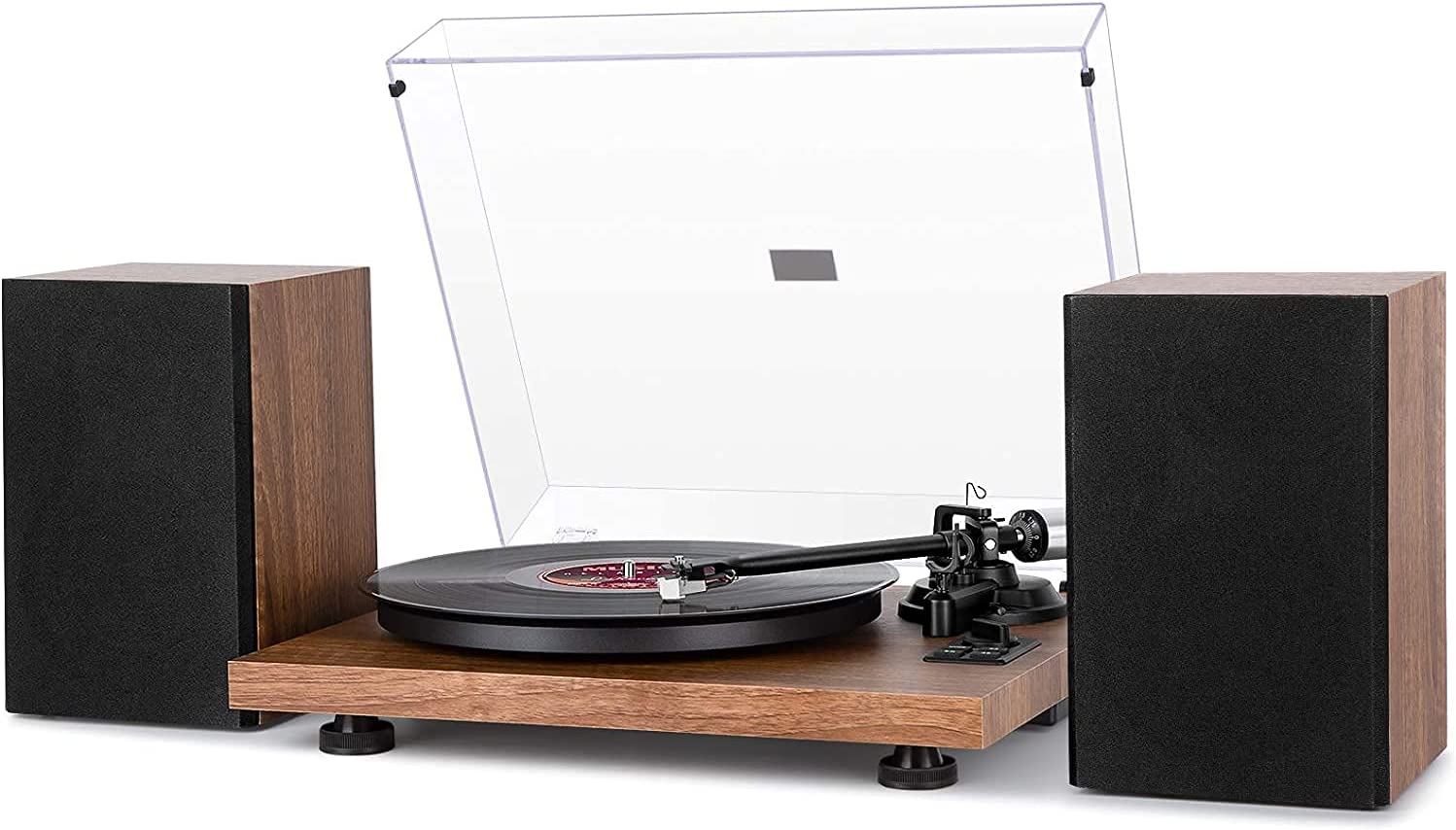
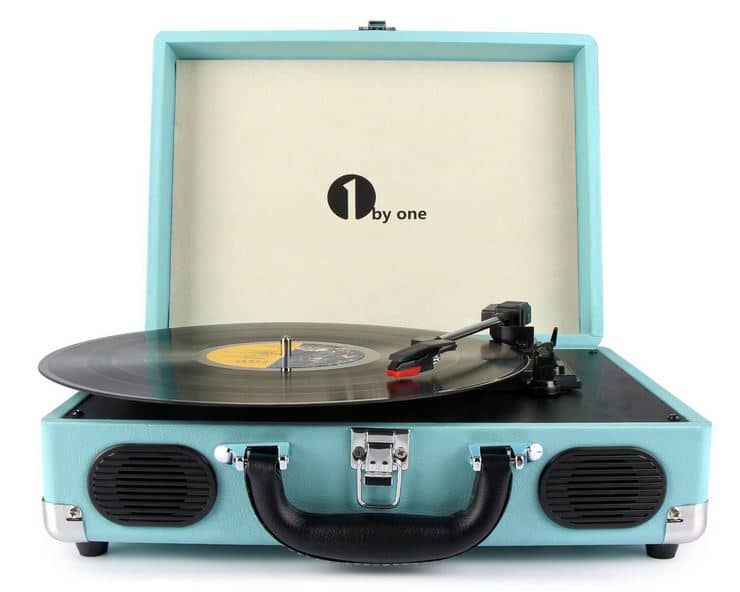
Built-in speakers are convenient for casual listening, but they are usually limited by size, cabinet space and vibration. If sound quality is a priority, a separate turntable with powered speakers or an amplifier and passive speakers is usually a stronger route.
Record care and set-up: a good deck still needs correct use
Even a well-made turntable can perform badly if it is not set up properly. Vinyl playback is a physical process, so small set-up errors can be audible.
Start with a level surface. Use a small spirit level if possible, checking both side-to-side and front-to-back. A turntable that is not level can affect arm movement and anti-skate behaviour.
If the tonearm has an adjustable counterweight, set the tracking force according to the cartridge manufacturer’s guidance. Do not guess, and do not set the arm very light in the belief that it protects records. Too little force can make the stylus rattle in the groove and cause damage.
Use the cueing lever rather than dropping the stylus by hand. This reduces the risk of damaging the stylus or scratching the record.
Keep records clean and store them upright in inner sleeves. Dust and grit make the stylus work harder and can increase noise. A carbon fibre brush before each play is a simple habit that often helps.
Replace the stylus when it is worn. A worn stylus can damage records and sound dull or distorted. If you buy a used turntable, assume the stylus may need replacing unless you have reliable evidence of its condition.
How to judge value: spend on performance, not clutter
A good turntable is not necessarily the one with the longest feature list. Extra functions can be helpful, but each one uses part of the design budget.
If two products cost about the same, a simple deck with a better tonearm, cartridge and platter may sound better than an all-in-one system with radio, cassette, Bluetooth, USB, built-in speakers and decorative styling.
That does not mean all-in-one systems are useless. They can suit a kitchen, bedroom, gift purchase or occasional listener who values simplicity above hi-fi performance. The key is being honest about expectations.
For a main listening system, prioritise the fundamentals:
- Stable speed and quiet running
- Adjustable tracking force, where possible
- Replaceable stylus and preferably replaceable cartridge
- Solid platter support and sensible isolation
- Correct connection to your amplifier or powered speakers
- A practical upgrade path if your interest grows
Think about the whole system too. A better turntable will not shine through poor speakers, bad placement or incorrect connection. Equally, a modest turntable can be enjoyable when set up carefully and paired with suitable speakers.
If you are new to vinyl, avoid buying only for looks. Retro styling can be enjoyable, but the record does not care how the player looks. It responds to geometry, pressure, speed and vibration.
At a glance comparison
| Core sound quality | Depends mainly on speed stability, tonearm behaviour, cartridge quality, stylus condition and vibration control. |
|---|---|
| Record safety | Helped by correct tracking force, suitable anti-skate, a clean stylus, a replaceable stylus and careful cueing. |
| Ease of use | Improved by automatic operation, built-in phono stage, speed switching, Bluetooth or bundled speakers, depending on your needs. |
| Upgrade potential | Stronger when the turntable has a standard cartridge mount, adjustable arm settings and switchable phono/line output. |
| Best first priority | Choose reliable mechanical playback and correct system matching before paying extra for decorative or rarely used features. |
Frequently asked questions
Is a more expensive turntable always better?
Not always. Higher prices can bring better materials, tighter engineering and better cartridges, but only if the design focuses on playback quality.
A costly turntable can still be a poor match if it lacks the connections you need, is difficult to set up, or is paired with weak speakers. Judge the whole system, not just the price tag.
Can a cheap turntable damage records?
It can if it uses a poor stylus, tracks too heavily or too lightly, has no proper tonearm control, or mistracks often. The biggest risk is not simply that a player is inexpensive, but that it cannot hold the stylus correctly in the groove.
If you own valuable records, choose a turntable with a replaceable stylus and proper tracking force control where possible.
Do I need a separate amplifier for a turntable?
You need some form of amplification and speakers, but it does not always have to be a traditional separate amplifier. You can use powered speakers if the turntable has a built-in phono stage, or if you add an external phono preamp.
If you have a hi-fi amplifier with a phono input, you can use a turntable with phono output. Always check whether the turntable is outputting phono level or line level.
Is direct drive better than belt drive?
Neither is automatically better. Direct drive can offer strong speed control and quick start-up, while belt drive can help isolate motor vibration.
The quality of the design matters more than the label. A well-built version of either system can work well for home listening.
How important is the cartridge compared with the turntable itself?
The cartridge is very important because it is the part that reads the groove. However, it can only perform well if the turntable gives it stable speed, low vibration and a suitable tonearm.
Think of the cartridge and turntable as a team. Upgrading a cartridge on a weak deck may bring limited benefits, while a good deck with a worn stylus will still sound poor.
Should beginners choose automatic or manual operation?
Automatic operation is useful if you want convenience or worry about leaving the stylus playing in the run-out groove. It can be a good choice for relaxed everyday listening.
Manual operation gives you more direct control and is common on many hi-fi turntables. It is not difficult, but you need to cue carefully and lift the arm at the end of the side unless the deck has auto-stop.
Are built-in speakers good enough for vinyl?
Built-in speakers can be fine for casual background listening, especially where space is limited. They are less ideal for hearing what records can really do because the speakers are small and close to the vibrating turntable mechanism.
For better sound, use separate powered speakers or a hi-fi amplifier and speakers. Even modest external speakers can make a large difference.
What should I check first when a turntable sounds bad?
Start with the simple things: make sure the stylus is clean, the record is clean, the turntable is level, and the tracking force is correct if adjustable.
Then check the connection. A phono and line mismatch is a common cause of very quiet, thin, loud or distorted sound.
Final thoughts
A good turntable is not defined by one headline feature. It is the result of several parts working together: steady speed, a competent tonearm, a suitable cartridge, controlled vibration and correct connection to the rest of your system.
For most buyers, the safest approach is to prioritise mechanical quality before convenience. Bluetooth, USB, automatic operation and built-in speakers can all be useful, but they should match your listening habits rather than distract from the basics.
Before buying, make a short checklist: where the turntable will sit, what speakers or amplifier you will use, whether you need a built-in phono stage, and whether you want manual or automatic operation. Then compare models by tonearm adjustment, cartridge options and connection type.
As a next step, read about phono stages, cartridge types and turntable set-up. Those topics will help you turn a sensible purchase into a record player that sounds better and treats your vinyl properly.