Quick answer
Yes, cartridge quality matters because the cartridge and stylus are responsible for tracing the record groove accurately. A better-matched cartridge can reduce distortion, improve detail, track difficult records more cleanly and make music sound more balanced.
However, it is not a magic upgrade. A good cartridge must be compatible with your tonearm, correctly aligned and used with the right tracking force. On some entry-level or all-in-one record players, the speakers, arm design or fixed cartridge may limit how much improvement is possible.
In this guide
- What the cartridge actually does and why it affects sound
- The difference between cartridge quality, stylus quality and setup quality
- How cartridge upgrades can change detail, tracking, tonal balance and record wear
- Why compatibility with the tonearm and phono stage matters
- When replacing the stylus is enough, and when a full cartridge upgrade makes sense
- Common mistakes that make a good cartridge sound poor
- Practical steps for deciding whether to upgrade
Watch the article video
What a cartridge does
A vinyl record stores sound as tiny side-to-side and vertical movements in the groove. The stylus, often called the needle, sits in that groove and vibrates as the record spins. The cartridge converts those vibrations into a small electrical signal that your amplifier or powered speakers can play.
This job is delicate. The groove movements are extremely small, and the cartridge has to follow them without scraping, mistracking or adding too much of its own character. Even a modest change in stylus shape, suspension, body design or setup can alter what reaches your speakers.
A cartridge is not just a plug-in accessory. It is part mechanical sensor, part electrical generator and part tracking system. That is why cartridge quality can affect sound in ways that are easy to hear, especially through decent speakers or headphones.
What cartridge quality really means
Cartridge quality is not one single feature. It is a combination of how well the stylus traces the groove, how accurately the internal generator turns movement into signal, how well the body controls unwanted vibration and how consistently the cartridge is made.
The stylus tip is especially important. A basic spherical stylus touches the groove in a relatively simple way and can be forgiving, but it may not retrieve as much fine detail. More advanced stylus shapes can make better contact with the groove walls, which may improve clarity and reduce inner-groove distortion when correctly set up.
The cantilever also matters. This is the tiny rod that holds the stylus and transfers movement into the cartridge. A lighter, stiffer and better-controlled cantilever can respond more accurately to fast groove changes, although the full result depends on the cartridge design.
The cartridge body and internal generator matter too. Moving magnet cartridges are common because they are practical, often allow stylus replacement and work with most built-in or external moving magnet phono stages. Moving coil cartridges can offer high performance, but many need a suitable phono stage and do not usually have a user-replaceable stylus.
Quality also includes consistency. A well-made cartridge should have a properly mounted stylus, stable channel balance and predictable tracking behaviour. A poorly made or worn cartridge can sound rough even if its basic design looks good on paper.
How a better cartridge can improve everyday listening
The most obvious improvement is often tracking. Tracking means how well the stylus follows the groove without losing contact or distorting. A cartridge that tracks well can make loud vocals, busy cymbals and complex orchestral passages sound cleaner.
You may also hear more detail. This does not necessarily mean a brighter sound. Good detail means small musical cues, such as room ambience, guitar texture or backing vocals, become easier to follow without the music becoming sharp or tiring.
Another common change is better separation between instruments. When the cartridge traces the groove more accurately, the left and right channels can sound more stable. The stereo image may feel less blurred, especially on well-made records.
A good cartridge can also reduce inner-groove distortion. This is the gritty or squeezed sound sometimes heard near the end of a side, where the groove is tighter and harder to trace. Stylus shape and alignment have a big influence here.
Tonal balance may change as well. Some cartridges sound fuller, some more open and some more forward in the upper midrange. This is not always about better or worse; it is also about matching the cartridge to your system and taste.
In normal listening, these differences are most noticeable when your turntable is stable, your records are clean and your speakers are revealing enough. If your system has small built-in speakers, heavy cabinet vibration or Bluetooth compression in the playback chain, the cartridge may not be the main bottleneck.
Stylus quality versus cartridge quality
Many owners say they want a new cartridge when they actually need a new stylus. The stylus wears with use because it is physically dragging through the groove. A worn stylus can cause distortion, dullness, sibilance and record damage.
If your cartridge body is decent and replacement styli are available, changing the stylus can be the best value move. It restores the most critical contact point without needing full cartridge alignment. This is common with many moving magnet designs.
A full cartridge upgrade makes more sense when the existing cartridge is very basic, damaged, not to your taste, or has no suitable replacement stylus. It may also be worthwhile if you want a different stylus profile or better tracking ability than the current cartridge range offers.
Do not assume that a new cartridge automatically includes perfect performance. It still needs correct tracking force, alignment and sometimes anti-skate. A new stylus on a well-set-up existing cartridge can beat a better cartridge installed carelessly.
If you hear sudden distortion, channel imbalance or skipping, check the stylus first. If the stylus is dirty, worn or bent, replacing the whole cartridge may be unnecessary. If the cartridge has been knocked or the cantilever is visibly off-centre, replacement may be safer.
Compatibility is as important as quality
A cartridge must suit the tonearm. Tonearms have different effective masses, which simply means how heavy the arm behaves from the cartridge’s point of view. Cartridges also have compliance, which is how springy the stylus suspension is.
If a cartridge and arm are poorly matched, the system may resonate too much or track badly. The result can be boomy bass, instability, skipping or increased distortion. You do not need to become an engineer, but you should check that the cartridge is broadly recommended for the type of arm you own.
Mounting type matters too. Many upgradeable turntables use a half-inch mount, where the cartridge is fixed with two small screws. Some turntables use a plug-in or fixed cartridge system, which limits your options.
Phono stage compatibility also matters. Most entry and mid-level turntables with upgradeable cartridges use moving magnet cartridges, which work with a standard moving magnet phono input. Moving coil cartridges often need different gain and loading, so they are not a simple swap unless your phono stage supports them.
Output level is another practical detail. Some cartridges produce a stronger signal than others. If the output is too low for your phono stage, you may need more volume and may hear more noise.
Before buying, check three things:
- The cartridge can physically fit your headshell or tonearm.
- Your tonearm can balance it and set the correct tracking force.
- Your phono stage supports its cartridge type and output level.
Some turntables in the local market, such as Audio-Technica, Denon, Fluance, Lenco and House of Marley models, may be sold in both more upgradeable and more lifestyle-focused forms. The important point is not the brand name alone, but whether your exact model allows cartridge changes and proper setup.
Setup can make or break the result
A good cartridge will not perform well if it is installed badly. Alignment sets the angle at which the stylus sits in the groove across the record. Poor alignment can increase distortion, especially near the inner grooves.
Tracking force is just as important. This is the downward pressure of the stylus on the record, measured in grams. Too little force can cause mistracking, which is often more damaging than using the correct recommended force.
Too much force can increase wear and make the sound heavy or dull.
Anti-skate is a small outward force that helps balance the tonearm’s natural pull towards the centre of the record. If it is badly wrong, one groove wall may be loaded more than the other. This can affect channel balance, distortion and stylus wear.
Vertical tracking angle and azimuth can also matter on more adjustable decks. Vertical tracking angle relates to the stylus angle from front to back. Azimuth is whether the cartridge is upright when viewed from the front.
On many everyday turntables these are not easily adjustable, so focus first on alignment, tracking force and anti-skate.
A sensible installation process is:
- Confirm the cartridge is compatible with your turntable and phono stage.
- Fit it carefully without over-tightening the mounting screws.
- Connect the four tiny headshell wires to the correct pins.
- Use an alignment protractor suitable for your turntable.
- Balance the tonearm and set the recommended tracking force with care.
- Set anti-skate to a sensible starting point, often similar to tracking force if your turntable uses a numbered dial.
- Play a clean, familiar record and listen for distortion, channel balance and secure tracking.
If you are not confident, it is reasonable to ask a dealer or experienced technician to fit the cartridge. The parts are small, the stylus is fragile and a rushed installation can damage both cartridge and records.
When a cartridge upgrade is worth it
A cartridge upgrade is most worthwhile when your current turntable has a proper tonearm, adjustable tracking force and an upgradeable cartridge mount. It also helps if the rest of the system can reveal the change. Good powered speakers, a capable amplifier or decent headphones make cartridge differences easier to hear.
It is also worth considering if your records are in good condition and you listen often. If your collection includes many worn or dusty records, cleaning and stylus replacement may deliver more benefit first. A better cartridge cannot restore groove damage that is already present.
Upgrade if you can identify a clear problem or goal. Examples include wanting less inner-groove distortion, cleaner vocals, improved tracking, a less bright sound or better detail. A vague hope that everything will become “hi-fi” can lead to disappointment.
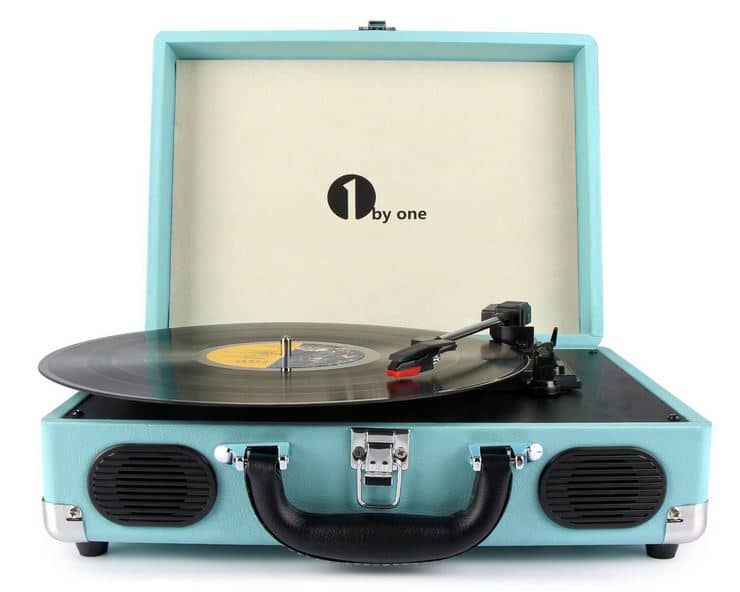
A cartridge upgrade is less sensible if your turntable has a fixed ceramic cartridge, very limited tonearm adjustment or built-in speakers as the main listening method. Many suitcase, retro and all-in-one record players are designed for convenience rather than cartridge experimentation. On those systems, external speakers or a better turntable may be the more meaningful step.
It is also worth upgrading in proportion to the turntable. Putting a very ambitious cartridge on a basic deck with a lightweight, non-adjustable arm is unlikely to show what the cartridge can do. Balance matters more than chasing the most expensive option.
How to choose the right level of upgrade
Start by identifying what is fitted now. Look for the cartridge model printed on the body, check the turntable manual or inspect whether the stylus assembly has a part number. If nothing is listed, search by the exact turntable model rather than guessing from appearance.
Next, decide whether you need a stylus replacement, a stylus upgrade within the same cartridge family, or a complete cartridge replacement. A stylus replacement is usually the least disruptive. A stylus upgrade can improve tracing while keeping the body and setup mostly familiar.
A full cartridge replacement offers the most change but requires more care.
Think about your listening priorities. If you play older second-hand records, a forgiving cartridge may suit you better than an extremely revealing one. If you play clean, well-pressed records and value detail, a more advanced stylus profile may be appealing.
Consider your phono stage and speakers. If you use a built-in phono stage and compact Bluetooth speaker, a major cartridge spend may be hard to justify. If you use a separate amplifier, good bookshelf speakers and an adjustable turntable, the cartridge becomes a more important tuning point.
Budget should include tools and setup. You may need a stylus force gauge, alignment protractor, small screwdriver and possibly a record brush or cleaning solution. These are not glamorous, but they help the cartridge perform properly.
A practical decision path is:
- If the stylus is old or unknown, replace it before judging the cartridge.
- If the stylus is good but the sound still distorts, check setup.
- If setup is correct and the system still falls short, consider a cartridge upgrade.
- If the turntable cannot be adjusted, consider whether the turntable itself is the real limit.
Cartridge quality and record wear
A common worry is whether a better cartridge is safer for records. The answer depends less on price alone and more on stylus condition, tracking ability and correct setup. A clean, unworn stylus tracking at the recommended force is usually kinder to records than a worn stylus used too lightly.
Mistracking is a major enemy of record health. When the stylus loses proper contact with the groove, it can rattle or scrape in ways the groove was not designed to handle. This can create permanent distortion, particularly on loud passages.
A cartridge with good tracking can reduce this risk, but only if installed correctly. Too little tracking force is a common mistake because it sounds gentler in theory. In practice, it can make the stylus bounce and mistrack.
Record cleanliness also matters. Dust and grit between stylus and groove can increase noise and wear. Keep records sleeved, use a carbon fibre brush when appropriate and clean dirty second-hand records before repeated play.
Stylus care is simple but important. Brush the stylus from back to front with a suitable stylus brush, never side to side or front to back. If the stylus is bent, chipped or visibly damaged, do not continue playing records.
Signs your cartridge is the weak link
The cartridge may be the weak link if records sound distorted across many clean discs, especially on vocals or inner tracks. It may also be suspect if sibilant sounds, such as “s” and “sh”, are consistently spitty even after cleaning the record and stylus.
Another sign is poor tracking on normal records at the recommended tracking force. If the tonearm setup is correct and the stylus is clean, the cartridge or stylus may not be coping well. This is particularly likely if the stylus has many hours of use or an unknown history.
Channel imbalance can point to cartridge or stylus trouble, but it can also come from speaker placement, amplifier balance, wiring or room acoustics. Swap left and right connections carefully if you know how, or seek help before assuming the cartridge is faulty.
Hum or buzzing is usually not solved by a cartridge upgrade. It often comes from grounding, cable routing, phono stage issues or electrical interference. Changing the cartridge may alter the noise, but it is not the first diagnostic step.
If the sound is merely lacking bass or treble, also check speaker position and phono input settings. A turntable connected to the wrong input can sound extremely thin, distorted or quiet. Cartridge quality cannot compensate for incorrect system connection.
At a glance comparison
| Replace stylus only | Best when the cartridge body is suitable, the sound has become worn or distorted, and compatible replacement styli are available. |
|---|---|
| Upgrade stylus within same range | Useful when you want better groove tracing without changing the whole cartridge or rethinking system matching. |
| Replace full cartridge | Best when the current cartridge is basic, damaged, unsuitable, or cannot accept the stylus quality you want. |
| Upgrade turntable instead | Often wiser when the arm is non-adjustable, the cartridge is fixed, or built-in speakers are the main sound limit. |
Frequently asked questions
How long does a cartridge last?
The cartridge body can last for many years if it is not damaged, but the stylus wears out. Stylus life varies by design, setup, record cleanliness and use, so follow the stylus maker’s guidance and replace it sooner if you hear persistent distortion or see damage.
Can a better cartridge make bad records sound good?
It can sometimes track a difficult record more cleanly, but it cannot repair groove wear, scratches or poor pressings. In some systems, a more revealing cartridge may actually make damage easier to hear.
Is a moving coil cartridge always better than moving magnet?
No. Moving coil cartridges can be excellent, but they usually need a suitable phono stage and often cost more to maintain because the stylus is not normally user-replaceable. A well-chosen moving magnet cartridge can be the better practical choice for many owners.
Will a cartridge upgrade make my turntable louder?
Not necessarily. Cartridge output levels vary, but loudness is mainly controlled by the phono stage, amplifier and speakers. If your turntable is very quiet, check that it is connected to the correct phono input or that its built-in preamp setting is correct.
Can I fit any cartridge to any headshell?
No. The cartridge must have the right mounting type, suitable weight and enough room for alignment. Many standard headshells use half-inch mounting, but some turntables use fixed or proprietary systems.
Do I need special tools to change a cartridge?
You can fit a cartridge with basic hand tools, but a stylus force gauge and alignment protractor are strongly recommended. They help you avoid the common problems that cause distortion and record wear.
Why does my new cartridge sound worse than the old one?
The most likely causes are incorrect alignment, wrong tracking force, wiring mistakes or poor compatibility with the tonearm or phono stage. Check setup carefully before deciding the cartridge is faulty or unsuitable.
Final thoughts
Cartridge quality does matter, but it matters most when the cartridge is healthy, compatible and correctly set up. A better cartridge can improve tracking, clarity, stereo focus and inner-groove performance, yet it cannot overcome a worn stylus, dirty records, unsuitable tonearm or weak speakers.
Your next step should be practical rather than impulsive. Identify your current cartridge, check stylus condition, confirm whether your turntable allows proper adjustment and decide what problem you are trying to solve. If the stylus history is unknown, replace it first.
If your turntable is adjustable and the rest of your system is capable, a carefully chosen cartridge upgrade can be one of the most satisfying changes you make.
For the next reading step, learn how cartridge alignment and tracking force work. Those two setup skills will help you get the best from both your current cartridge and any future upgrade.