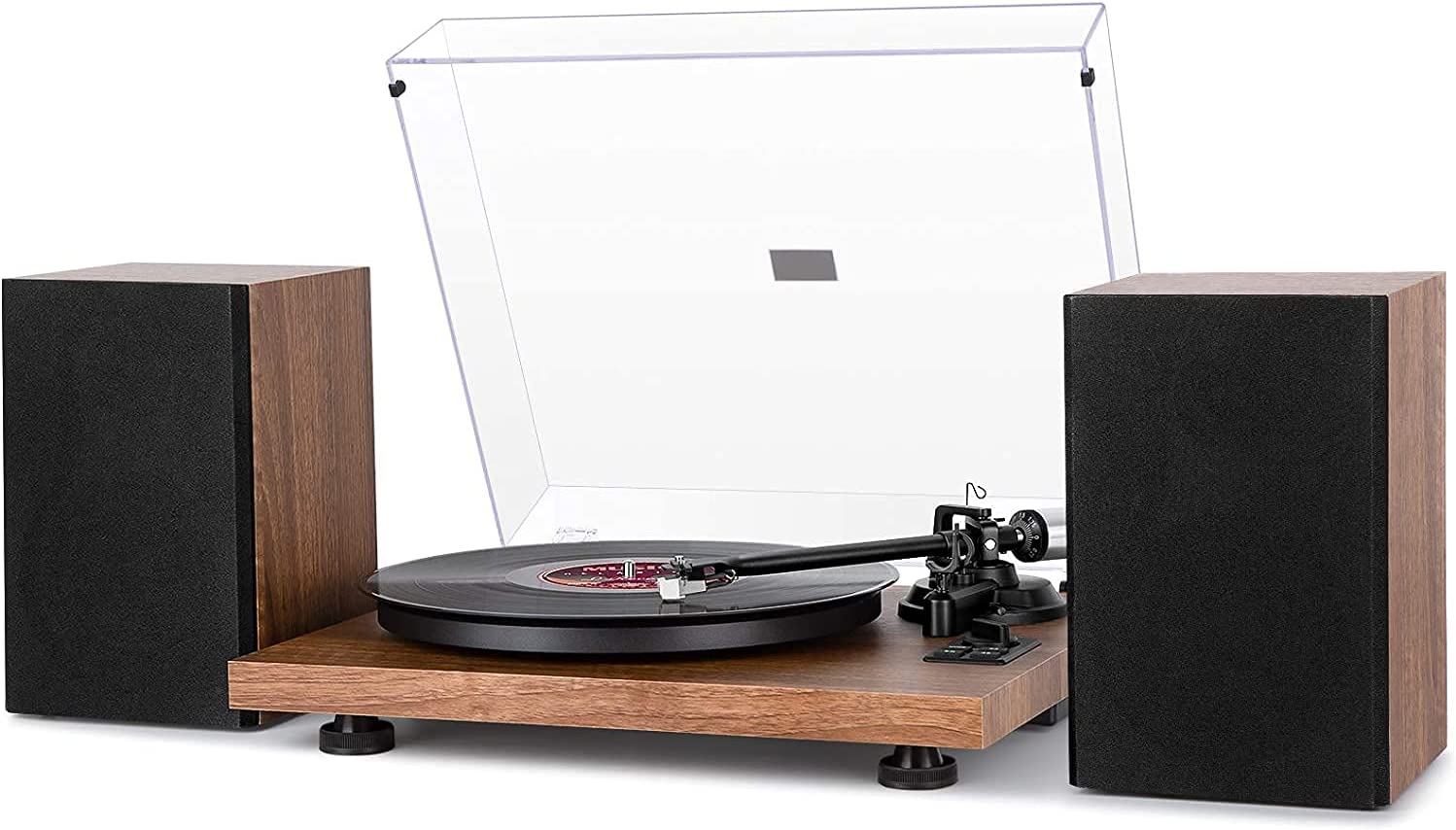
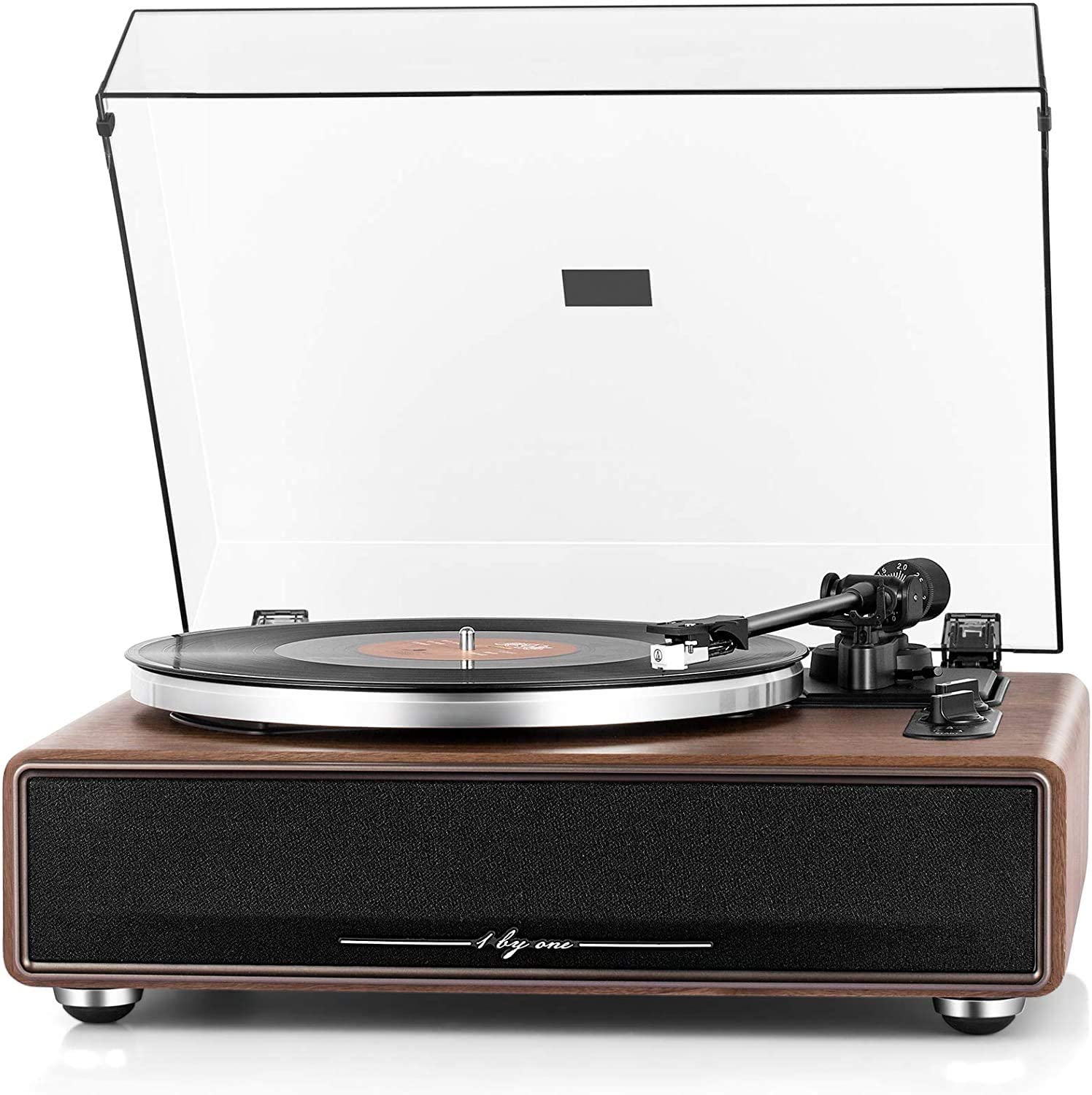
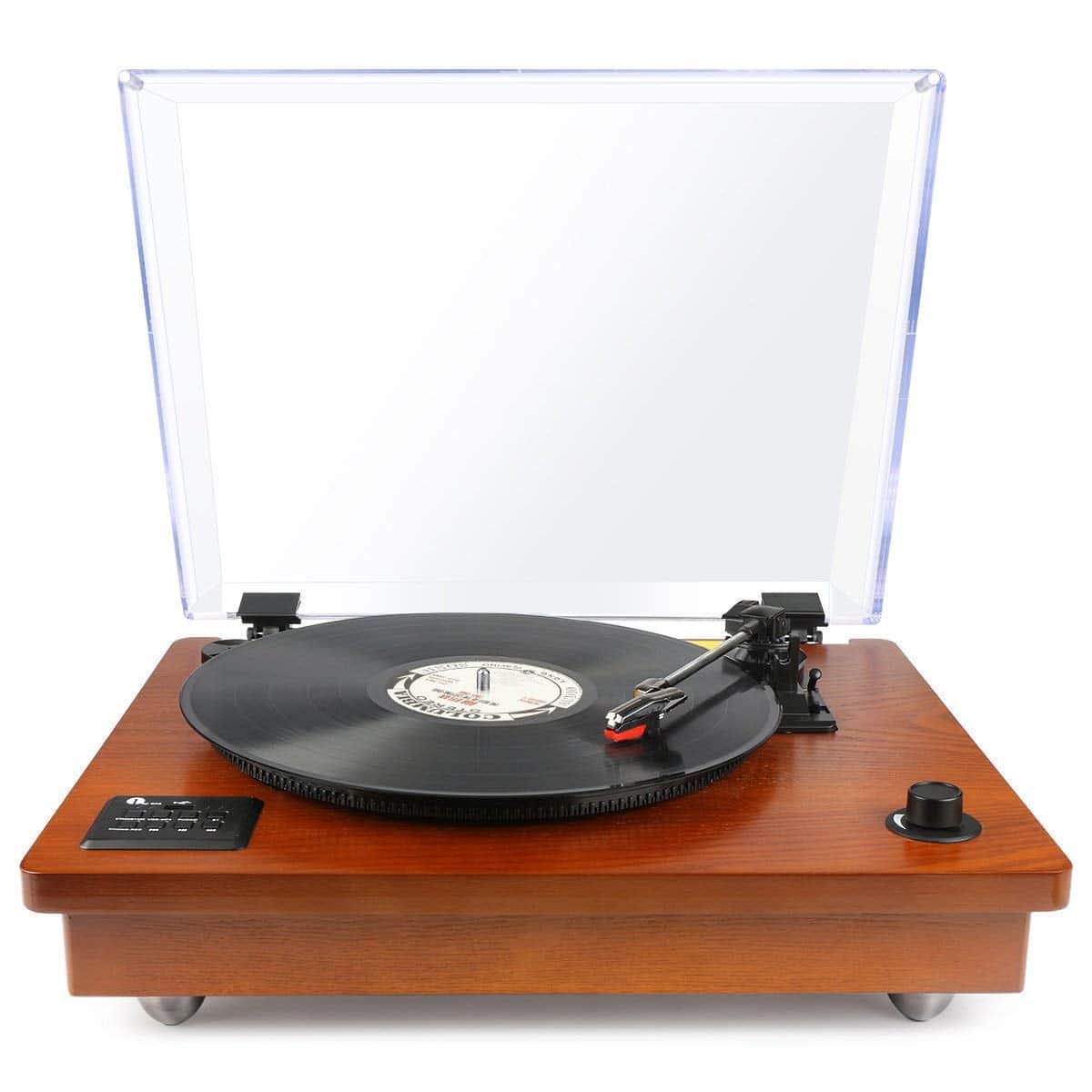
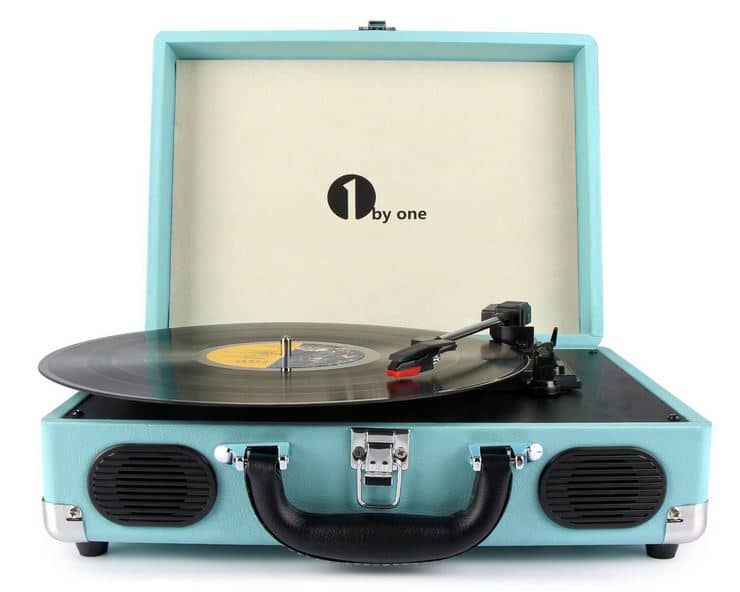
Quick answer
Powered speakers have amplification built into the speaker system, so they can usually connect more directly to a turntable, provided the turntable or speakers include the right phono stage. Passive speakers do not have built-in amplification, so they need a separate amplifier or receiver between the turntable and the speakers.
For most first turntable systems, powered speakers are simpler and take up less space. Passive speakers are more flexible if you want to build a traditional hi-fi system, change components over time, or use several music sources through one amplifier.
In this guide
- What powered and passive speakers actually do in a vinyl system
- Why a turntable signal often needs both a phono preamp and an amplifier
- Which speaker type is easier for beginners to set up
- When passive speakers offer better long-term flexibility
- How Bluetooth, RCA and speaker cable connections fit into the decision
- Common mistakes that cause low volume, hum or no sound
- A practical checklist for choosing speakers for your room
Watch the article video
1. The basic difference
The simplest difference is where the amplifier lives.
Powered speakers have an amplifier built in. You plug the speakers into the mains, feed them an audio signal, and the built-in electronics provide the power needed to move the speaker drivers.
Passive speakers do not plug into the mains and do not amplify anything themselves. They need power from a separate amplifier, stereo receiver or all-in-one hi-fi unit.
In a turntable system, this matters because a record player cartridge produces a very small signal. That signal is not strong enough to drive normal speakers on its own. It has to be prepared and amplified before you hear music at a useful volume.
A typical powered speaker system might look like this:
- Turntable
- Phono preamp, if needed
- Powered speakers
A typical passive speaker system might look like this:
- Turntable
- Phono preamp, if needed
- Amplifier or receiver
- Passive speakers
Neither approach is automatically better. The better choice is the one that fits your equipment, room, budget and willingness to add extra boxes.
2. Powered, active and passive: clearing up the wording
The terms can be messy because manufacturers do not always use them consistently.
“Powered speakers” usually means the speaker system contains its own amplifier. Many bookshelf powered speakers have the amplifier in one speaker, with a cable carrying the amplified sound to the other speaker.
“Active speakers” is sometimes used in the same way, especially in casual product listings. In stricter hi-fi language, active speakers may have separate amplifiers for different drivers inside each speaker, often with more advanced internal filtering. For most turntable buyers, the practical point is the same: they need mains power and do not require a separate external amplifier.
“Passive speakers” means there is no amplifier inside. They are connected to an amplifier using speaker cable, not a standard line-level RCA cable.
This is why you should not buy on the name alone. Look at the rear panel or product description and check what sockets it has.
Powered speakers commonly include:
- A mains power lead or power socket
- RCA, 3.5 mm, optical or Bluetooth input options
- A volume control or remote control
Passive speakers commonly include:
- Red and black binding posts or spring clips
- No mains power lead
- No volume control on the speaker itself
If a speaker has only red and black speaker terminals and no power connection, it is passive.
3. Why vinyl needs more than just speakers
A turntable is not like a phone, CD player or streamer. The cartridge at the end of the tonearm generates a tiny electrical signal as the stylus follows the groove. That signal needs special treatment before it can be played properly.
There are two separate jobs to understand.
The first is the phono preamp, also called a phono stage. This boosts the very quiet cartridge signal to a stronger “line level” signal and applies equalisation so the record sounds tonally correct. Without it, the sound may be extremely quiet, thin and lacking bass.
The second job is power amplification. This makes the line-level signal strong enough to drive speakers. Powered speakers contain this power amplification.
Passive speakers need an external amplifier to do it.
Some turntables have a built-in phono preamp. Some powered speakers may include a phono input, though many do not. Some amplifiers include a phono input, while others only accept line-level sources.
This means the speaker decision cannot be separated from the turntable and amplifier decision. Before buying anything, you need to know where the phono stage and power amplifier will be in your system.
For example, a turntable with a built-in phono preamp can often connect to powered speakers through RCA cables. A turntable without a built-in phono preamp will need either an external phono preamp, powered speakers with a phono input, or an amplifier with a phono input.
4. How powered speakers work with a turntable
Powered speakers are popular with new vinyl listeners because they reduce the number of separate components. You can place the speakers on stands or a solid surface, connect the turntable, plug the speakers into the mains, and control volume from the speaker system.
A powered speaker setup works best when the signal arriving at the speakers is already line level. That usually means the turntable has a built-in phono preamp switched on, or you use a separate phono preamp between the turntable and the speakers.
The usual wired connection is RCA. These are the red and white plugs used for left and right audio. Some powered speakers also offer a 3.5 mm input, optical input, USB input or Bluetooth, but RCA is the most common analogue connection for turntable use.
Powered speakers can be especially suitable if:
- You want a simple vinyl setup without a separate amplifier
- You have limited shelf space
- You mainly listen in a bedroom, study or small living room
- You want volume control on the speakers or a remote
- You are not planning a larger hi-fi system immediately
Catalogue examples of this general type include Edifier R1280DB Powered Bluetooth Bookshelf Speakers and House of Marley Get Together Duo Bookshelf Speakers. Their presence in a catalogue does not make them the right choice for every system, but they illustrate the type of product often considered by turntable buyers.
The main limitation is that the amplifier and speaker are bought as one package. If you later want a different amplifier sound, more inputs, room correction, or a more powerful amp, you may need to replace the whole speaker system rather than just one component.
5. How passive speakers work with a turntable
Passive speakers are the traditional hi-fi route. They need an amplifier or receiver, which sits between your sources and the speakers.
In this arrangement, the amplifier has several possible jobs. It may select between sources, control the volume, boost the signal, and drive the speakers. If it has a phono input, it may also handle the phono preamp stage for your turntable.
A basic passive setup might be:
- Connect the turntable to the amplifier’s phono input, if the amplifier has one.
- If the amplifier has no phono input, connect the turntable to an external phono preamp first.
- Connect the phono preamp to a line-level input on the amplifier.
- Connect the amplifier to the passive speakers using speaker cable.
- Set the amplifier volume low before playing the first record, then raise it gradually.
Passive speakers can be a strong choice if:
- You already own an amplifier or receiver
- You want to upgrade parts of the system separately
- You need several inputs for TV, streamer, CD player or radio
- You want larger speakers for a bigger room
- You enjoy building a hi-fi system over time
The trade-off is complexity. You have more boxes, more cables and more matching decisions. You need to make sure the amplifier is suitable for the speakers and that the turntable has access to a phono stage somewhere in the chain.
For many listeners, that extra flexibility is worth it. For others, it creates avoidable clutter and confusion.
6. Connection types you are likely to meet
Connections are one of the main reasons people choose the wrong speaker type. A socket may look familiar but do a different job from what you expect.
RCA connections use red and white plugs for stereo audio. On a turntable, RCA output may be phono-level or line-level depending on whether a built-in phono preamp is present and switched on. On powered speakers and amplifiers, RCA inputs usually expect a line-level signal unless specifically marked “phono”.
A phono input is not just a normal RCA input with a different name. It is designed for a turntable cartridge signal and includes the necessary phono preamp equalisation. If you plug a line-level source into a phono input, it may sound distorted and overloaded.
Speaker cable is used between an amplifier and passive speakers. It carries an amplified signal and usually connects to red and black terminals. You should not connect a turntable directly to passive speaker terminals.
Bluetooth can be useful for convenience, but it changes the signal path. A Bluetooth turntable sends audio wirelessly to compatible speakers or headphones, often after internal conversion and processing. This can reduce cable clutter, but it is not the same as a direct analogue connection.
Optical inputs are digital inputs often used for TVs and streamers. A purely analogue turntable cannot plug straight into an optical input without additional conversion. If your powered speakers only have digital inputs, check carefully before assuming they will work with vinyl.
A ground wire may be present on some turntables. It is usually connected to a grounding post on a phono preamp or amplifier to reduce hum. Some turntables with built-in phono stages may not require a separate ground connection.
7. Sound quality: which is better?
Powered speakers are not automatically worse than passive speakers, and passive speakers are not automatically more serious. Sound quality depends on the design, room, placement, cartridge, phono stage, amplifier and speakers working together.
Powered speakers can sound very good because the amplifier is chosen to suit the speaker design. The manufacturer controls the pairing, so the buyer does not have to worry as much about matching amplifier power, sensitivity and impedance.
Passive systems can also sound excellent because they allow careful component matching. You can choose an amplifier with the features you want, then choose speakers that suit your room and listening taste. Later, you can upgrade the cartridge, phono stage, amp or speakers separately.
In normal listening, the room and speaker placement often make a bigger difference than people expect. A modest system set up well can be more enjoyable than a more expensive system placed badly.
Before assuming you need a different speaker type, check the basics:
- Are the speakers at ear height when seated?
- Are they spaced evenly from your listening position?
- Are they too close to a wall or corner, causing boomy bass?
- Is the turntable on a stable surface away from vibration?
- Is the phono preamp setting correct?
Powered speakers are often best for simplicity per pound spent. Passive speakers are often best for long-term system building. Neither guarantees better sound on its own.
8. Space, room size and everyday use
The right speaker choice depends heavily on where you listen.
In a small room, powered bookshelf speakers can be a neat solution. They usually take up less space because you do not need a separate amplifier shelf. They are also convenient for casual listening, especially where a remote control or Bluetooth input is useful.
In a larger living room, passive speakers with a suitable amplifier may offer more room to grow. You can use bigger bookshelf speakers on stands or floorstanding speakers, depending on space and taste. The amplifier can also handle other sources such as a TV or network streamer.
Think about how the system will be used by everyone in the home. If you want a simple “turn it on and play a record” system, powered speakers reduce the number of controls. If you want a central audio hub for several devices, an amplifier with passive speakers may be tidier in the long run.
Also consider where cables will go. Powered speakers need mains power, and one speaker may need a cable to the other. Passive speakers need speaker cables running from the amplifier to each speaker.
Neither is cable-free unless you rely on wireless features, and even wireless speakers usually need power.
9. Upgrade flexibility and long-term value
Powered and passive systems encourage different upgrade paths.
With powered speakers, the amplifier and speakers are tied together. If you want a clear improvement later, you may replace the speakers as a complete unit. You can still upgrade the turntable, cartridge or external phono preamp, but the speaker amplification remains fixed.
With passive speakers, the system is more modular. You can change the amplifier while keeping the speakers, or change the speakers while keeping the amplifier. This is useful if your room changes, your listening tastes develop, or you add more sources.
However, flexibility only matters if you will use it. Some listeners are happiest with a compact system that simply works. Buying a more complex passive system “just in case” can lead to extra cost and unused features.
A practical way to decide is to ask:
- Will I add a TV, streamer or CD player to the same system?
- Do I enjoy comparing and upgrading hi-fi components?
- Do I have space for an amplifier and extra cables?
- Is simple daily use more important than future flexibility?
- Am I likely to move the system between rooms?
If the answers point towards simplicity, powered speakers make sense. If they point towards expansion, passive speakers may be the better foundation.
10. How to choose the right option for your turntable
Start with the turntable, because it determines what signal you have available.
- Check whether your turntable has a built-in phono preamp. Look for wording such as “phono/line switch”, “built-in preamp” or “line output”.
- If it has a phono/line switch and you are using powered speakers without a phono input, set it to line. If you are using an amplifier’s phono input, set it to phono.
- If the turntable has no built-in phono preamp, decide where the phono stage will be. It could be in an amplifier, in certain powered speakers, or in a separate phono preamp.
- Decide whether you want an external amplifier. If not, choose powered speakers with the right analogue input.
If yes, choose passive speakers and an amplifier that suits your sources.
- Think about room size and placement before spending more. Speakers placed on a wobbly cabinet, too close together, or hidden behind furniture will not perform at their best.
- Leave room in the budget for stands, suitable cables and basic isolation if needed. These are not glamorous purchases, but they can affect everyday results.
If you are choosing from turntables such as Audio-Technica, Denon, Fluance, Lenco, House of Marley or other catalogue models, do not assume the connection requirements are the same across the range. Product categories such as Bluetooth turntables, USB turntables and automatic turntables describe features, not always the exact audio output arrangement.
Always check the specific model’s rear panel and manual before buying speakers.
At a glance comparison
| Powered speakers | Amplifier is built in. Usually simpler, more compact and easier for a first turntable setup, but less flexible to upgrade separately. |
|---|---|
| Passive speakers | Need a separate amplifier or receiver. More components and cables, but better suited to traditional hi-fi systems and gradual upgrades. |
| Best for simplicity | Powered speakers, especially when paired with a turntable that has a built-in phono preamp or with a small external phono preamp. |
| Best for expandability | Passive speakers with an amplifier that can handle several sources and, ideally, includes or works with a suitable phono stage. |
| Main cable difference | Powered speakers use line-level audio cables and mains power. Passive speakers use speaker cable from an amplifier. |
| Main buying risk | Powered: forgetting the phono stage. Passive: forgetting the amplifier or mismatching the system layout. |
Frequently asked questions
Can I use powered speakers with any turntable?
Not always directly. The turntable signal must pass through a phono preamp before it reaches most powered speakers. If your turntable has a built-in phono preamp, you can usually use its line output.
If it does not, you need an external phono preamp or powered speakers with a proper phono input.
Do passive speakers sound better because they use a separate amplifier?
Not automatically. A well-designed powered speaker system can sound better than a poorly matched passive system. Passive systems mainly give you more choice and upgrade flexibility, rather than a guaranteed improvement.
What happens if I plug a turntable into a normal AUX input?
If the turntable is set to line output or has a built-in phono preamp active, a normal AUX input should work. If the turntable is sending a raw phono signal, the sound will usually be very quiet, thin and lacking bass because the phono preamp stage is missing.
Can I use Bluetooth speakers for vinyl?
You can if your turntable transmits Bluetooth or if you add a suitable transmitter after the phono stage. It is convenient, but it may add delay and converts the signal to a wireless digital format. Many vinyl listeners still prefer a wired connection for simplicity and reliability.
Do I need a receiver instead of an amplifier?
A receiver is basically an amplifier with radio reception and often extra features. For a turntable, either can work if it has the right inputs or can be used with an external phono preamp. The key point is that passive speakers need some form of amplification.
Can I connect powered speakers to an amplifier?
Usually you should not connect powered speakers to the speaker outputs of an amplifier. Powered speakers expect a line-level signal, not an already amplified speaker-level signal. Some amplifiers have pre-outs or line outputs that may be suitable, but you must check the manuals before connecting anything.
Are built-in speakers in record players the same as powered speakers?
They are powered in the sense that amplification is built into the record player, but they are not the same as separate powered bookshelf speakers. Built-in speakers are convenient, yet their size and placement are limited by the record player cabinet. Separate speakers usually allow better stereo spacing and placement.
Should I spend more on speakers or the turntable?
Both matter, but speakers and placement have a large effect on what you hear in the room. A sensible approach is to avoid extreme imbalance. Do not pair a capable turntable with unsuitable speakers, and do not spend heavily on speakers while ignoring the need for a correct phono stage and stable turntable setup.
Final thoughts
Powered speakers and passive speakers solve the same problem in different ways. Powered speakers put the amplifier inside the speaker system, making them compact and straightforward. Passive speakers need a separate amplifier, but give you more control over the system and more options for future upgrades.
For a first vinyl setup in a small or medium room, powered speakers are often the easier route if the phono stage requirement is handled correctly. For a more traditional hi-fi system, or a setup that will also serve a TV, streamer or several sources, passive speakers with a suitable amplifier may be the better long-term foundation.
Your next step is to check your turntable’s output: phono, line, Bluetooth, or a switchable option. Then choose speakers around the complete signal path, not just the speaker label. A useful next read would be a guide to phono preamps, because that small stage is often the missing link between a turntable and speakers.