Quick answer
A phono cartridge is the small component fitted to the end of a turntable’s tonearm. It holds the stylus, often called the needle, and turns the tiny movements from the record groove into an electrical signal that your amplifier, powered speakers or phono stage can make louder.
It matters because the cartridge is the first audio component to “read” the record. Its condition, type and setup can affect clarity, distortion, surface noise, channel balance and even record wear.
In this guide
- What a phono cartridge does in the vinyl playback chain
- The difference between a cartridge and a stylus
- How a record groove becomes an electrical music signal
- Why cartridge alignment, tracking force and condition matter
- The basic difference between moving magnet and moving coil cartridges
- When you should replace a stylus or consider a cartridge upgrade
- Common beginner mistakes that can cause poor sound or record wear
Watch the article video
Where the cartridge sits in the turntable system
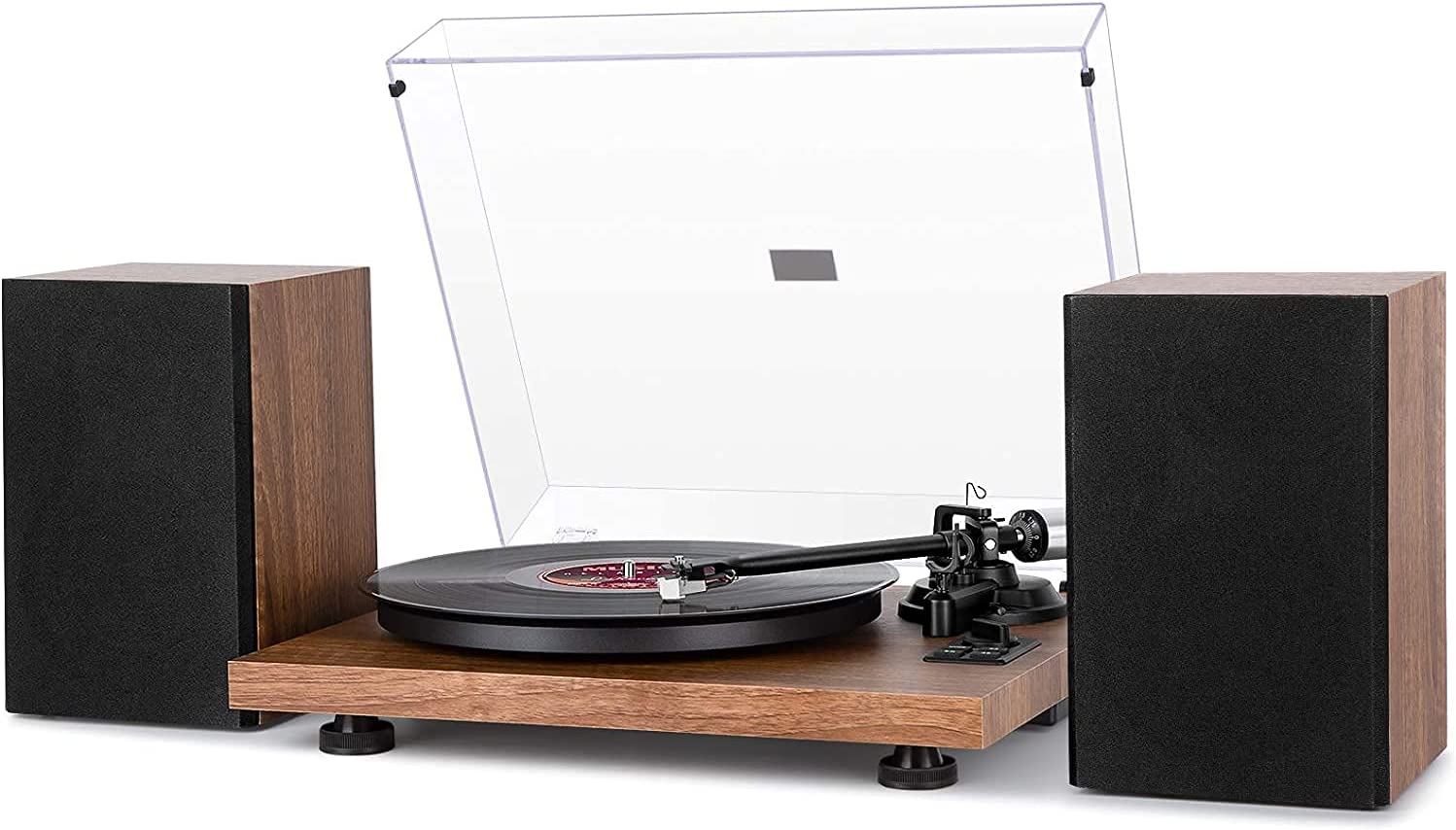
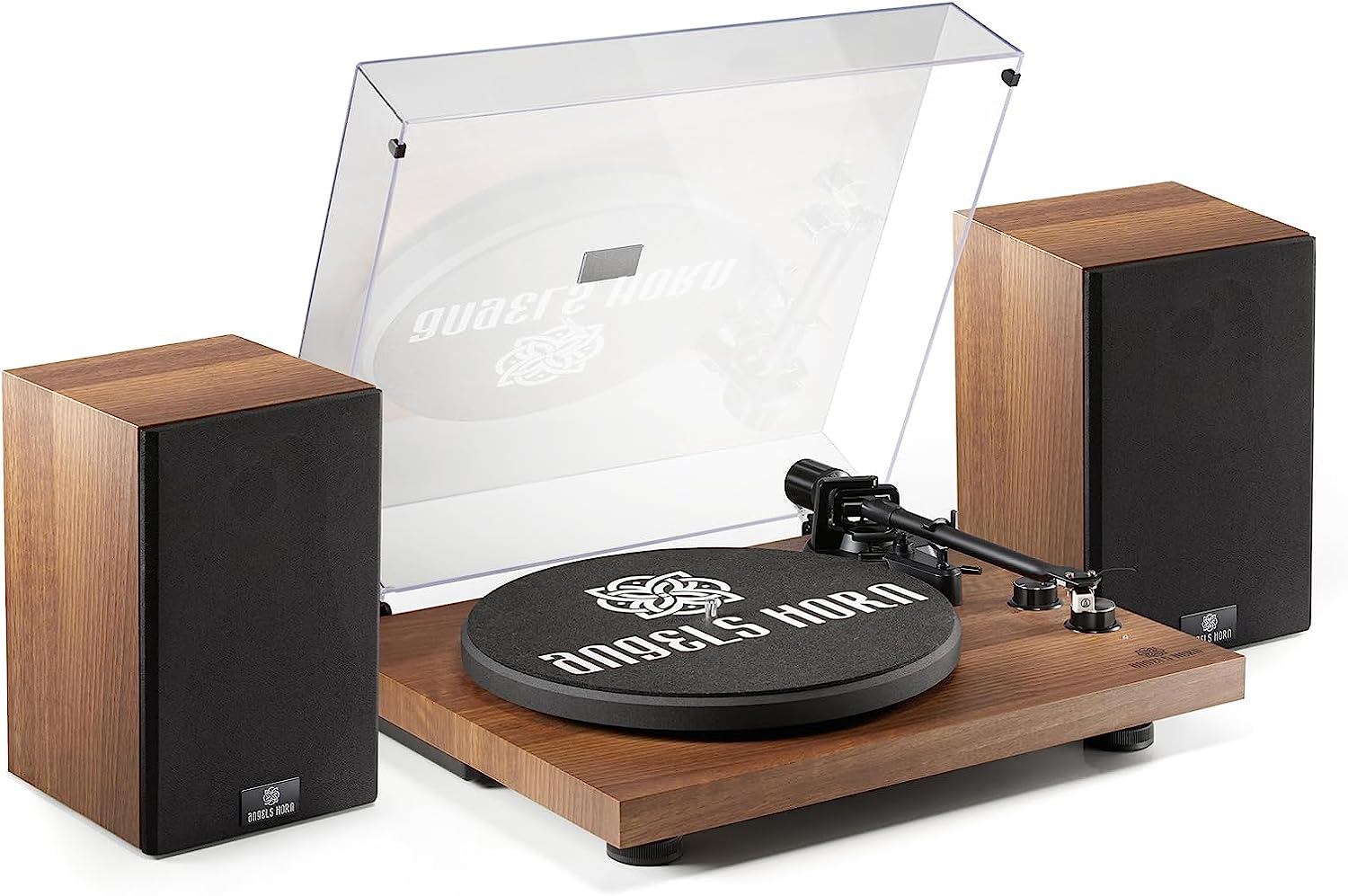
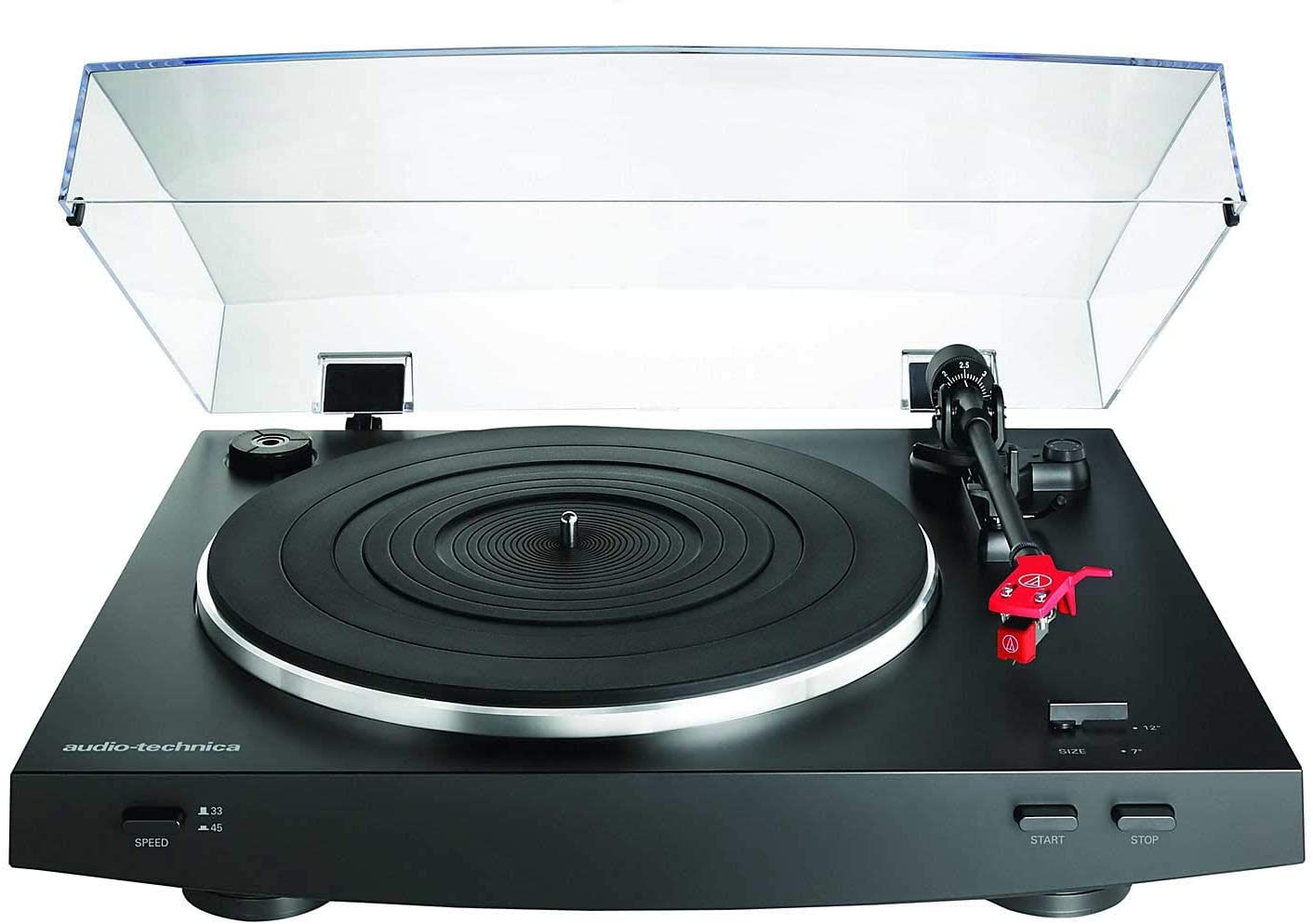
The phono cartridge is mounted at the front end of the tonearm, directly above the record surface. On many turntables it is attached to a removable headshell, while on others it is fixed directly to the arm.
The stylus, which is the tiny pointed tip that touches the record, sits underneath the cartridge body. When you lower the tonearm, the stylus rests in the spiral groove of the record and follows its microscopic side-to-side and up-and-down movements.
In a normal listening system, the order looks like this:
- Record groove
- Stylus
- Cartridge
- Tonearm wiring
- Phono stage or built-in phono preamp
- Amplifier or powered speakers
- Loudspeakers or headphones
The cartridge is therefore very early in the chain. If it mistracks, is damaged, or is badly fitted, later equipment cannot fully correct the problem.
What the cartridge actually does
A vinyl record does not store music as digital data. It stores it as a physical groove with tiny variations cut into the surface. Those groove shapes represent the sound waves of the original recording.
As the record spins, the stylus traces those shapes. The stylus is connected to a small cantilever, which is a thin arm inside the cartridge. As the stylus moves, the cantilever moves too.
Inside the cartridge, that motion is converted into a very small electrical signal. The exact method depends on the cartridge type, but the principle is the same: mechanical movement becomes electricity.
That signal is extremely quiet compared with the output of a phone, CD player or streamer. It also needs equalisation because records are cut using a special tonal curve. This is why turntables need a phono stage, either built into the turntable, built into an amplifier, or supplied as a separate box.
Cartridge, stylus and headshell: what is the difference?
Beginners often use “cartridge” and “needle” to mean the same thing, but they are not quite the same. Understanding the difference helps when you are buying replacements or diagnosing a problem.
The stylus is the part that physically touches the record. It normally includes the tiny tip and the cantilever assembly. The tip may be diamond or another hard material, depending on the design.
The cartridge is the full body that holds the stylus assembly and contains the generator that creates the electrical signal. On many common moving magnet cartridges, the stylus assembly can be pulled out and replaced without changing the whole cartridge.
The headshell is the small mounting piece at the end of some tonearms. The cartridge screws into the headshell, and the headshell connects to the tonearm. Not every turntable has a removable headshell, so do not assume one cartridge fitting method applies to all models.
A simple way to remember it is:
- Stylus: the part that touches the groove
- Cartridge: the part that turns movement into signal
- Headshell: the part that holds the cartridge on some tonearms
If your turntable sounds dull or distorted, you may only need a new stylus. If you want a different sound character or your cartridge is not suitable for your tonearm, you may be looking at a cartridge change.
How a cartridge produces left and right stereo sound
Stereo records contain two channels of information in a single groove. The groove is shaped so that movement in one direction relates to one channel and movement in another direction relates to the other channel.
The cartridge has to follow both sets of movement accurately. If it does, you hear a stable stereo image, with vocals, instruments and room sound spread between the speakers.
If the cartridge is worn, badly aligned or not tracking properly, the stereo image may become vague. You might hear distortion in one channel, sibilance on vocals, or inner-groove distortion near the end of a side.
This is one reason the cartridge matters even in a modest system. It is not only about “audiophile” detail. A decent, correctly fitted cartridge helps records sound balanced and listenable from the start of the side to the run-out groove.
Moving magnet and moving coil cartridges in plain English
Most beginner and mid-range turntables use moving magnet cartridges, often shortened to MM. Many higher-end systems use moving coil cartridges, often shortened to MC. These are not the only cartridge technologies in history, but they are the main ones a modern buyer is likely to meet.
In a moving magnet cartridge, a tiny magnet moves inside coils of wire. This movement generates the electrical signal. Moving magnet cartridges are common because they usually have a healthy output level, work with many standard phono inputs, and often allow simple stylus replacement.
In a moving coil cartridge, tiny coils move within a magnetic field. Moving coil cartridges can be very precise, but many have a much lower output. They usually need a compatible MC phono stage or a step-up device, and stylus replacement is often not as simple as pulling out a stylus assembly.
For beginners, moving magnet is usually the easier route. It is widely supported, more forgiving in system matching, and simpler to maintain. Moving coil can be excellent, but it asks more of the phono stage, setup and budget.
The important point is not that one type is automatically “better”. It is that the cartridge must suit your turntable, tonearm and phono input.
Why the cartridge affects sound quality
The cartridge is a mechanical and electrical device, so it influences sound in several ways. It has to move freely enough to follow the groove, but it also has to be controlled enough not to bounce, mistrack or exaggerate noise.
A good match and setup can improve:
- Clarity of voices and instruments
- Bass definition
- Treble smoothness
- Stereo focus
- Tracking through loud passages
- Reduction of obvious distortion
- Lower risk of avoidable record wear
Different cartridges can have different tonal balances. Some sound a little warmer, some more open, and some more detailed. However, beginners should be cautious about chasing cartridge character before solving basic setup issues.
A poorly aligned cartridge may sound harsh even if it is a respected design. A worn stylus may make clean records sound noisy. A cartridge connected to the wrong type of phono input may sound too quiet, too loud, dull or distorted.
In normal listening, the most important benefits are not mystical. They are cleaner tracking, less strain on vocals, fewer unpleasant high-frequency sounds, and more reliable playback across the whole record.
The setup factors that matter most
A cartridge does not work properly simply because it is screwed into the arm. It needs to sit in the right position and press on the record with the right amount of force.
Tracking force is the downward pressure of the stylus on the record. Too little force can cause the stylus to rattle in the groove, creating distortion and possible damage. Too much force can increase wear and may make the sound heavy or constrained.
The correct tracking force is set according to the cartridge manufacturer’s recommended range. Do not guess. If your turntable has an adjustable counterweight, use the instructions and, ideally, a simple stylus force gauge for accuracy.
Alignment is the position and angle of the cartridge in relation to the groove. If the cartridge is not aligned correctly, the stylus may sit at a poor angle as it travels across the record. This can cause distortion, especially towards the inner tracks.
Anti-skate is a tonearm adjustment that helps counter the inward pull on the arm as the record spins. When set sensibly, it helps the stylus sit more evenly in the groove. Not all beginner turntables offer this adjustment, but if yours does, follow the turntable or cartridge guidance.
Vertical tracking angle and azimuth are more advanced terms. Vertical tracking angle concerns the angle of the stylus assembly when viewed from the side. Azimuth concerns whether the stylus is vertical when viewed from the front.
Beginners do not need to obsess over these immediately, but they explain why cartridge fitting can become quite precise on more adjustable turntables.
Signs your stylus or cartridge may need attention
A cartridge body can last a long time if it is not damaged, but the stylus is a wear item. Because it physically touches the record, it gradually wears with use.
You may need to inspect or replace the stylus if you notice:
- Increasing distortion on records that used to sound clean
- Harsh “s” sounds on vocals
- More crackle than usual after cleaning the record
- One channel sounding weaker or rougher than the other
- The stylus visibly bent, missing or sitting at an odd angle
- Skipping on records that are not badly warped or scratched
Do not keep playing records with a damaged stylus. A worn or broken stylus can harm records, and the damage may not be reversible.
If the sound is poor from a newly bought used turntable, treat the stylus as unknown unless the seller can clearly prove its age and condition. Replacing the stylus is often a sensible first maintenance step.
If a new stylus does not solve the issue, then check alignment, tracking force, cartridge wiring and phono stage compatibility. Many “bad cartridge” problems are actually setup or connection problems.
Cartridge compatibility: what beginners should check before buying
Not every cartridge suits every turntable. Before buying a replacement or upgrade, check the fitting, weight, output type and whether your tonearm allows proper adjustment.
The most common mounting style on many hi-fi cartridges is the half-inch mount, where two screws hold the cartridge in place. Some turntables use plug-in or model-specific cartridge systems instead. If your turntable uses a fixed or proprietary design, your options may be limited.
Also check whether the turntable has adjustable tracking force. Some simple record players have limited adjustment, which can make cartridge upgrades impractical. A cartridge that needs careful setup is not a good match for an arm that cannot be adjusted properly.
Phono stage compatibility matters too. A moving magnet cartridge should normally go into an MM phono input. A low-output moving coil cartridge needs the correct MC input or matching equipment.
Before buying, confirm:
- The cartridge mounting type matches your tonearm or headshell.
- The cartridge weight is suitable for the arm’s counterweight range.
- The recommended tracking force can be set on your turntable.
- The cartridge output suits your phono stage.
- Replacement styli are available if it is a design with a user-replaceable stylus.
- You are comfortable aligning it, or you can get help from a dealer or technician.
If you are unsure, search using the exact turntable model and cartridge fitting type. Avoid buying on appearance alone, as many cartridges look similar but are not equally suitable.
How to handle and care for a phono cartridge
The cartridge and stylus are delicate. You do not need to be afraid of them, but you do need to handle them with care.
Always use the tonearm cueing lever if your turntable has one. This lowers the stylus more gently than dropping it by hand. When the turntable is not in use, fit the stylus guard if one is supplied.
Clean the stylus regularly with a suitable stylus brush or cleaner. Brush in the direction recommended for stylus cleaning, usually from back to front, not side to side. Sideways pressure can damage the cantilever.
Keep records clean as well. A dirty record forces the stylus to push through dust and debris, which can increase noise and wear. Basic record cleaning is one of the cheapest ways to help a cartridge perform properly.
Avoid touching the stylus tip with your fingers. Oils from skin and accidental pressure can cause problems. If you need to inspect it, use good light and, if available, magnification.
When moving a turntable, secure the tonearm and protect the stylus. Many broken cantilevers happen during cleaning, moving furniture, or reaching over the deck while a record is playing.
Should a beginner upgrade the cartridge?
A cartridge upgrade can improve a turntable, but it is not always the first or best upgrade. The benefit depends on the quality of the turntable, tonearm, phono stage, speakers and current cartridge condition.
If your stylus is worn, replace that first. A fresh correct stylus can be a bigger improvement than an ambitious cartridge fitted badly. If your records are dirty, clean them before judging the cartridge.
It may be worth considering a cartridge upgrade if:
- Your turntable has a proper adjustable tonearm
- You already have decent speakers or headphones
- Your records are clean and in good condition
- The current cartridge is basic but replaceable
- You are prepared to align and set tracking force correctly
It may not be worth upgrading if:
- The turntable has a fixed cartridge system
- Tracking force cannot be adjusted properly
- Built-in speakers are the main sound source
- The stylus is damaged and only needs replacement
- You are trying to solve a hum, wiring or speaker problem
For many beginners, the sensible order is: clean records, replace a worn stylus, check setup, improve speakers or phono stage if needed, then think about cartridge changes. The cartridge is important, but it works as part of a system.
At a glance comparison
| Stylus | The tiny tip and cantilever assembly that physically touches and follows the record groove. |
|---|---|
| Cartridge | The complete body that holds the stylus assembly and converts its movement into an electrical signal. |
| Moving magnet cartridge | Common, beginner-friendly cartridge type that usually works with standard MM phono inputs and often has a replaceable stylus. |
| Moving coil cartridge | Often used in more specialised systems; may need an MC phono stage and usually requires more careful matching. |
| Phono stage | The circuit or separate box that boosts and equalises the cartridge signal so it can be used by an amplifier or powered speakers. |
Frequently asked questions
Is a phono cartridge the same as a needle?
Not exactly. The needle is usually the stylus, which is the part that touches the record. The cartridge is the larger component that holds the stylus and converts its movement into an electrical signal.
Can I play records if the cartridge is missing?
No. Without a cartridge and stylus, the turntable cannot read the groove. Do not lower a bare tonearm or damaged cartridge onto a record, as it could scratch the surface.
How often should I replace my stylus?
It depends on the stylus type, condition of your records, cleaning habits and hours of use. Follow the stylus maker’s guidance where available, and replace it sooner if you hear persistent distortion or can see damage.
Will a better cartridge make old records quiet?
It may track some records more cleanly, but it cannot remove scratches, groove wear or pressing faults. Cleaning records and using a healthy stylus are usually the first steps before judging whether a cartridge upgrade will help.
Do USB and Bluetooth turntables still use phono cartridges?
Yes. USB and Bluetooth features affect how the audio is output or transmitted, but the record is still read by a stylus and cartridge. The cartridge remains central to the sound.
Can I fit any cartridge to any headshell?
No. The mounting style, weight, tracking force range and wiring must be compatible. Many headshells use a standard half-inch mount, but you should still check that the tonearm can balance and align the cartridge correctly.
Why is my turntable very quiet after changing cartridge?
You may be using the wrong input or phono stage setting. A cartridge needs a phono input, and moving magnet and moving coil cartridges have different output requirements. Also check that the small cartridge wires are connected correctly.
Is it safe to buy a used cartridge?
A used cartridge body can be fine, but the stylus condition is harder to judge. Unless you can verify its condition, budget for a correct replacement stylus or consider buying new for peace of mind.
Final thoughts
A phono cartridge is the small but vital part of a turntable that turns record groove movement into an electrical signal. It includes the stylus assembly, works with the tonearm and phono stage, and has a direct effect on how cleanly your records play.
For beginners, the most useful priorities are simple: keep records clean, protect the stylus, replace a worn stylus promptly, and set tracking force correctly. If you later want to upgrade, check compatibility before buying and remember that careful setup matters as much as the cartridge itself.
A good next step is to learn how a phono stage works, because the cartridge signal cannot be used properly without one. After that, read about tracking force and cartridge alignment so you can keep your records sounding good and reduce avoidable wear.