Quick answer
A record player usually means a complete or near-complete device for playing records. It may include built-in speakers, Bluetooth, a radio, USB recording, or other features, depending on the model.
A turntable is more often the record-playing part of a hi-fi system. It spins the record and uses a tonearm and cartridge to read the groove, but it normally needs speakers and may also need a phono preamp or amplifier before you can hear anything.
In this guide
- What people usually mean by “record player” and “turntable”
- Why the terms are sometimes used loosely by shops and manufacturers
- Which extra parts you may need with each type of product
- How built-in speakers, Bluetooth and USB features affect your choice
- Common beginner mistakes that lead to poor sound or missing equipment
- A simple way to choose your first vinyl setup with confidence
Watch the article video
1. The simple difference
In everyday use, a record player is often understood as an all-in-one music player. You put a record on it, lower the stylus, and sound comes out of the unit or from speakers supplied with it.
A turntable is usually one part of a separate audio system. It plays the record mechanically, but it is not always designed to produce audible sound on its own.
The difference matters because vinyl playback is a chain. The record, stylus, cartridge, tonearm, phono stage, amplifier and speakers all affect what you hear. A record player may include several of these parts in one box, while a turntable may leave more of the chain for you to choose separately.
2. Why the words are used inconsistently
There is no strict legal rule that forces brands to use one word in one way. This is why beginners often see confusing product names.
For example, a product may be called a “record player” even if it behaves more like a hi-fi turntable that needs external speakers. Another product may be called a “turntable” even though it includes Bluetooth or other convenience features.
You can see this naming overlap in many catalogues. Audio-Technica, Denon, Lenco, Fluance, House of Marley, ION and other brands all use a mixture of “record player”, “vinyl turntable” and “Bluetooth turntable” wording across different products.
So do not choose purely by the name on the box. Look instead at what is actually built in and what still needs to be added.
3. What a record player usually includes
A beginner-friendly record player often includes more than just the platter and tonearm. The platter is the rotating platform the record sits on. The tonearm is the arm that carries the cartridge and stylus across the record.
Depending on the model, a record player may include:
- Built-in speakers
- A built-in phono preamp
- Bluetooth output or Bluetooth input
- USB connection for recording to a computer
- Radio, CD, cassette or other entertainment-centre features
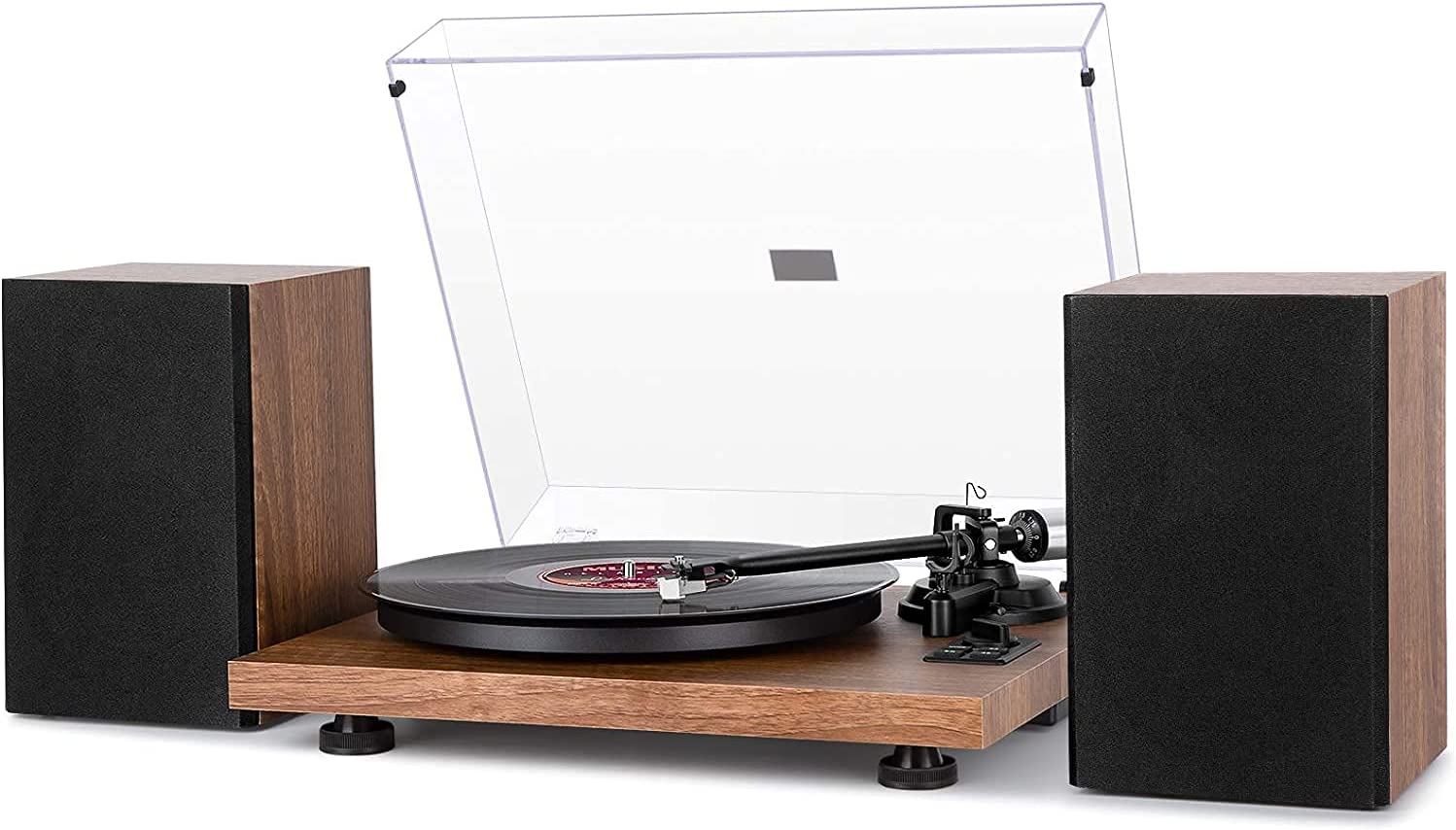
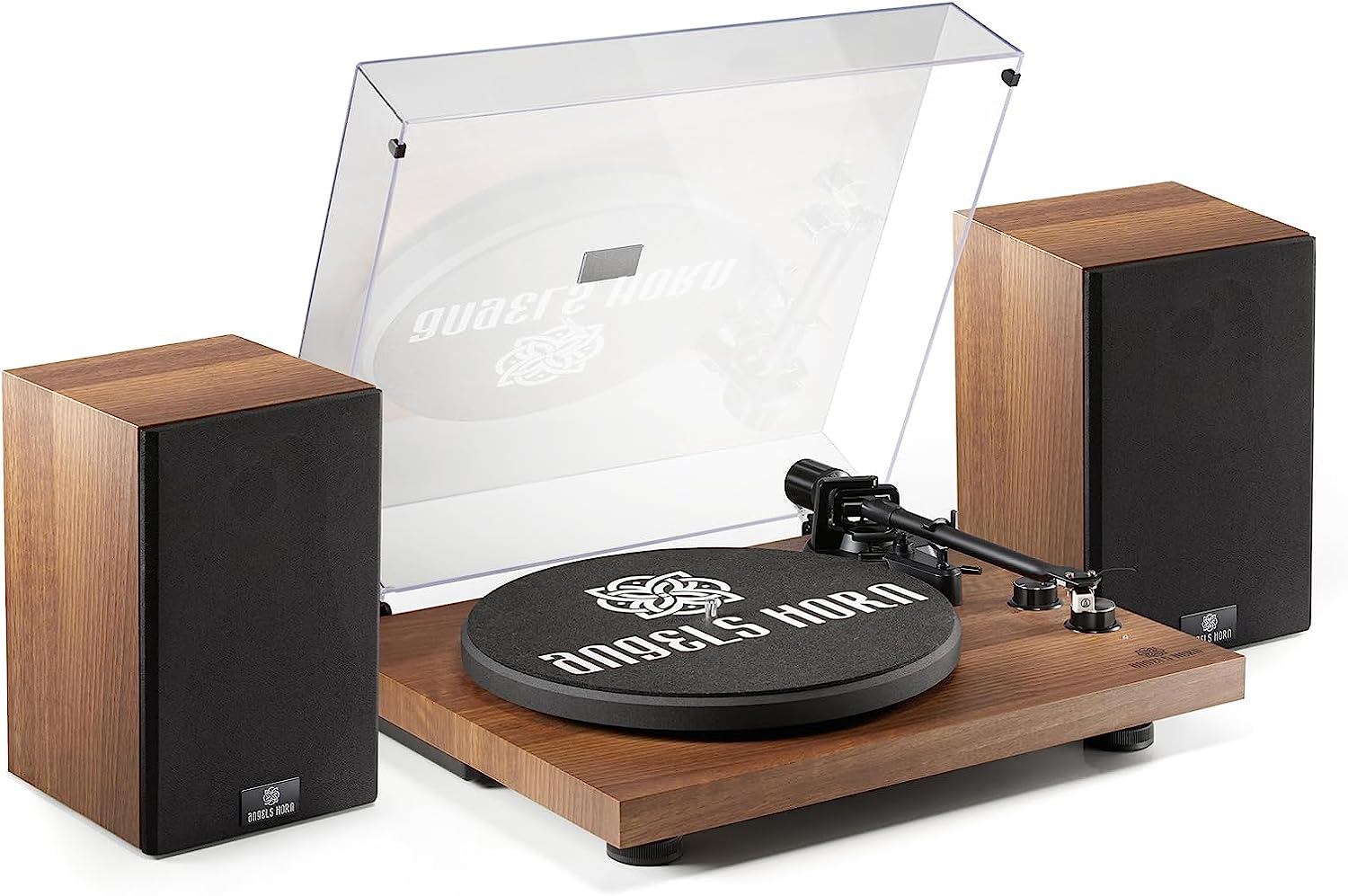
- Supplied external speakers
This can make a record player appealing if you want a simple setup with fewer boxes. A compact unit can be useful for casual listening, a bedroom setup, or a gift for someone who wants to play a small record collection straight away.
The trade-off is that all-in-one designs often involve compromises. Very small speakers cannot move as much air as separate hi-fi speakers, so they may sound thin or lack bass. Compact cases can also make it harder to isolate the stylus from vibration caused by the speakers.
4. What a turntable usually includes
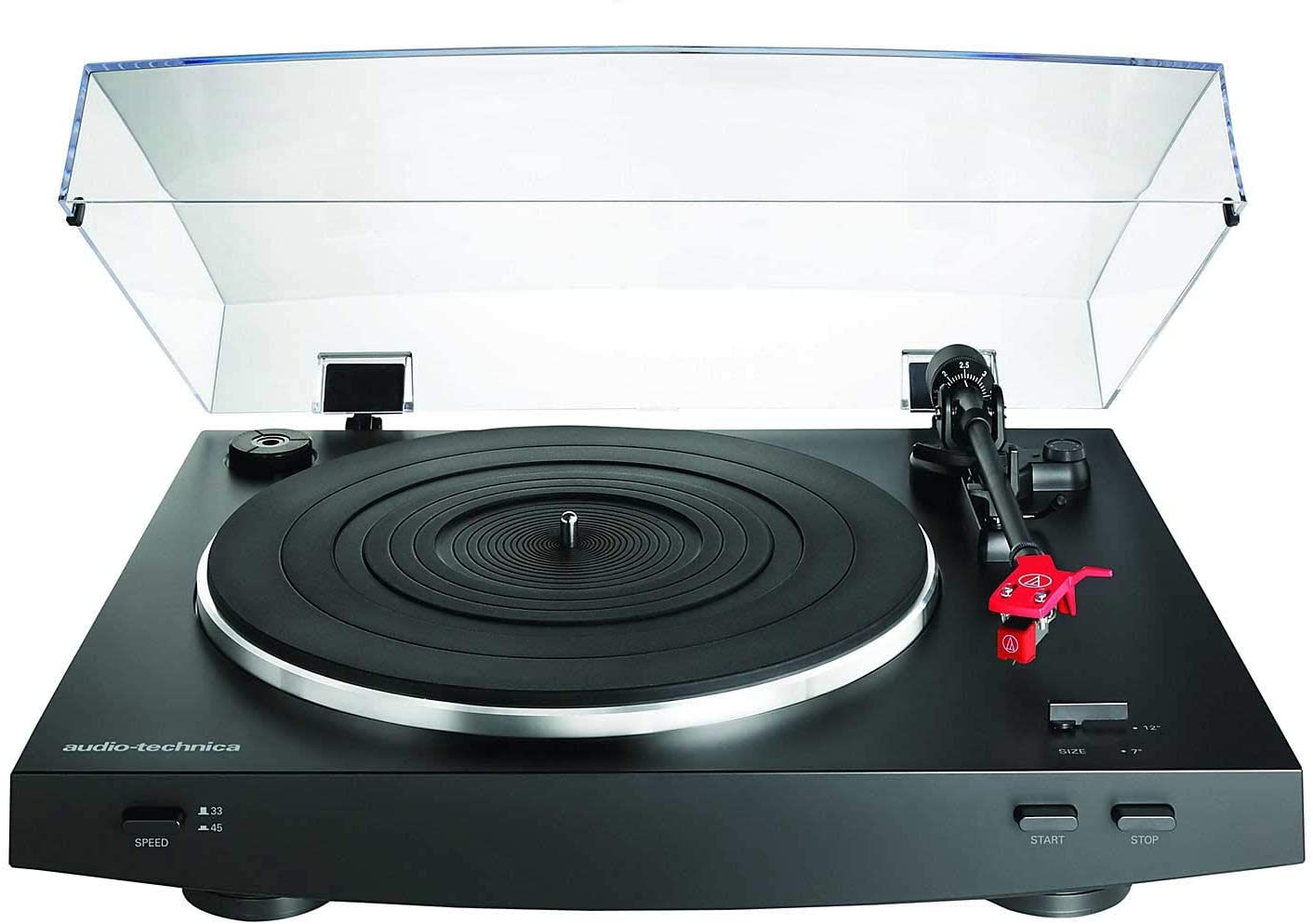
A turntable normally focuses on the job of spinning the record accurately and letting the stylus trace the groove. It will usually include a plinth, platter, motor, tonearm, cartridge and stylus, though the exact specification varies.
The plinth is the main body of the unit. A cartridge is the small device at the end of the tonearm that converts stylus movement into an electrical signal. The stylus is the tiny tip, often called the needle, that sits in the record groove.
Some turntables include a built-in phono preamp. Others do not. This is one of the most important details to check before buying, because a turntable signal is very quiet and needs special equalisation before it can be used by normal audio inputs.
A turntable without built-in speakers is not faulty. It is simply designed to be connected to the rest of a system. That system may be as simple as a turntable with built-in preamp plus powered speakers, or as traditional as a turntable, separate phono stage, amplifier and passive speakers.
5. The parts you may need to hear sound
The most common beginner surprise is buying a turntable, plugging it in, and hearing nothing. That usually happens because one or more parts of the playback chain are missing.
At minimum, you need three jobs to be done:
- The record must be spun at the correct speed.
- The stylus and cartridge must read the groove.
- The tiny signal must be amplified and sent to speakers.
A record player may do all three jobs in one unit. A turntable may only do the first two, or it may also include a phono preamp but still need speakers.
A phono preamp, also called a phono stage, boosts and corrects the cartridge signal. Some turntables have one built in. Some amplifiers have a dedicated “phono” input.
If neither your turntable nor your amplifier or speakers include a phono stage, you need a separate one.
Speakers also matter. Powered speakers have amplifiers built into them and plug into the mains. Passive speakers need a separate amplifier.
Many beginners find powered speakers simpler, but traditional hi-fi systems often use passive speakers with an amplifier.
6. Built-in speakers: convenient but limited
Built-in speakers are the main reason many people think of a record player as different from a turntable. They make the unit self-contained, which is convenient if you have limited space or do not want to learn about separate components straight away.
However, convenience is not the same as sound quality. Small built-in speakers are physically limited, especially with bass and stereo separation. Stereo separation means how clearly the left and right channels create a sense of space.
There is also a mechanical issue. Records are played by a stylus reading very small movements in a groove. If speakers are built into the same lightweight cabinet, their vibration can feed back into the stylus, especially at higher volumes.
This does not mean every all-in-one unit is unsuitable for everyone. It means you should match expectations to use. For background listening and simplicity, built-in speakers may be acceptable.
For better sound and long-term enjoyment, separate speakers are usually the stronger route.
7. Bluetooth, USB and other modern features
Modern vinyl products often include features that blur the line between record player and turntable. Bluetooth and USB are the two most common.
Bluetooth output lets the unit send sound wirelessly to Bluetooth speakers or headphones. This is convenient, but it usually involves digital compression and may add a delay. It is fine for casual listening, but it is not the purist route if your aim is the most direct analogue chain.
Bluetooth input is different. It lets you play music from a phone through the record player’s speakers. That can be useful on an all-in-one unit, but it does not improve vinyl playback itself.
USB output is mainly for recording records to a computer. Some people use this to make digital copies of rare records, spoken-word discs or older collections. It is useful only if you actually plan to record; it should not be treated as essential for normal listening.
Other features, such as radio, cassette or CD playback, can be handy in a family room or vintage-style entertainment centre. But the more features packed into one box, the more important it is to check that the record-playing basics have not been overlooked.
8. Sound quality and upgrade potential
A separate turntable system usually gives you more room to improve sound over time. You can change speakers, add a better phono stage, replace the cartridge, or upgrade the amplifier without replacing the whole setup.
With many all-in-one record players, upgrade options are more limited. You may be able to connect external speakers or replace the stylus, but the built-in amplification, cabinet and tonearm may still set the ceiling for performance.
This is why a turntable-based system is often the better choice if you already know you want to build a vinyl collection. It does not have to be complicated. A turntable with a built-in phono preamp and a pair of powered speakers can still be simple, but it gives you a more flexible foundation.
For a child’s first player, a casual kitchen setup or occasional use, a basic record player may be enough. For serious listening, regular album buying, or use with better speakers, look more closely at turntables and separate systems.
9. How to decide which one to buy first
Start with how you will really listen, not with the label used in the product title. A simple decision process helps avoid buying the wrong type of system.
- Decide whether you want sound from one box or from separate speakers.
- Check whether the product has built-in speakers, supplied speakers, or no speakers.
- Check whether it has a built-in phono preamp.
- Check what inputs your speakers or amplifier have.
- Decide whether Bluetooth or USB is genuinely useful for you.
- Think about whether you may want to upgrade later.
If you want the quickest route, choose a record player with built-in or supplied speakers, while accepting the likely sound limitations. If you want better sound without a complicated hi-fi rack, choose a turntable with a built-in phono preamp and powered speakers.
If you already own an amplifier and speakers, check for a phono input. If your amplifier has one, you can use many turntables directly into that input. If it does not, you need either a turntable with built-in phono preamp or a separate phono stage.
Also consider space and placement. Any vinyl player works best on a level, stable surface away from heavy vibration. Avoid placing speakers on the same flimsy table as the turntable if you can.
10. Terms to check before you buy
A few terms on product pages can tell you far more than the words “record player” or “turntable”. These are worth learning before you spend money.
- Built-in speakers: sound comes from the unit itself, though quality varies.
- Supplied speakers: separate speakers are included, but may still be basic.
- Built-in phono preamp: the turntable can connect to normal line-level inputs.
- Phono output only: you need a phono input or separate phono stage.
- Line output: the signal has already been boosted by a built-in preamp.
- Powered speakers: speakers with amplification built in.
- Passive speakers: speakers that need a separate amplifier.
- Automatic: the tonearm can start, stop or return by itself, depending on the design.
- Manual: you place and lift the tonearm yourself.
- Belt drive: the motor turns the platter using a belt.
- Direct drive: the motor drives the platter more directly.
Do not worry about mastering every specification on day one. For a first purchase, the big questions are simpler: can you connect it, can you place it safely, will it treat records properly, and does it suit how you want to listen?
At a glance comparison
| Record player | Usually means a complete or near-complete unit for playing records, often with built-in speakers or extra features. |
|---|---|
| Turntable | Usually means the record-playing deck itself, designed to connect to speakers and possibly a phono stage or amplifier. |
| Best for simplicity | Record player, especially if it has built-in or supplied speakers. |
| Best for upgrade potential | Turntable, because speakers, cartridge, phono stage and amplifier can often be changed separately. |
| Most important thing to check | Whether the product has speakers and a built-in phono preamp, regardless of what it is called. |
Frequently asked questions
Is a record player bad for records?
Not automatically. A well-set-up player with a suitable stylus and sensible tracking force should play records safely.
The risk is higher with very cheap or poorly made units that use heavy tonearms, worn styli or unstable mechanisms. Whatever you buy, keep the stylus clean, replace it when needed, and avoid playing valuable records on equipment you do not trust.
Can I connect a turntable directly to Bluetooth speakers?
Only if the turntable has Bluetooth output, or if you add a suitable transmitter after the correct preamp stage. A standard phono-only turntable cannot normally connect directly to Bluetooth speakers.
Also remember that Bluetooth turns the signal into digital audio for wireless transmission. That may be perfectly convenient, but it is not the same as a fully wired analogue setup.
What is the difference between a phono input and an aux input?
A phono input is made for the very low-level signal from a turntable cartridge. It boosts the signal and applies the correct equalisation for vinyl playback.
An aux input expects a stronger line-level signal, such as from a CD player, streamer or turntable with a built-in preamp. Plugging a phono-only turntable into aux will usually sound extremely quiet and thin.
Do I need an amplifier if I buy powered speakers?
Usually no, because powered speakers have amplification built in. You still need to make sure the signal going into them is correct.
If your turntable has a built-in phono preamp, it can often connect directly to powered speakers using a line output. If it does not, you need a separate phono stage between the turntable and the powered speakers.
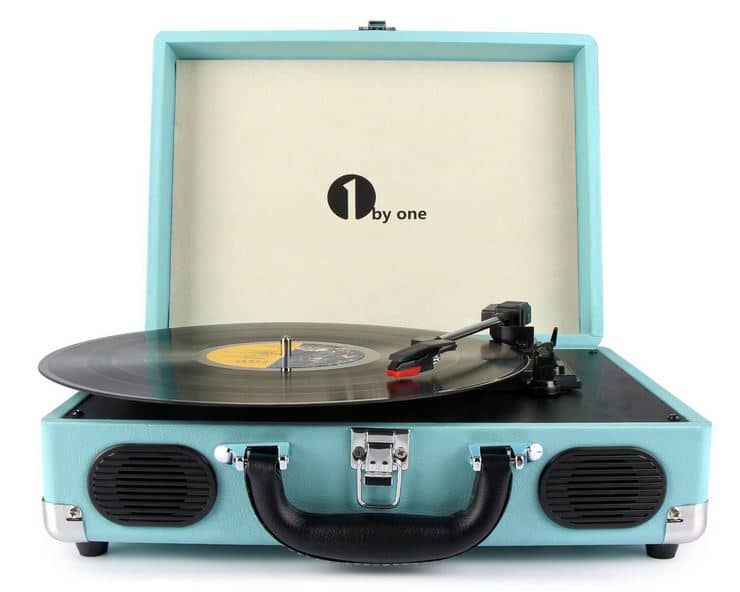
Are suitcase record players the same as turntables?
They contain a turntable mechanism, but they are usually sold as portable all-in-one record players. Many include small built-in speakers and a compact case.
They can be convenient, but they are rarely the best route for sound quality or upgrade potential. If you plan to listen often or build a valuable collection, compare them carefully with a separate turntable and speaker setup.
Why do some brands call the same kind of product a record player and others call it a turntable?
The terms are often used for marketing rather than strict technical classification. One brand may use “record player” to sound beginner-friendly, while another uses “turntable” to sound more hi-fi.
That is why the feature list matters more than the name. Check for speakers, phono preamp, outputs, cartridge type and setup requirements.
Should my first vinyl setup be automatic or manual?
Automatic operation can be helpful if you are nervous about placing the stylus by hand. It can start and sometimes return the tonearm for you, depending on the design.
Manual turntables are simple once you learn the basic handling. The better choice depends on confidence, convenience and the specific model, rather than the word alone.
Final thoughts
The practical difference is simple: a record player is usually a more complete playback device, while a turntable is usually the deck that forms part of a wider system. In real shops, the words overlap, so always check the features rather than relying on the label.
If you want the easiest first step, look for a record player with built-in or supplied speakers and accept that it may be more about convenience than hi-fi performance. If you want better sound and a setup you can improve over time, look for a turntable and make sure you also have the right speakers, amplification and phono stage.
Your next step should be to learn how phono preamps, powered speakers and turntable setup work. Those three topics will help you avoid the most common first-buy mistakes and get your records playing properly from the start.