Quick answer
A belt drive turntable uses a rubber belt to connect the motor to the platter. It is often chosen for home listening because the belt helps separate motor vibration from the record, though the belt may need replacing over time.
A direct drive turntable has the platter driven directly by the motor. It usually starts quickly, holds speed confidently and is the standard choice for DJ use, but a good direct drive design still depends on the quality of the motor, tonearm, cartridge and overall build.
In this guide
- What the drive system actually does inside a turntable
- The practical difference between belt drive and direct drive designs
- Why neither type automatically guarantees better sound
- Which drive system suits home listening, DJ use and casual beginners
- What maintenance to expect from each type
- Which specifications and features matter more than the label
- A simple buying checklist for making a confident first decision
Watch the article video
What the drive system does
The drive system is the part of the turntable that makes the platter spin. The platter is the round platform your record sits on.
For vinyl to sound right, the platter must rotate at a steady speed. Most LPs play at 33⅓ rpm, while many singles play at 45 rpm. If the speed is unstable, music can sound slightly wobbly, slow, fast or uneven.
The drive system is only one part of this job. The platter, motor, bearing, power supply, plinth, tonearm and cartridge all affect how well a turntable performs.
This is why “belt drive” and “direct drive” are useful labels, but they are not complete verdicts. A well-made belt drive can sound excellent, and a well-made direct drive can sound excellent too. A poorly made turntable of either type can disappoint.
How a belt drive turntable works
A belt drive turntable uses a small motor placed away from the centre of the platter. A rubber or silicone belt links the motor pulley to the platter, either around the outer edge of the platter or around a smaller sub-platter underneath it.
The belt acts like a flexible link between the motor and the record. Because it is not rigid, it can help reduce the amount of motor vibration that reaches the stylus.
That is the main attraction of belt drive for many home listeners. The design can be simple, quiet and cost-effective when done well.
The trade-off is that the belt is a wearing part. Over time it can stretch, harden, slip or lose grip. When that happens, the platter may take longer to reach speed or may no longer keep speed as accurately.
Some belt drive models require you to move the belt by hand to change between 33⅓ and 45 rpm. Others have electronic speed change, where you press a button or turn a switch. Manual belt moving is not difficult, but it is worth knowing before you buy.
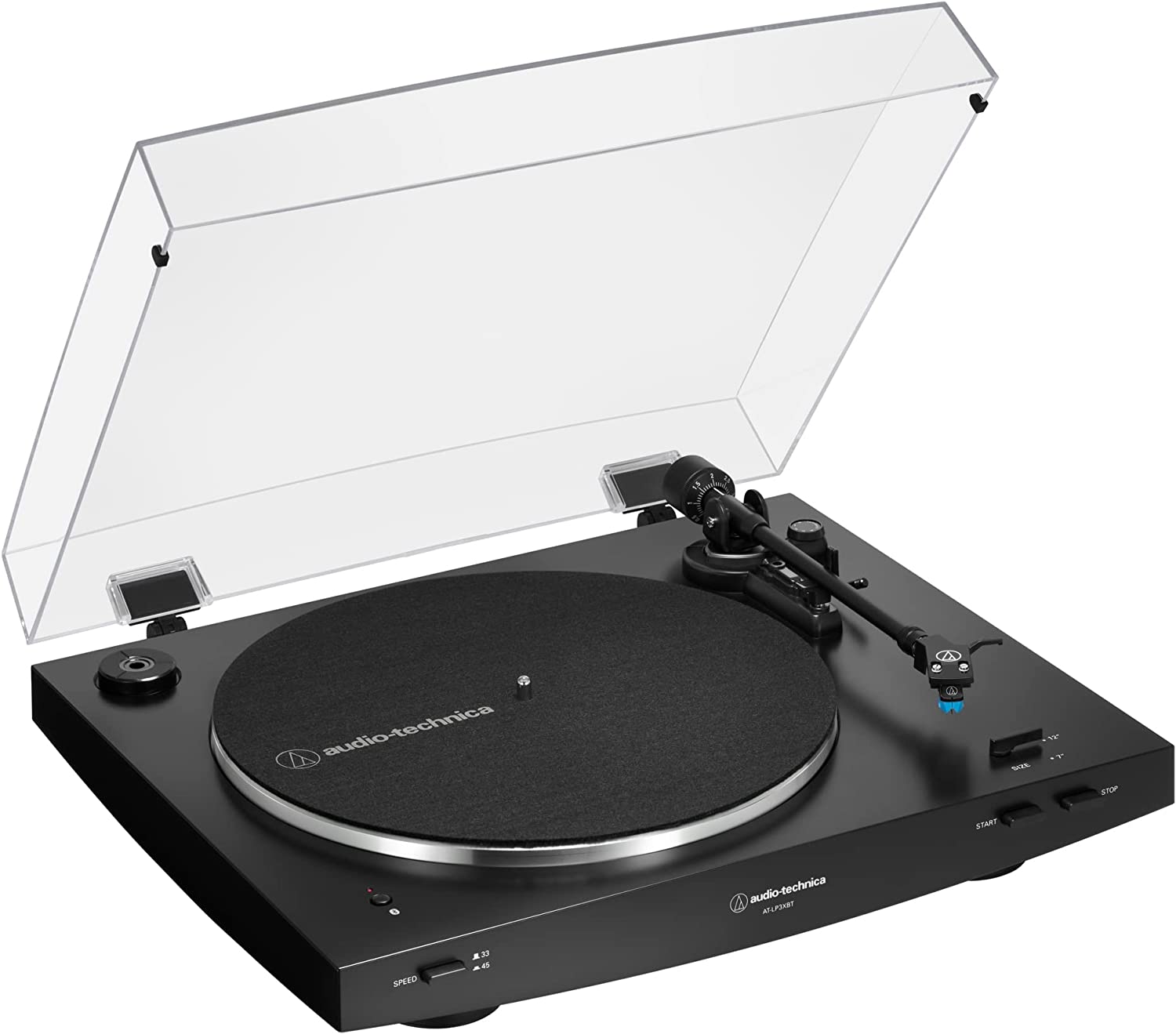
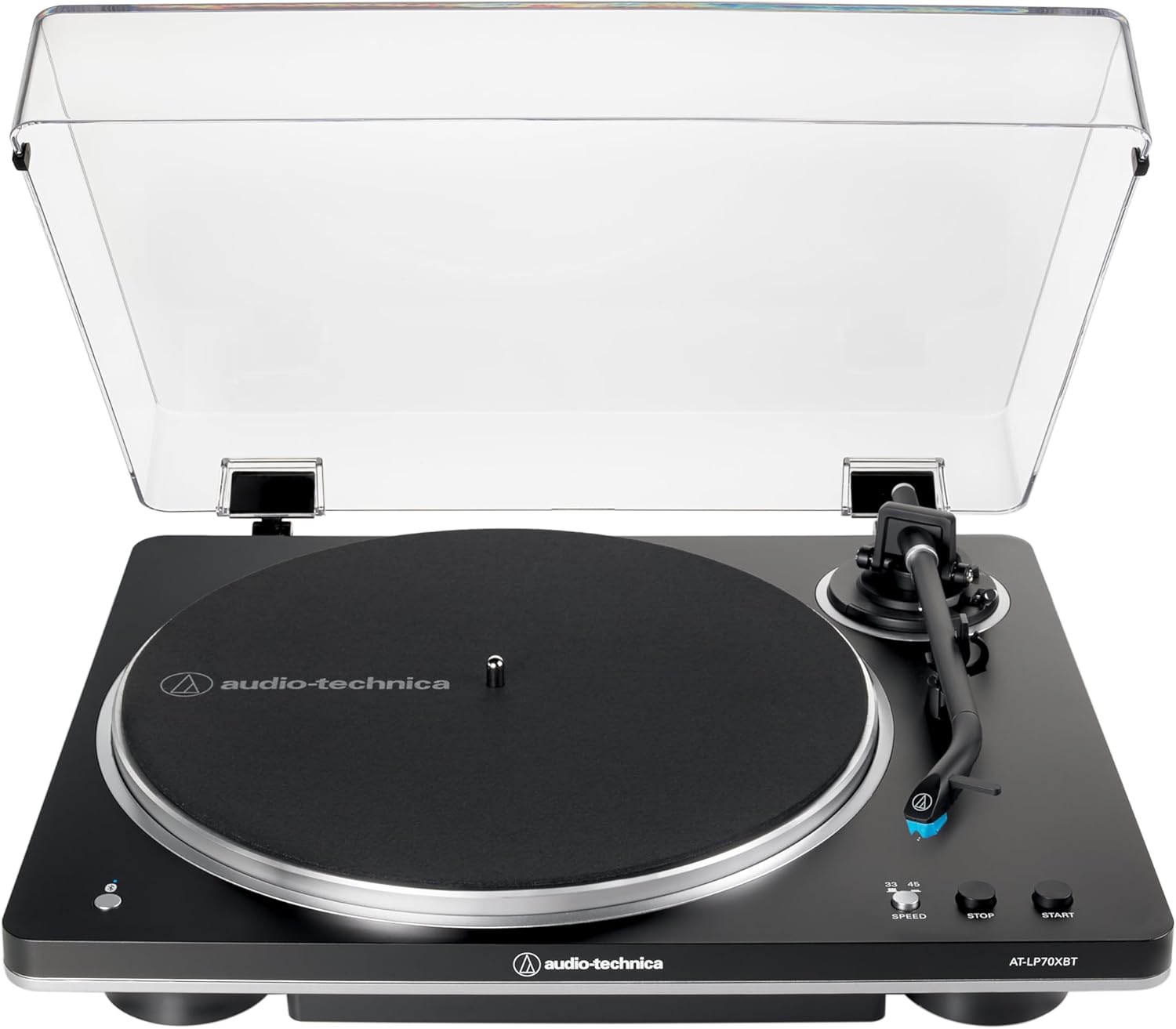
In the local catalogue, names such as the 1 BY ONE High Fidelity Belt Drive Record Player and Audio-Technica LPW50PB Manual Belt Drive Turntable clearly indicate belt drive designs. Their presence shows how common belt drive is among home-listening turntables, but the name alone should not be treated as a full quality judgement.
How a direct drive turntable works
A direct drive turntable has its platter driven directly by the motor. There is no belt between the motor and the platter.
This gives direct drive turntables strong starting power, often called torque. Torque simply means turning force. Higher torque helps the platter get up to the correct speed quickly and resist slowing down when handled.
That matters for DJ work, where the user may cue records, stop the platter, back-cue, scratch or mix tracks. Direct drive became strongly associated with DJ turntables because it copes better with that kind of physical use.
For home listening, the benefits are different. A good direct drive turntable can offer stable speed, easy operation and less routine belt maintenance.
The old criticism of direct drive is that the motor sits closer to the record, so motor vibration could potentially be passed to the stylus. In modern designs, this depends heavily on engineering quality. It is not safe to assume direct drive is noisy or belt drive is always quieter.
In the local catalogue, names such as the Audio-Technica AT-LP5X Direct Drive Turntable clearly identify direct drive. The Audio-Technica AT-LP120USBHCBK USB Vinyl Turntable is also commonly grouped with USB turntables in the catalogue, but you should still check the manufacturer’s current specification before relying on any feature.
Sound quality: what beginners should really listen for
Many beginners ask whether belt drive or direct drive sounds better. The honest answer is that the drive type can matter, but it is not the only factor and not always the biggest one.
The drive system affects speed stability and vibration control. Speed stability means the turntable can keep the record spinning evenly. Vibration control means unwanted movement from the motor, speakers, floor or room is less likely to reach the stylus.
However, the cartridge and stylus often make a very obvious difference. The cartridge is the small part at the end of the tonearm that holds the stylus. The stylus, often called the needle, sits in the record groove and reads the music.
The tonearm also matters. It must let the stylus follow the groove accurately without pressing too heavily or bouncing around. A poor tonearm can cause distortion, skipping or extra record wear.
The plinth and platter matter too. The plinth is the main body of the turntable, and the platter is the spinning disc. A stable, well-damped turntable is less likely to feed vibration into playback.
So do not buy only from the words “belt drive” or “direct drive”. Look at the whole design, especially the cartridge, tonearm adjustment, platter quality, speed control and whether the turntable has a proper line or phono output for your system.
Speed stability, wow and flutter explained simply
Two terms often appear when turntable speed is discussed: wow and flutter. They describe small speed variations during playback.
Wow is a slower variation. It can make sustained notes, such as piano chords or strings, sound like they are gently wavering. Flutter is a faster variation, which can make playback feel nervous or unstable.
Beginners do not need to obsess over numbers, especially when comparing incomplete listings. But you should understand the practical effect: poor speed stability makes music sound less natural.
A belt drive turntable can have excellent speed stability if the belt, motor and platter are well designed. A direct drive turntable can also have excellent speed stability if the motor control is accurate.
What should you check before buying? Look for credible speed specifications if supplied, but also check whether the model has proper speed selection, stable build and a platter that is not extremely light and flimsy.
If you already own a turntable and suspect speed problems, do not immediately blame the drive type. With belt drive models, inspect the belt first. With any turntable, check that the record is seated properly, the platter is installed correctly and the unit is on a level surface.
Maintenance and reliability
Belt drive turntables usually need simple belt care. The belt may last for years in normal use, but it is not permanent.
Signs of a worn belt include slow start-up, uneven speed, slipping, visible cracks, looseness or a belt that falls off easily. Replacement belts are often inexpensive, but you must buy the correct type for the model.
To look after a belt drive turntable:
- Keep the belt clean and free from oil or grease.
- Avoid stretching it more than necessary during setup.
- Fit it around the correct pulley step for the speed you want.
- Replace it if speed becomes unreliable or the belt looks worn.
- Store the turntable away from heat, which can age rubber parts.
Direct drive turntables avoid belt replacement. That can make them feel more convenient, especially if you use the turntable frequently.
However, direct drive does not mean maintenance-free. You still need to keep the stylus clean, replace the stylus when worn, keep records clean, set tracking force correctly if adjustable, and protect the turntable from vibration and dust.
Reliability depends on design quality, not just drive type. A simple belt drive from a careful manufacturer may outlast a poorly built direct drive, and the reverse can also be true.
Which is better for home listening?
For relaxed home listening, both belt drive and direct drive can be good choices. The better decision depends on your priorities.
Choose belt drive if you want a traditional hi-fi approach, do not mind occasional belt replacement, and mainly want to play records rather than handle them actively. Many home-focused turntables use belt drive because it is a straightforward way to isolate the motor from the platter.
Choose direct drive if you value quick start-up, easy speed control and less belt-related maintenance. A direct drive design can be especially appealing if you play records often, switch speeds regularly or prefer a more robust mechanical feel.
If you are building a first hi-fi system, also think about the rest of your setup. You may need powered speakers, an amplifier, or a phono preamp. A phono preamp boosts the tiny signal from the cartridge to a level that an amplifier or powered speakers can use.
Some turntables have a built-in phono stage, while others need an external one. This is often more important to a beginner’s success than the drive system itself.
For many first-time buyers, the best home choice is not “belt or direct” in isolation. It is the turntable that offers stable speed, a decent cartridge, safe tracking, suitable outputs and sensible setup for your room.
Which is better for DJ use and hands-on control?
For DJ use, direct drive is usually the right starting point. The reason is not fashion; it is function.
DJ techniques often require the platter to respond quickly and recover speed after being touched. A direct drive motor is better suited to cueing, back-cueing, scratching and beatmatching.
Belt drive turntables are generally less suitable for this. The belt can stretch or slip under hands-on use, and the platter may not recover speed quickly enough for accurate mixing.
If you only want to play records at home and never plan to DJ, you do not need to buy a DJ-style direct drive turntable. Some DJ-style features, such as pitch control, can be useful but are not essential for normal listening.
If you do want to learn DJ skills, look beyond the drive type. Check for a suitable tonearm, replaceable cartridge, pitch control, sturdy construction and outputs that work with your mixer or audio interface.
The Numark PT01 Scratch Portable DJ Turntable appears in the local catalogue as a DJ Scratch Turntable. Portable scratch products can serve a different purpose from full-size home hi-fi turntables, so always match the product type to the way you actually intend to use it.
Common buying mistakes to avoid
The first mistake is assuming belt drive is automatically audiophile and direct drive is automatically for DJs. These are stereotypes, not rules.
Some belt drive turntables are basic lifestyle products, while some direct drive turntables are serious home listening machines. The engineering matters more than the label.
The second mistake is ignoring the cartridge. A decent drive system cannot rescue a worn, poor or badly set-up stylus. If the cartridge is upgradeable and replacements are easy to find, that is a useful advantage.
The third mistake is buying a turntable without checking outputs. Some models provide phono-level output, some provide line-level output, and some offer both. If you connect the wrong output to the wrong input, the sound may be very quiet, distorted or overly boomy.
The fourth mistake is placing the turntable badly. Even a good turntable can sound poor if it sits on a wobbly table beside a speaker. Footfall, bass vibration and an uneven surface can all cause skipping or muddy sound.
The fifth mistake is overvaluing convenience features. Bluetooth, USB recording, auto-stop and built-in speakers can be useful, but they do not automatically mean better record playback. Decide which features you truly need before paying attention to extras.
How to choose: a beginner’s decision checklist
Use this simple process if you are comparing two or three turntables and feel stuck.
- Decide how you will use it most.
For home listening only, both belt drive and direct drive are valid. For DJ use or scratching, start with direct drive.
- Check the cartridge and stylus.
Look for a replaceable stylus and clear information about compatible replacements. If tracking force is adjustable, make sure the manufacturer gives a recommended setting.
- Check the outputs.
If you use powered speakers, a built-in phono preamp can make setup easier. If you use a hi-fi amplifier with a phono input, you may not need one.
- Consider speed change.
If you play many 45 rpm singles, electronic speed switching may be more convenient than moving a belt by hand. If you mostly play LPs, manual speed change may not bother you.
- Think about maintenance.
Belt drive means occasional belt replacement. Direct drive avoids belts but still needs stylus care, record cleaning and careful placement.
- Look for stability and adjustability.
A turntable should sit level, run at the correct speed and allow the stylus to track safely. Avoid choosing purely on looks if the practical details are weak.
- Match the turntable to your room.
If your floor is springy or your speakers produce strong bass, place the turntable on a rigid, isolated surface. This helps either drive type perform properly.
As grounded catalogue examples of naming, the Audio-Technica LPW50PB Manual Belt Drive Turntable clearly signals a belt drive design, while the Audio-Technica AT-LP5X Direct Drive Turntable signals direct drive. Those names are useful starting points, but you should still compare the full feature set before deciding.
At a glance comparison
| How it turns the platter | Belt drive uses a belt between the motor and platter. Direct drive has the platter driven directly by the motor. |
|---|---|
| Main everyday strength | Belt drive can help isolate motor vibration. Direct drive usually offers quick start-up, strong control and easy speed handling. |
| Typical best fit | Belt drive often suits home hi-fi listening. Direct drive is usually preferred for DJ use and frequent hands-on control. |
| Maintenance | Belt drive may need a replacement belt over time. Direct drive avoids belt replacement but still needs stylus, record and setup care. |
| Speed change | Some belt drive models require moving the belt manually. Many direct drive models use electronic speed selection, though this varies by model. |
| Beginner takeaway | Neither type is automatically better. Choose according to use, build quality, cartridge, outputs and setup needs. |
Frequently asked questions
Can a belt drive turntable be used for DJing?
It can play records, but it is usually not the best choice for DJ techniques. Cueing, scratching and back-cueing place extra demands on the platter, and a belt may slip or stretch under that kind of use.
If you want to learn DJing seriously, direct drive is the safer starting point.
Does direct drive damage records?
Direct drive does not damage records simply because of the motor type. Record wear is more closely linked to stylus condition, tracking force, cartridge alignment, cleanliness and how carefully records are handled.
A badly worn stylus or incorrect setup can damage records on either belt drive or direct drive turntables.
How often should I replace a turntable belt?
There is no single interval that applies to every belt and every turntable. Replace it if you notice slipping, slow start-up, unstable speed, visible cracking or looseness.
If the turntable has been stored unused for years, inspect the belt before playing valuable records.
Is a heavier platter always better?
A heavier platter can help speed stability because it has more rotating mass, but weight alone is not a guarantee of quality. The bearing, motor control, platter material and overall design all matter.
A well-designed lighter platter may perform better than a heavy platter in a poorly designed turntable.
Do I need a phono preamp with belt drive or direct drive?
The need for a phono preamp is separate from the drive system. Some belt drive and direct drive turntables have a built-in phono stage, while others do not.
Check the turntable output and the input on your amplifier or powered speakers. If neither provides phono amplification, you will need an external phono preamp.
Why does my belt drive turntable sound slow?
The belt may be stretched, dirty, fitted to the wrong pulley step or not seated correctly. The platter may also be installed incorrectly, or the turntable may not be level.
Start by checking the belt position and condition. If the belt looks loose or polished smooth, replacing it may solve the issue.
Is an automatic turntable usually belt drive or direct drive?
Automatic operation and drive type are separate features. Automatic means the tonearm can start or return by itself, depending on the design. The platter can still be belt driven or direct driven.
If automatic operation matters to you, check that feature directly rather than assuming it from the drive system.
Final thoughts
Belt drive and direct drive turntables solve the same problem in different ways. Belt drive uses a belt to spin the platter and can be a very sensible choice for home listening. Direct drive connects the motor more directly to the platter and is usually the better choice for DJ use, quick start-up and frequent hands-on control.
For a beginner, the best answer is practical rather than ideological. Choose belt drive if you want a simple home hi-fi turntable and do not mind occasional belt maintenance. Choose direct drive if you want stronger platter control, easier speed handling or any form of DJ use.
Before buying, compare the cartridge, stylus replacement options, tonearm setup, outputs, speed control and where the turntable will sit in your room. Those details often decide whether vinyl feels enjoyable or frustrating.
Next, read a beginner guide to phono preamps, cartridges or turntable setup. Understanding those areas will help you get more from whichever drive system you choose.