Quick answer
A manual turntable needs you to lift the tonearm, place the stylus on the record, and return it when the side finishes. It suits listeners who want a simple, hands-on experience and do not mind learning a small routine.
An automatic turntable can move the tonearm for you at the start and end of a record. It is usually the easier choice if you are nervous about handling the needle, likely to fall asleep while listening, or want a more convenient first setup.
In this guide
- What manual, automatic and semi-automatic turntables actually do
- How each type affects day-to-day listening and record handling
- Why automatic features can protect against some beginner mistakes
- Where manual turntables may offer more simplicity and control
- What to check before buying if you want Bluetooth, USB or built-in speakers
- How to choose based on your habits, not just the specification sheet
Watch the article video
What the terms mean
A manual turntable is one where you do the tonearm work yourself. The tonearm is the pivoting arm that holds the cartridge and stylus, often called the needle, above the record.
With a manual deck, you usually start the platter spinning, lift the tonearm using a cueing lever, move it over the record, and lower the stylus into the lead-in groove. At the end of the side, you lift the tonearm and return it to its rest.
An automatic turntable does some or all of that movement for you. On a fully automatic model, you press a button and the tonearm moves to the beginning of the record, lowers itself, then lifts and returns when the side ends.
There is also a middle option called semi-automatic. These turntables normally require you to start the record manually, but they lift or return the tonearm at the end. This can be a useful compromise if you like placing the needle yourself but want protection if you forget the record is finished.
How playing a record differs in practice
The biggest difference is the routine. With a manual turntable, playing a record is a deliberate process. You take the record from its sleeve, place it on the platter, select the speed, lift the arm, position it, and lower the stylus gently.
This routine can be part of the appeal. Many vinyl listeners enjoy the small ritual because it slows listening down and makes each album side feel intentional.
With an automatic turntable, the routine is shorter. You place the record on the platter, choose the correct speed and size setting if required, and press start. The mechanism handles the most delicate movement.
That convenience matters if several people in the house will use the turntable. It can also help if you have less steady hands, poor eyesight, or simply do not want to concentrate every time you put a side on.
Neither approach is automatically more “proper”. The right choice is the one that fits how you will actually listen on a normal evening, not how you imagine you might listen on your most patient day.
Control, involvement and confidence
Manual turntables give you direct control over where the record starts. This is useful if you want to skip to a particular track, replay a passage, or cue records carefully.
The word “cue” simply means placing the stylus at the right point on the record. Most decent turntables have a cueing lever that lowers the tonearm slowly, so you are not expected to drop the stylus by hand.
Automatic turntables reduce the need for this skill. For beginners, that can make the first few weeks much less intimidating. You can enjoy records without worrying as much about scraping the stylus across the surface.
However, automatic mechanisms may give you less fine control. Some are designed mainly to start at the beginning of a record, not to place the stylus precisely between tracks. If you often jump between songs, check how easy the model is to use manually as well as automatically.
Confidence often grows quickly. A beginner who is nervous in week one may be happy using a manual tonearm by week three. If you like learning small mechanical routines, manual operation should not put you off.
What happens at the end of the record
End-of-side behaviour is one of the most practical differences between manual and automatic turntables. With a manual deck, the stylus may continue sitting in the run-out groove until you lift it. The run-out groove is the spiral near the centre that carries the stylus after the music has finished.
This usually creates a repeated soft sound or silence, depending on the record and system. Leaving it there for a short time is not a disaster, but making a habit of it is not ideal for stylus wear.
An automatic turntable normally lifts and returns the tonearm at the end. A semi-automatic model may lift the arm, return it, or stop the platter depending on design.
This is useful if you listen while cooking, reading, working, or falling asleep. It is also helpful if you have children or guests using the system and you do not want to supervise every side.
If you are choosing a manual turntable, build a simple habit: stay close enough to hear when a side ends, or set a reminder if you often get distracted. Vinyl rewards attention, but your turntable choice should also match real life.
Record care and stylus safety
Both manual and automatic turntables can be safe for records when set up and used correctly. The main causes of damage are poor handling, a worn stylus, wrong tracking force, dirty records, and careless cueing.
Tracking force is the downward pressure of the stylus on the record. Too little force can make the stylus mistrack, which means it fails to follow the groove properly. Too much force can increase wear.
Automatic operation can reduce one common beginner risk: dropping the stylus too hard or dragging it sideways. Because the mechanism lowers the arm, it can make starting a record more consistent.
Manual operation is also safe if you use the cueing lever and avoid touching the tonearm while it is lowering. The cueing lever is there to do the delicate part slowly.
Record care is mostly about steady habits:
- Hold records by the edge and the labelled centre, not the playing surface.
- Keep the stylus clean with a suitable stylus brush or cleaner.
- Replace the stylus when it is worn, following the cartridge maker’s guidance.
- Use the correct speed for the record.
- Keep the turntable level and away from vibration.
A poor-quality or badly adjusted turntable can be rough on records whether it is manual or automatic. Do not judge safety by operation type alone.
Sound quality: does manual or automatic sound better?
Manual turntables are often associated with hi-fi systems because they can be mechanically simpler. Fewer automatic parts can mean fewer things to adjust, fewer parts to fail, and sometimes a more straightforward path for the designer.
That does not mean every manual turntable sounds better than every automatic one. Sound quality depends on the whole design: the tonearm, cartridge, platter, motor, isolation, phono stage and how well the deck is set up.
Automatic turntables add a mechanism that moves the arm. In well-designed models, this should stay out of the way during normal playback. In poorer designs, any extra play, friction or vibration could be a concern.
For a beginner, the bigger sound-quality difference is often elsewhere. A decent cartridge, correct tracking force, stable furniture and suitable speakers will usually matter more than whether the tonearm returns itself.
If you are choosing between two similar turntables, do not assume manual automatically means serious and automatic automatically means basic. Look at the full feature set, adjustment options and how the turntable will connect to your system.
Reliability, servicing and long-term ownership
Manual turntables are mechanically simpler. There is no start-return mechanism to operate the tonearm, so there are fewer moving parts linked to automation.
This simplicity can be attractive if you want something you can understand easily. It may also appeal if you plan to keep the turntable for many years and prefer fewer hidden mechanisms.
Automatic turntables add convenience but also add parts. These parts may include gears, levers, sensors or belts depending on the design. If they go out of adjustment, the arm might start in the wrong place, fail to return, or behave inconsistently.
That does not mean automatic turntables are unreliable. Many people use them happily for years. It simply means you should buy with your eyes open and avoid treating automation as a free extra with no trade-off.
If buying second-hand, automatic mechanisms deserve extra checking. Ask the seller to show that start, stop, return and size selection work properly. If you cannot inspect it, factor in the risk that repair may be needed.
For a first new turntable, consider the warranty, availability of replacement stylus parts, and whether the controls feel straightforward. A reliable manual deck that you find awkward is not better than an automatic deck you will use confidently.
Features that often get confused with manual or automatic
Manual versus automatic only describes tonearm operation. It does not tell you whether a turntable has Bluetooth, USB recording, built-in speakers, a built-in phono stage, or direct drive.
Bluetooth lets the turntable send audio wirelessly to compatible speakers or headphones, although some listeners prefer wired connections for simplicity and consistency. USB lets you connect to a computer for recording records as digital files.
A built-in phono stage means the turntable can connect to a normal line input, such as AUX, on an amplifier or powered speaker. Without one, you need a separate phono preamp or an amplifier with a phono input.
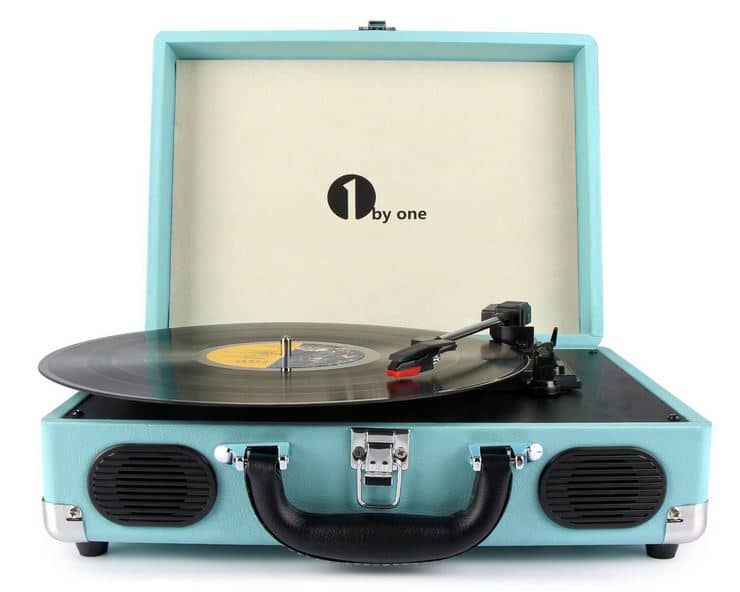
Built-in speakers mean the player can make sound on its own, but speaker size and placement are limited by the cabinet. Separate speakers usually give you more flexibility and potential for better sound.
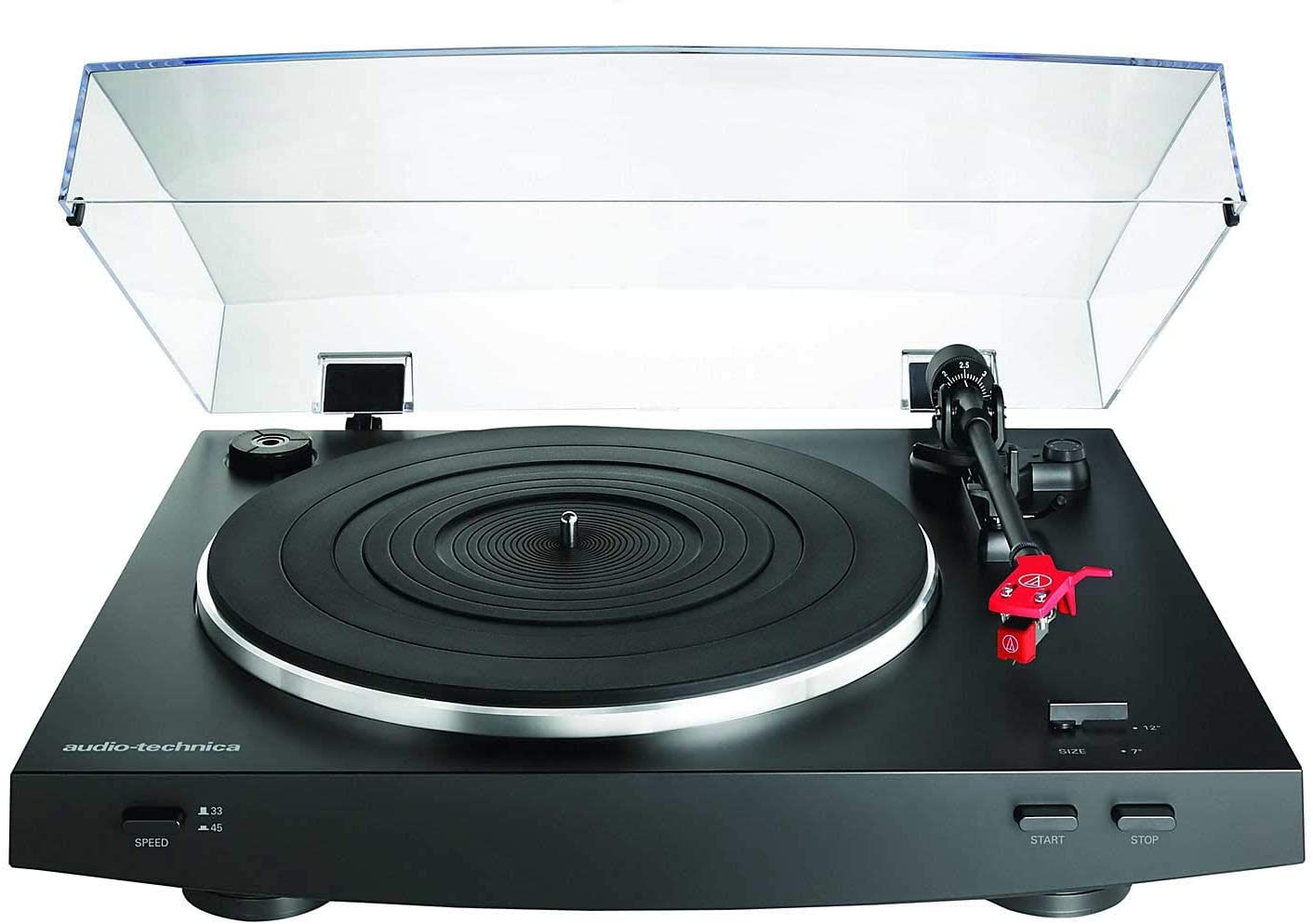
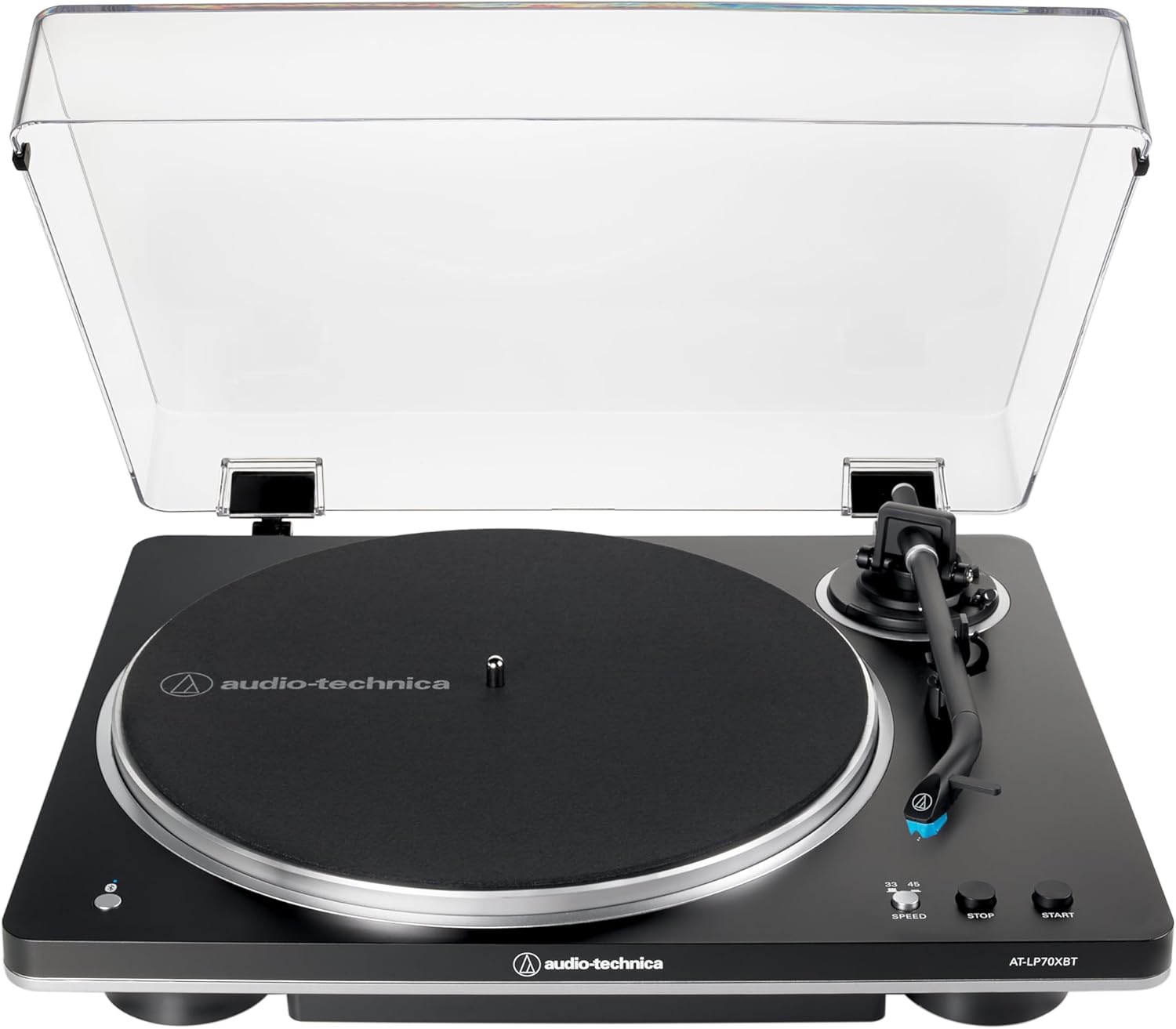
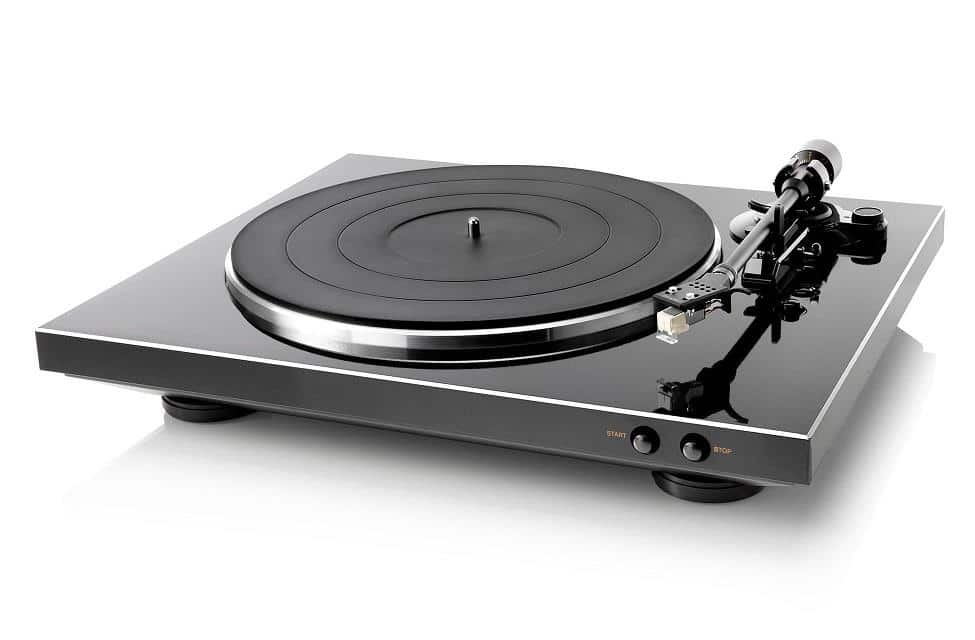
The local catalogue includes examples across different categories, such as the Audio-Technica AT-LP3XBT Automatic Wireless Turntable and Denon DP-300F Automatic Vinyl Turntable in automatic turntables, and the Audio-Technica LPW50PB Manual Belt Drive Turntable in record players. These names show how operation type can sit alongside other features, but you still need to check the exact specification before buying.
Do not buy a turntable just because it is automatic or manual. First make sure it connects to your speakers or amplifier without unexpected extra boxes.
Which type suits different buyers?
A manual turntable is often a good fit if you want the traditional vinyl routine. It suits people who enjoy careful handling, want direct control, and are happy to learn basic setup habits.
Manual can also be a sensible choice if your priority is a simple mechanism. If you are planning a separates hi-fi system with an amplifier and speakers, you may find many suitable manual options.
An automatic turntable is often better if convenience matters most. It is especially useful if you are anxious about lowering the stylus, share the system with beginners, or often listen while doing something else.
A semi-automatic turntable suits people who want some involvement but do not want the stylus left running at the end. It can be a particularly sensible first choice if you are undecided.
Think about your listening style:
- Choose manual if you will sit down and listen to albums properly.
- Choose automatic if you want vinyl to feel easy and low-stress.
- Consider semi-automatic if you want manual start with end-of-side protection.
- Prioritise connection options if you already own speakers or an amplifier.
- Avoid paying for features you will not use.
The best first turntable is not the one with the longest feature list. It is the one that removes enough friction that you will actually play records regularly.
A simple decision process before you buy
Use a short checklist before comparing individual models. It will stop you being distracted by features that sound impressive but do not solve your main problem.
- Decide how nervous you are about handling the tonearm. If the idea worries you, automatic or semi-automatic is worth considering.
- Decide where and when you listen. If you sit near the turntable, manual is easy.
If you move around the house, automatic return is useful.
- Check your speakers or amplifier. Confirm whether you need a built-in phono stage, Bluetooth, powered speakers or a separate phono preamp.
- Think about who else will use it. A shared household may benefit from automatic operation and simple controls.
- Look for proper speed options. Most LPs play at 33⅓ rpm and most singles at 45 rpm, so make sure the turntable covers what you own.
- Check stylus replacement. A turntable is easier to live with if replacement styli are clearly available.
- Avoid choosing on looks alone. Retro cabinets and compact designs can be appealing, but operation, setup and connections matter more.
Once you have narrowed the operation type, compare individual models within that group. That is much easier than trying to compare every manual, automatic, Bluetooth, USB and all-in-one player at once.
At a glance comparison
| Manual turntable | You place and return the tonearm yourself. Best for hands-on listeners who want control and a simpler mechanism. |
|---|---|
| Automatic turntable | The turntable can move the tonearm at the start and end. Best for convenience, shared use and nervous beginners. |
| Semi-automatic turntable | You usually start playback manually, but the turntable helps at the end. Best if you want involvement with some protection. |
| Main convenience difference | Automatic operation reduces handling at the most delicate moments. Manual operation asks you to be present and attentive. |
| Main buying caution | Operation type does not tell you about sound quality, Bluetooth, USB, phono stage or speaker requirements. Check these separately. |
Frequently asked questions
Will an automatic turntable damage my records less than a manual one?
Not automatically. It may reduce the risk of a beginner dropping or dragging the stylus, but record safety still depends on correct setup, a clean and unworn stylus, clean records and careful handling.
A well-used manual turntable with a cueing lever can be perfectly safe. A badly set up automatic turntable can still cause problems.
Can I use an automatic turntable manually if I want to skip a track?
Many automatic turntables allow some manual cueing, but the experience varies by model. Some are easy to position by hand, while others feel more designed around pressing start and letting the mechanism work.
If track skipping matters to you, check the controls before buying. Make sure you can lift, move and lower the arm comfortably.
Is a manual turntable too difficult for a complete beginner?
No, not if you are patient and use the cueing lever. Most beginners can learn the routine quickly: start the platter, lift the arm, position it over the lead-in groove and lower it gently.
The first few attempts may feel delicate. After a short time, it usually becomes normal.
What if I fall asleep while playing records?
An automatic or semi-automatic turntable is the safer and more convenient choice for that habit. It can lift or return the arm when the side ends, depending on the design.
If you buy a manual turntable, try not to use it as background music when you are likely to drift off. The stylus may sit in the run-out groove until you wake up.
Do DJs use manual or automatic turntables?
DJ turntables are generally manual because DJs need direct control over cueing, starting, stopping and moving the record. Automatic mechanisms would not suit scratching, beatmatching or fast track positioning.
For home listening, DJ-style control is not necessary unless you specifically want that kind of use.
Does Bluetooth make a turntable automatic?
No. Bluetooth and automatic operation are separate features. Bluetooth is about how sound is sent to speakers or headphones, while automatic operation is about how the tonearm moves.
A turntable can be manual with Bluetooth, automatic without Bluetooth, or have both. Always check the exact feature list.
Should I choose automatic if I have children in the house?
Automatic operation can make supervised use easier because there is less need for a child to handle the tonearm. It does not make the turntable child-proof.
Records, styli and tonearms are still delicate. Keep the dust cover closed when not in use and teach anyone using the player how to handle records properly.
Is semi-automatic always better than fully manual?
Not always. Semi-automatic operation is useful if you want end-of-side help, but some buyers prefer the simplicity of a fully manual deck.
Choose semi-automatic because it suits your habits, not because it sounds like an upgrade. The quality of the whole turntable still matters more than the label.
Final thoughts
Manual and automatic turntables are not rivals where one is universally right and the other is wrong. They are different answers to the same question: how much do you want the turntable to do for you?
Choose manual if you like involvement, want direct control and are happy to build a careful playing routine. Choose automatic if ease, confidence and end-of-side convenience are more important. Consider semi-automatic if you want a sensible balance.
Before buying, check the practical details: how it connects to your speakers, whether it has a built-in phono stage, how the stylus is replaced, and whether the controls make sense to you. If possible, imagine using it on a tired evening, not just on the day you unbox it.
For your next step, read a beginner setup guide covering tracking force, cartridge care and phono preamps. Those topics will help you get better sound and protect your records whichever operation type you choose.