Quick answer
For most beginners, the safest first choice is a proper turntable with a replaceable stylus, adjustable or correctly set tonearm, and a built-in phono preamp if you want simple connection to powered speakers. If you want the easiest possible setup, look at automatic or Bluetooth-capable models, but understand the trade-offs.
Avoid choosing on looks alone. A good first system is the whole chain: turntable, cartridge and stylus, phono preamp, amplifier or powered speakers, plus somewhere stable to put everything.
In this guide
- What a turntable actually needs in order to play records properly
- The difference between all-in-one record players and separate turntable systems
- Whether you need Bluetooth, USB, automatic operation or a built-in preamp
- How to match a turntable with speakers without buying the wrong extras
- The key features that protect your records and make setup easier
- A practical step-by-step way to shortlist your first turntable
Watch the article video
Start with the system, not just the turntable
A turntable does not work in isolation. It reads the groove in the record, but the tiny signal then needs to be boosted and played through speakers.
At a basic level, your vinyl system needs:
- A turntable to spin the record and hold the cartridge
- A cartridge and stylus to read the groove
- A phono preamp to boost the very quiet cartridge signal
- An amplifier, unless you use powered speakers
- Speakers or headphones to hear the music
Some products combine several of these parts. A record player with built-in speakers may include the turntable, amplifier and speakers in one box. A turntable with a built-in phono preamp still needs powered speakers or an amplifier and passive speakers.
This is where many first-time buyers get caught out. They buy a turntable, plug it into ordinary speakers, and hear nothing because the speakers are not powered. Or they plug into an amplifier without the right input and get a very quiet, thin sound.
Before comparing models, decide how you want the system to work in your room. If you already own powered speakers, a turntable with a built-in phono preamp is usually straightforward. If you own a hi-fi amplifier with a “phono” input, you may not need a built-in preamp at all.
If you own only Bluetooth speakers, check carefully whether the turntable sends Bluetooth out. Many products receive Bluetooth from a phone, which is useful for streaming, but that does not always mean they can transmit a record to wireless speakers.
Understand the main types of first turntable
Beginners often see several product types described in similar language. The differences matter because they affect sound quality, convenience and upgrade options.
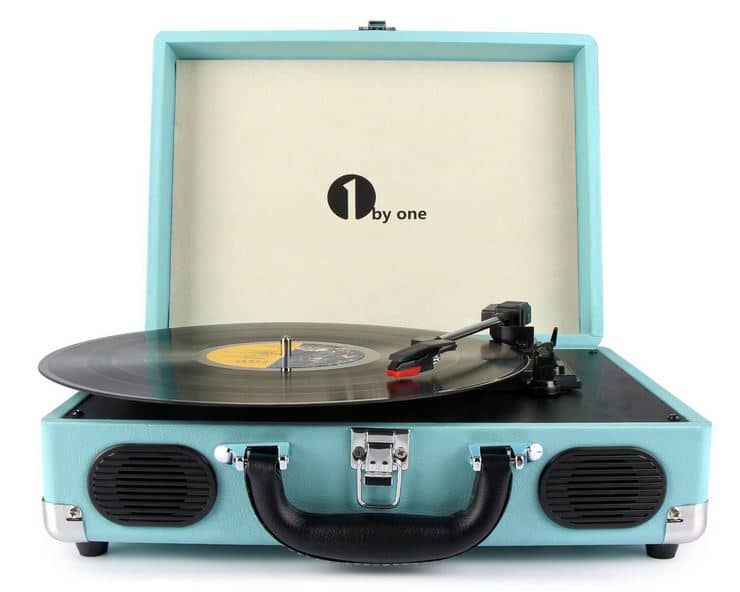
An all-in-one record player usually has built-in speakers. It is simple, portable and tidy, but the small speakers and lightweight construction can limit sound quality. Some briefcase-style players are bought for casual use, gifts or occasional listening rather than long-term hi-fi listening.
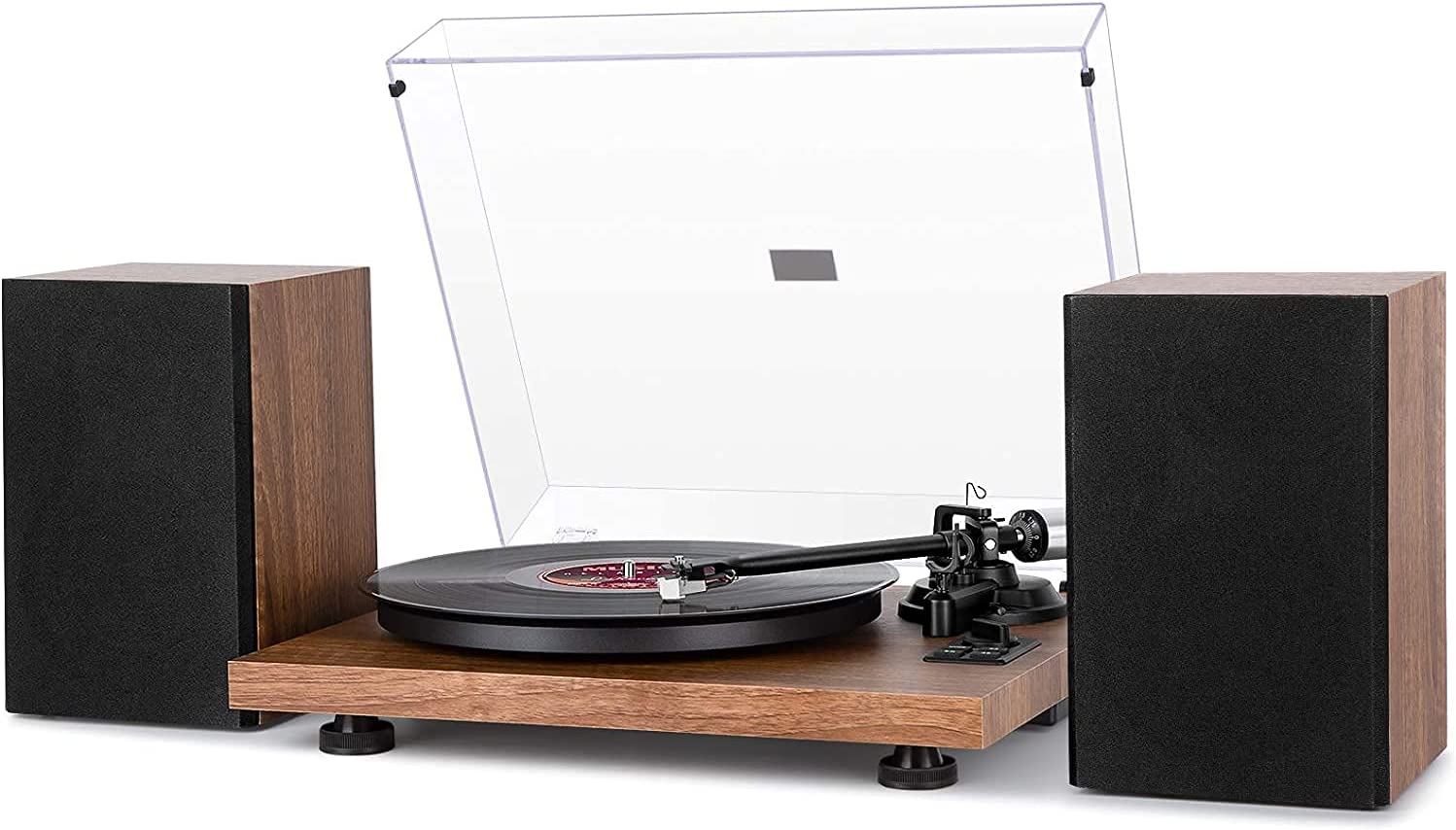
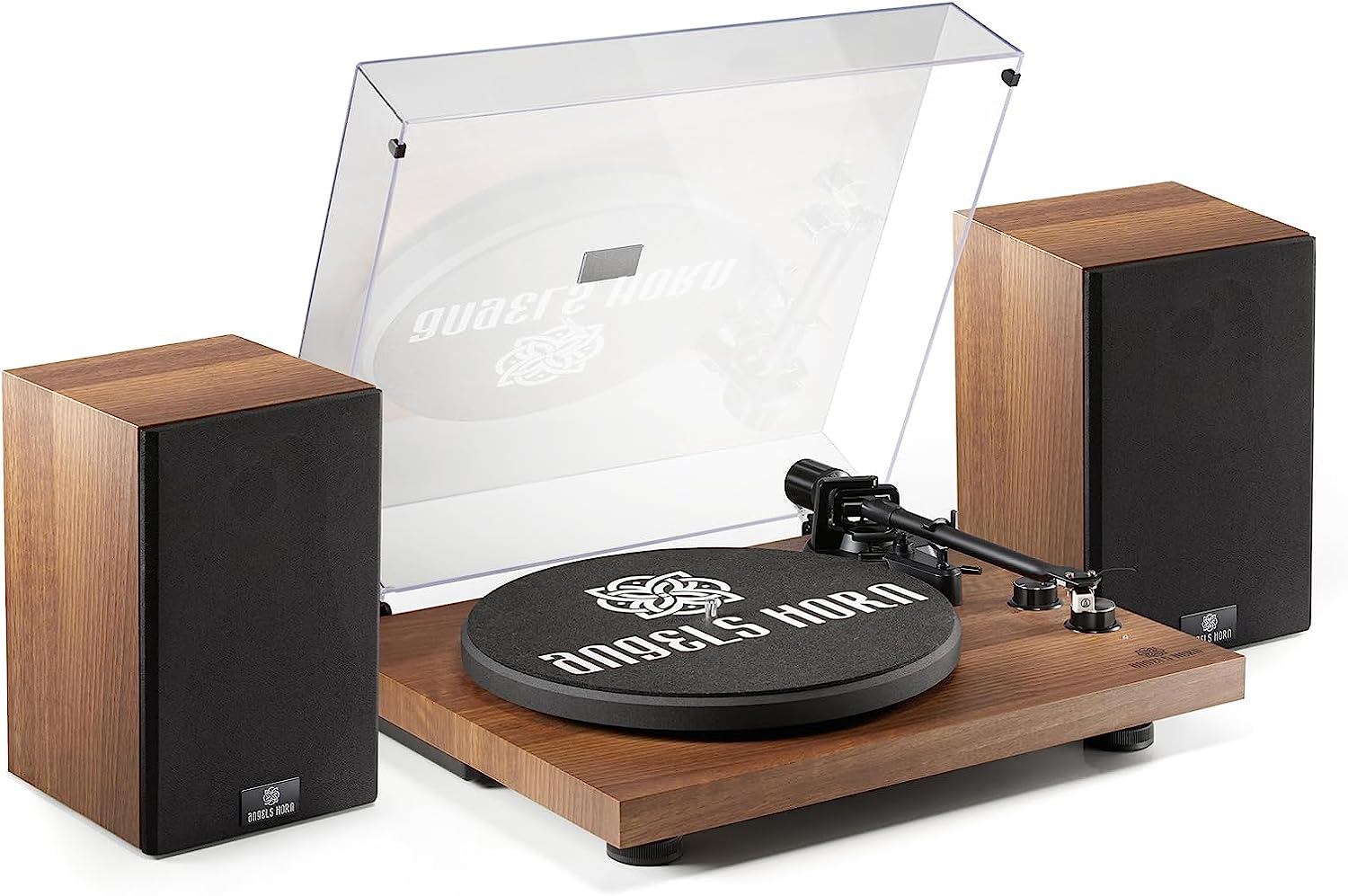
A separate turntable is designed to connect to speakers or a hi-fi system. It normally gives you better placement options, better sound potential and more sensible upgrade paths. Examples in the local catalogue include categories such as vinyl turntables, USB vinyl turntables, Bluetooth vinyl turntables and automatic turntables.
A Bluetooth turntable can be useful if you want fewer cables. For instance, catalogue examples include models in Bluetooth record player and Bluetooth vinyl turntable categories from brands such as Audio-Technica, House of Marley, Lenco and 1byone. The important point is to check whether Bluetooth is an output to speakers, an input from a phone, or both.
A USB turntable is aimed at people who want to digitise records to a computer. Catalogue examples include USB models from Audio-Technica, Denon, ION and Lenco. USB is handy for archiving, but it is not necessary if your main aim is simply listening.
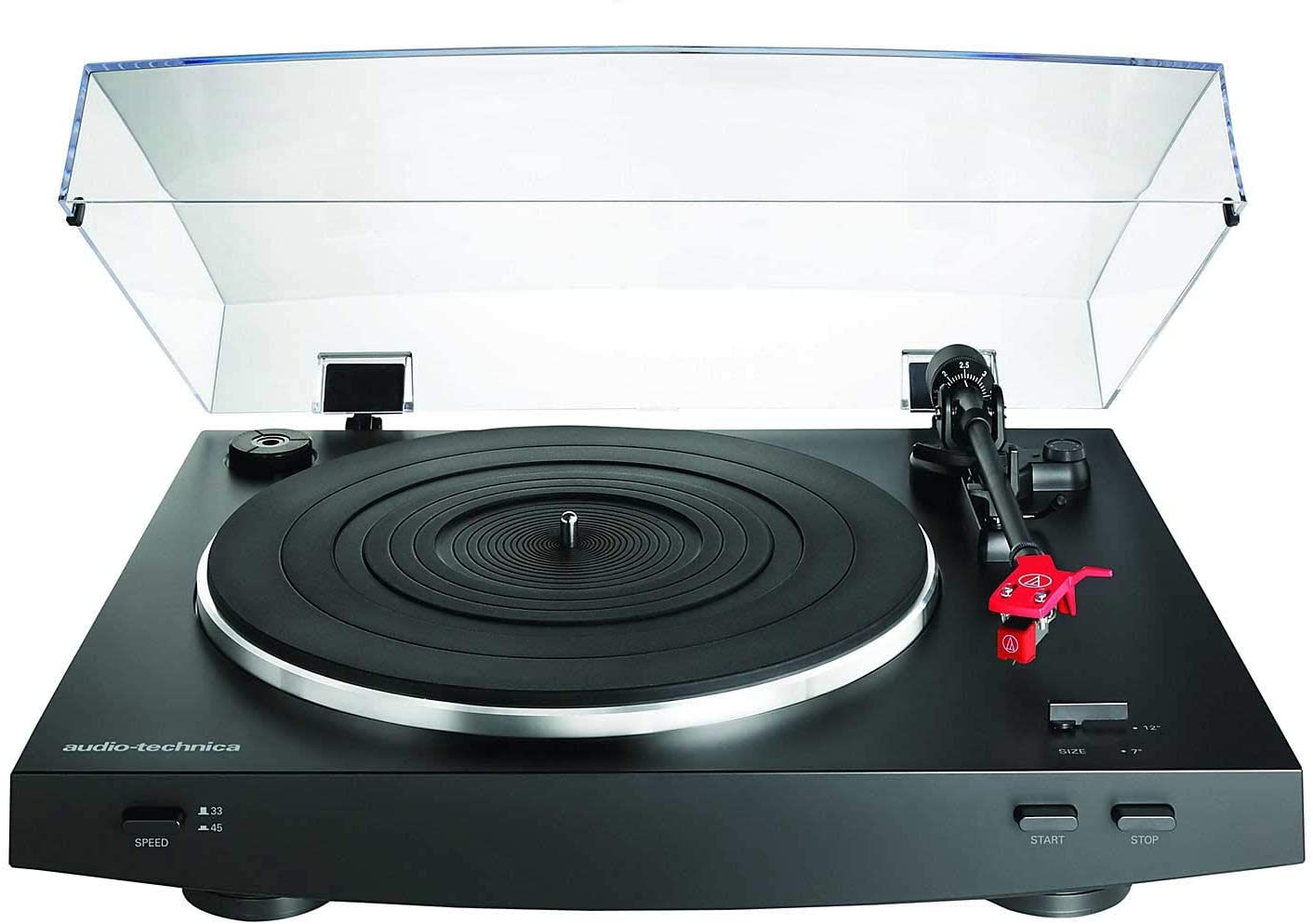
An automatic turntable can start and stop playback for you. Models in the automatic category, such as the Audio-Technica AT-LP3XBT Automatic Wireless Turntable or Denon DP-300F Automatic Vinyl Turntable, show the type of product to compare if convenience is high on your list. Automatic operation can reduce handling mistakes, especially when you are new to cueing a tonearm.
Know the parts that affect sound and record care
You do not need to become a technician before buying a first turntable. However, a few parts are worth understanding because they directly affect sound and how gently your records are treated.
The stylus is the tiny tip that sits in the record groove. People often call it a needle, although stylus is the more precise term. It wears out with use, so a replaceable stylus is important.
The cartridge is the small unit at the front of the tonearm that holds the stylus and converts groove movement into an electrical signal. Some beginner turntables come with a fixed cartridge, while others allow cartridge replacement. Replaceability gives you more flexibility later.
The tonearm is the arm that carries the cartridge across the record. It should move smoothly and apply the correct downward pressure, known as tracking force. Too much force can increase wear; too little can cause mistracking, skipping and distortion.
The platter is the round platform that the record sits on. A heavier or better-damped platter can help with stable rotation, although it is only one part of the design. The mat between the record and platter can also affect grip and vibration.
The motor and drive system keep the record spinning. Most home listening turntables are either belt drive or direct drive. Belt drive uses a small belt between the motor and platter, while direct drive has the motor linked more directly to the platter.
Do not judge a turntable by one part alone. A good cartridge on a poorly made deck may still disappoint, while a modest cartridge on a well-set-up turntable can be enjoyable and reliable.
Decide how simple you want setup to be
There is no shame in wanting an easy first setup. The best beginner turntable is not the one with the most features; it is the one you will set up correctly and use with confidence.
A fully manual turntable usually means you lift the tonearm, place it at the start of the record, and lift it off at the end. Manual decks can be simple and robust, but they require a steady hand. Many enthusiasts prefer them because there is less mechanism in the way.
A semi-automatic turntable may lift or return the arm at the end, depending on the design. This can be helpful if you sometimes forget a record is playing. Leaving the stylus going round the run-out groove is not ideal, although a brief delay is not a disaster.
A fully automatic turntable can move the arm to the record and return it at the end. This is attractive for beginners, shared households and anyone nervous about handling records. The trade-off is extra mechanism, which may slightly limit choice or add complexity if repairs are ever needed.
If you enjoy learning and do not mind a careful setup process, a manual turntable with clear instructions can be a good choice. If you want the lowest-stress route, automatic operation and a built-in preamp may matter more than ultimate upgrade potential.
Think honestly about who will use the turntable. A system used by children, guests or a busy household may benefit from automatic features and a dust cover that is easy to use.
Work out whether you need a built-in phono preamp
A phono preamp is one of the most confusing parts of a first vinyl system. The cartridge signal from a turntable is much quieter than the signal from a phone, CD player or streamer. It also needs equalisation, which restores the correct balance of bass and treble.
If your turntable has a built-in phono preamp, it can usually connect to powered speakers, an amplifier line input, or an auxiliary input. The output may be labelled “line”. This is often the simplest route for a first setup.
If your turntable does not have a built-in phono preamp, you need either an amplifier with a phono input or a separate phono preamp box. A phono input is not the same as any ordinary input; it is specifically designed for turntables.
Some turntables have a switch that lets you choose phono or line output. This is useful because it allows the turntable to work with different systems. Set it to “line” when connecting to powered speakers or a normal amplifier input, and “phono” when connecting to a proper phono input.
Do not run two phono preamps at once. If you set the turntable to line and then plug it into an amplifier’s phono input, the sound can become loud, distorted and boomy. If the sound is extremely quiet, the opposite mistake may have happened.
For most beginners without existing hi-fi equipment, a built-in phono preamp is practical. You can always explore separate phono stages later if you upgrade the rest of the system.
Choose speakers and connections before you buy
The speaker decision is just as important as the turntable decision. A capable turntable played through poor speakers will still sound limited. A modest beginner deck through decent speakers can be surprisingly satisfying.
Powered speakers have their own amplifier built in. They are convenient because you can connect many turntables with a built-in phono preamp directly to them. Catalogue examples of powered speaker products include Edifier R1280DB Powered Bluetooth Bookshelf Speakers and House of Marley Get Together Duo Bookshelf Speakers, but you should compare features and compatibility rather than treating any example as a recommendation.
Passive speakers need a separate amplifier. This traditional hi-fi route gives you wide choice and easy future upgrades. It also means more boxes, more cables and more care when matching components.
Bluetooth speakers can reduce cable clutter, but Bluetooth is not always the best route for vinyl sound. It converts the signal for wireless transmission and can introduce a slight delay. For relaxed listening it may be fine, but a wired connection is usually simpler to troubleshoot and more consistent.
Check the connection labels before buying. Look for terms such as RCA output, line output, phono output, auxiliary input, optical input and Bluetooth output. If these labels are unclear, read the manual or product description carefully before you commit.
A sensible first system might be:
- Turntable with built-in phono preamp.
- RCA cable from turntable to powered speakers.
- Speakers placed on a separate surface or isolation pads, not on the same lightweight table as the turntable.
- Turntable set level and away from heavy vibration.
This arrangement keeps the system simple while still giving better potential than a tiny all-in-one player.
Look for features that protect records
Records are more durable than many beginners fear, but they are not indestructible. A turntable that is poorly set up, has a worn stylus or tracks badly can damage records over time.
A replaceable stylus should be a basic requirement. If the stylus wears out, you need to be able to fit a new one without replacing the whole player. Check that replacement styli are available and clearly identified.
Correct tracking force is also important. Some beginner turntables set this automatically at the factory, while others let you adjust it using a counterweight. Adjustable tracking force is useful, but only if you are willing to set it properly.
Anti-skate is another feature to understand. As a record spins, the arm naturally tends to pull inward. Anti-skate applies a small balancing force so the stylus sits more evenly in the groove.
A cueing lever is very helpful for beginners. It lets you raise and lower the tonearm gently instead of dropping the stylus by hand. This reduces the risk of scratching a record or bending the stylus cantilever.
A dust cover helps keep dust off the platter, stylus and record surface. Dust causes crackle and can speed up stylus wear. It is still worth cleaning records, but a cover makes everyday care easier.
Be cautious with very lightweight players that have limited adjustment and no clear replacement stylus path. They may be acceptable for occasional casual use, but they are not usually the best foundation for building a record collection.
Think about speed, records and everyday use
Most modern albums and 12-inch singles play at 33⅓ rpm. Many 7-inch singles play at 45 rpm. Some older records, especially shellac discs, play at 78 rpm, but they need a suitable stylus and should not be treated like normal vinyl LPs.
For a first turntable, make sure it supports 33⅓ and 45 rpm. If you plan to collect older 78 rpm records, check carefully that the turntable supports 78 rpm and that the correct 78 stylus is available. Playing 78s with the wrong stylus is not recommended.
Speed change can be manual or electronic. Manual speed change may involve moving a belt between pulleys, while electronic speed change uses a switch. A switch is more convenient if you regularly move between albums and singles.
Consider where the turntable will live. It should sit on a level, stable surface away from speakers if possible. Bass vibration can travel through furniture and make the stylus behave badly, causing rumble, feedback or skipping.
Also think about lid clearance and access. If the turntable is tucked under a shelf, you may not be able to open the dust cover properly. A system that is awkward to use often ends up unused.
Do not forget record storage. Records should stand upright, not be stacked flat in a heavy pile. Good storage protects sleeves, reduces warps and makes listening less of a chore.
Set a realistic budget for the whole package
A common beginner mistake is spending nearly all the money on the turntable and leaving too little for speakers, cleaning supplies and basic accessories. Vinyl playback is a system, so the weakest part can hold back the rest.
Rather than chasing a specific price, divide your budget by purpose. Decide what you need immediately and what can wait. If you already own suitable speakers, more of the budget can go towards the turntable.
If you own nothing, speakers and stands or supports may matter just as much.
Allow for basic extras:
- A carbon fibre record brush or similar dry cleaning brush
- A stylus brush used carefully in the correct direction
- Inner sleeves if your used records arrive in poor paper sleeves
- A stable surface or isolation pads if furniture vibration is a problem
- Replacement stylus availability for the model you choose
Do not assume higher cost always means a better first experience. A complex manual deck may perform well, but it can frustrate a complete beginner if the instructions are poor or the setup demands more care than expected.
Equally, do not buy the cheapest player purely to see if you like vinyl. If it sounds poor, skips easily or wears records quickly, it may put you off the format for the wrong reason. Aim for a balanced starter system that is good enough to show why records are enjoyable.
If you are buying used, budget for a new stylus unless the seller can clearly prove its condition. A worn stylus is not always obvious by sight, and it is not worth risking valued records.
A practical first-turntable buying process
A simple buying process helps you avoid getting distracted by styling, brand names or long feature lists. Use these steps before comparing final models.
- Decide how you want to listen. Choose between wired speakers, powered speakers, a hi-fi amplifier, headphones or Bluetooth speakers.
- Check whether you need a built-in phono preamp. If you are using powered speakers or a normal auxiliary input, you probably do.
If your amplifier has a phono input, you may not.
- Choose your convenience level. Manual suits careful users who do not mind cueing records.
Automatic or semi-automatic suits people who want less handling stress.
- List your must-have features. Good beginner priorities include replaceable stylus, cueing lever, dust cover, 33⅓ and 45 rpm support, and clear connection options.
- Decide whether Bluetooth or USB is genuinely needed. Bluetooth helps with wireless listening, while USB helps with recording to a computer.
Neither is essential for ordinary record playback.
- Check upgrade and maintenance basics. Look for available replacement styli, clear setup instructions and sensible connection labels.
- Shortlist two or three models, then compare the whole system cost. Include speakers, cables, cleaning tools and any separate phono preamp or amplifier.
When using catalogue examples, compare categories rather than assuming one label tells the whole story. For instance, Audio-Technica appears across automatic, USB, Bluetooth and standard vinyl turntable categories, while brands such as Fluance, Denon, Lenco, ION, House of Marley and 1byone also appear in different types. The right choice depends on the exact system you are building.
If you can, read the manual before buying. A clear manual is a good sign for a beginner because correct setup matters as much as the product itself.
At a glance comparison
| All-in-one record player | Simplest and tidiest option, often with built-in speakers. Best for casual use, but usually limited in sound quality and upgrade potential. |
|---|---|
| Turntable with built-in phono preamp | Good beginner choice for powered speakers or a normal amplifier input. Keeps wiring simple while allowing better speakers. |
| Automatic turntable | Moves and returns the arm for you, depending on design. Helpful for nervous beginners or shared households. |
| Bluetooth turntable | Useful for wireless listening if it has Bluetooth output. Check carefully, as some products only receive Bluetooth from a phone. |
| USB turntable | Useful for recording vinyl to a computer. Not required if you only want to listen to records. |
| Traditional hi-fi turntable | Often best for long-term system building. May need a separate phono preamp, amplifier and more careful setup. |
Frequently asked questions
Is a suitcase record player good enough for a first turntable?
It can be good enough for very casual listening, especially if space and simplicity matter most. However, many suitcase-style players have small speakers, lightweight parts and fewer adjustments, so they are not usually the best choice if you plan to build a record collection or care about sound quality.
Can I connect a turntable straight to any speakers?
Only if the speakers are powered and the turntable provides the right level of output, usually through a built-in phono preamp. Passive speakers need an amplifier, and a turntable without a phono preamp needs either a phono input or a separate phono preamp.
Do I need Bluetooth for vinyl?
No. Bluetooth is convenient, but vinyl works perfectly well with cables, and a wired connection is often more reliable. Choose Bluetooth if your room layout demands it or you already use wireless speakers, but check that the turntable transmits Bluetooth audio.
Will a cheap turntable damage my records?
Not automatically, but poor tracking, a worn stylus or a badly designed tonearm can increase wear. To reduce risk, choose a model with a replaceable stylus, sensible tracking behaviour and clear setup instructions, then keep the stylus and records clean.
What is the first upgrade I should make later?
For many beginners, better speakers make the biggest audible difference. After that, a fresh or improved stylus, a better cartridge if your turntable allows it, or a separate phono preamp can all help, depending on the rest of the system.
Should I buy new or used for my first turntable?
New is usually easier because you get current instructions, known accessories and less uncertainty about stylus wear. Used can be good value, but beginners should budget for a replacement stylus and check that the turntable runs steadily, the arm moves freely and all essential parts are present.
Why does my record skip if the turntable is new?
Skipping can come from an unlevel surface, vibration from speakers, incorrect tracking force, a dirty record, a damaged groove or a stylus problem. Start by checking the turntable is level, the stylus is clean, the record is clean and the speakers are not shaking the same furniture.
Do I need special equipment to play old 78 rpm records?
Yes, if you want to play them properly. A turntable must support 78 rpm, and you need a suitable 78 stylus. Many 78s are shellac rather than vinyl, so do not play them with an ordinary LP stylus.
Final thoughts
Your first turntable should make records enjoyable, not intimidating. Focus on the complete listening system, not just the deck, and make sure the turntable matches the speakers or amplifier you plan to use.
For most beginners, the practical shortlist is simple: a stable turntable with a replaceable stylus, cueing lever, dust cover, 33⅓ and 45 rpm support, and either a built-in phono preamp or a clear plan for an external one. Add automatic operation, Bluetooth or USB only if those features solve a real need for you.
Your next step is to decide your listening route: powered speakers, hi-fi amplifier, or Bluetooth. After that, read a beginner guide to phono preamps and speaker matching before comparing individual models, because compatibility is what turns a good purchase into a system you will actually use.