Introduction
The Pro-Ject Primary E Record Player is a simple manual belt-drive hi-fi turntable for people who want to start playing records through a proper stereo system. It suits first-time vinyl buyers who are more interested in core playback quality than in Bluetooth, USB recording or built-in speakers.
Watch the product video
This is the non-Phono version of the Primary E, so it needs an amplifier with an MM phono input or a separate MM phono stage. That makes it less convenient than some plug-and-play record players, but it also keeps the design focused on the deck, tonearm and cartridge.
Design and build
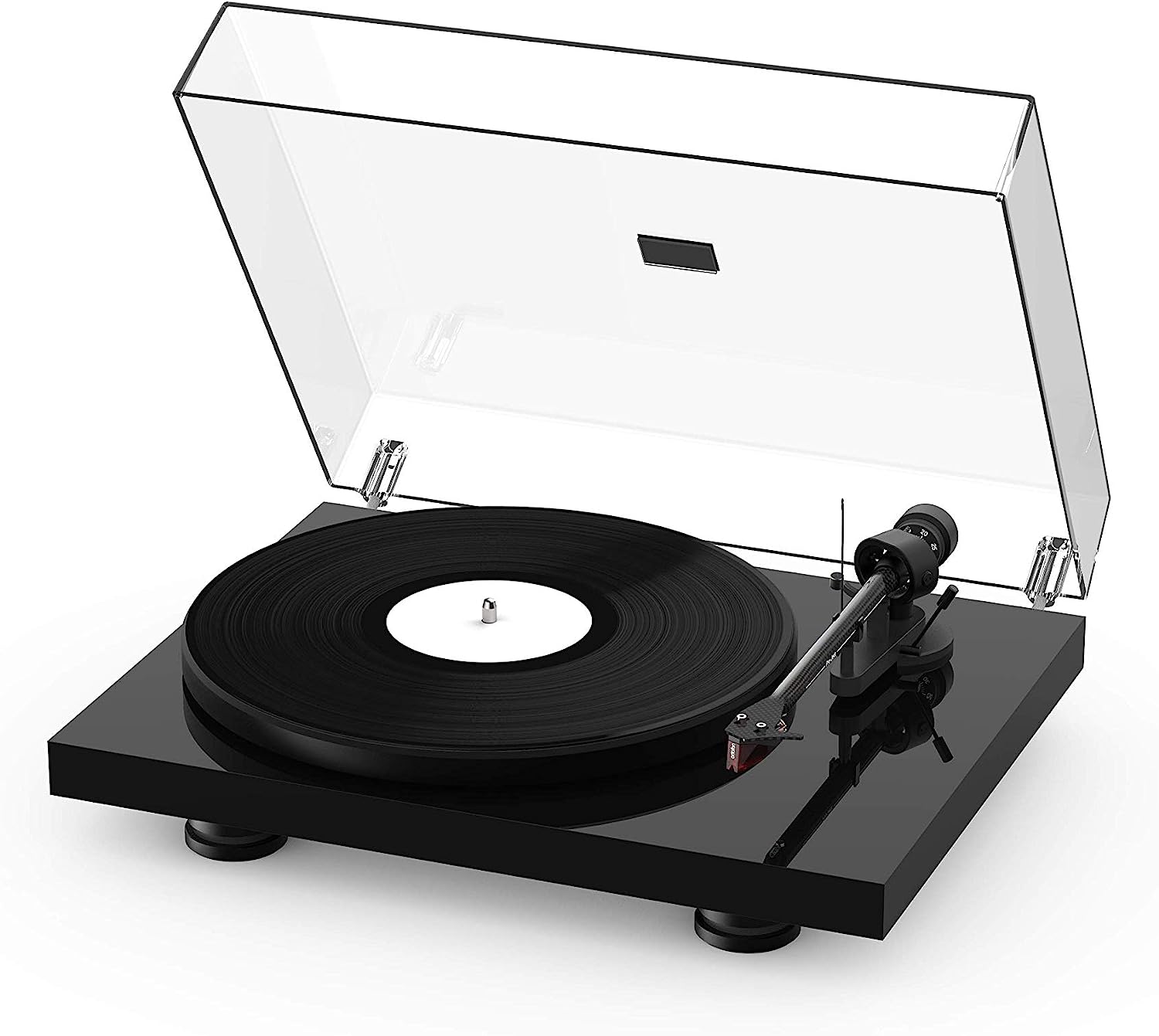
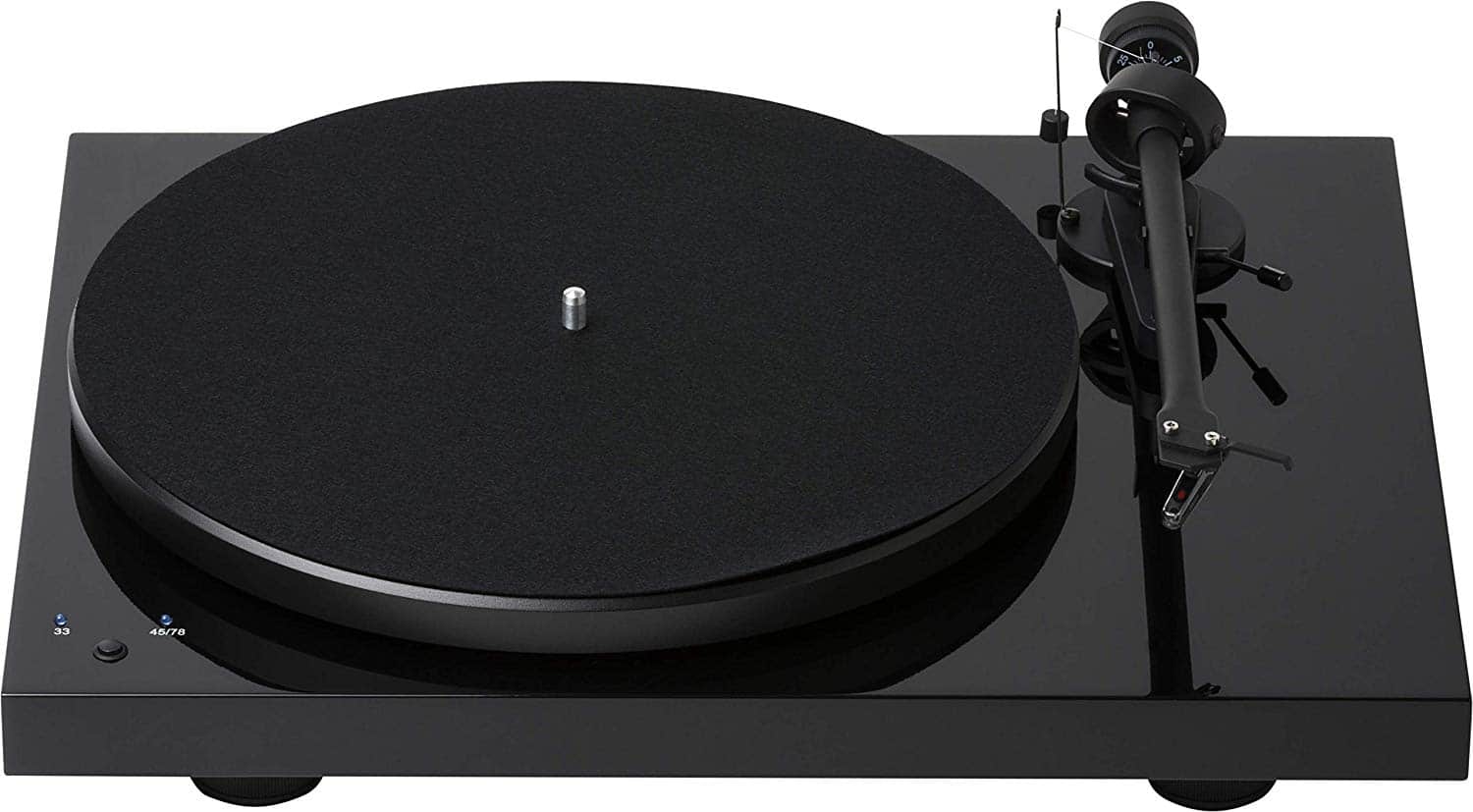
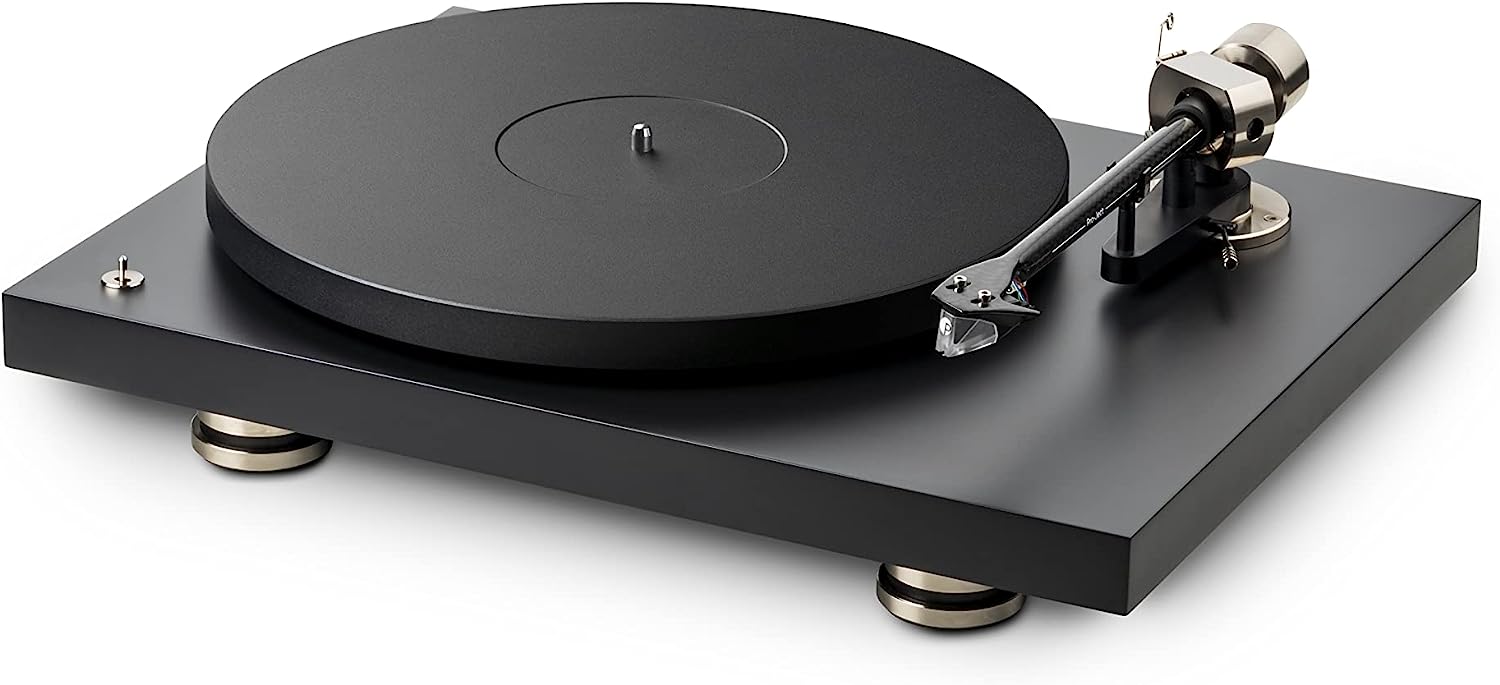
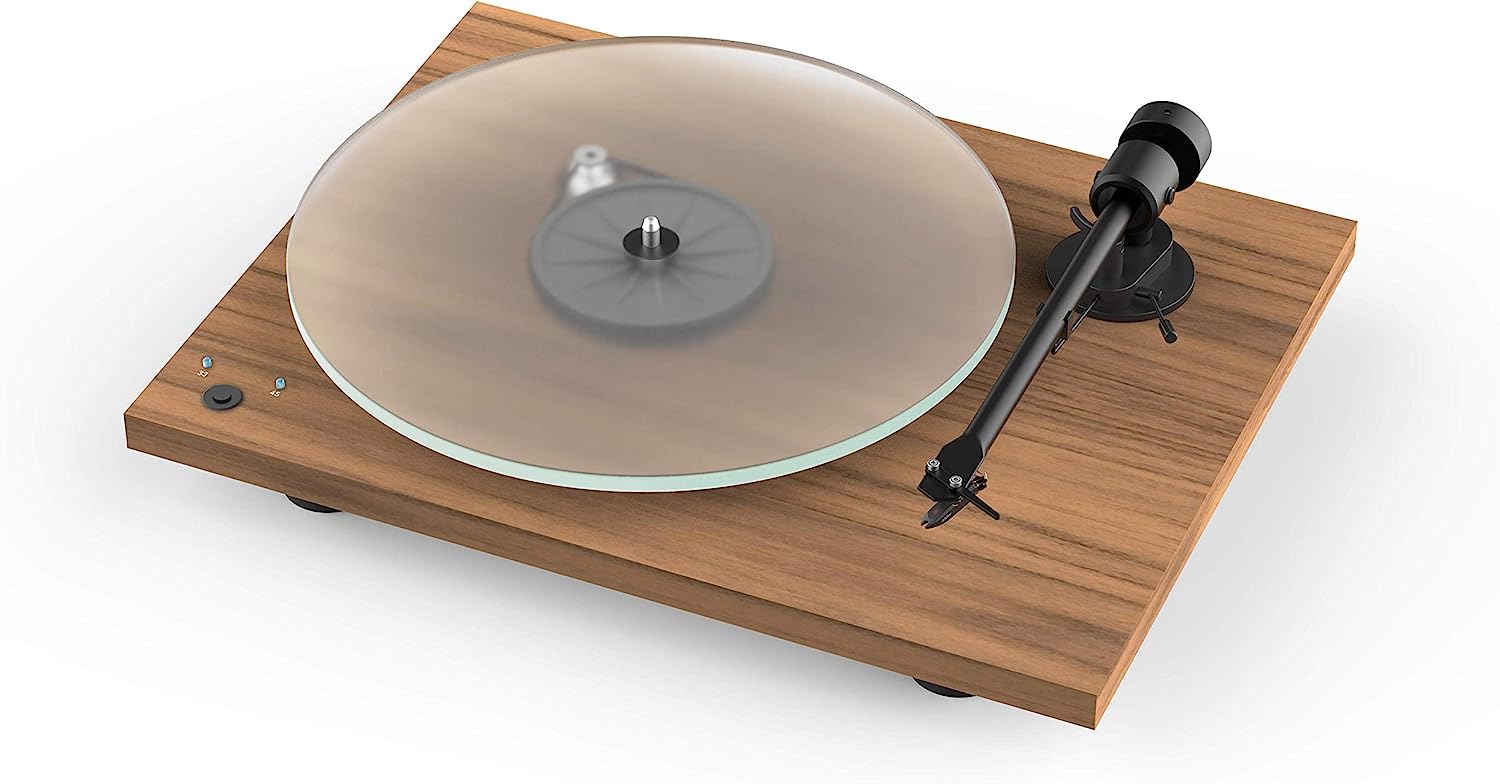
The Primary E has a traditional rectangular plinth and a deliberately plain appearance. Its compact 420 x 112 x 330 mm footprint should suit smaller hi-fi systems, while the 4.0 kg net weight is in keeping with its entry-level position.
Construction is based around an unsuspended belt-drive layout with a 300 mm platter and felt mat. Official material describes a machined composite-fibre chassis, vibration-absorbing feet, stainless-steel bearing parts and gold-plated contacts.
The 8.6-inch aluminium tonearm is supplied with a pre-mounted Ortofon OM moving-magnet cartridge. The general impression is practical and no-nonsense rather than luxurious, and buyers expecting premium finish or extensive upgrade flexibility may find it modest.
Day-to-day protection is helped by the supplied dust cover with adjustable hinges. As with most lightweight turntables, placement still matters, so a firm, low-resonance surface is preferable to wobbly furniture or a spot affected by footfall.
Features
The main feature is its straightforward analogue design. There is no Bluetooth, USB, automatic mechanism or built-in speaker system, so the Primary E is best viewed as a proper starter deck for an existing hi-fi rather than an all-in-one record player.
A pre-mounted Ortofon OM cartridge and pre-adjusted tonearm settings reduce the amount of work required before first use. That is useful for beginners because cartridge fitting, tracking force and anti-skate can be common sources of setup errors.
Speed support covers 33 and 45 rpm, but switching speed is manual. The user moves the belt between pulley steps, which is simple enough but not as convenient as a front-panel electronic speed selector.
Connectivity is via a directly soldered RCA phono cable, and the deck must feed an MM phono input. If the rest of the system only has a normal AUX, CD, tape or line input, an external MM phono stage is required.
Setup
Setup is intended to be beginner-friendly. The cartridge is already mounted, the tonearm settings are pre-adjusted, and the main tasks are fitting the platter and mat, placing the belt correctly, attaching the dust cover, connecting the RCA cable and powering the deck.
The most important point is the phono stage requirement. This exact Primary E model cannot simply be plugged into a standard line input unless a separate MM phono preamp is placed between the turntable and the amplifier or powered speakers.
Daily use is straightforward but hands-on. The cueing lever helps lower the stylus safely, while speed changes require belt movement and the tonearm must be lifted at the end of each record side.
Performance
In use, the Primary E is a fully manual turntable. The user starts the motor, cues the tonearm, changes speed manually and lifts or returns the arm at the end of a side.
Official figures list speed variance of 0.8% at 33 rpm and 0.7% at 45 rpm, with wow and flutter of 0.29% and 0.27% respectively. Those specifications place expectations in sensible entry-level hi-fi territory rather than suggesting the precision of more expensive decks.
The lack of automatic operation is both a benefit and a limitation. It keeps the mechanism simple and reduces feature clutter, but it will not suit anyone who wants auto-start, auto-stop or automatic arm return.
System matching is important. The cartridge is a moving-magnet type with a recommended 47 kOhm load, so the deck needs the right phono input or a suitable external phono preamp before it can be used with most powered speakers or line-level amplifiers.
Sound quality
Based on its supported design and consistent review evidence, the Primary E is best understood as a cleaner, more hi-fi-orientated alternative to many cheap all-in-one record players. Its moving-magnet cartridge, counterweighted tonearm and belt-drive layout give it a more credible foundation than suitcase-style players with basic ceramic cartridges.
The expected presentation is balanced and engaging for an entry-level deck when partnered with a suitable phono stage, amplifier and speakers. It is designed to concentrate the budget on replay fundamentals rather than convenience features.
There are sensible limits. The supplied Ortofon OM cartridge uses a spherical stylus according to the official manual, and the deck’s lightweight construction and limited upgrade path mean it should not be expected to match higher-tier Pro-Ject or Rega models for refinement, scale or low-level detail.
Pros
- Proper manual belt-drive hi-fi design rather than an all-in-one suitcase player Pre-mounted Ortofon OM moving-magnet cartridge Pre-adjusted tonearm settings make initial setup easier Simple analogue layout with no unnecessary digital features
- Compact footprint suits small hi-fi systems Supplied dust cover with adjustable hinges
- Good match for systems that already include an MM phono input
Cons
- No built-in phono stage on this non-Phono model No
- Bluetooth, USB, automatic operation or built-in speakers Speed changes require moving the belt by hand Limited long-term upgrade potential compared with higher-tier decks Plain finish and budget construction will not suit everyone Requires careful placement on a stable surface
Verdict
The Pro-Ject Primary E Record Player is a strong option for buyers who want an affordable route into proper hi-fi vinyl playback without paying for features they will not use. Its appeal lies in its simplicity: belt drive, manual operation, a pre-mounted Ortofon OM cartridge and a clear requirement for MM phono amplification.
It is not the right choice for everyone. The lack of a built-in phono stage, automatic operation, Bluetooth and USB means it needs more system planning than many convenience-focused turntables.
If your amplifier already has a suitable phono input, or you are willing to add a separate phono stage, the Primary E makes a sensible starter deck. If convenience, upgrade scope or electronic speed switching are priorities, it is worth comparing alternatives before buying.