Introduction
The Pro-Ject Debut Carbon EVO Turntable is a manual belt-drive hi-fi record player for buyers moving beyond all-in-one systems and entry-level convenience decks. It suits someone who wants stronger core engineering, upgrade potential and a cleaner hi-fi setup, rather than built-in speakers, Bluetooth or automatic operation.
Watch the product video
This is part of Pro-Ject’s long-running Debut line, but the important distinction is that this model is the Debut Carbon EVO, not the older Debut Carbon DC, the newer Debut EVO 2 or the step-up Debut PRO. Its appeal lies in a carbon-fibre tonearm, damped steel platter, electronic 33/45 rpm speed switching and a choice of finishes.
It is best considered as a first serious turntable for a small to medium hi-fi system. Buyers should note that it needs an MM phono input or separate phono preamp, and the supplied cartridge can vary by market and retailer listing.
Design and build
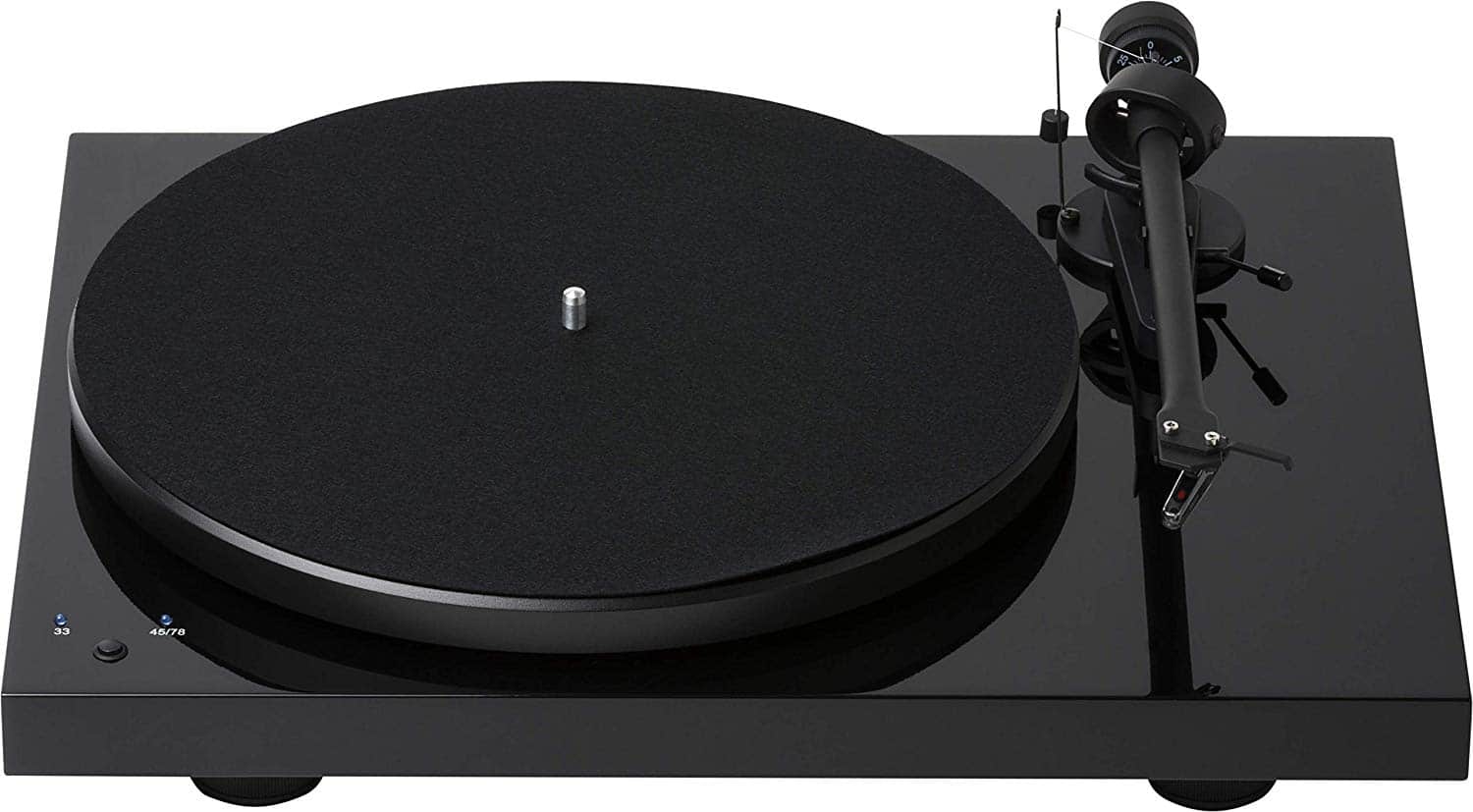
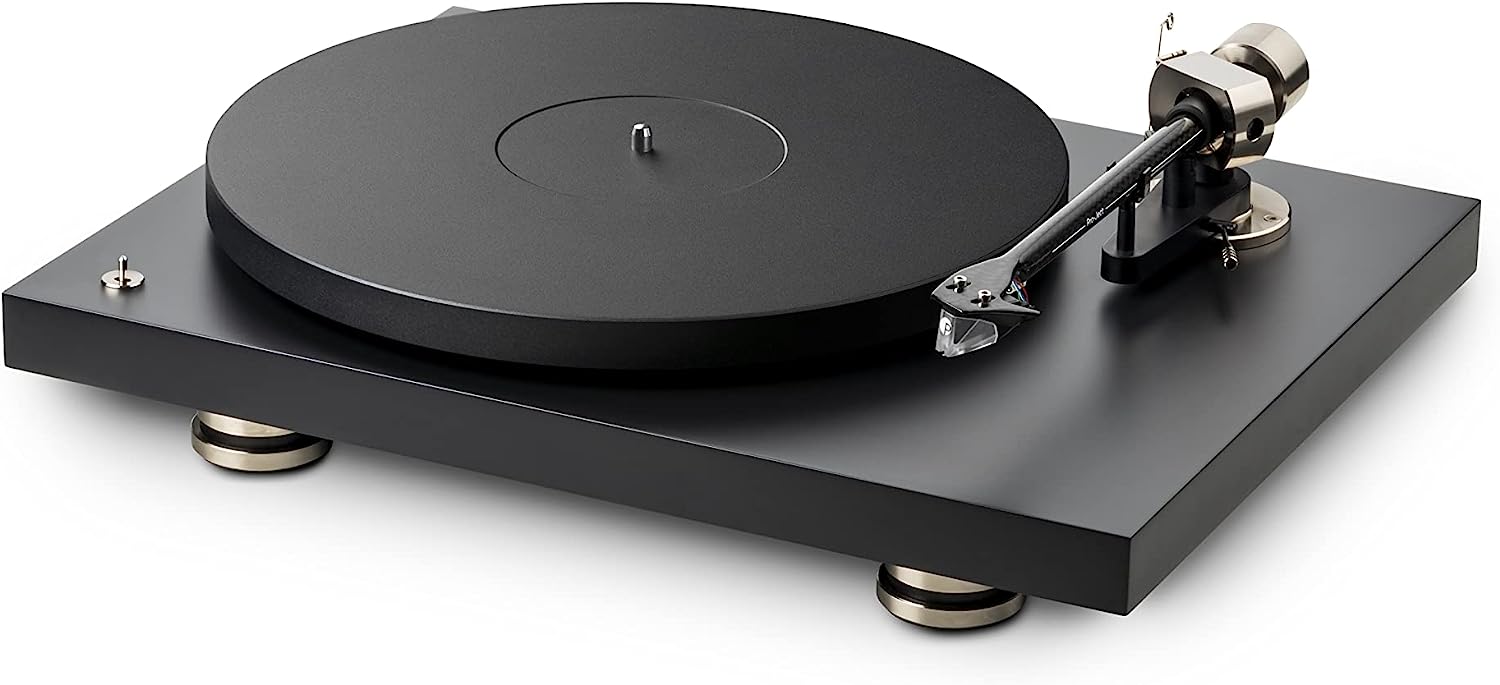
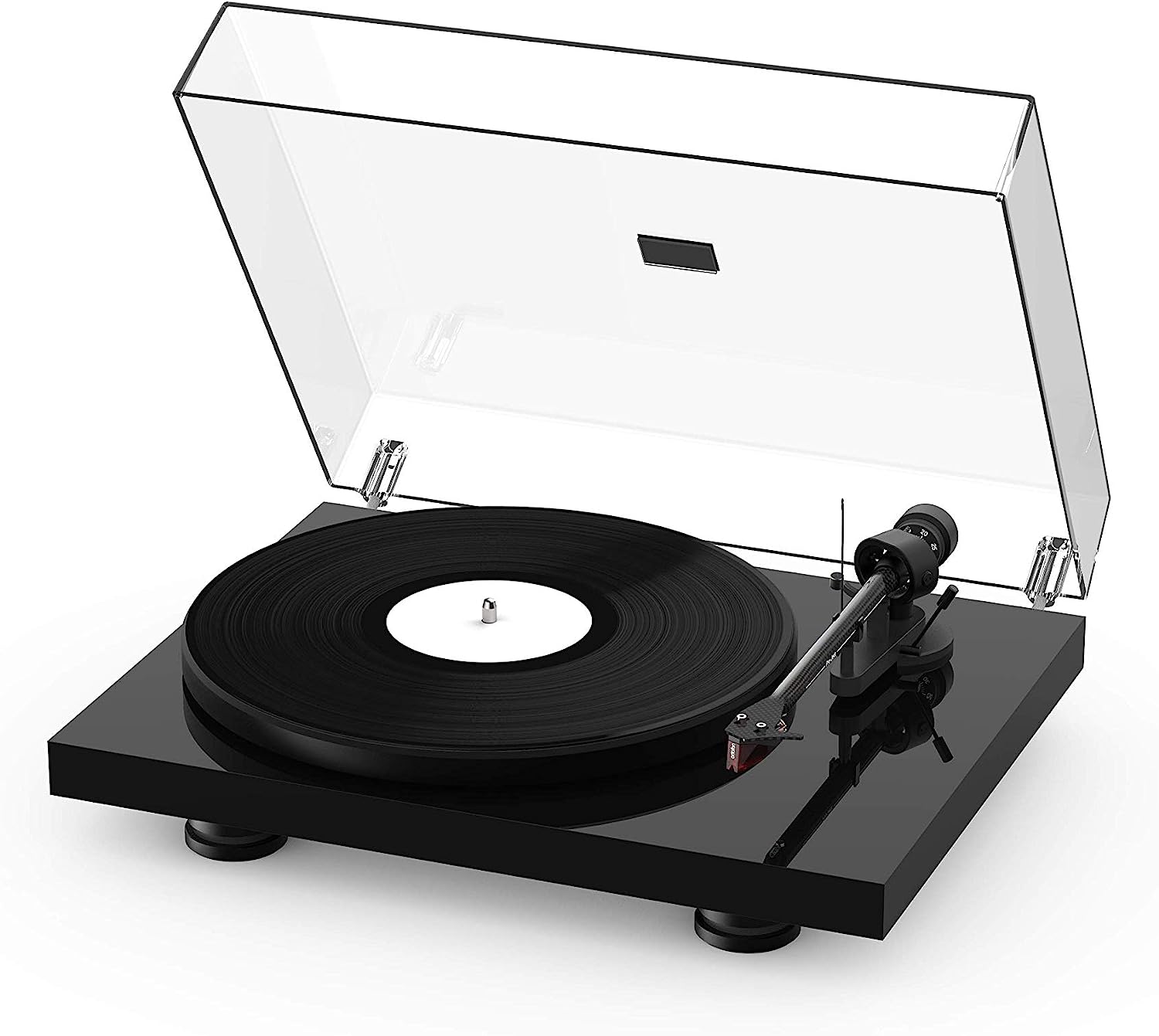
The Debut Carbon EVO keeps to a classic minimalist turntable layout, with a rectangular MDF plinth, exposed platter, straight tonearm and hinged dust cover. The speed switch is positioned under the front-left area of the plinth, which keeps the top surface visually uncluttered.
A major construction point is the 1.7 kg steel platter with TPE damping, intended to add rotational mass while controlling unwanted resonance. The deck also uses a redesigned motor suspension and three height-adjustable damped metal feet, which help with levelling and provide some isolation from the supporting furniture.
The 8.6-inch one-piece carbon-fibre tonearm is a key part of the design. It has adjustable tracking force and anti-skate, and available documentation describes azimuth adjustment, but this is not a deck with simple on-the-fly VTA adjustment for frequent cartridge experimentation.
Practical connectivity is better than on turntables with captive leads, as the EVO uses rear RCA sockets plus an earth connection. It was sold in several gloss, satin and walnut finishes, making it easier to match to a room than many plainer rivals.
Features
Electronic speed switching is one of the most useful everyday features. The deck selects 33 and 45 rpm by switch, so owners with a mix of LPs and 45s do not need to move the belt manually for normal use.
It can also run at 78 rpm using the supplied round belt, but this is conditional. Shellac 78s require a suitable 78 stylus or cartridge, and should not be played with the normal LP stylus.
The EVO is supplied with a moving-magnet cartridge, but the exact model is market-dependent. UK and European versions commonly specify an Ortofon 2M Red, while US versions and some listings use a Sumiko Rainier, so buyers should check the exact box contents before comparing value or planning stylus upgrades.
There is no built-in phono stage, USB output, Bluetooth or speaker system. That makes the design more focused on traditional hi-fi replay, but it also means the turntable must be partnered with an amplifier with an MM phono input or an external MM phono preamplifier.
Setup
Setup is straightforward by hi-fi turntable standards, but it is not plug-and-play in the way an automatic record player might be. The user needs to fit the belt and platter, install the counterweight, balance the tonearm, set tracking force, attach the anti-skate weight and connect the RCA and earth leads.
The turntable should be placed on a level, low-resonance surface, and the adjustable feet help with levelling. Once installed, everyday operation is simple but entirely manual: select speed, cue the arm, lower it with the lift and return it after play.
New buyers should confirm whether their amplifier, powered speakers or headphone system has a proper MM phono input. If not, an external phono preamp is essential between the turntable and a normal line-level input.
Performance
In day-to-day use, the Debut Carbon EVO is a fully manual turntable. The user starts the motor, cues the arm, lowers it onto the record and returns the arm at the end of the side; there is no automatic start, auto-stop or automatic arm return.
The supported specification includes belt drive with electronic speed control, quoted wow and flutter of ±0.17% at 33 rpm and ±0.15% at 45 rpm, and a 68 dB signal-to-noise ratio. Those figures place the emphasis on stable, low-noise mechanical replay rather than convenience features.
The detachable RCA output and separate earth connection make it easier to integrate the deck into a proper hi-fi system. As with many turntables, hum or buzz can arise if grounding, cable routing, nearby power supplies or phono-stage matching are not right, so installation matters.
The EVO is not designed for DJ use, back-cueing, pitch control or rough handling. Its strengths are better aligned with domestic listening, careful setup and gradual upgrades.
Sound quality
Without claiming first-hand listening, the supported design and review consensus point to a clean, detailed and full-bodied presentation for the price class. The carbon tonearm, damped platter and electronic speed control all support the aim of stable, controlled record playback.
The final tonal balance will depend partly on the supplied cartridge. Versions with the Ortofon 2M Red may sound more explicit and can be less forgiving of rough pressings, while Sumiko Rainier versions are often associated with a smoother, fuller moving-magnet character.
System matching remains important. The phono stage, cartridge alignment, support surface, earthing and record condition will all affect the result, so the EVO should be treated as a capable platform rather than a self-contained sound solution.
For buyers coming from a basic record player, the likely improvement is not just volume or bass, but greater openness, pitch confidence and a more composed stereo presentation when the deck is correctly set up.
Pros
- Carbon-fibre tonearm and TPE-damped steel platter give it a serious hi-fi foundation Electronic 33/45 rpm speed switching is convenient for mixed record collections Detachable RCA outputs and separate earth connection aid system integration Wide range of gloss, satin and walnut finish options Supplied moving-magnet cartridge makes it close to ready once correctly set up
- Useful upgrade paths for stylus, cartridge, phono stage, platter and cabling
Cons
- No built-in phono preamp, Bluetooth, USB output or speakers Fully manual operation with no auto-stop or arm return Cartridge supplied varies by market, so buyers must check the listing carefully Anti-skate and tonearm balancing may feel fiddly for beginners 78 rpm playback needs the round belt and a suitable 78 stylus or cartridge
- No simple standard VTA adjustment for frequent cartridge changes
Verdict
The Pro-Ject Debut Carbon EVO remains a persuasive choice for buyers who want a traditional, upgradeable manual turntable without stepping immediately into more expensive hi-fi decks. Its appeal comes from sensible engineering choices: a carbon tonearm, damped heavy platter, electronic speed control and detachable outputs.
Its trade-offs are equally clear. There is no built-in phono stage, no wireless or USB convenience, no automatic operation and no universal cartridge fitment across all markets, so careful buying and setup matter.
If priced well, bundled with the cartridge you want or available in a preferred finish, it is a strong first serious hi-fi turntable. If buying new alongside newer Pro-Ject models, it is worth comparing prices carefully before deciding.