Introduction
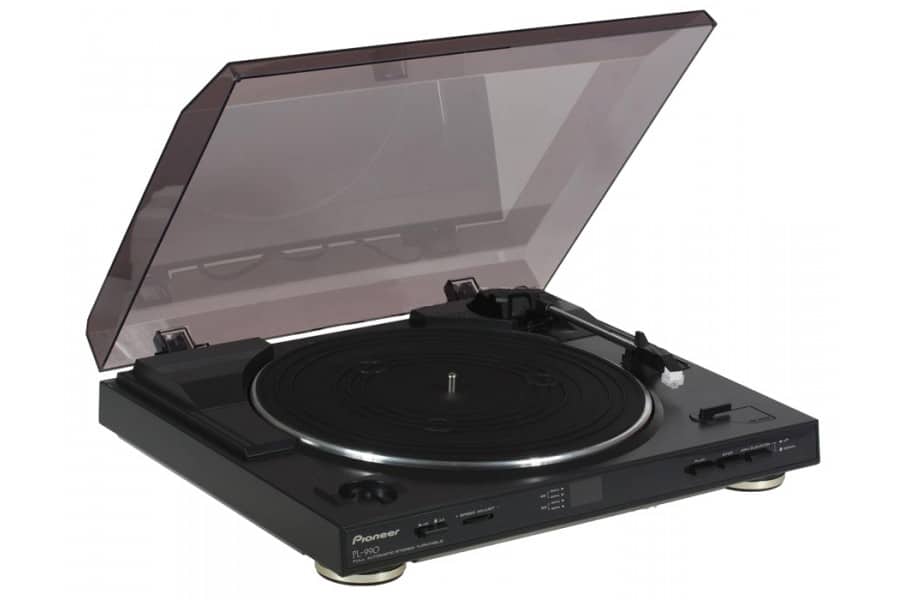
Pioneer PL-990 Vinyl Turntable is a fully automatic belt-drive record player with a built-in phono equaliser. It is aimed at listeners who want simple vinyl playback through an amplifier, mini system or powered speakers with a line-level input.
Watch the product video
This is best understood as an entry-level convenience deck rather than a platform for serious tweaking. The PL-990 suits beginners, returning vinyl users and anyone replacing an older basic component turntable who values automatic start and return.
Buying context matters because this is an older model and many examples are likely to be used or new old stock. It makes most sense if the price is sensible, the stylus and belt are in good condition, and the automatic mechanism works properly.
Design and build
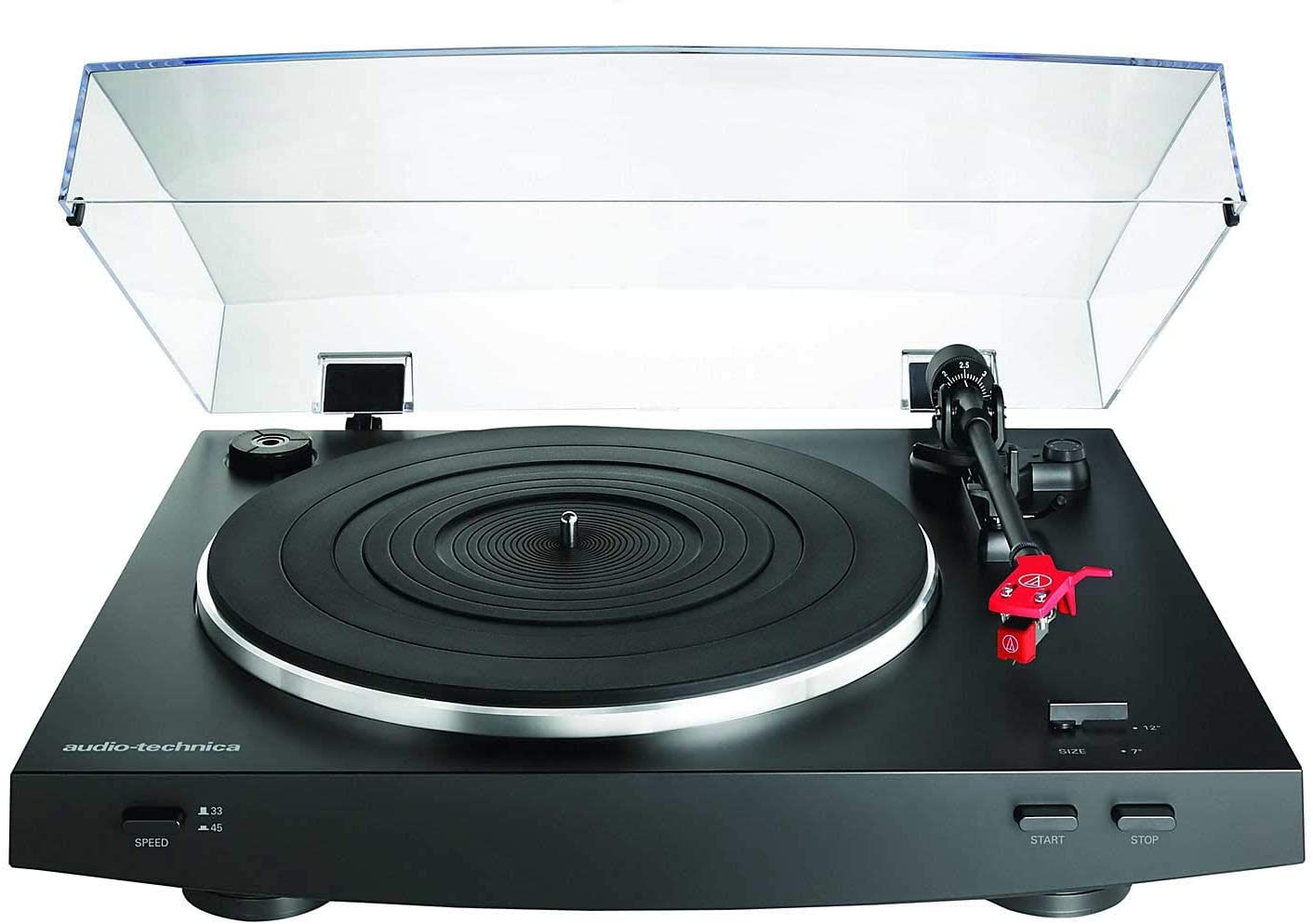
The PL-990 has a full-width component style, with a 420 mm wide chassis and a hinged dust cover. At 2.65 kg, it is light compared with more substantial hi-fi turntables, so expectations should be set accordingly.
Its construction is based around a belt-drive system, DC servo motor, 295 mm platter and low-mass straight tonearm. The cartridge is a moving-magnet type with a replaceable 0.6 mil diamond stylus, but the arm and cartridge arrangement is largely preset rather than intended for extensive adjustment.
Controls are placed for straightforward domestic use, including automatic play and stop, speed selection, record-size selection and a stroboscope with speed adjustment. The record-size selector supports 30 cm LPs and 17 cm singles or EPs.
Practical limitations include captive RCA leads and a built-in phono equaliser that appears to be intended for line-level connection. This keeps the design simple, but it is less flexible for users with separate phono stages or systems where placement requires longer cabling.
Features
The main feature is fully automatic operation. Pressing start allows the turntable to cue the arm and begin playback, while automatic return reduces the need to handle the tonearm at the end of a side.
A manual play option is also supported, so the arm can be lifted and moved to a chosen track when required. That gives a little more control without turning the PL-990 into a hands-on manual deck.
The built-in phono equaliser is central to how this model should be used. Its output is intended for AUX or line inputs on an amplifier, receiver, mini system or suitable powered speakers, so a separate phono preamp is not required.
Playback speeds are 33-1/3 and 45 rpm only, so it is suitable for standard LPs and singles but not 78 rpm records. The stroboscope and speed-adjust control are useful additions on a basic automatic deck, especially if pitch needs checking or correcting.
Setup
Setup is fairly straightforward, but it is not completely without steps. The belt needs to be fitted over the motor pulley without twisting, the platter mat placed, the tonearm released, and the stylus guard removed before use.
For normal playback, the user selects 33 or 45 rpm, chooses the correct 30 cm or 17 cm record-size setting, places the record and starts the automatic cycle. Pioneer’s guidance also supports using a stable surface away from speakers and avoiding warped or overly flexible records.
The most important setup point is input choice. Use AUX, line or equivalent analogue inputs; do not use a phono input unless the system arrangement can properly accommodate the PL-990’s built-in equaliser.
Performance
Day-to-day operation is designed to be low-effort. The automatic mechanism is helpful for users who want to avoid cueing errors, and the front-panel controls make speed and record-size selection clear.
The official specification lists wow and flutter at no more than 0.25% WRMS and signal-to-noise ratio at more than 50 dB DIN-B. Those figures are consistent with an entry-level domestic turntable rather than a higher-end audiophile source.
Connectivity is simple but specific: the RCA output should go to a line-level input, not a phono input. Connecting it to a phono socket can result in distorted playback because the built-in equalisation and amplification are already in circuit.
As an older belt-drive automatic model, condition is especially important when buying used. A stretched belt, worn stylus, faulty automatic return or unstable speed would have a direct effect on usability.
Sound quality
The PL-990’s sound expectations should be framed around its design. It uses a moving-magnet cartridge, 0.6 mil diamond stylus and built-in phono equaliser, which should be adequate for everyday record playback when connected correctly.
Its nominal stylus pressure is 3.5 g ± 1 g, and the replaceable stylus means it is not in the same category as very cheap all-in-one novelty players with non-replaceable or inappropriate cartridges. However, a worn or missing stylus on a used unit should be treated as a priority replacement item.
The lightweight construction, limited tonearm adjustment and modest published noise and speed figures limit its appeal for listeners chasing high resolution, deep upgrade options or external phono-stage experimentation. Better manual decks from specialist hi-fi brands are a stronger route if long-term sound quality is the main goal.
For casual listening through a modest amplifier, mini system or powered speakers, the PL-990’s appeal is its convenience and compatibility rather than ultimate detail retrieval. It is a practical starter deck when expectations remain realistic.
Pros
- Fully automatic start and return make playback easy for beginners Built-in phono equaliser allows connection to AUX or line inputs Supports both automatic and manual play Speed adjustment and stroboscope are useful on a basic automatic deck Replaceable PZP1004 stylus helps with maintenance Simple 33-1/3 and 45 rpm operation for LPs and singles
Cons
- Limited tonearm and cartridge adjustability
- No 78 rpm playback No USB
- Bluetooth or digital recording features Built-in phono equaliser is not ideal for external phono-stage users Lightweight construction compared with more serious hi-fi decks Used examples may need a belt, stylus or automatic-mechanism attention
Verdict
The Pioneer PL-990 Vinyl Turntable is a sensible, convenience-led automatic deck for straightforward record playback. Its strengths are ease of use, line-level output and automatic arm handling rather than upgrade potential or audiophile refinement.
It is most attractive as a carefully checked used purchase or simple starter turntable for an existing AUX-equipped system. Avoid paying too much if modern entry-level alternatives with warranty support are available at similar money.
Choose it if automatic operation matters and the example in question is fully working with a good stylus and belt. Look elsewhere if you want Bluetooth, USB, 78 rpm playback or a turntable that can grow with cartridge and phono-stage upgrades.