Introduction
The Audio-Technica LP120XUSB Vinyl Turntable is a manual, direct-drive record player with USB output, aimed at buyers who want a more hands-on deck than a basic automatic model. It suits listeners who are building a conventional hi-fi or powered-speaker system, but also want the option to digitise records on a computer. ([docs.audio-technica.com](https://docs.audio-technica.com/eu/AT-LP120XUSB_UM_162501380_V1_EN_web_190312.pdf))
Watch the product video
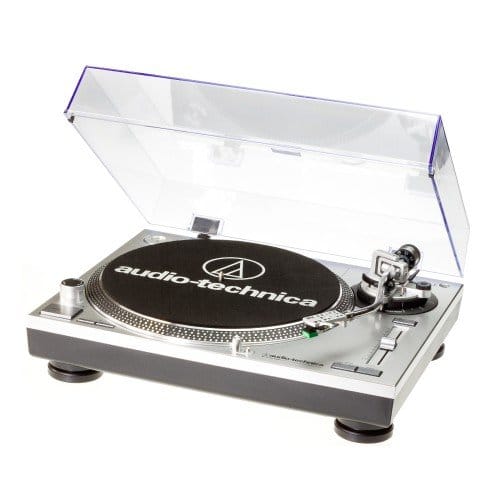
This is not a minimalist lifestyle turntable. The AT-LP120XUSB borrows much of its layout from DJ-style decks, with pitch control, a strobe platter and a start/stop button, while remaining a home-listening product rather than a fully professional club machine. ([docs.audio-technica.com](https://docs.audio-technica.com/eu/AT-LP120XUSB_UM_162501380_V1_EN_web_190312.pdf))
Its main appeal is flexibility. The switchable phono stage, replaceable cartridge system, three playback speeds and USB connection make it a practical step-up choice for newcomers who expect to keep adjusting and upgrading their set-up over time. ([docs.audio-technica.com](https://docs.audio-technica.com/eu/AT-LP120XUSB_UM_162501380_V1_EN_web_190312.pdf))
Design and build
The LP120XUSB has a purposeful, equipment-like design rather than a soft domestic look. Its large plinth, S-shaped tonearm, pitch slider and strobe markings give it a familiar direct-drive appearance, and buyers should check shelf depth because it is a full-width deck rather than a compact record player. ([docs.audio-technica.com](https://docs.audio-technica.com/eu/AT-LP120XUSB_UM_162501380_V1_EN_web_190312.pdf))
Audio-Technica specifies a die-cast aluminium platter with a felt mat, adjustable feet and a detachable dust cover. The quoted weight is 8 kg without the dust cover, which puts it above many entry-level lightweight decks and helps explain its more substantial feel. ([docs.audio-technica.com](https://docs.audio-technica.com/eu/AT-LP120XUSB_UM_162501380_V1_EN_web_190312.pdf))
The controls are arranged for visibility and manual operation. There are separate 33 and 45 rpm buttons, 78 rpm by pressing both together, a start/stop button, quartz lock, tempo range selection and a removable stylus target light for cueing in low light. ([docs.audio-technica.com](https://docs.audio-technica.com/eu/AT-LP120XUSB_UM_162501380_V1_EN_web_190312.pdf))
The tonearm is a static-balanced S-shaped design with adjustable tracking force and anti-skate. The supplied AT-HS6 headshell carries an AT-VM95E VM cartridge, giving the turntable a proper half-inch cartridge platform rather than a fixed, non-upgradeable pick-up. ([docs.audio-technica.com](https://docs.audio-technica.com/eu/AT-LP120XUSB_UM_162501380_V1_EN_web_190312.pdf))
Features
The direct-drive motor is the defining feature. It avoids belt changes and gives the deck immediate start/stop behaviour, with Audio-Technica listing a DC servo motor, electronic braking and three speeds: 33⅓, 45 and 78 rpm. ([docs.audio-technica.com](https://docs.audio-technica.com/eu/AT-LP120XUSB_UM_162501380_V1_EN_web_190312.pdf))
Connectivity is unusually broad for a home deck. The rear panel provides analogue RCA output, a ground terminal, a switch for phono or line output, and USB for connection to a computer; the built-in phono equaliser means it can feed powered speakers or an amplifier line input without a separate phono stage. ([docs.audio-technica.com](https://docs.audio-technica.com/eu/AT-LP120XUSB_UM_162501380_V1_EN_web_190312.pdf))
The USB function records at selectable 16-bit 44.1 kHz or 48 kHz, which is useful for making straightforward digital copies of records. Audio-Technica’s manual notes that the turntable can work with Audacity or other compatible recording software and does not require special drivers for the USB connection. ([docs.audio-technica.com](https://docs.audio-technica.com/eu/AT-LP120XUSB_UM_162501380_V1_EN_web_190312.pdf))
Pitch adjustment is another practical feature, especially for older records, DJ-style beat matching or correcting pressings that do not sound quite right at standard speed. The pitch control can be disabled with quartz lock when you simply want standard speed operation. ([docs.audio-technica.com](https://docs.audio-technica.com/eu/AT-LP120XUSB_UM_162501380_V1_EN_web_190312.pdf))
Setup
Initial set-up is more involved than with a fully automatic plug-and-play deck. The platter, mat, counterweight, headshell and dust cover parts need fitting, and the tonearm must be balanced before setting the tracking force and anti-skate. ([docs.audio-technica.com](https://docs.audio-technica.com/eu/AT-LP120XUSB_UM_162501380_V1_EN_web_190312.pdf))
Audio-Technica’s manual gives the supplied cartridge a standard tracking force value of 2.0 g and advises matching anti-skate to the same value. Taking time over this step matters, because incorrect tracking force can cause mistracking, distortion or unnecessary stylus and record wear. ([docs.audio-technica.com](https://docs.audio-technica.com/eu/AT-LP120XUSB_UM_162501380_V1_EN_web_190312.pdf))
Once assembled, daily use is simple if you are comfortable handling a tonearm. Choose the correct speed, use the cueing lever to lower the stylus and select phono, line or USB output according to the connected equipment. ([docs.audio-technica.com](https://docs.audio-technica.com/eu/AT-LP120XUSB_UM_162501380_V1_EN_web_190312.pdf))
Performance
Day-to-day operation is fully manual: the user starts the platter, moves the arm, lowers the stylus and returns the arm at the end of a side. That gives more control than an automatic deck, but it also means this is not the best choice for anyone who wants push-button playback from start to finish. ([docs.audio-technica.com](https://docs.audio-technica.com/eu/AT-LP120XUSB_UM_162501380_V1_EN_web_190312.pdf))
Speed control is a strong part of the specification. Audio-Technica quotes wow and flutter below 0.2% WRMS at 33 rpm, and the strobe markings and quartz lock provide a visual and functional way to monitor or stabilise platter speed during use. ([docs.audio-technica.com](https://docs.audio-technica.com/eu/AT-LP120XUSB_UM_162501380_V1_EN_web_190312.pdf))
The switchable line/phono output makes system matching straightforward. In phono mode it can be used with an amplifier’s phono input and ground connection; in line mode it can go into an AUX input, active speakers or similar equipment without needing an external phono preamp. ([docs.audio-technica.com](https://docs.audio-technica.com/eu/AT-LP120XUSB_UM_162501380_V1_EN_web_190312.pdf))
USB is convenient rather than a guarantee of archive-grade transfers. The format is limited to 16-bit capture, and independent review coverage has reported reservations about the USB recording output, so serious archivists may still prefer a higher-quality external recording chain. ([docs.audio-technica.com](https://docs.audio-technica.com/eu/AT-LP120XUSB_UM_162501380_V1_EN_web_190312.pdf))
Sound quality
The LP120XUSB’s likely sonic character is shaped by sensible, upgradeable components rather than exotic audiophile parts. The supplied AT-VM95E is a moving-magnet VM cartridge with a bonded elliptical stylus, a 4.0 mV output and a recommended 2.0 g standard tracking force. ([docs.audio-technica.com](https://docs.audio-technica.com/eu/AT-LP120XUSB_UM_162501380_V1_EN_web_190312.pdf))
On paper, this cartridge is a credible fit for a first serious turntable. An elliptical stylus should retrieve more groove information than a basic conical stylus when properly aligned, while the replaceable VM95 stylus family gives owners a clear route to maintenance or later upgrade. ([docs.audio-technica.com](https://docs.audio-technica.com/eu/AT-LP120XUSB_UM_162501380_V1_EN_web_190312.pdf))
The built-in phono stage adds convenience, but it should be viewed as a practical starting point rather than the final word in analogue playback. Buyers with a good external phono stage may reasonably choose to use the phono output instead and compare it within their own system. ([docs.audio-technica.com](https://docs.audio-technica.com/eu/AT-LP120XUSB_UM_162501380_V1_EN_web_190312.pdf))
For 78 rpm records, the motor speed is supported, but the supplied AT-VM95E stylus is not the right tool for shellac 78s. Audio-Technica’s VM95 range includes SP/78-focused stylus options, so collectors of older discs should budget for a suitable stylus before playing them regularly. ([docs.audio-technica.com](https://docs.audio-technica.com/eu/AT-LP120XUSB_UM_162501380_V1_EN_web_190312.pdf))
Pros
- Direct-drive motor with 33⅓, 45 and 78 rpm speed support Switchable phono preamp allows use with phono inputs, line inputs or powered speakers USB output for computer recording without a special driver Supplied with AT-HS6 headshell and AT-VM95E VM cartridge Adjustable tracking force and anti-skate support proper cartridge set-up Quartz lock, pitch control and strobe markings add useful speed-control flexibility Substantial 8 kg quoted weight without dust cover
Cons
- Fully manual operation will not suit buyers wanting automatic start and return USB recording is convenient but not necessarily ideal for demanding archiving Large DJ-style layout needs more space than many simple home turntables Supplied stylus is not appropriate for regular shellac 78 rpm playback Set-up requires more care than a fixed-cartridge beginner deck
Verdict
The Audio-Technica LP120XUSB Vinyl Turntable is a strong choice for buyers who want a capable, adjustable and system-friendly deck without moving straight into specialist separates territory. Its combination of direct drive, switchable phono stage, USB output and AT-VM95E cartridge makes it more versatile than many simpler starter turntables.
Its strengths come with trade-offs. The manual controls, large footprint and set-up process demand more involvement, while the USB function should be treated as a useful convenience rather than a professional archiving solution.
For a home listener who wants to learn proper vinyl handling and retain upgrade options, the LP120XUSB remains a practical and well-specified option. For someone who wants automatic ease, wireless streaming or the cleanest possible audiophile path, a different style of turntable may be a better fit.