Introduction
The Retrolife Vinyl Record Player is a suitcase-style record player with built-in speakers, aimed at people who want to play records without putting together a separate hi-fi system. It is best understood as a simple, self-contained starter player for casual listening, bedrooms, studies and gift buyers.
Watch the product video
The available product evidence identifies this model as the Retrolife R609, a manual belt-drive suitcase player with 33⅓, 45 and 78 RPM speed settings. Its appeal is convenience and retro styling rather than serious upgrade potential or audiophile performance.
It suits occasional playback of inexpensive records and also works as a small Bluetooth-input speaker for phone audio. Buyers with valuable collections, daily listening plans or ambitions to build a proper vinyl system should treat it as a stepping stone rather than a long-term main source.
Design and build
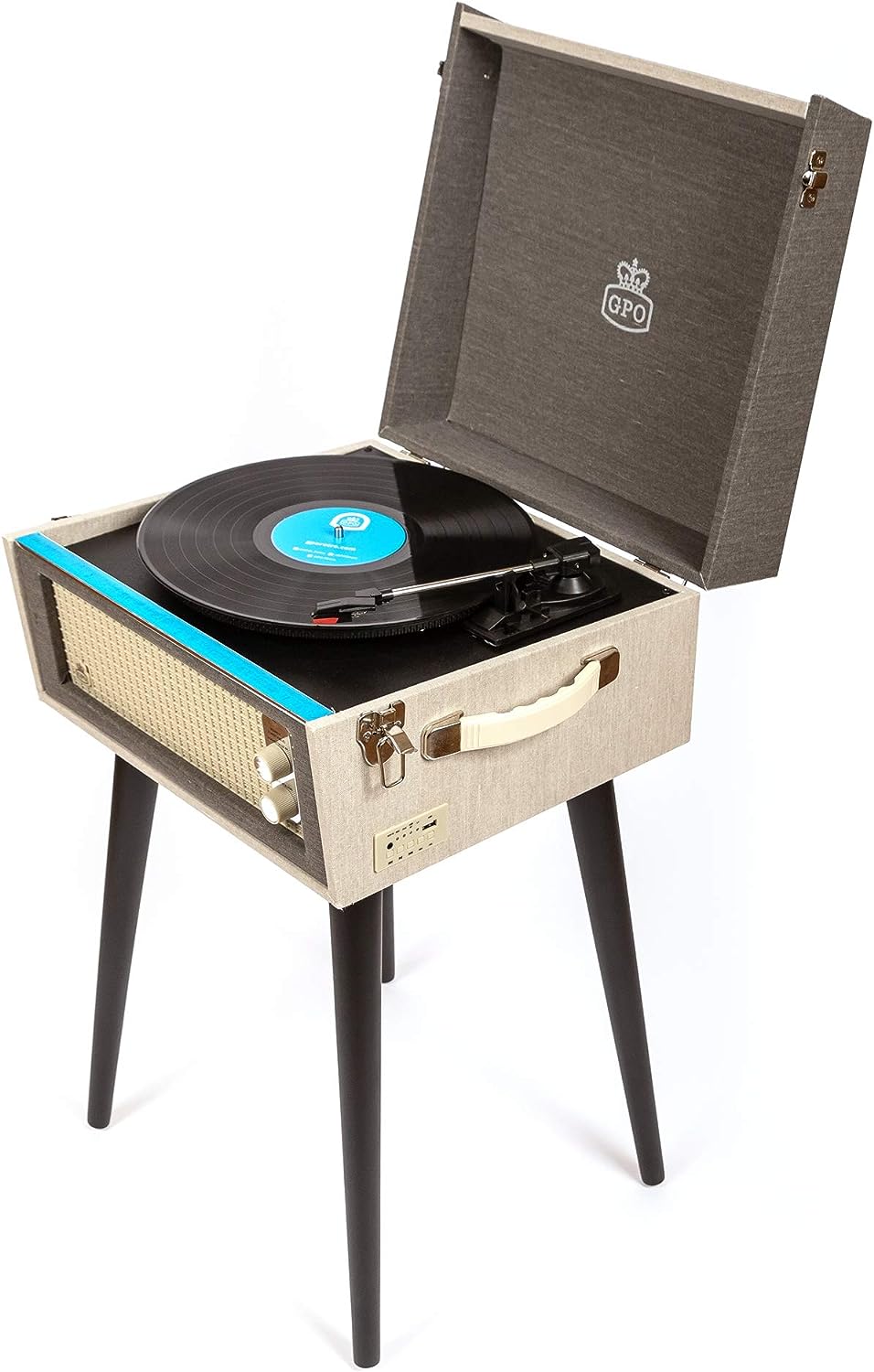
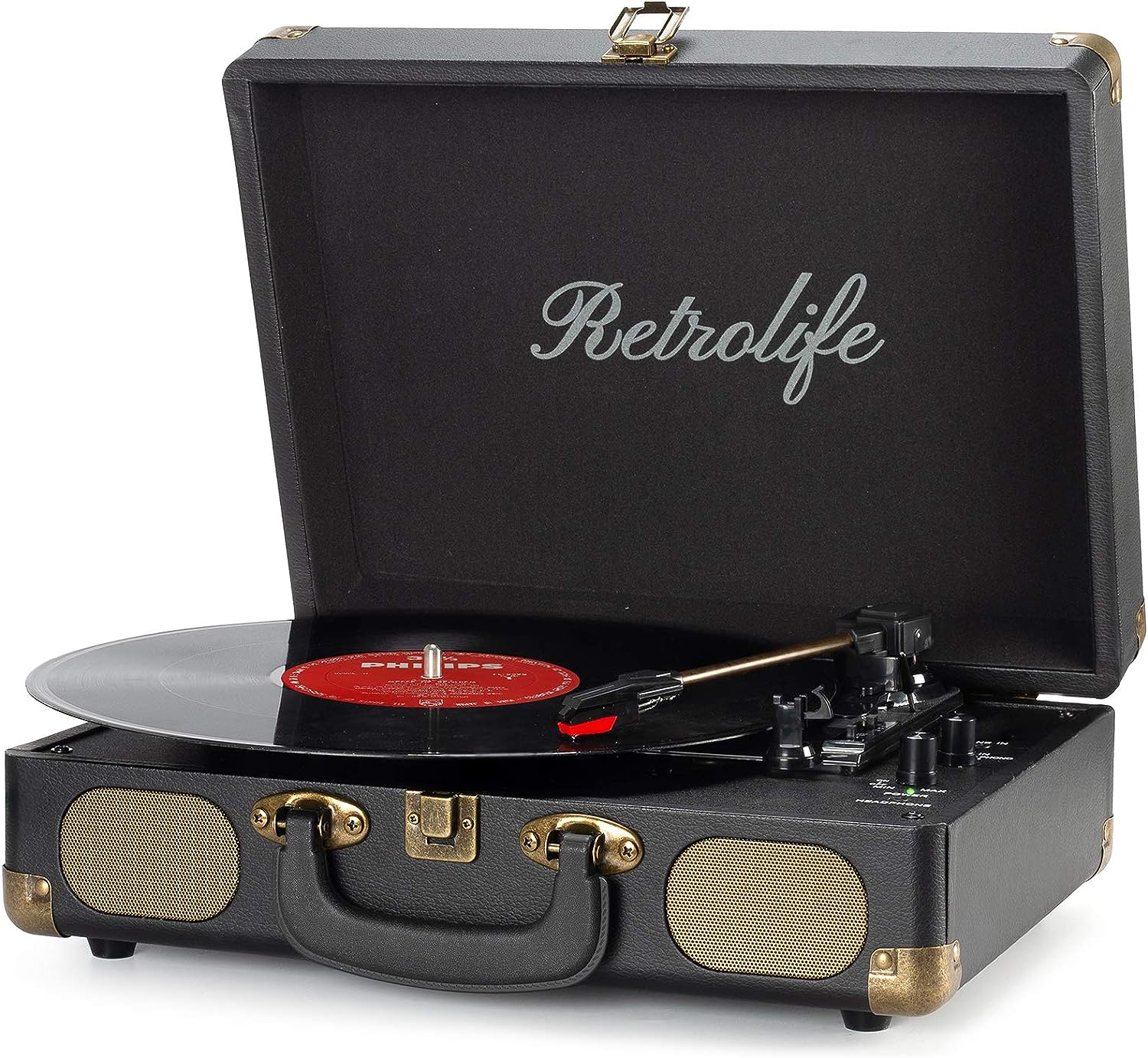
The R609 follows the familiar portable suitcase format, with a carry handle, latch-style case and PU leather-style exterior. Colour options are part of its visual appeal, and the compact footprint makes it easy to place on a desk, shelf or bedside table.
Controls are deliberately simple. The tonearm, speed selector, function switch, cueing lever, auto-stop switch, headphone socket and power/volume control are laid out for manual operation rather than fine adjustment.
Construction is convenience-led. The turntable mechanism, amplifier, speakers and connection sockets are all built into one lightweight enclosure, and the record sits on a smaller platter rather than a full-size hi-fi platter.
Retrolife states that the speaker chambers are separated to reduce internal buzzing and vibration interference, although this should be viewed as a design claim rather than verified measured performance. The manual’s advice to use a stable, level and low-vibration surface is especially relevant for this type of lightweight player.
Features
The main feature is all-in-one playback. Built-in stereo speakers mean the R609 can play records without separate speakers, an amplifier or a standalone phono stage, which keeps the first step into vinyl straightforward.
It supports 33⅓, 45 and 78 RPM records, covering most LPs and singles as well as some older discs. A 45 RPM adaptor is listed, but a dedicated 78 RPM stylus was not confirmed, so caution is sensible with valuable shellac records.
Bluetooth is included, but only as an input. That means the player can receive audio from a phone or tablet and act as a small speaker, but it cannot send vinyl playback wirelessly to Bluetooth headphones or Bluetooth speakers.
For wired use, the RCA output provides a route to powered speakers, an amplifier or a suitable line-level input. There is also a headphone jack for private listening and a 3.5 mm AUX/line input for external audio sources.
Setup
Setup is intentionally simple. Connect the DC adaptor, open the case, remove the stylus guard, unlock the tonearm, select the correct mode and speed, place the record on the platter and lower the arm with the cueing lever.
For singles, use the 45 RPM adaptor when required. For Bluetooth input, select Bluetooth mode and pair a phone or tablet to the device name stated in the manual.
A stable, level surface is important because the unit is light and suitcase players are more sensitive to vibration than heavier component decks. Keeping records and the stylus clean will also help reduce mistracking and unnecessary wear.
Performance
Day-to-day operation is manual. The user selects the speed, places the record, moves the tonearm into position and lowers it with the cueing lever; there is no automatic start, return or repeat.
The switchable auto-stop function is useful because it can stop the platter at the end of many records, reducing unnecessary stylus wear. However, the manual notes that it may not work perfectly with every record, including cases where it stops early or does not stop as expected.
Connectivity is practical for a beginner unit. RCA output makes external speakers possible, the headphone socket is useful in shared spaces, and Bluetooth input adds casual streaming from a phone.
The limitations are typical of this category. The small platter, lightweight enclosure and ceramic/piezoelectric cartridge make it less stable and less adjustable than a component turntable, and owner feedback includes some reports of skipping, speed issues or early faults.
Sound quality
The R609 should be judged as a convenience player rather than a hi-fi deck. Its built-in speakers, compact case and ceramic/piezoelectric cartridge point towards a simple, casual presentation rather than deep bass, wide stereo scale or high detail retrieval.
For background listening, gifts and occasional use, the built-in speakers are likely to be the reason many buyers choose it. However, owner feedback commonly describes the sound as limited in bass, volume and overall fullness compared with even modest separate speakers.
Using the RCA output with powered speakers or an amplifier should give a fuller and louder result than the internal speakers. Even then, the basic tonearm, cartridge and suitcase mechanism set a clear ceiling on fidelity.
Collectors should also consider record care. With careful occasional use, clean records and a good stylus, it is intended for normal playback, but valuable records are better served by a turntable with adjustable tracking force, anti-skate and a moving-magnet cartridge.
Pros
- Built-in speakers allow record playback without extra equipment
- Compact retro suitcase design suits bedrooms, studies and gift use Plays 33⅓, 45 and 78 RPM records
- Bluetooth input lets it work as a small speaker for phone audio RCA output provides a path to powered speakers or an amplifier Headphone socket supports private listening Replaceable stylus is supported in the manual
Cons
- Bluetooth is input only, with no wireless vinyl output Built-in speakers are limited in bass, volume and scale
- No rechargeable battery operation Small platter and lightweight case are less stable than a component turntable
- No confirmed adjustable tracking force or anti-skate
- Ceramic/ruby stylus arrangement is not ideal for valuable or heavily played records
Verdict
The Retrolife Vinyl Record Player is a straightforward suitcase player for buyers who value simplicity, styling and all-in-one convenience. As the R609, it offers useful basics: built-in speakers, three speeds, Bluetooth input, RCA output, AUX input, headphone listening and switchable auto-stop.
Its weaknesses are equally important. The limited speakers, lightweight construction, ceramic cartridge and lack of adjustment mean it should not be mistaken for a proper hi-fi turntable or the safest long-term choice for prized records.
For occasional use, a gift or a compact casual listening space, it is a practical entry point. If vinyl becomes a regular hobby, a component turntable with separate speakers will be the more capable upgrade.