Introduction
The Pro-Ject Debut Carbon Vinyl Turntable is a manual belt-drive hi-fi deck aimed at listeners moving beyond basic all-in-one record players. It suits buyers who want a simple analogue source with a proper tonearm and moving-magnet cartridge, rather than built-in speakers, Bluetooth or USB features.
Watch the product video
The evidence for this listing most closely matches the archived Pro-Ject Debut Carbon DC, so it should not be confused with the later Debut Carbon EVO, EVO 2 or other Debut variants with different features. As a used, clearance or old-stock purchase, its value depends heavily on condition, cartridge fit and whether the original parts are present.
Its natural buyer is someone with an amplifier that has an MM phono input, or someone willing to add a separate MM phono stage. If you want automatic operation, push-button speed changes or a built-in preamp, this is not the most convenient route into vinyl.
Design and build
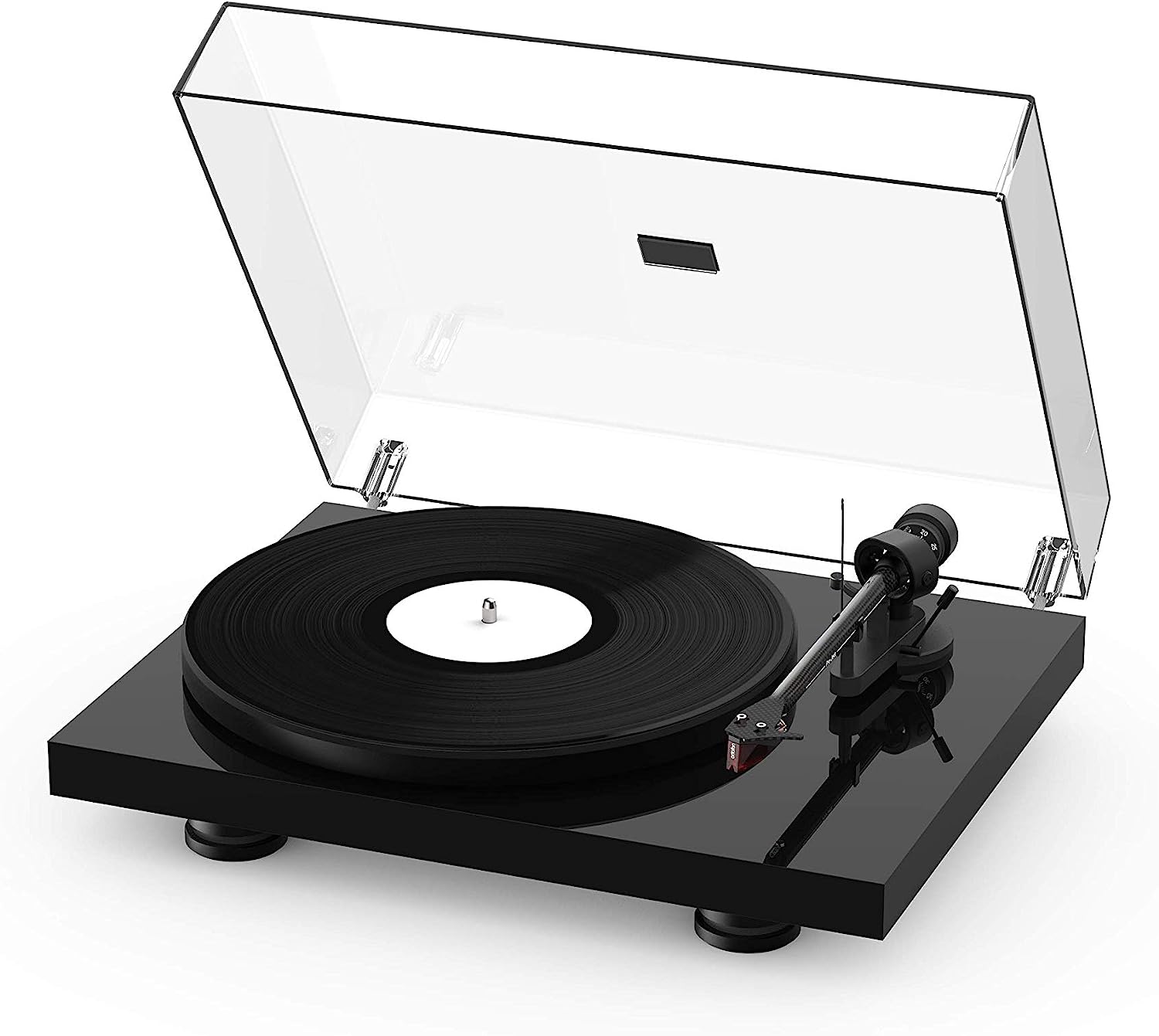
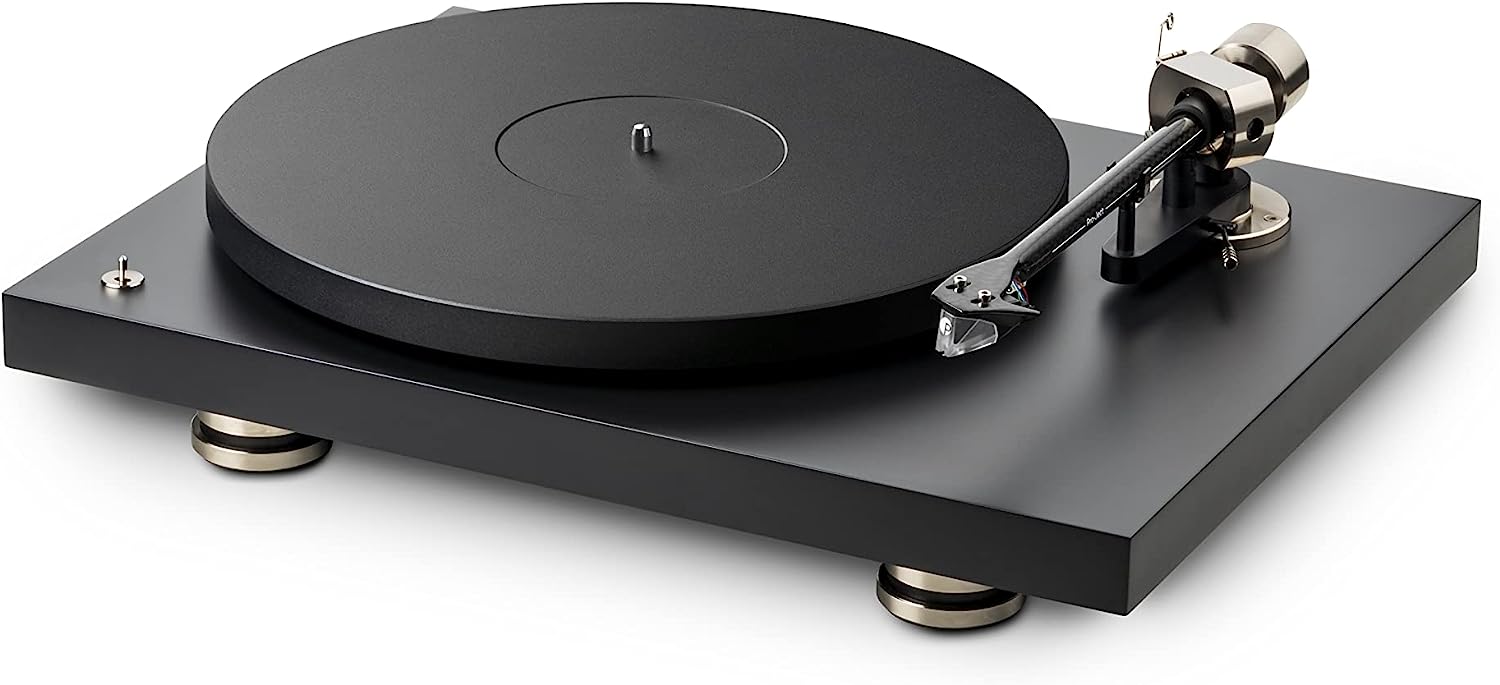
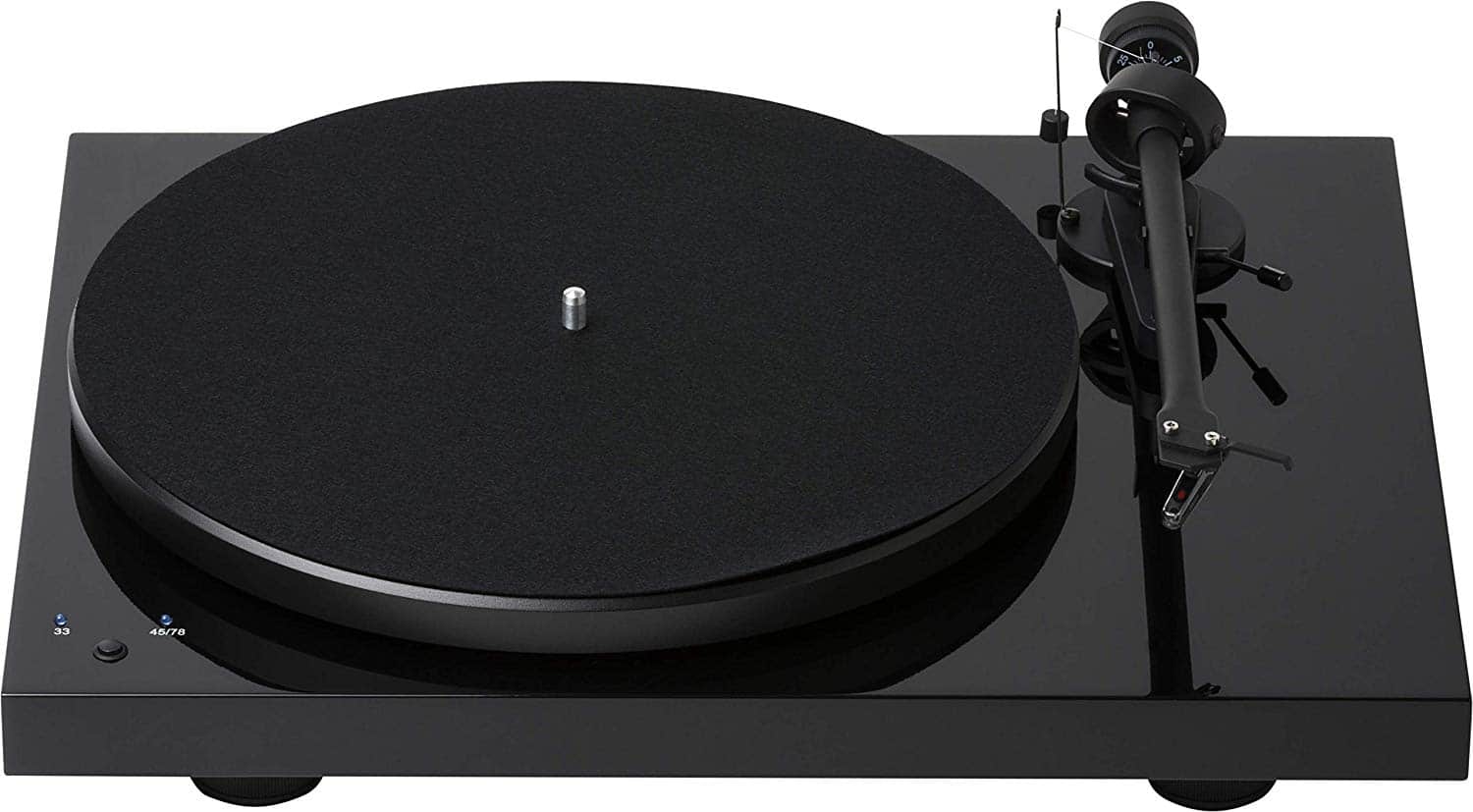
The Debut Carbon DC follows Pro-Ject’s familiar minimalist layout, with a rectangular plinth, separate platter, hinged dust cover and a clean manual control arrangement. It was offered in several gloss colours as well as matt walnut, making it more visually flexible than many plain black budget hi-fi decks.
The headline design element is Pro-Ject’s 8.6cc carbon-fibre tonearm. The carbon armtube is intended to combine low weight with stiffness, helping to reduce unwanted resonance and support accurate cartridge tracking.
Under the platter, the deck uses a belt-drive system with a decoupled motor and TPE motor suspension. Manufacturer material also highlights a larger, heavier platter compared with earlier Debut models, intended to support smoother rotation.
Practical construction is traditional hi-fi rather than lifestyle convenience. RCA phono sockets and a separate earth connection are provided, while the counterweight and hanging anti-skate weight give proper adjustment but require careful handling.
Features
The standard Debut Carbon DC is a manual two-speed turntable for 33 and 45 rpm records. Changing speed is done by removing the platter and moving the belt between pulley steps, which keeps the design simple but is less convenient for frequent 45 rpm users.
Factory cartridge fit can vary, with official documentation listing Ortofon OM 10 and Ortofon 2M Red moving-magnet options depending on package or market. Both are replaceable-stylus hi-fi cartridges, but buyers should check the actual cartridge and stylus condition on the deck being sold.
There is no built-in phono stage on the standard model. It needs an MM phono input on an amplifier or receiver, or a separate MM phono preamp before connecting to a normal line input or most powered speakers.
The external DC power supply and frequency generator are part of the model’s design brief for more stable drive and reduced unwanted vibration. The deck also allows tracking force and anti-skate adjustment, which supports correct setup but makes it more involved than a plug-and-play record player.
Setup
Setup is manageable for careful beginners, but it is not fully plug-and-play. The deck needs to be placed on a level, low-resonance surface, then the belt, platter, felt mat, counterweight and anti-skate weight must be correctly fitted.
The cartridge is normally factory fitted, so alignment may not need attention unless the cartridge has been changed. Even so, balancing the tonearm and setting tracking force require patience, and the small hanging anti-skate weight can be fiddly.
Connection is also system-dependent. The RCA leads and earth wire must go to a suitable MM phono input or external phono stage, and hum should be checked before purchase where possible, especially with used examples.
Performance
In daily use, the Debut Carbon DC is deliberately hands-on. The user starts the motor, cues the arm onto the record and returns the arm at the end of a side, as there is no automatic start, auto-return or auto-stop.
The belt-drive arrangement and DC power system are designed to support stable playback, although published speed-variance and wow/flutter figures vary between manual revisions. That means condition, belt health, levelling and correct setup matter, particularly when assessing a used example.
Connectivity is straightforward but uncompromising. The RCA outputs and earth post are welcome for system matching, but the standard version offers no line-level output, USB recording, Bluetooth or built-in preamp.
For LP-focused listening, the operating routine is simple once set up. However, anyone who regularly switches between albums and 7-inch singles may find the under-platter belt change a nuisance.
Sound quality
The Debut Carbon DC is best understood as a clarity-focused entry-level hi-fi turntable rather than a bass-boosted or feature-led player. Its carbon tonearm, proper cartridge options and separate phono-stage requirement all point towards a more serious analogue setup than compact all-in-one record players.
Professional commentary on the model has been broadly positive in its price class, particularly around detail, precision and the package value of the tonearm and cartridge. Some comparisons suggest rival Rega decks can offer more low-end weight, so this should not be assumed to be the warmest or fullest-sounding option.
The cartridge fitted will have a significant influence on the final result. Many packages were sold with the Ortofon 2M Red, while official documentation also lists the OM 10, so a buyer should confirm what is installed before judging value.
Sound quality will also depend on stylus wear, tracking force, isolation, grounding, phono stage and the rest of the system. A used example with a worn stylus or poor setup may not show what the design is capable of.
Pros
- Carbon-fibre 8.6cc tonearm is strong for this class of manual hi-fi deck Ortofon OM 10 or 2M Red cartridge options provide a credible starting point RCA outputs and earth connection make system matching more flexible than fixed-only cables Simple, minimalist design with several finish options
- Good upgrade path through stylus, cartridge, phono stage and isolation changes
- A meaningful step up from cheap all-in-one record players
Cons
- No built-in phono stage, Bluetooth, USB or line-level output on the standard model
- Manual belt change for 45 rpm is inconvenient
- No automatic start, auto-return or auto-stop Counterweight and hanging anti-skate setup can be fiddly for beginners Used examples may need a new stylus, belt or careful troubleshooting Should not be confused with newer Debut Carbon EVO or EVO 2 models
Verdict
The Pro-Ject Debut Carbon Vinyl Turntable remains a credible entry-level hi-fi deck when assessed as the Debut Carbon DC: simple, manual and focused on tonearm and cartridge quality rather than convenience features. Its carbon arm, proper cartridge options and traditional RCA/earth output make it a sensible analogue source for a suitable hi-fi system.
The main cautions are practical rather than cosmetic. It needs a phono stage, speed changes are manual, and used examples must be checked for cartridge condition, missing parts, hum and correct identification.
Bought at the right price and in clean condition, it can still be a worthwhile step up from basic record players. If the price is close to a new deck, compare it carefully with current Pro-Ject, Rega and Audio-Technica alternatives that may offer warranty support or easier day-to-day operation.