Introduction
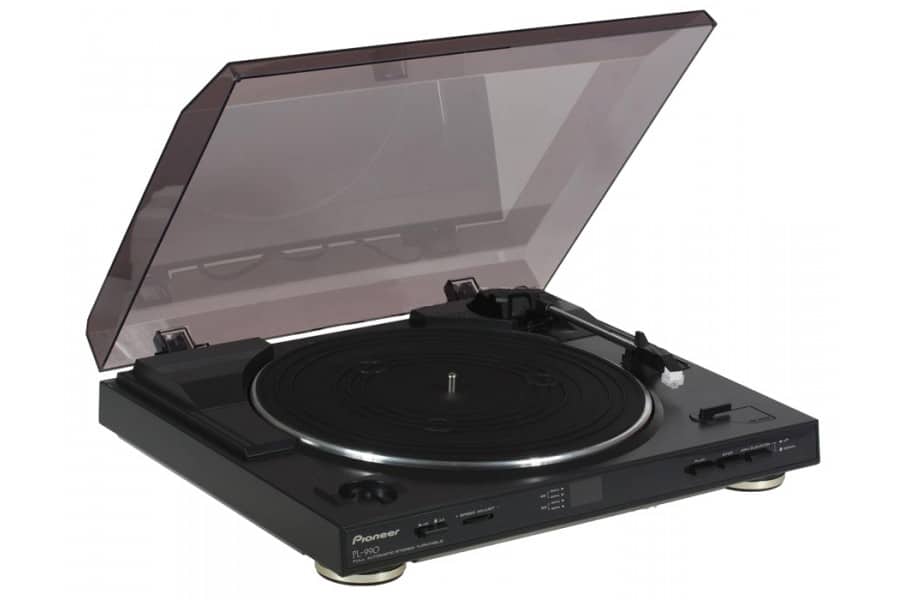
The Pioneer PL-990 Vinyl Turntable is a fully automatic belt-drive record player with a built-in phono equaliser. It is aimed at listeners who want simple vinyl playback through an amplifier, mini system or powered speakers with an AUX or line input.
Watch the product video
This is an entry-level component deck rather than a heavy upgrade-focused hi-fi turntable. The PL-990 suits beginners, returning vinyl users and casual listeners who value automatic start and return more than cartridge swapping or detailed tonearm adjustment.
Its strongest appeal is likely to be as a sensible used buy, provided it is fully working and priced accordingly. Buyers should distinguish it from other Pioneer PL models, as this PL-990 is a lightweight automatic deck with line-level output and limited user adjustment.
Design and build
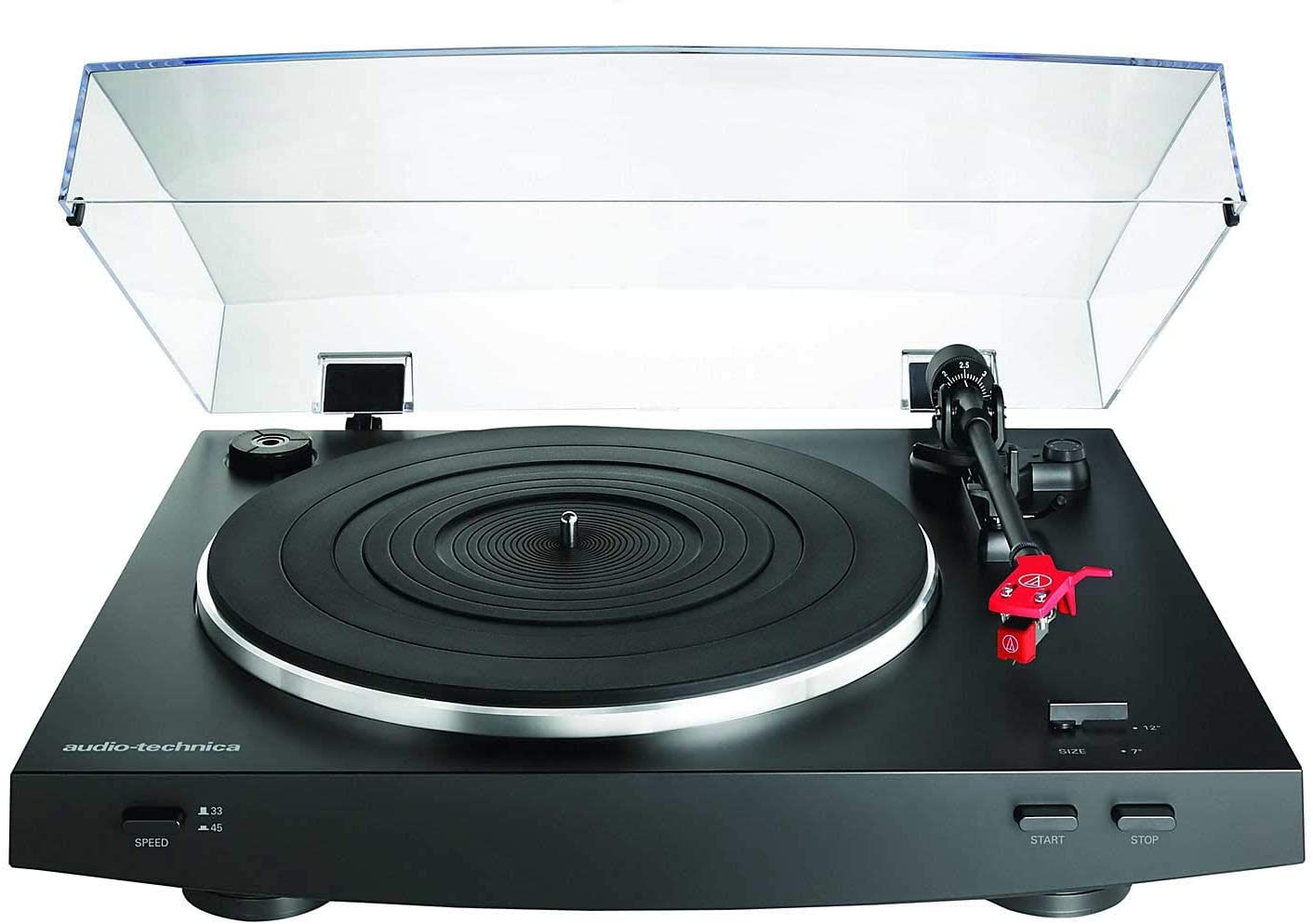
The PL-990 has a full-width component-style layout, with a 420 mm wide chassis and a hinged dust cover. At 2.65 kg, it is relatively light, which reinforces its position as a convenience-led entry-level turntable rather than a substantial audiophile deck.
Its core design uses a belt-driven 295 mm platter, a DC servo motor and a low-mass straight tonearm. The fitted moving-magnet cartridge and stylus assembly are largely preset, so the deck is not intended for extensive cartridge alignment or tonearm tuning.
Controls are placed for straightforward use, including automatic play and stop, speed selection and record-size selection for 30 cm and 17 cm records. The stroboscope and speed-adjust control are useful additions on a basic automatic model, especially if pitch appears to need correction.
Practical limitations come with the simple construction. The RCA leads are captive, which can restrict placement, and the built-in phono equaliser appears to be central to how the deck is intended to be used.
Features
Fully automatic operation is the headline feature. Pressing start allows the turntable to cue the arm and return it at the end of the record, which reduces handling and makes it approachable for new users.
There is also a manual play option for choosing a specific track. The record-size selector helps the automatic mechanism place the arm correctly for standard LPs and 7-inch singles or EPs.
The built-in phono equaliser means the PL-990 outputs at line level. It should be connected to AUX or line inputs, not to a dedicated phono input, because using a phono input can cause distortion.
Playback is limited to 33-1/3 and 45 rpm, so it is not suitable for 78 rpm collections. The stylus is replaceable with Pioneer part PZP1004, but the evidence supports stylus replacement rather than a conventional cartridge-upgrade path.
Setup
Setup is relatively straightforward, though it is not completely without steps. The belt must be fitted over the motor pulley without twisting, the tonearm tie and stylus guard need removing, and the mat and EP adaptor should be placed correctly.
For use, the listener selects 33 or 45 rpm, chooses the correct record size and uses the automatic start control. The deck should sit on a solid, level surface away from speakers to reduce feedback, skipping and mechanical disturbance.
The most important connection point is the input choice. Its red and white RCA plugs should go into AUX or line inputs, because the built-in preamplifier is already active and a phono input may overload or distort the sound.
Performance
Day-to-day performance is centred on convenience. The automatic start and return system makes the PL-990 easier to live with than a fully manual deck, particularly for users who do not want to cue records by hand every time.
The belt-drive system and DC servo motor are typical of domestic entry-level turntables. The official wow and flutter figure is no more than 0.25% WRMS, and the deck includes strobe-assisted speed adjustment, which is helpful if speed appears slightly off.
Connectivity is simple but specific. The built-in equaliser allows connection to line-level inputs on amplifiers, receivers, mini systems or suitable powered speakers, but it is not ideal for users who want to choose an external phono stage.
As an older model often encountered used, condition matters. Belts, styli and automatic mechanisms can be age-related weak points, so a prospective buyer should check both speeds, automatic return, both audio channels and overall speed stability.
Sound quality
The PL-990 should be viewed as an accessible everyday record player rather than a high-resolution source. Its fitted MM cartridge, 0.6 mil diamond stylus and built-in phono equaliser point towards simple, acceptable vinyl playback for modest systems.
The official signal-to-noise ratio is more than 50 dB DIN-B, and the nominal stylus pressure is 3.5 g ± 1 g. Those figures are consistent with a basic automatic deck, not with more refined manual turntables that use adjustable tonearms and higher-grade cartridges.
Owner and budget-review evidence generally places the sound in the “good enough for casual listening” category when the turntable is connected correctly through AUX or line inputs. More demanding listeners may find the limited upgrade route, light construction and built-in equaliser restrictive.
Record safety depends partly on condition and use. A correct replacement stylus, a stable support and a properly working mechanism are important, especially when buying a used example with unknown history.
Pros
- Fully automatic start and return suits beginners and casual listening Built-in phono equaliser allows connection to AUX or line inputs Plays both 33-1/3 and 45 rpm records Stroboscope and speed-adjust control are useful on a basic automatic deck Replaceable stylus with Pioneer PZP1004 part specified
- Manual play option allows track selection
Cons
- No 78 rpm playback Limited tonearm and cartridge adjustability Built-in phono equaliser is not ideal for external phono-stage users No USB
- Bluetooth or digital recording features Lightweight construction compared with more serious hi-fi decks Used examples may need a belt, stylus or automatic-mechanism attention
Verdict
The Pioneer PL-990 Vinyl Turntable is best understood as a straightforward automatic deck for uncomplicated record playback. Its built-in phono equaliser, automatic arm operation and simple controls make it friendly for everyday use with an AUX or line-input system.
Its drawbacks are just as clear. The lightweight build, limited adjustment, lack of 78 rpm, absence of USB or Bluetooth and restricted upgrade path mean it is not a strong platform for serious hi-fi development.
Buy it only at a price that reflects its older entry-level status and condition. A fully working example with a good stylus and belt can be a practical starter turntable, but overpaying makes little sense when newer entry-level automatics and more upgradeable manual decks are available.