Introduction
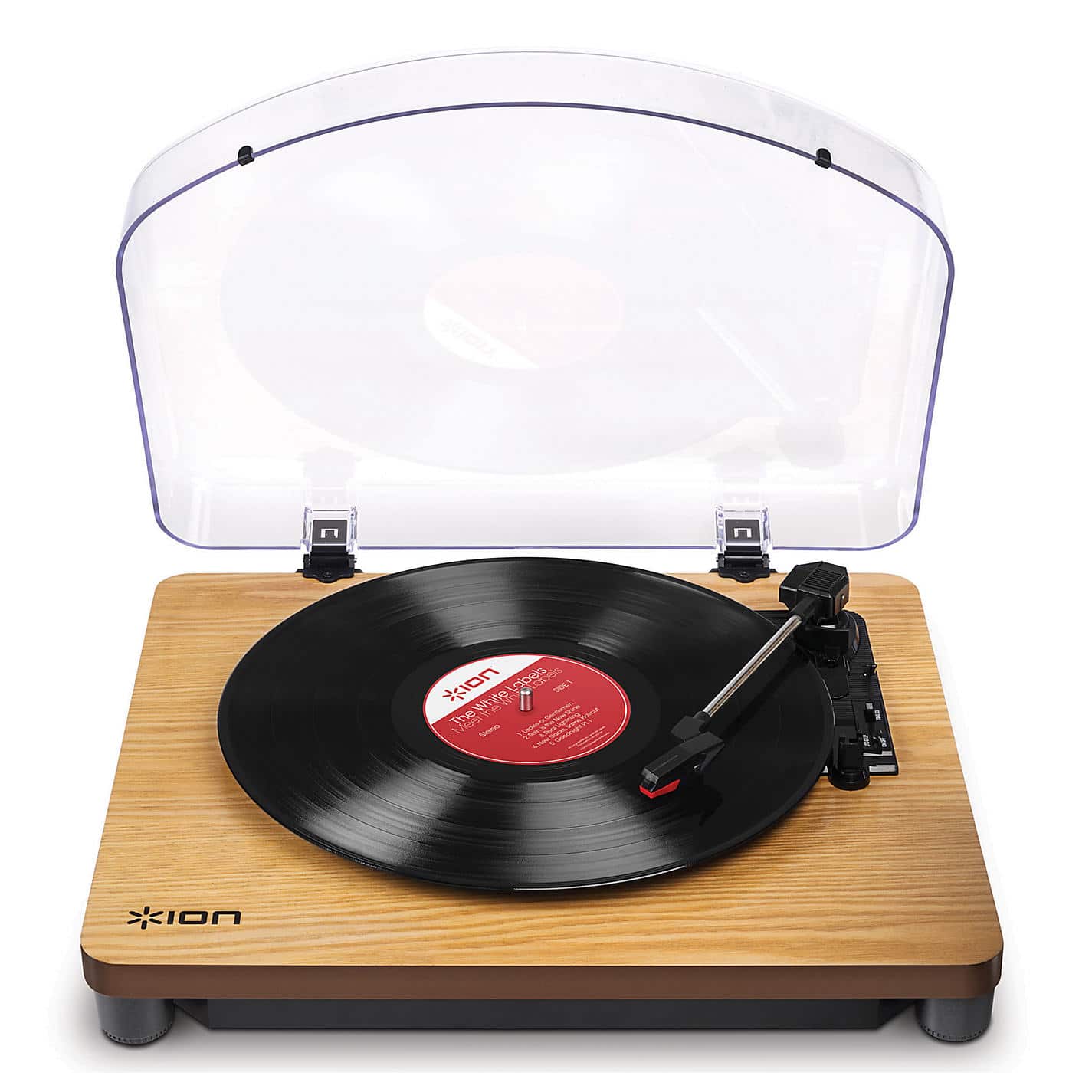
ION Audio Max LP Vinyl Turntable is an all-in-one USB conversion record player with built-in stereo speakers. It is aimed at beginners, gift buyers and casual listeners who want to play records without immediately buying a separate amplifier or speakers.
Watch the product video
Its appeal is convenience rather than hi-fi ambition. The Max LP is best suited to bedrooms, studies, dorm-style rooms and occasional listening, especially where simple vinyl-to-computer recording is part of the brief.
This review refers to the ION Audio Max LP in the natural wood finish. ION also lists a closely related Max LP Black variant, but it should not be confused with other ION models that add different features such as Bluetooth or larger speaker systems.
Design and build
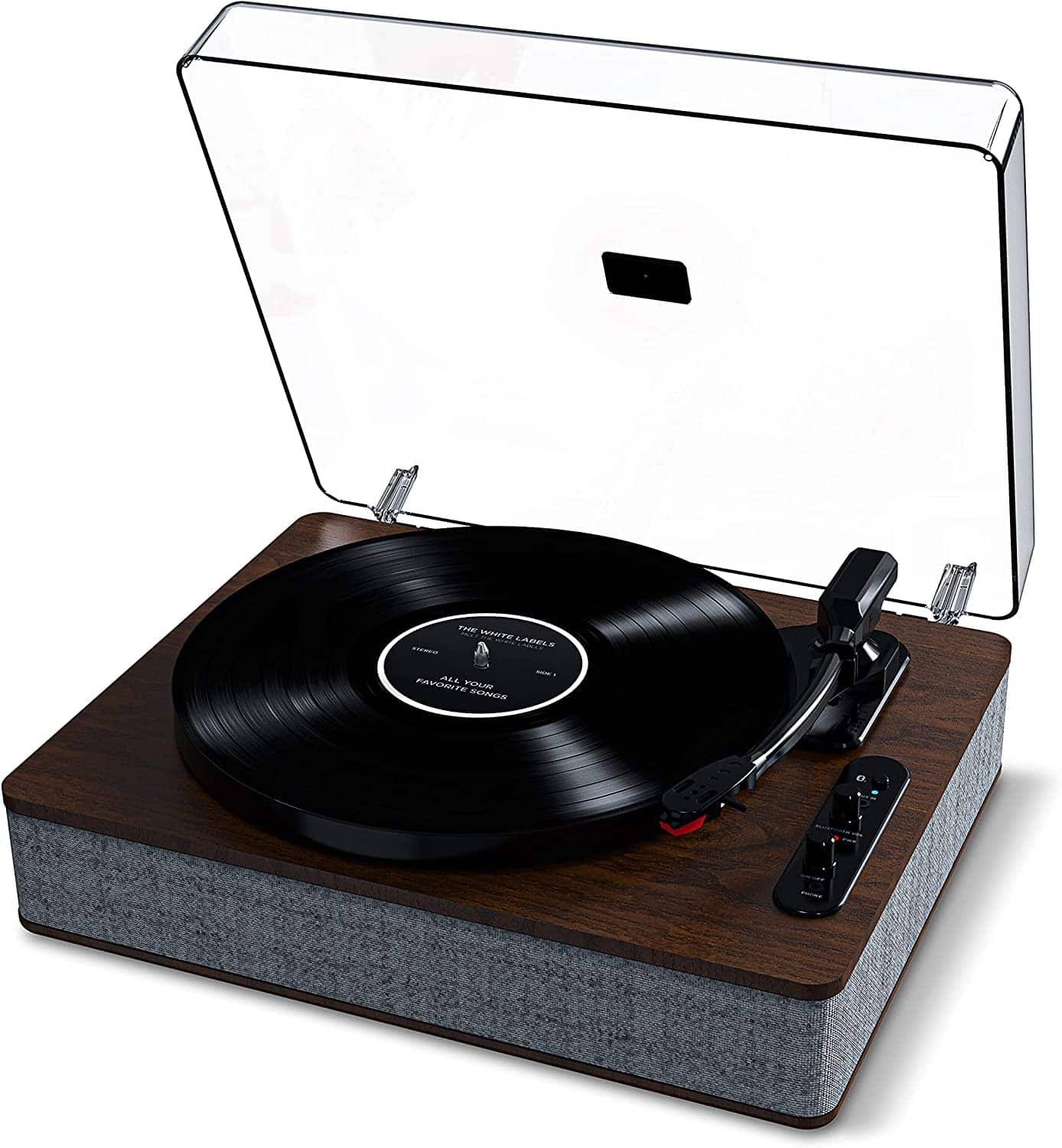
The Max LP has a compact, lightweight all-in-one layout, with the speakers, line-level electronics, USB interface and turntable mechanism housed in one unit. The natural wood finish gives it a softer domestic look than many black plastic record players, while the supplied dust cover adds useful everyday protection.
Construction is clearly convenience-led. The evidence points to a belt-driven platter, a felt slipmat, a manual tonearm with cueing lever, and an ION headshell with a ceramic cartridge and conical diamond-tipped stylus.
Controls are kept simple, with speed selection, volume, autostop and the usual tonearm operation doing most of the work. There is no verified evidence of adjustable tracking force, anti-skate or a standard moving-magnet cartridge upgrade path, so expectations should be set accordingly.
At about 3.5 kg, it is easy to move around the home. That portability is useful, but it also reinforces that this is not built like a heavier separates-style hi-fi deck.
Features
The headline feature is self-contained playback. Built-in stereo speakers mean the Max LP can play records straight away without an amplifier, receiver or powered speakers, which is useful for first-time buyers and small rooms.
USB recording is the other major attraction. By connecting the turntable to a Mac or PC, records can be captured using ION’s EZ Vinyl/Tape Converter software or compatible recording software, making it a practical tool for casual digitisation.
The 3.5 mm auxiliary input broadens its use beyond vinyl. A cassette deck or similar analogue source can be connected and routed to a computer over USB, which is handy for basic tape or external-source transfers.
Connectivity also includes RCA line-level outputs and a headphone socket. The RCA outputs are for powered speakers or line inputs such as Aux, CD or Tape, and should not be connected to a phono input.
Setup
Setup is simple by design. Fit the dust cover, place the felt slipmat on the platter, remove the stylus guard, connect the power adapter, select the right speed and use the cue lever to lower the arm.
For singles, the supplied 45 RPM adapter is used where required. For computer recording, connect USB to the computer and select the Max LP or USB audio device as the recording input in the chosen software.
Care is needed with external connections. The RCA sockets output a line-level signal, so they should go to powered speakers or line inputs, not to a phono input on an amplifier.
Performance
Day-to-day operation is straightforward. Select the correct speed, place the record on the platter, move the tonearm into position and use the cue lever to lower the stylus.
The Max LP supports 33 1/3, 45 and 78 RPM playback, but 78 RPM records need the correct separate 78 stylus. The supplied conical stylus should not be assumed suitable for shellac 78s.
Switchable autostop is useful for casual listening because it can stop the platter at the end of a side. The manual also notes that some records may stop early, particularly some 45s, in which case autostop should be switched off.
There is no verified published wow/flutter or signal-to-noise specification in the supplied evidence, so speed precision cannot be assessed in technical terms here. The manual does describe underside speed-adjustment screws, but that is better seen as a maintenance provision than a normal user control.
Sound quality
The Max LP should be judged as a convenience-first record player rather than a hi-fi turntable. Its built-in speakers are useful for quick listening, but small integrated speakers are inherently limited compared with decent powered speakers or a separate stereo system.
The ceramic cartridge and simple tonearm arrangement also set a ceiling on performance. This design is not aimed at listeners seeking strong stereo imaging, deep bass, low distortion or a refined cartridge platform.
Using the RCA line outputs with powered speakers or a line input on an amplifier should improve loudness, scale and clarity over the internal speakers. However, it will not change the underlying entry-level cartridge, arm and drive system.
USB recordings should be viewed as convenient digital copies rather than archival-grade transfers. For preserving a large or valuable collection, a better turntable, cartridge and recording chain would be the more sensible route.
Pros
- Built-in stereo speakers allow record playback without separate hi-fi equipment USB output supports simple vinyl and auxiliary-source recording to a computer 3.5 mm aux input can be used for digitising sources such as cassette decks RCA line outputs allow connection to powered speakers or a stereo system Supports 33 1/3, 45 and 78 RPM speeds, with the correct stylus for 78s Switchable autostop adds convenience for everyday use Lightweight, compact design with a supplied dust cover
Cons
- Not a hi-fi turntable by design or upgrade potential Built-in speakers are limited compared with external speakers
- Ceramic cartridge and simple tonearm restrict performance and flexibility No verified
- Bluetooth feature on this exact Max LP model RCA outputs must not be connected to phono inputs 78 RPM playback requires a separate suitable stylus
Verdict
The ION Audio Max LP is easiest to recommend as a simple starter record player, gift purchase or casual digitisation tool. Its built-in speakers, USB output and auxiliary input make it more versatile than a basic playback-only unit.
The trade-off is that its construction is entry-level and convenience-focused. The ceramic cartridge, simple arm, limited upgrade route and modest built-in speaker concept place it well below a proper hi-fi turntable and separate speaker system.
If simplicity matters most, the Max LP is a practical choice. If record care, sound quality or future upgrades are priorities, it is wiser to start with a more conventional entry-level turntable and add suitable external speakers.