Introduction
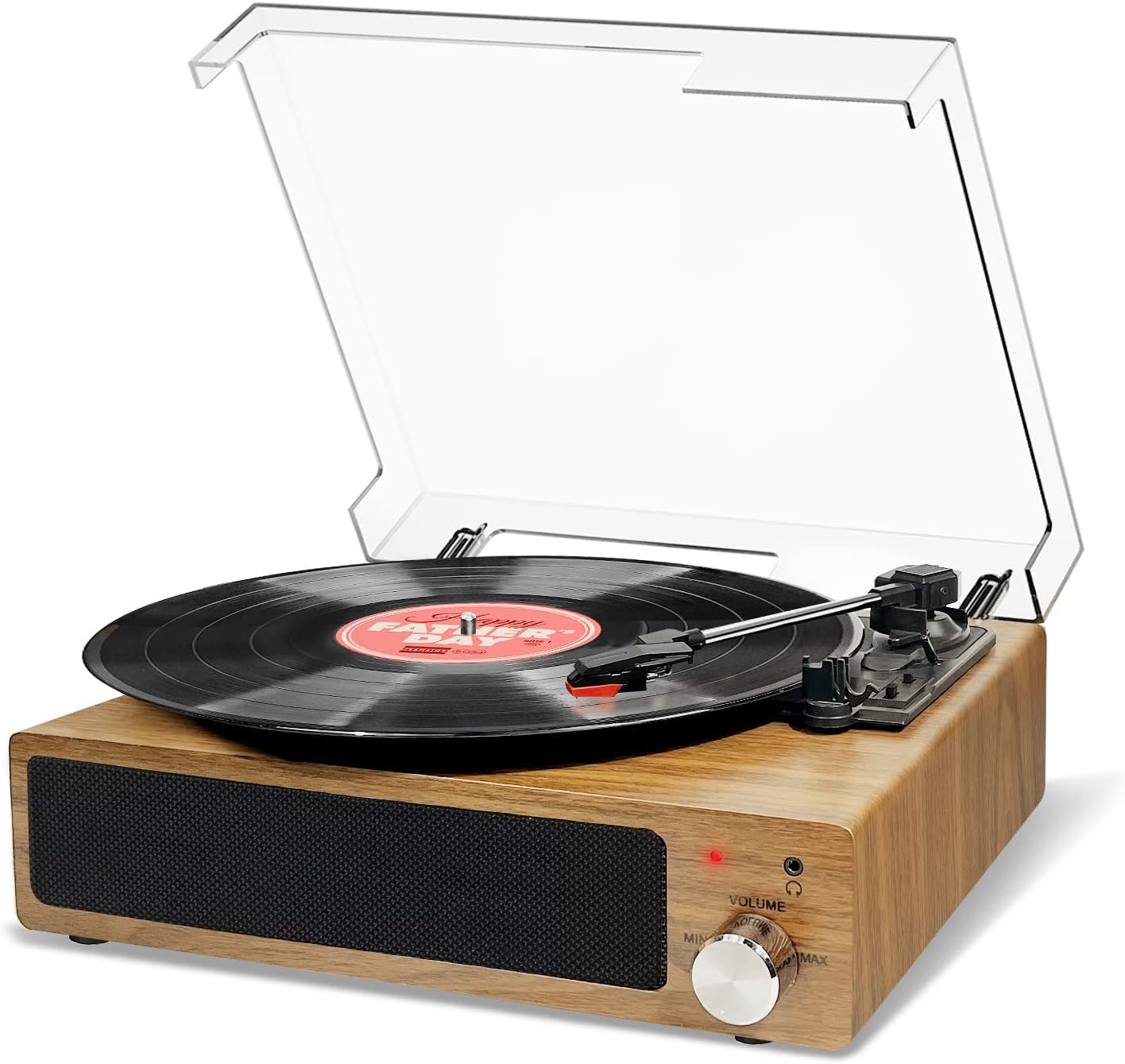
The FYDEE Vinyl Record Player is a compact all-in-one record player with built-in stereo speakers, Bluetooth input and a vintage-style natural wood finish. It is aimed at beginners, gift buyers and casual listeners who want to play records without building a separate hi-fi system.
This review covers the FYDEE A6 version, not the similarly named A7. Its appeal is convenience and appearance rather than serious long-term vinyl performance, so it makes most sense for bedrooms, desks, student rooms and occasional listening spaces.
Design and build
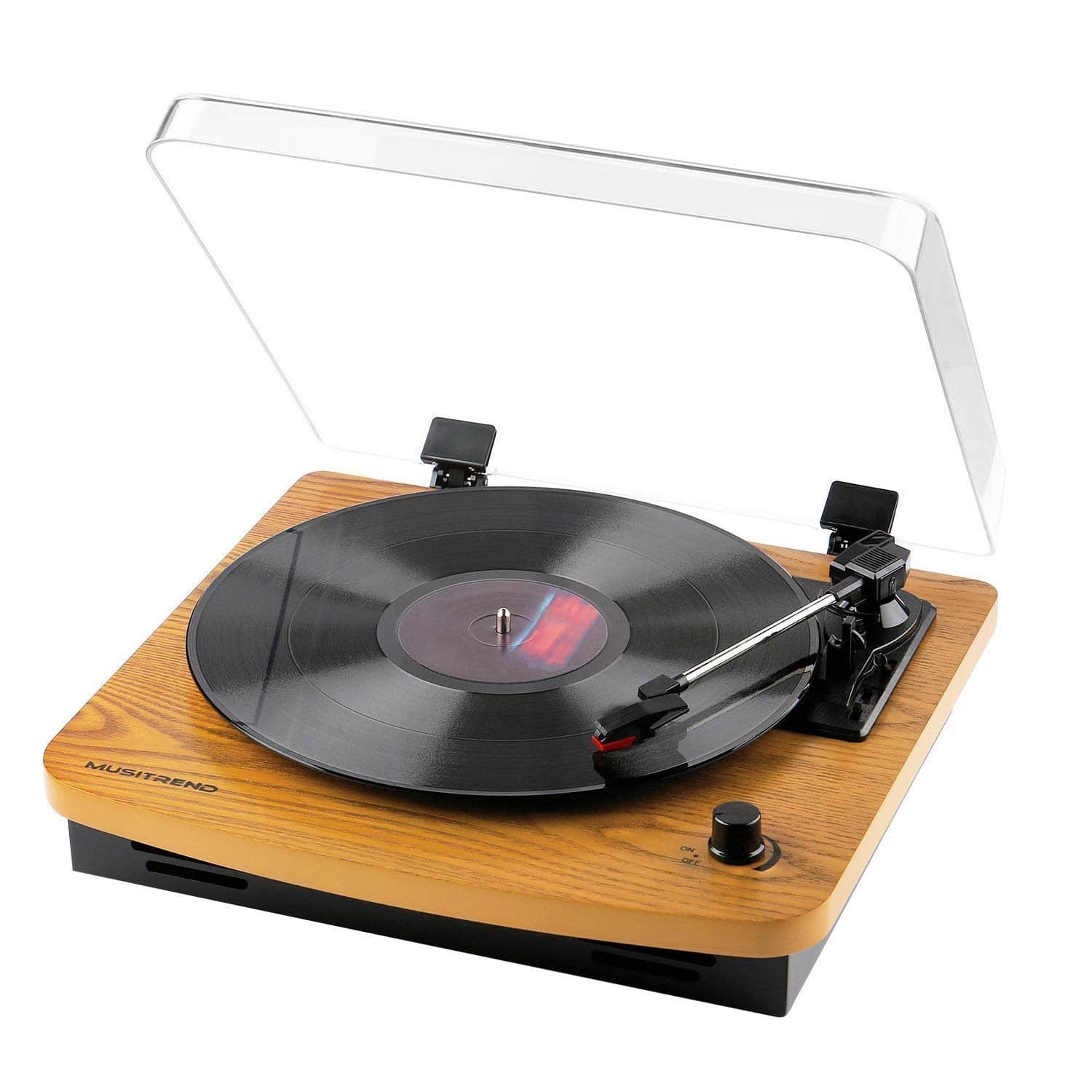
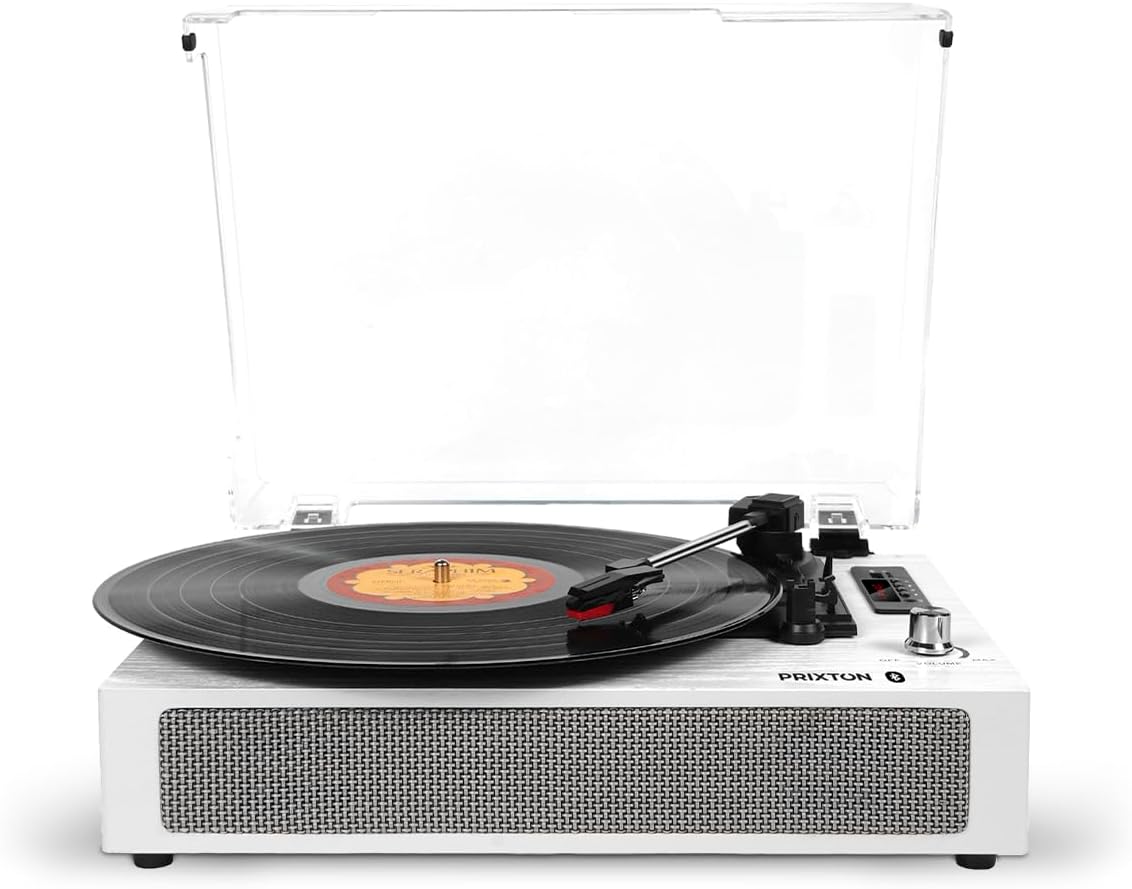
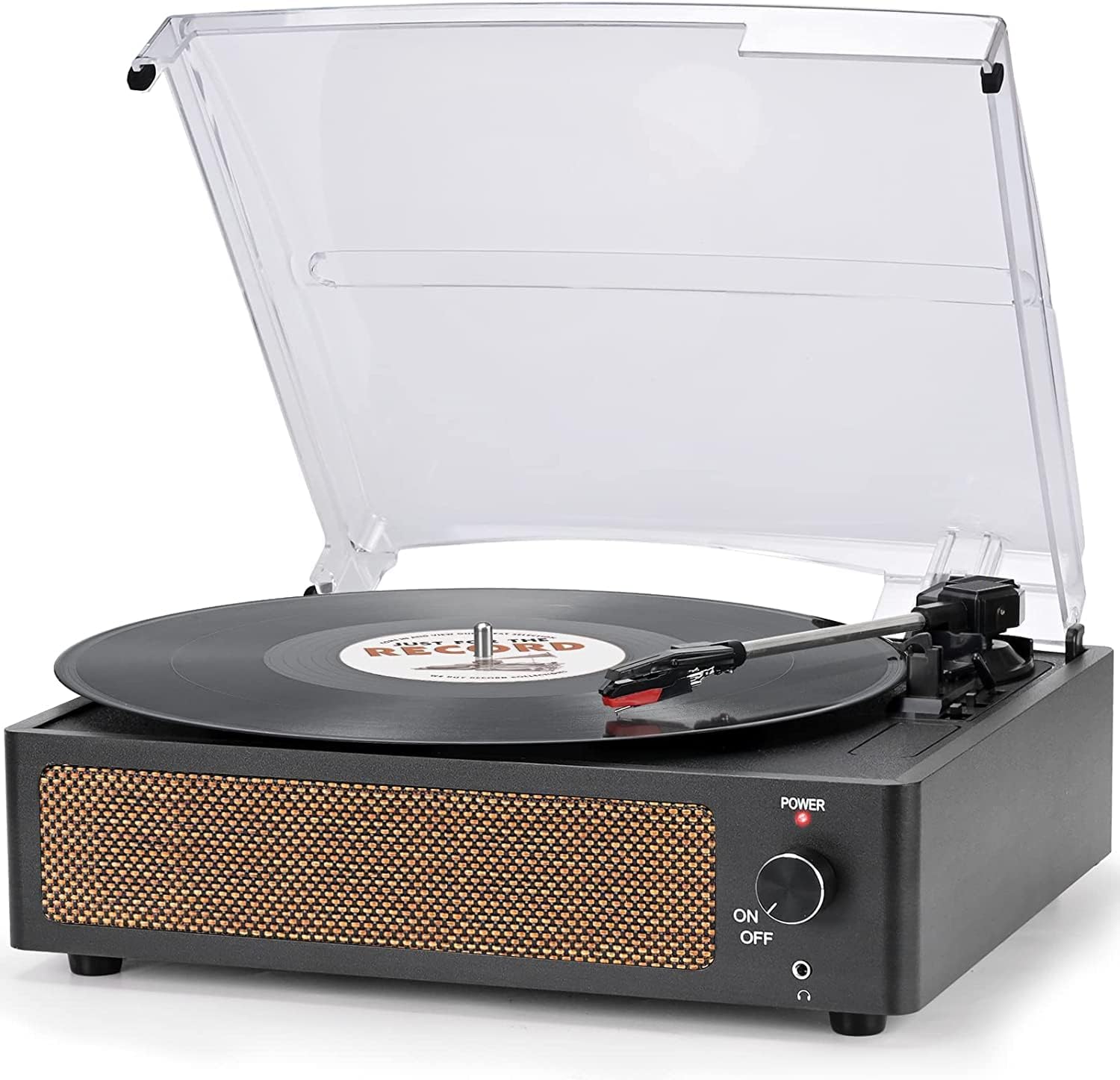
The A6 has a retro look with a wood or wood-effect enclosure, a clear dust cover and front-facing speaker grilles. Its compact footprint is part of the appeal, especially where a full turntable and speaker setup would be too bulky.
Controls are deliberately simple. The supplied manual identifies a rotary power and volume control, speed switch, tonearm lock, lift lever, auto-stop switch, headphone socket, RCA output, AUX input and DC power input.
Build expectations should be kept realistic. This is a lightweight lifestyle player, not a heavy plinth turntable with a precision arm, adjustable cartridge setup or upgrade-focused construction.
Some secondary material for related products mentions features such as counterweight or anti-skate adjustment, but those are not supported by the verified A6 manual evidence. For this exact model, it is safer to treat the tonearm and cartridge arrangement as basic.
Features
The main feature is all-in-one playback. Built-in stereo speakers allow records to play straight from the unit, while the RCA output gives owners the option to connect powered speakers or an amplifier later.
Bluetooth is included as a receiver function. That means a phone, tablet or laptop can stream audio to the FYDEE’s speakers, but this A6 evidence does not support Bluetooth transmission from vinyl to wireless headphones or Bluetooth speakers.
The deck supports 33, 45 and 78 RPM speeds and can handle 7, 10 and 12 inch records. The 78 RPM setting is useful on paper, but the supplied stylus type is not clearly specified for shellac 78s, so valuable older records should be treated with caution.
Other practical features include an AUX input, a headphone jack, a dust cover and an auto-stop switch. The manual notes that auto-stop may not behave perfectly on every record, so the ability to switch it off is useful.
Setup
Setup should be simple for a first-time user. Place the unit on a level surface, connect the supplied 5 V power adaptor, remove the stylus protector, unlock the tonearm, select the correct speed and lower the arm using the cueing lever.
Bluetooth pairing uses the device name shown as “A6” in the manual. AUX playback is selected when a 3.5 mm cable is connected, and external audio systems can be connected from the RCA outputs to a suitable line input or powered speakers.
The auto-stop switch is worth experimenting with. It adds convenience at the end of a side, but if a particular record stops early or does not trigger the mechanism correctly, switching auto-stop off may be necessary.
Performance
Day-to-day operation is designed to be straightforward. Select the mode, choose the correct speed, place the record on the platter and use the lift lever to lower the tonearm.
The belt-drive system and compact platter are appropriate for a low-cost all-in-one player, but there is no verified evidence here to support claims about measured speed accuracy or wow and flutter. Buyers wanting tight speed stability and a more refined mechanism should look at a more conventional entry-level hi-fi turntable.
Connectivity is flexible for casual use. RCA output is the most important option because it lets the A6 move beyond its internal speakers, while the AUX input and Bluetooth receiver mode make it function as a small music playback hub.
The lightweight construction means placement matters. A stable, level surface away from knocks and vibration will be more important than it would be with a heavier turntable.
Sound quality
The FYDEE A6 should be understood as a convenience-first player. Its built-in speakers are likely to suit background listening, spoken-word records and casual use, but they should not be expected to produce deep bass, wide stereo imaging or the detail of a separate speaker system.
Using the RCA output with powered speakers or an amplifier is the most practical route to better sound. Even modest external speakers should offer more scale and separation than the small integrated drivers.
The cartridge and stylus are not specified in enough detail to make strong claims about tracking performance, frequency response or record wear. For valuable vinyl, a turntable with a known cartridge, adjustable tracking force and a more substantial platter would be the safer foundation.
As a starter player, the A6 is best judged by ease and flexibility rather than audiophile accuracy. It can introduce vinyl in a simple way, but it is not the model to choose for critical listening.
Pros
- Built-in stereo speakers make it usable without extra equipment RCA output allows connection to powered speakers or an amplifier
- Bluetooth receiver mode is convenient for phone or tablet streaming Plays 7, 10 and 12 inch records at 33, 45 and 78 RPM
- Compact natural wood styling suits bedrooms, desks and casual spaces Simple controls are beginner-friendly Headphone jack and AUX input add useful flexibility
Cons
- Not a true hi-fi turntable for critical listening
- Bluetooth is receive-only on the verified A6 evidence Built-in speakers are convenience-focused and likely limited in bass and scale
- No verified USB recording feature
- No verified adjustable tracking force or anti-skate for this exact A6 manual Stylus and cartridge details are not clearly specified
Verdict
The FYDEE Vinyl Record Player is a sensible choice when the brief is simple: affordable vinyl playback, built-in speakers, Bluetooth input and a display-friendly vintage look. It removes the need to buy separate equipment on day one, which is its strongest practical advantage.
Its limitations are equally clear. The A6 is a compact all-in-one player with basic hardware, modest speaker expectations and no verified Bluetooth output or USB recording, so it should not be mistaken for a proper hi-fi deck.
For a first taste of records, a gift or a casual bedroom player, it is easy to understand the appeal. If vinyl is likely to become a serious hobby, it is better viewed as a starting point rather than the final turntable.