Introduction
The Denver VPL-210 Vinyl Record Player is an all-in-one Bluetooth record player with built-in speakers, three-speed vinyl playback and USB/SD recording. It is aimed at buyers who want a simple tabletop player rather than a separate turntable, amplifier and speaker system.
Its main appeal is convenience. The VPL-210 suits beginners, casual listeners and households that want to play records, stream from a phone into the unit, or make straightforward MP3 copies of vinyl without using a computer.
This is not a hi-fi deck in the traditional sense. The VPL-210 model is best viewed as a low-cost, feature-rich record player for everyday use, with some useful outputs if you later want to connect it to a better sound system.
Design and build
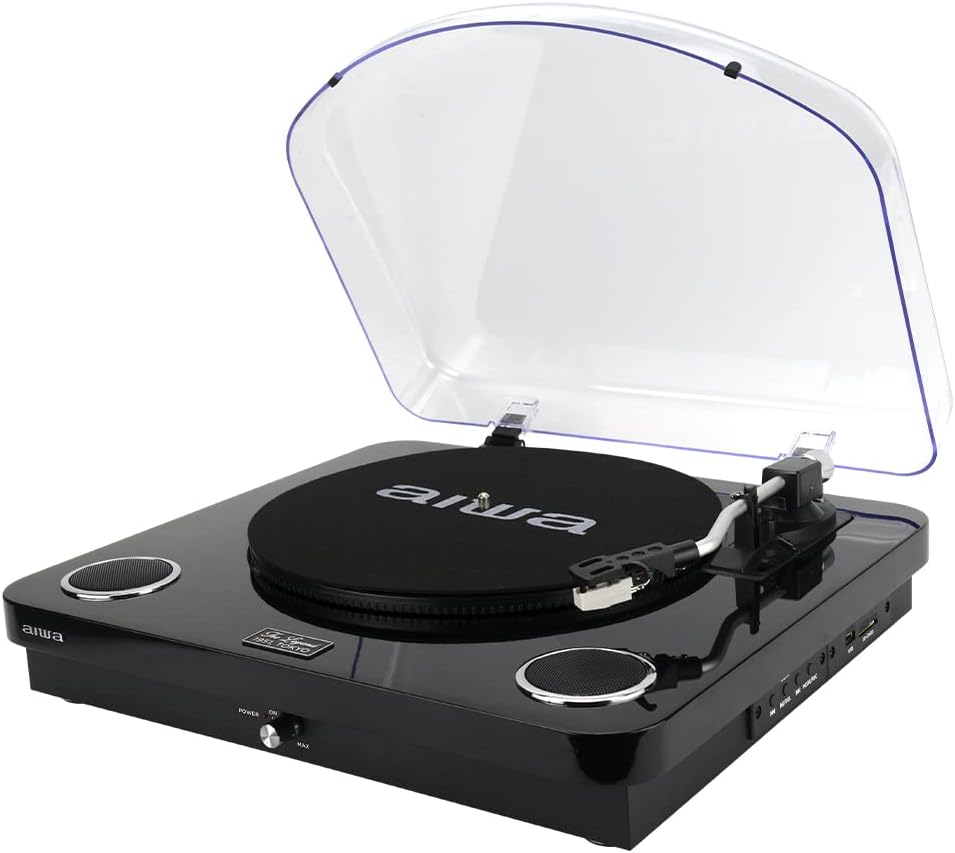
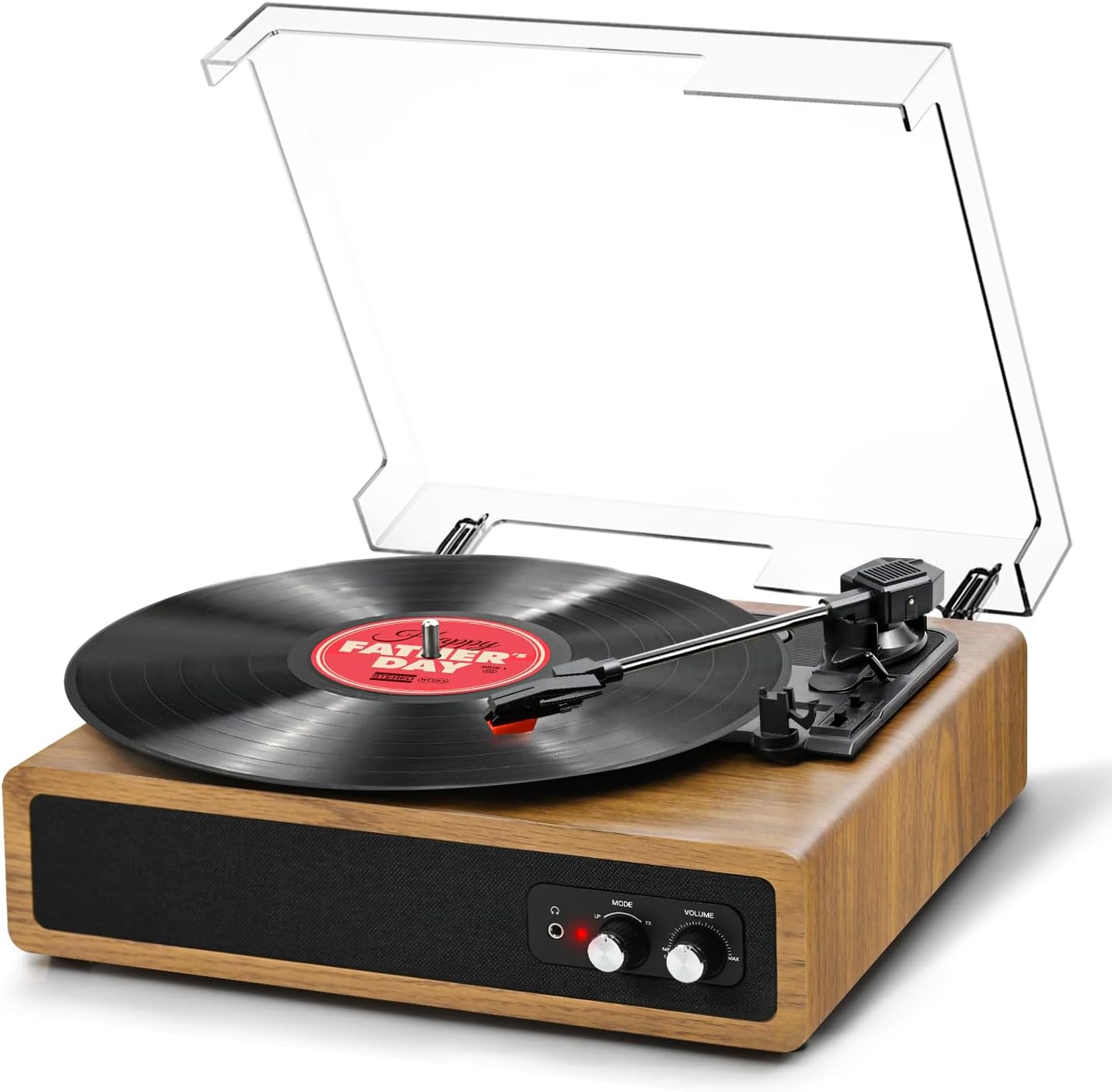
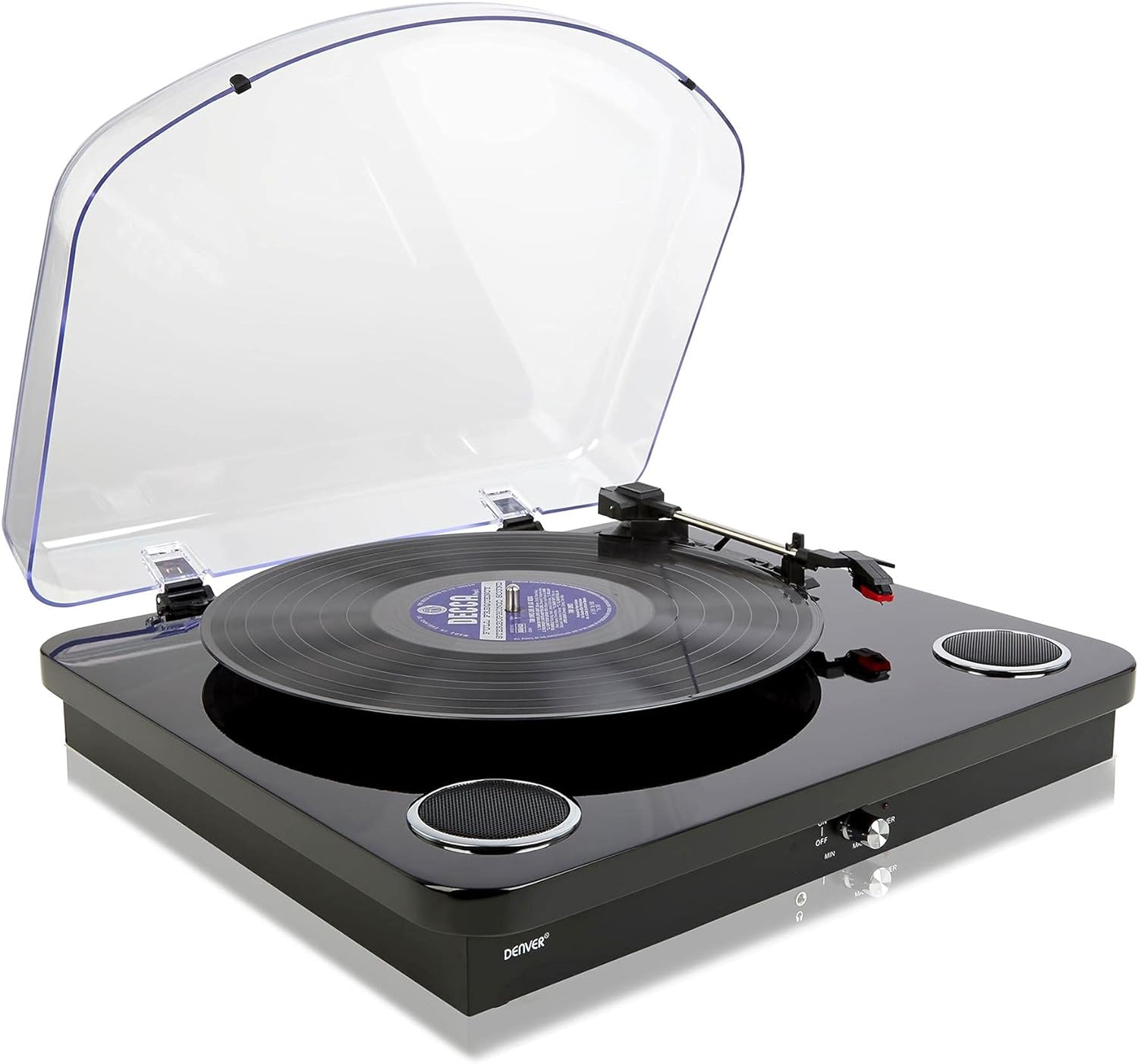
The VPL-210 uses a full-size rectangular tabletop design with retro styling. Available evidence points to gloss black and wood-look variants, with a clear dust cover reported by supporting product information.
Controls are arranged for straightforward use rather than technical adjustment. The front includes power and volume control, while the deck area includes the platter, manual tonearm, cueing lever, speed selector, auto-stop switch and a holder for the 45 rpm adaptor.
Digital features are built into the same unit. There is a USB port and SD/MMC card reader for MP3 playback and recording, plus RCA left/right outputs and a DC power input on the rear.
Construction should be judged in context. The exact plinth material is not consistently confirmed, and there is no verified evidence of adjustable tracking force, anti-skate or a detailed cartridge specification, so it should not be mistaken for a more upgradeable hi-fi turntable.
Features
The headline feature is flexibility. The Denver plays 33, 45 and 78 rpm records, which is useful for mixed collections, though anyone with valuable 78 rpm shellac discs should confirm stylus suitability before use.
Built-in speakers mean it can be used straight away without an amplifier. That makes it practical for bedrooms, kitchens or occasional listening spaces, but those same speakers are likely to be the main limit on sound quality.
Bluetooth is included as an input, allowing a phone or tablet to stream audio through the VPL-210. The available documentation does not verify Bluetooth output from vinyl to wireless speakers or headphones, so buyers should not assume that function is present.
USB and SD functions add extra value for casual archiving. The unit can play MP3 files from compatible media and record vinyl directly to MP3 on a USB stick or SD card, although there is no evidence of advanced editing, track splitting or high-resolution recording.
Setup
Setup is deliberately simple. Connect the 5 V DC adaptor, place a record on the platter, choose 33, 45 or 78 rpm, switch on the unit and use the cueing lever to lower the tonearm.
For Bluetooth use, the supported instructions describe pairing a phone to the unit under the VPL-210 name while the tonearm is resting. For vinyl recording, insert a USB stick or SD card and use the Mode button to start and stop MP3 recording.
Daily use remains hands-on. The arm must be positioned and returned manually, and buyers connecting external speakers or a hi-fi will need a suitable RCA cable and a line-level input.
Performance
Day-to-day operation is manual. The user places the record, selects the speed, releases the tonearm lock, uses the cueing lever and lowers the stylus onto the record.
Auto-stop is included, but it is not full automatic operation. When enabled, the platter can stop at the end of a record, while the tonearm still needs to be lifted and returned by hand.
Connectivity is practical for a budget all-in-one player. The RCA stereo outputs allow connection to a line input on an amplifier, mixer, hi-fi or suitable powered speaker system, although the manual indicates that an RCA cable is not supplied.
There is no supported evidence of a headphone socket, tone controls, adjustable tracking force or anti-skate. Speed stability measurements are also not available, so expectations should remain realistic for an entry-level convenience product.
Sound quality
The VPL-210 should be approached as a convenience-first record player. Its built-in speakers are useful for immediate listening, but the supported evidence and owner feedback indicate modest output, limited bass and sound that may not satisfy demanding listeners.
A small number of owner comments describe the built-in sound as weak, metallic or lacking weight. That should be treated as a tendency rather than a broad consensus, but it is consistent with the limitations normally associated with compact speakers built into the same plinth as a budget record player.
Using the RCA outputs with better external speakers or an amplifier is the most obvious way to improve volume and tonal balance. Even then, the underlying entry-level tonearm and unspecified cartridge system remain important limitations for serious listening or valuable record collections.
For background music, older records and casual playback, the sound is likely to be acceptable to many buyers at this level. For detailed stereo imaging, deep bass or careful record handling, a separate turntable and speaker system would be the more appropriate route.
Pros
- Built-in speakers allow immediate playback without a separate amplifier Plays 33, 45 and 78 rpm records
- Bluetooth input for streaming from a phone or tablet into the unit Direct vinyl-to-MP3 recording to USB stick or SD card USB/SD MP3 playback adds extra source flexibility RCA stereo outputs provide a route to external speakers or a hi-fi Auto-stop can stop the platter at the end of a record
Cons
- Bluetooth output to wireless speakers or headphones is not verified Built-in speakers are modest and likely to limit bass and volume
- No verified headphone socket No confirmed tone controls, adjustable tracking force or anti-skate Manual operation
- auto-stop does not return the tonearm Stylus and cartridge details are not clearly specified for record-care-focused buyers
Verdict
The Denver VPL-210 Vinyl Record Player makes most sense as a simple, inexpensive all-in-one player for casual listening. Its strongest qualities are convenience, three-speed playback, Bluetooth input and direct USB/SD recording.
The trade-off is that it lacks the adjustability, cartridge clarity and speaker quality expected from a more serious turntable system. Buyers should also note that Bluetooth is supported as an input, not as a verified way to send vinyl wirelessly to headphones or speakers.
Choose it if you want an easy, compact record player that does several jobs at once. If sound quality, record care or long-term upgrade potential matter more, put the budget towards a proper entry-level turntable and separate speakers.