Introduction
The Denver VPL-210 Vinyl Record Player is a retro-style, all-in-one record player with built-in speakers, Bluetooth input and USB/SD recording. It is aimed at beginners and casual listeners who want to play records without buying a separate amplifier or speaker system.
This is best viewed as a convenience product rather than a hi-fi separates turntable. The VPL-210 model is likely to appeal if you want simple vinyl playback, MP3 recording and digital playback in one compact tabletop unit.
Design and build
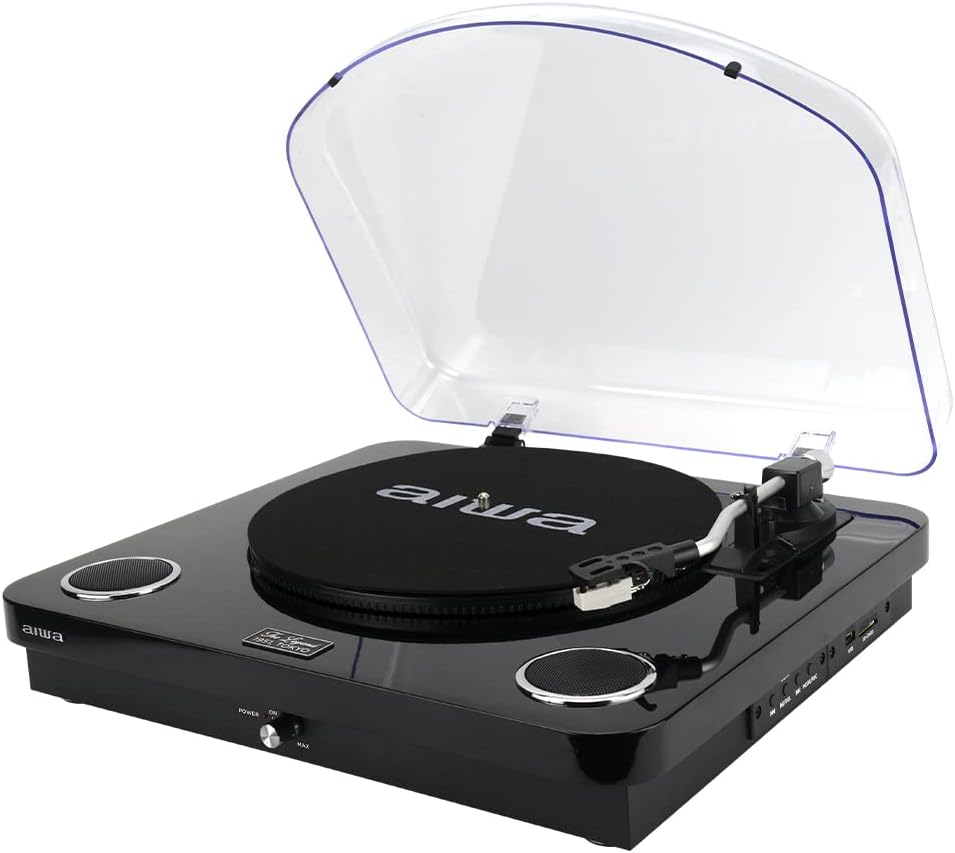
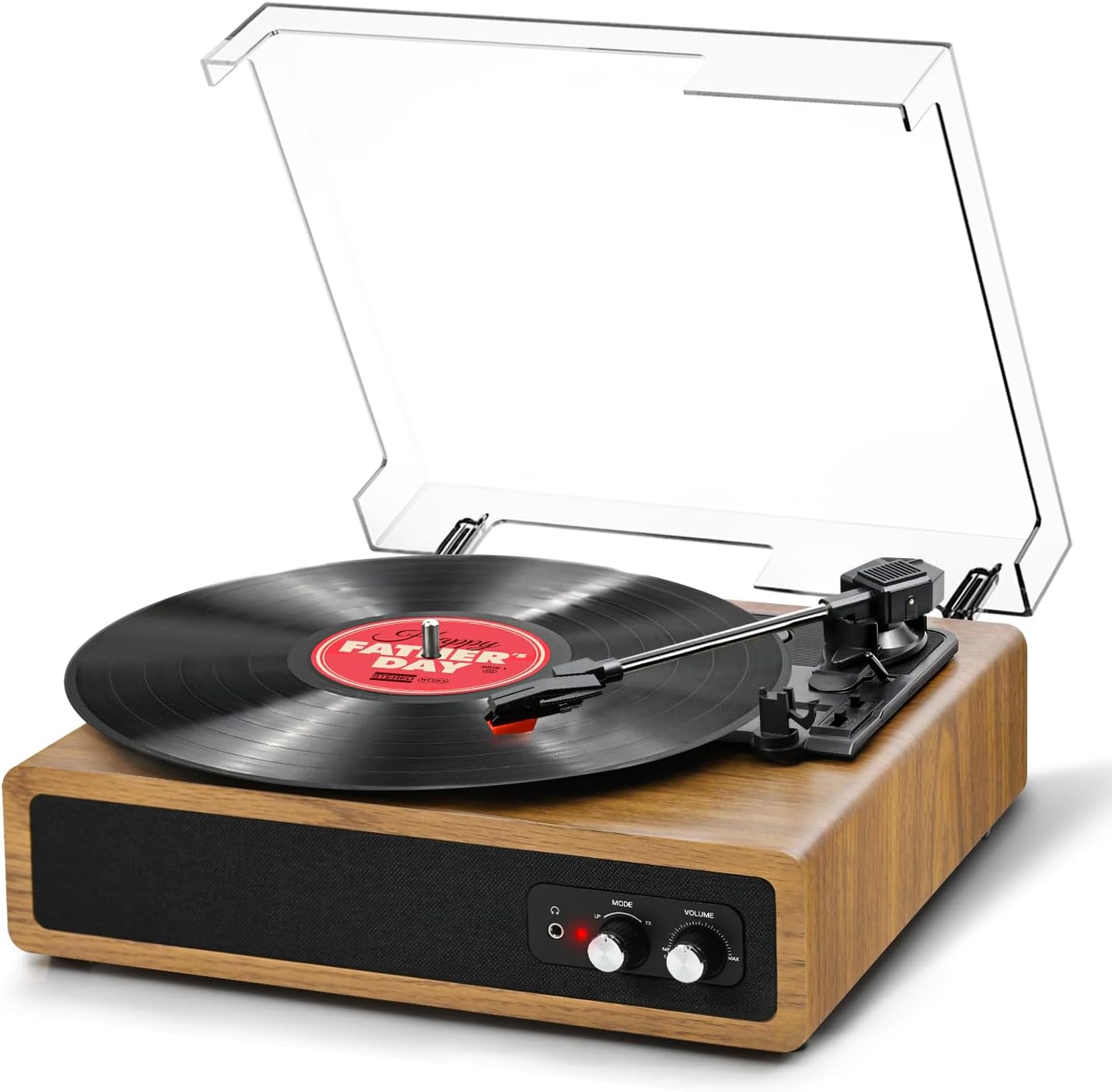
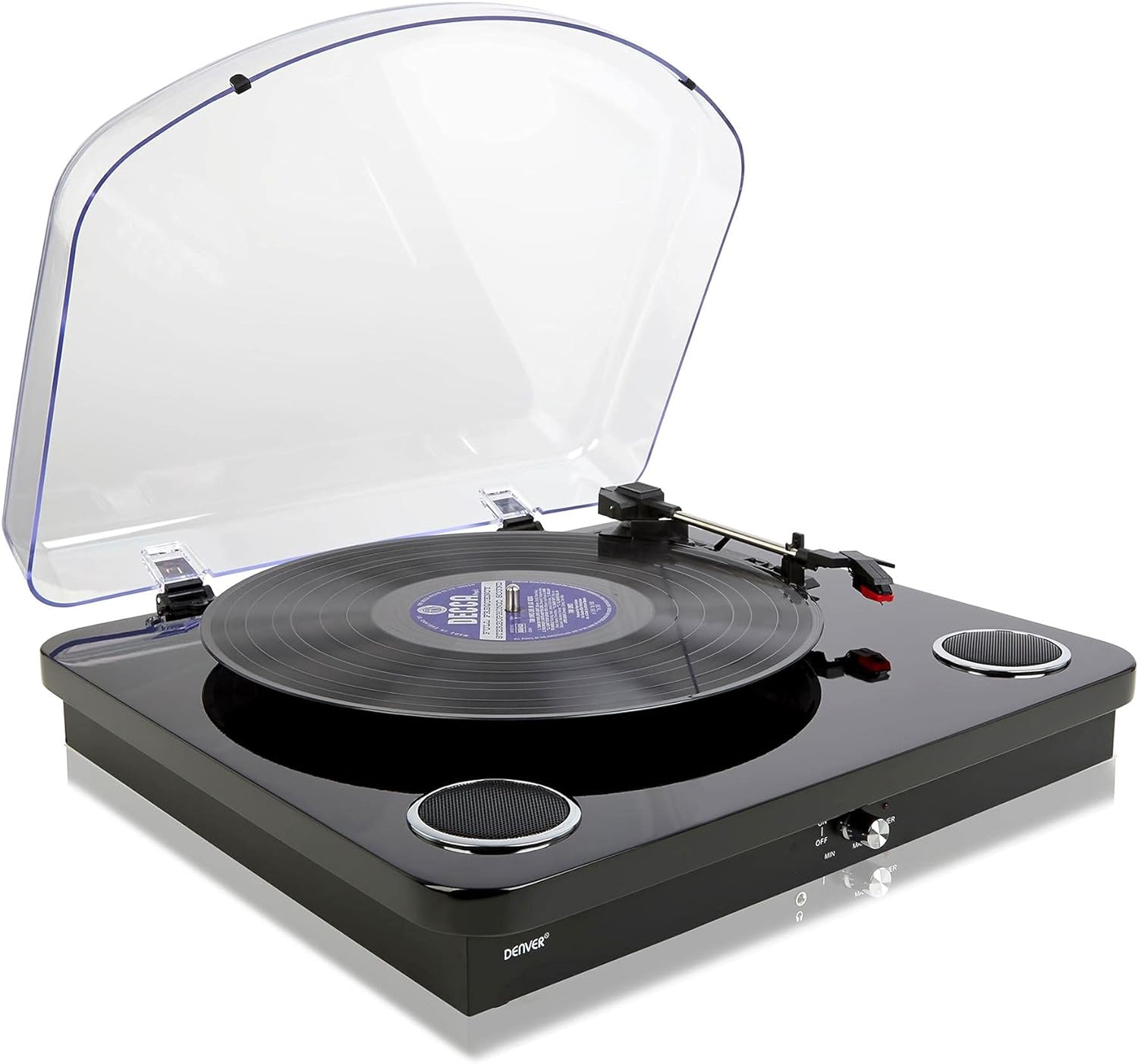
The VPL-210 uses a full-size rectangular plinth with a vintage-inspired look, built-in top-mounted speakers and a clear dust cover reported in the available product evidence. Colour variants include gloss black and wood-style finishes, although exact retail SKUs may vary.
The layout is straightforward, with a front on/off and volume control, playback controls for digital media, a USB port, an SD/MMC card reader and a rear stereo RCA output. The tonearm is manually operated and includes a cueing lever, tonearm rest and lock.
Construction should be judged in context. The available evidence does not confirm premium materials, adjustable tonearm settings or a detailed cartridge specification, so it should not be mistaken for a specialist hi-fi deck.
Features
The headline feature set is broad for an inexpensive all-in-one player. It supports 33, 45 and 78 rpm playback, has built-in speakers, accepts Bluetooth audio from a phone or tablet, and can play MP3 files from USB or SD media.
A particularly useful function is direct vinyl-to-MP3 recording. The manual describes recording to a USB stick or SD card without a computer, with files saved in MP3 format, which is handy for simple archiving rather than advanced audio editing.
The stereo RCA outputs give the VPL-210 an important upgrade path. Connecting it to powered speakers, an amplifier or a hi-fi line input should offer more usable volume and scale than relying only on the built-in speakers.
Setup
Setup is deliberately uncomplicated. Connect the 5 V DC adaptor, place the record on the platter, choose 33, 45 or 78 rpm, release the tonearm lock and lower the stylus using the cueing lever.
For 45 rpm singles, the supplied adaptor can be used where needed. If auto-stop is enabled, the platter can stop at the end of a side, but the tonearm still needs to be returned manually.
Bluetooth pairing is handled by selecting the VPL-210 from a phone or tablet, while USB/SD recording is started and stopped via the Mode button as described in the manual. For external audio, a separate RCA cable is needed to connect the rear outputs to a suitable line input.
Performance
Day-to-day operation is manual and simple. You select the record speed, place the tonearm over the disc and lower it with the cueing lever, while the selectable auto-stop can stop the platter at the end of a record.
Auto-stop should not be confused with automatic operation. The arm does not return itself, so the user still needs to lift it back to its rest and lock it after playback.
Bluetooth is supported as an input to the record player, allowing a smartphone or similar device to play through the unit. There is no verified support for sending vinyl wirelessly to Bluetooth speakers or headphones.
The USB/SD functions add flexibility for mixed listening, but the recording system is best understood as quick and basic. There is no supported evidence of advanced track splitting, high-resolution recording or editing tools.
Sound quality
The VPL-210 is designed around convenience and compactness, so expectations should be realistic. Its built-in speakers are likely to be the main limitation, especially for bass weight, loudness and overall refinement.
Available owner and review evidence points towards acceptable casual sound for the type of product, but not a performance aimed at demanding listeners. Some feedback describes the sound as weak, metallic or lacking bass, which is consistent with the limitations of small integrated speakers.
Using the RCA outputs with better external speakers or an amplifier is the most sensible way to improve presentation. Even then, the lack of verified adjustable tracking force, anti-skate or cartridge details means it remains an entry-level record player rather than a serious upgrade platform.
Pros
- All-in-one design works without a separate amplifier or speakers Supports 33, 45 and 78 rpm playback
- Bluetooth input lets a phone or tablet play through the unit Records vinyl directly to MP3 on USB or SD media RCA outputs allow connection to an external hi-fi or powered speakers
- Manual cueing lever and selectable auto-stop aid everyday use Retro styling with reported gloss black and wood-style variants
Cons
- Built-in speakers are modest and likely to limit bass and volume
- Bluetooth output to wireless speakers or headphones is not verified
- No verified headphone socket No verified adjustable tracking force, anti-skate or cartridge specification
- Manual tonearm operation with no auto-return USB/SD recording is basic rather than an advanced archiving solution
Verdict
The Denver VPL-210 Vinyl Record Player makes sense as a simple, affordable-style all-in-one for casual listening, especially where built-in speakers, Bluetooth input and USB/SD recording are more important than hi-fi performance. Its broad feature set is practical, and the RCA outputs are a useful way to improve the sound later.
Its limitations are equally important. The modest built-in speakers, manual tonearm and lack of verified cartridge adjustment mean it is not the right choice for serious record care or demanding sound quality.
Consider it if you want convenience and a retro tabletop format with minimal setup. If your records are valuable or you already care about speaker quality, it is wiser to budget for a more capable entry-level turntable and separate speakers.